Understanding craft techniques →
Technical diagrams help you recognise weave structures, loom parts, garment construction and the limits of the evidence.

Lithuanian crafts and folk art
Explore Lithuanian craft heritage in English, from UNESCO-recognized cross-crafting and straw gardens to woven sashes, national costume, Easter eggs, woodwork, pottery, and living village skills.
Start with what interests you: a material, a technique, or a finished object.
Browse all crafts Explore the straw garden tradition
Four connected stories about fibre, colour, weaving, and the finished object.
Each guide explains the object or technique, symbolism, regional features, living practice, source context, and places where the craft can still be seen or learned in Lithuania.
Each English page explains the object, technique, symbolism, regional context, source status, and where the tradition can still be seen or learned.
Decorative folk art: woodcarving, paper cuts, Easter eggs, ceramics, and ornamented objects.
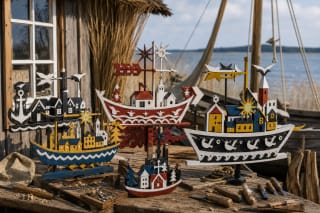
Curonian Lagoon weathervanes began as fishing-control signs introduced on sailing boats in 1844 and later became colorful openwork wooden folk art and one of…
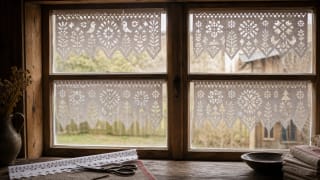
Cut paper window curtains are thin strips or sheets of paper cut with openwork ornament and fastened to windows as fragile, inexpensive rural interior…
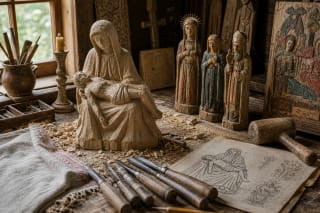
Dievdirbystė is the Lithuanian folk tradition of sacred wooden sculpture: self-taught or local masters carved figures of Christ, Mary, and saints for…
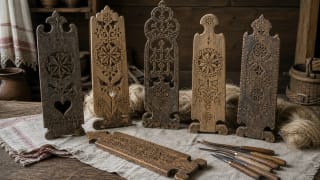
Prieverpstės are ornate wooden boards for fastening a flax or wool bundle, one of the most vivid areas of Lithuanian wood carving, filled with sunbursts,…
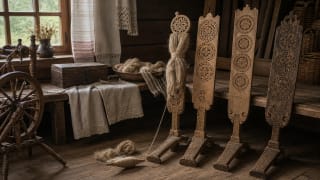
Lithuanian distaffs held flax or wool for spinning and often became carved, ornamented objects that joined textile work, wood carving, courtship gifts, and…
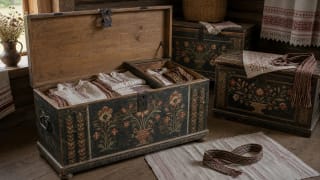
Dowry chests were Lithuanian rural household furniture used to store dowry textiles, fabrics, clothing, sashes, and valuables; their painting, iron fittings,…
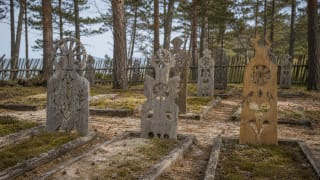
Krikštai are wooden grave markers characteristic of Lithuania Minor: profiled boards set at the foot of a grave and decorated with plant, geometric, bird,…
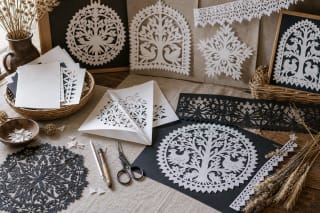
Paper cuttings are Lithuanian paper-cut folk art in which white or colored paper is cut into openwork patterns of trees, birds, sun motifs, plants, seasons, and…
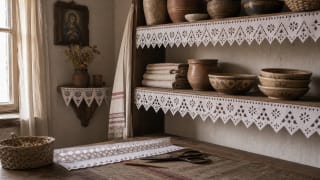
Shelf decorations are paper-cut strips fixed to the edges of shelves, cupboards, etageres, or corner shelves.
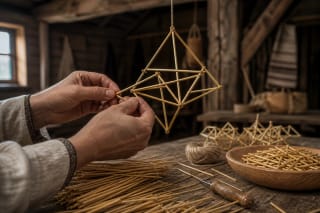
Lithuanian straw gardens, called sodai, are symmetrical spatial structures threaded from rye or other grain straw and associated with domestic harmony, a model…
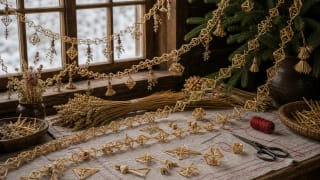
Straw garlands are linear decorations threaded from straw modules: chains of diamonds, triangles, cubes, stars, small reketukai, or other forms hung in windows,…
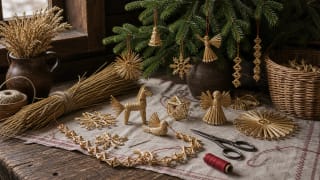
Straw ornaments are small decorations threaded and tied from rye, wheat, or oat straw: birds, horses, angels, bells, sunbursts, snowflakes, reketukai, garland…
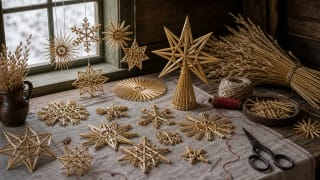
Straw stars are radial ornaments threaded or tied from straw: flat or spatial stars, sunbursts, snowflakes, and Christmas-tree toppers whose beauty depends on…
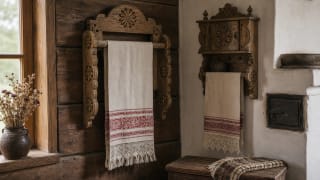
Rankšluostinės are traditional wooden wall-mounted towel holders: they had rollers, side boards, sometimes shelves or a small cupboard, and together with the…
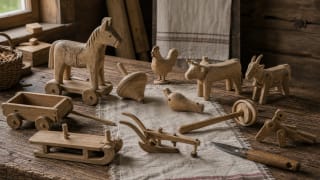
Wooden toys in the Lithuanian village were simple handmade objects: horses, carts, animals, whistles, rattles, spinning tops, miniature implements, and moving…
Practical skilled crafts: smithing, pottery, woodwork, wickerwork, and handmade trades.
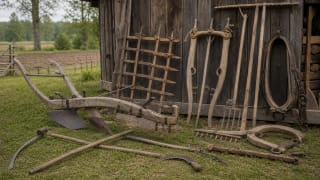
Traditional Lithuanian agricultural implements include wooden, iron, and mixed tools for plowing, harrowing, mowing, haymaking, harvesting, threshing, and…
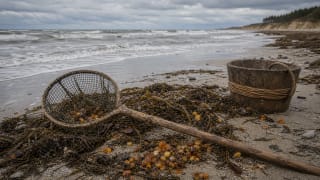
Amber catching on the coast is a Baltic shore skill: after storms and suitable winds, people read waves, currents, seaweed deposits, and use a scoop net or…
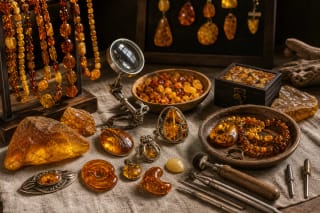
Amber objects in Lithuania connect Stone Age amulets, Baltic jewelry, coastal workshops, the Palanga Amber Museum, national identity, modern jewelry, and…

Baked beer is a rare brewing tradition of the Jūžintai region: barley malt is made into dough, shaped into loaves, baked in a bread oven, then used to make wort…
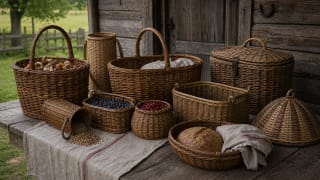
Baskets and carriers are traditional woven containers for forest, field, market, kitchen, and household work.
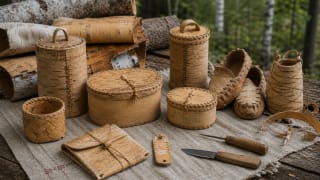
Birch bark crafts are vessels, boxes, baskets, bags, footwear parts, sheets, and small household objects made from layered birch bark.
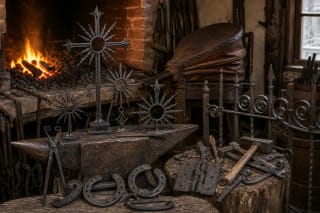
Blacksmithing in Lithuania joins the daily work of the rural smith, agricultural tools, horseshoeing, iron for gates and hinges, cemetery fences, cross-crafting…
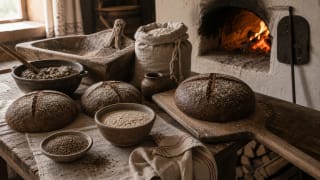
Bread baking in Lithuania is the craft of rye sourdough bread, scalded dough, the dough trough, peel, and masonry bread oven, tied to everyday food, respect for…
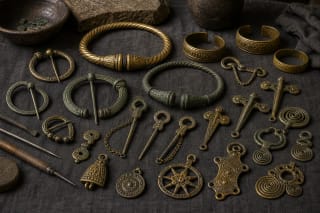
Bronze and brass ornaments in Lithuania include neck-rings, brooches, pins, chains, bracelets, rings, head ornaments, and pendants known from Baltic archaeology…
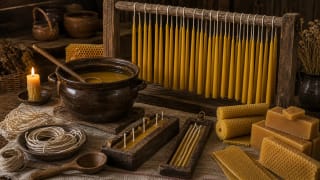
Candle casting is the traditional making of candles from beeswax or other waxes by casting, dipping, or rolling, joining craft skill with household light,…
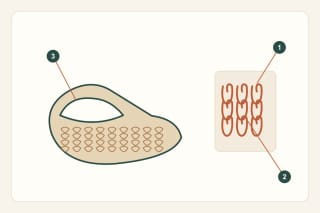
Čempės are footwear crocheted from thick yarn, particularly associated with Dzūkija.
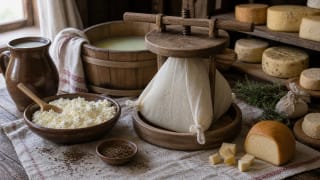
Lithuanian cheese making ranges from household pressed curd cheese in a sūrmaišis to smoked, dried, baked, and aged cheeses, linking milk, dairy skill, family…
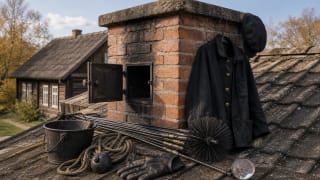
Chimney sweeping is the craft of cleaning and maintaining flues, chimneys, and smoke channels of stoves, directly tied to household safety during the heating…
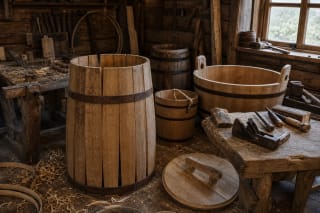
Cooperage and tub-making are wooden vessel crafts in which separate staves tightened by wooden or iron hoops become barrels, tubs, and buckets: vessels for…
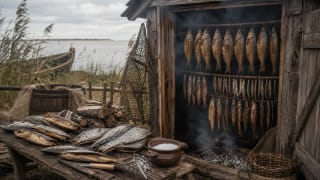
Fish smoking preserves and flavors fish with salt, drying, and smoke, especially in Pamarys and the Curonian Lagoon, where smoked fish belongs to fishing…
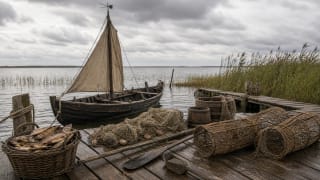
Fishing in the Curonian Lagoon joins boats, nets, fyke nets, fish traps, weathervanes, smoked fish, and the cultural layer of Pamarys and Lithuania Minor.
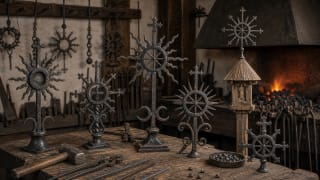
Forged sunbursts are iron finials on crosses, chapel-posts, roofed posts, chapels, and churches, joining the cross, rays, circles, crescents, small crosses,…
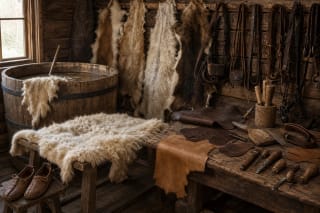
Fur work and leather work are two related branches of Lithuanian hide craft: fur workers dressed animal skins with the wool left on for fur coats, while leather…
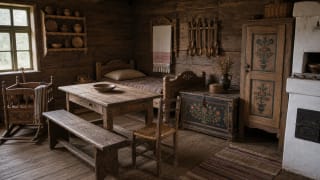
Furniture-making in the Lithuanian village included benches, tables, beds, cradles, shelves, towel racks, spoon racks, cupboards, chests, kuparai, wardrobes,…
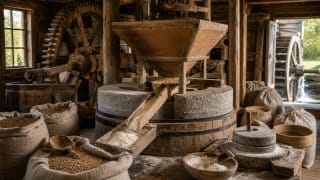
Grain milling is the tradition of crushing grain and preparing flour or groats, including hand querns, watermills and windmills, the miller's craft, mill…
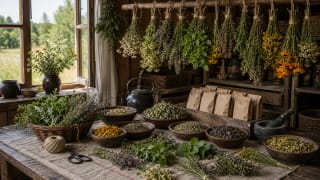
Lithuanian herbalism is the knowledge of recognizing, gathering, drying, storing, and using herbs in household practice, seasonal customs, teas, infusions,…
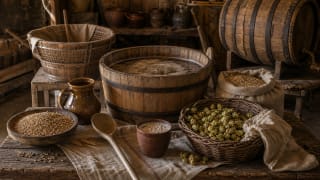
Homemade beer is a traditional Lithuanian craft, especially in the Biržai and Kupiškis regions, based on barley malt, hops, wort, and fermentation.
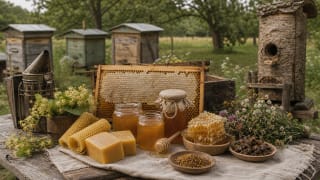
Honey and beekeeping traditions in Lithuania join hives, tree hollows, honey harvesting, combs, wax, propolis, the language of bičiulystė, mead, and candle…
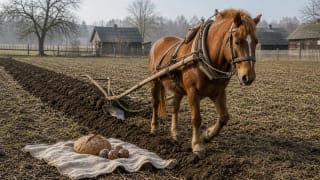
Horse ploughing is an agricultural tradition revived in the Lazdijai region, where the skill of the ploughman, the horse, the plough, a straight furrow,…
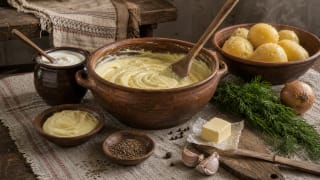
Kastinys is a hand-stirred dairy product characteristic of Samogitia, made from sour cream and butter, seasoned with salt, caraway, garlic, onion, pepper, or…
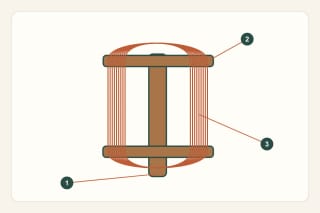
A lanktis winds yarn into a hank. Identify the yarn path and supporting arms before comparing it with a rotating warping mill.
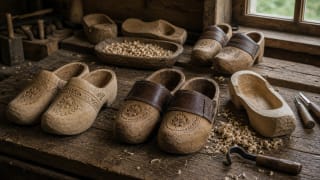
Klumpės are wooden clogs, in Lithuania especially associated with Lithuania Minor, Užnemunė, and Samogitia: clog-makers carved them from willow, alder, or other…

Mead is an alcoholic drink fermented from a honey solution, with old historical memory in Lithuania and a Stakliškės production tradition revived in the…
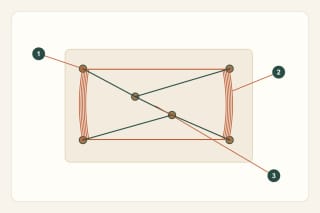
Warping equipment prepares warp threads to a planned length and preserves their order. Distinguish warping from making hanks and from weaving itself.
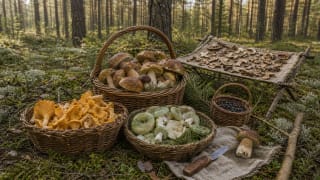
Mushrooming in Dzūkija is a whole tradition of forest livelihoods, family memory, mushroom knowledge, beliefs, and food among the forest Dzūkai.
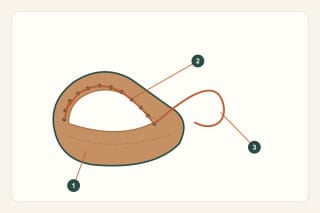
Naginės are leather footwear shaped by gathering the edges around the foot.
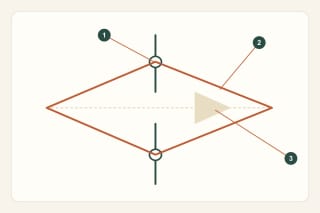
Heddles separate warp threads to form a shed. Distinguish an individual heddle, a shaft and the number of shafts named in a loom description.
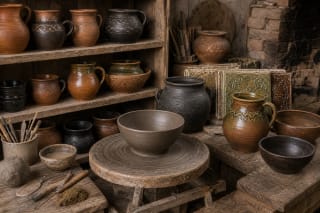
Puodininkystė is the craft of making clay vessels, while ceramics covers a wider world of clay objects: from everyday pots and jugs to black ceramics, stove…
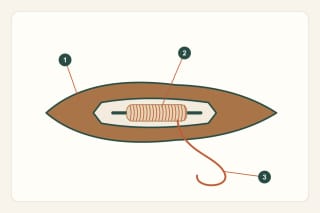
A weaving shuttle carries weft through the warp shed. Identify its body, yarn holder and working path rather than assigning a type from decoration alone.
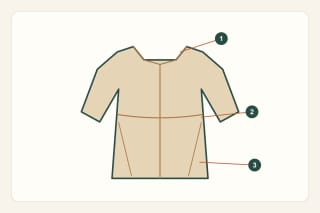
A sermėga is an outer garment made from fulled woollen cloth.
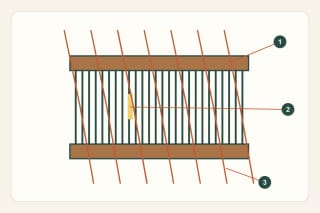
A loom reed spaces warp threads and helps beat in the weft. Read its spacing together with the threading plan and intended fabric.
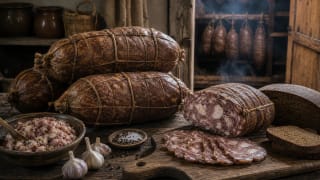
Skilandis is a Lithuanian meat product made from seasoned pork stuffed into a natural casing, pressed, smoked, dried, and matured until it becomes a dense…
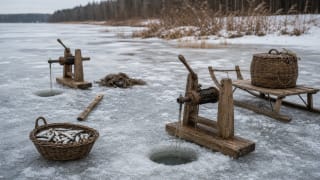
Smelt fishing by rotating bobos is an old winter fishing method in which nets are worked beneath lake ice through paired holes, especially known from eastern…
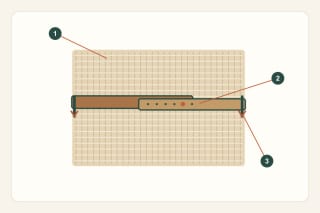
A sprąstis is a weaving temple: a tool that maintains cloth width during weaving. Its relationship to the fabric edges explains its function.
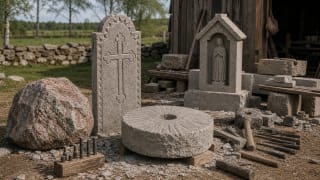
Akmenskaldystė and akmentašystė are traditional stoneworking crafts: masters split, dress, level, and ornament stone for monuments, millstones, foundations,…
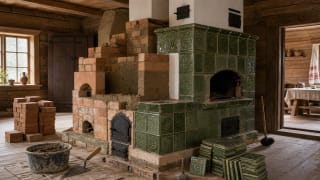
Stove building is the traditional craft of constructing and repairing stoves, joining warmth, bread baking, cooking, house layout, tiles, flues, chimneys, and…
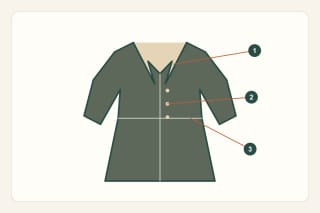
The surdutas is a fitted male garment with lapels. Its place in Lithuanian dress reveals connections between rural clothing and urban tailoring.
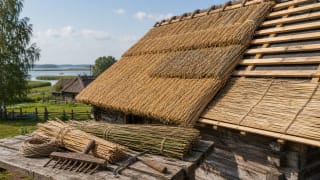
Thatching with straw and reeds is a traditional building craft in which roofs are covered with rye-straw bundles or reeds.
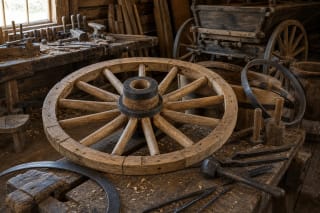
The wheelwright's craft is the making of wooden wheels and vehicles: the wheelwright made hubs, spokes, and felloes, assembled wheels, carts, sledges, and…
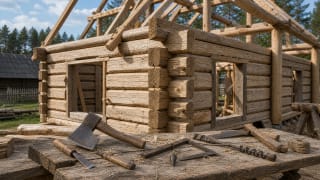
Dailidystė is the craft of traditional wooden building: the dailidė builds houses, granaries, barns, storehouses, and other rural buildings from wall logs,…
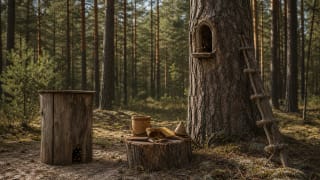
Tree beekeeping is the old craft of keeping forest bees in tree hollows, today revived and protected in the Varėna region, especially around Musteika and…
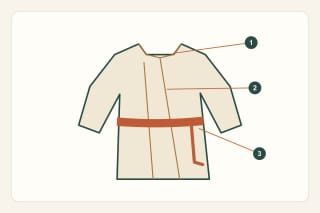
Trinyčiai are long linen or tow-linen outer garments. Distinguish the clothing name from a weave description and the textile factory that shared its name.
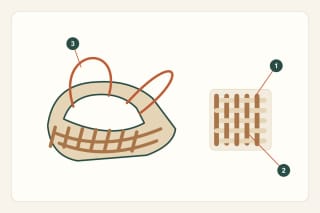
Vyžos are footwear plaited from bast strips. Their interlacing structure and ties distinguish them from gathered-leather naginės and crocheted čempės.
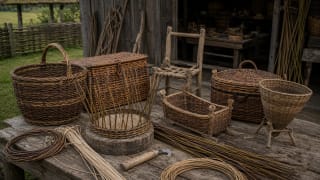
Willow weaving is a traditional plant-material craft in which baskets, hampers, seed baskets, cradles, fish traps, furniture parts, and many household objects…
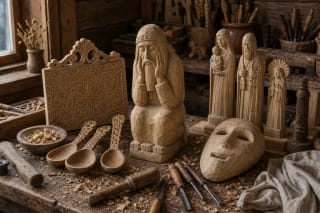
Wood carving is one of the most important fields of Lithuanian folk art, joining saints' sculptures, cross-crafting details, Užgavėnės masks, distaff ornament,…
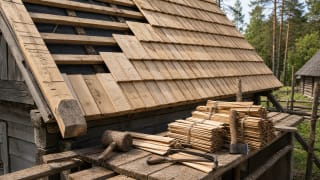
Wooden shingle roofing is a traditional wooden-building craft in which the roof is covered with overlapping malksnos, shakes, or gontai.
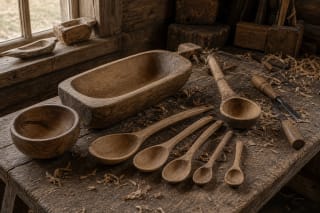
Wooden spoon making and the craft of carved wooden vessels include spoons, ladles, scoops, troughs, kneading tubs, and bowls hollowed or carved from a single…
Objects tied to feast days and custom: Vilnius palms, straw gardens, masks, and ritual things.

Koplytėlės are small Lithuanian forms of sacred architecture: wooden or masonry spaces for holy images, set on the ground, hung in trees, attached to buildings,…
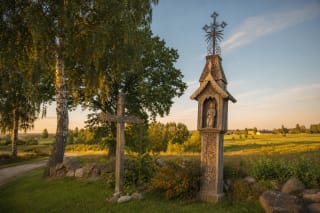
Cross-crafting is the Lithuanian tradition of creating, erecting, blessing, visiting, and safeguarding wooden crosses, koplytstulpiai, stogastulpiai, and small…
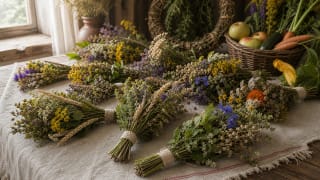
Herb bouquets are seasonal bundles of flowers, grain ears, herbs, and garden plants, especially associated with Žolinė, harvest gratitude, church blessing, and…
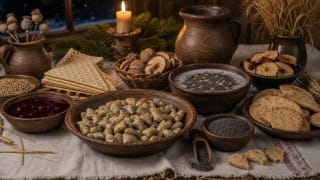
Kūčiukai are small fasting baked pieces with poppy seeds, eaten during Kūčios, often with poppy milk.
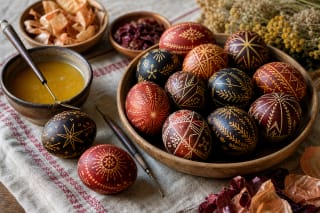
Margučiai are Lithuanian Easter eggs whose patterns are created with wax, scratching, or combinations of natural dyes, signs, family customs, and the symbolism…
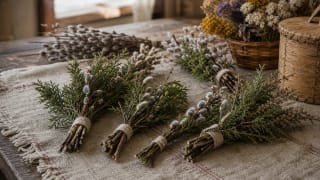
Verba binding prepares Palm Sunday bundles from juniper, willow, budding branches, dried plants, or Vilnius-region flowered forms, linking spring, church…
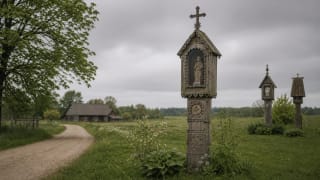
Koplytstulpiai are Lithuanian cross-crafting monuments: a pillar with a chapel-shrine, niche, or tiny house for saints' sculptures, raised along roads, at…
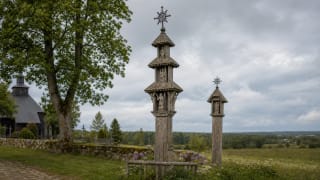
Stogastulpiai are Lithuanian roofed pillar shrines: carved wooden posts with one or more small roofs, niches, saint figures, forged tops, and a place in the…

Užgavėnės masks, also called ličynos, are grotesque, humorous, and unsettling masks worn by masqueraders to drive out winter, embody social inversion, and bring…

Vilnius verbos are distinctive Palm Sunday bundles from the Vilnius region, tied from dried flowers and grasses around a stem in roller, flat, figural, or…
Weaving and textile art: sashes, national costume, coverlets, aprons, and regional cloth work.
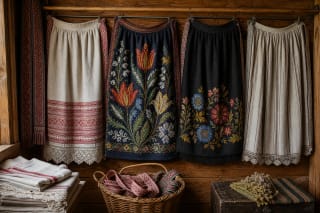
In Lithuanian traditional clothing, the apron was not only a work garment: it covered, protected, and decorated the woman's skirt, marking propriety, region,…
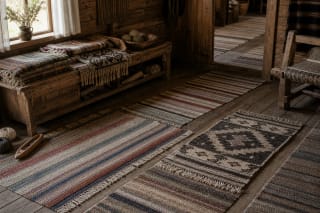
Carpets and runners in Lithuanian textile include modest woven runners for rural homes, bench and floor covers, and later workshop, manufactory, and factory…
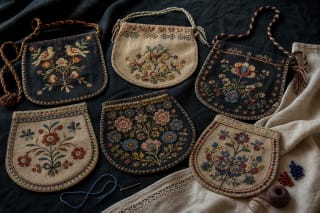
Delmonai are embroidered textile pouches worn at the waist by women of Lithuania Minor, joining a practical pocket, the identity of Lietuvininkės, family…
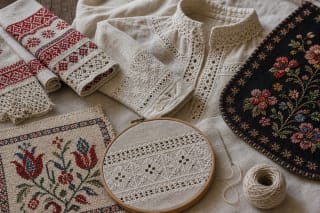
Embroidery in Lithuanian textiles decorated shirts, aprons, caps, scarves, delmonai, towels, and household cloths: white stitches on linen, openwork, red…
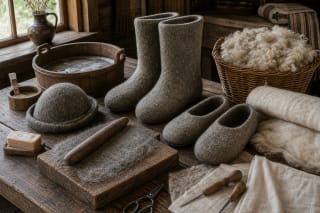
Felting turns wool fibers into dense felt through moisture, heat, friction, and pressure, producing Lithuanian felt boots, slippers, headwear, textiles, and…
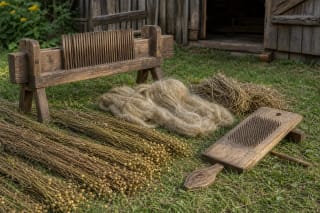
Flax processing is the chain of work by which fiber is extracted from pulled and retted flax stalks: pulling, dew retting or soaking, drying, breaking,…
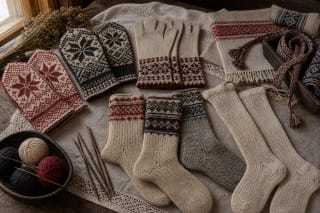
In Lithuanian traditional clothing, gloves and socks were knitted objects of warmth, work, travel, and ornament: from practical mittens to patterned gloves,…
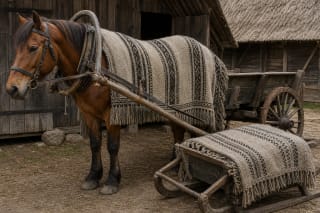
A gūnia is a thick woven cover used in Lithuanian farm life to cover a horse, wagon, sleigh, seat, or saddle; it joined warmth, protection, travel comfort, and…
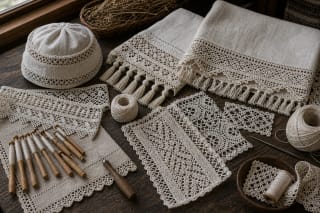
In Lithuanian textiles, lacework created openwork edges, joins, and surfaces: on towel ends, tablecloths, bonnets, scarves, pillowcases, bedspreads, and home…
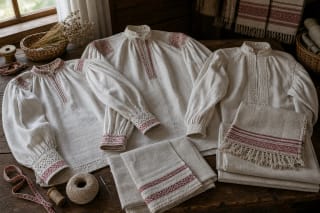
Shirts are the basic linen layer of Lithuanian traditional clothing: cut like a tunic, with shoulder pieces, gussets, collar, cuffs, and visible ornament, they…
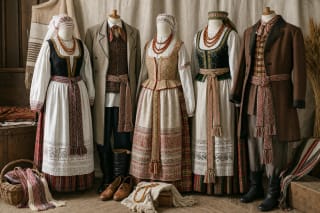
The Lithuanian national costume is a carefully assembled regional ensemble based on historical festive rural dress, textile crafts, social signs, and later…
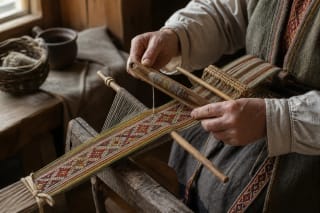
Lithuanian sashes are one of the oldest and most abundantly preserved groups of folk textiles: they girded clothing, tied everyday objects, accompanied…
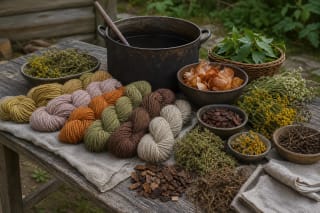
Plant dyes are a traditional way to give color to wool, linen, and hemp yarns from plant flowers, leaves, roots, mosses, tree bark, and bog or iron ore.
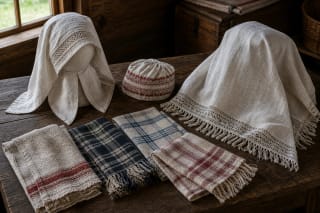
In Lithuanian traditional dress, scarves and nuometai covered the head, shoulders, and sometimes the neck, marking age, marital status, region, and festive…
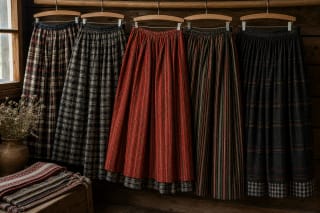
The skirt was a core part of Lithuanian women’s traditional dress: long, wide, pleated or gathered, woven from wool or mixed yarns, and coordinated with the…
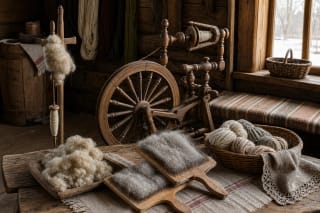
Spinning and wool carding transform washed fiber into usable thread: carding opens and aligns wool, while a spindle, distaff, or spinning wheel twists wool or…
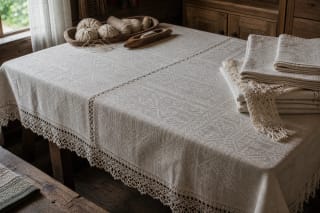
Traditional Lithuanian tablecloths were woven, sewn, and decorated pieces of household textile culture, covering everyday tables, guest tables, wedding tables,…
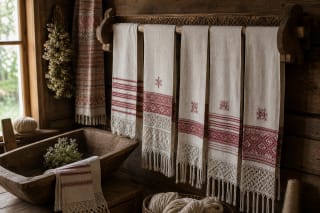
Lithuanian towels were not only objects for drying hands: long linen abrūsai with žičkai, pinikai, lace, initials, and wooden towel racks became signs of…
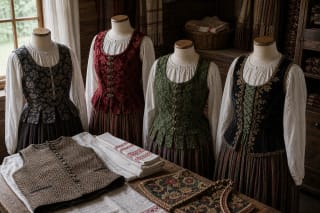
In Lithuanian national costume, the waistcoat is an upper garment that shapes the figure and signals region: women's kiklikai and men's waistcoats differed by…
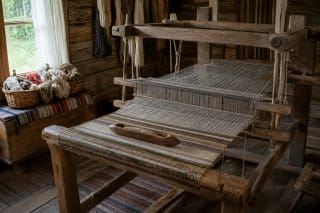
Weaving is one of the oldest and most important Lithuanian textile crafts: on looms, flax, wool, hemp, and later yarns became linen cloth, clothing, sashes,…
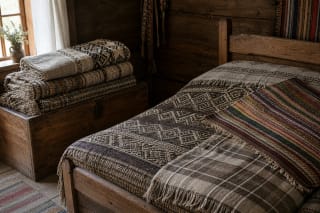
Lithuanian lovatiesės are woven bedcovers that joined everyday order, the festive look of the room, dowry value, weaving skill, and regional patterns, from…
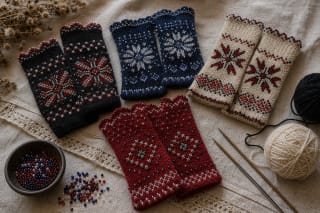
Riešinės are small knitted wrist warmers that in Lithuanian clothing protected the join between hands and shirt cuffs from cold, while bead-knitted patterns…
Technical diagrams help you recognise weave structures, loom parts, garment construction and the limits of the evidence.