Language, dialects and place names →
Song vocabulary, household terms, accented place-name forms and sources for dialect listening.

Lithuanian regions
A gateway to Lithuania through its ethnographic regions: Aukstaitija, Zemaitija, Dzukija, Suvalkija, and Lithuania Minor.
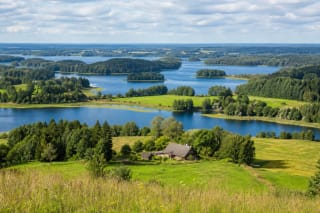
Aukštaitija is Lithuania's largest ethnographic region, stretching across the country's north-east and east. It is known for lakes, forests, hillforts, manor estates, and the sutartinės polyphonic singing tradition.
Explore the guide →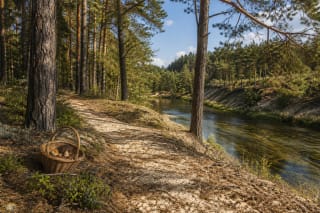
Dzūkija, also called Dainava, is Lithuania's south-eastern ethnographic region, known for pine forests, sandy soils, mushrooms, the Dzūkian dialect, the Nemunas loops, Trakai, and Dzūkija National Park.
Explore the guide →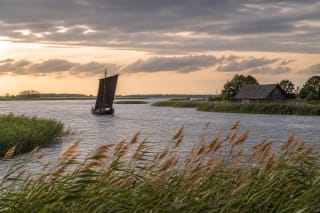
Lithuania Minor is the historic land of the Lietuvininkai and the coast in former Prussia; within Lithuania it is represented by the Klaipėda Region with the Curonian Spit, Nida, the Nemunas Delta, and Rambynas.
Explore the guide →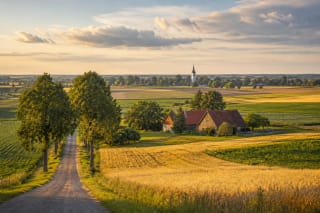
Suvalkija, also called Sūduva, is Lithuania's fertile south-western ethnographic region across the Nemunas, known for prosperous farmers, the Kapsai and Zanavykai speech groups, manor estates, and national-revival history.
Explore the guide →
Žemaitija, or Samogitia, is Lithuania's north-western ethnographic region, known for a strong dialect, cross-crafting, Žemaičių Kalvarija, lakes, and the Baltic coast.
Explore the guide →Song vocabulary, household terms, accented place-name forms and sources for dialect listening.