- Field
- Fishing traditions of the Curonian Lagoon, Pamarys, and Lithuania Minor
- Type
- traditional fishing
- Heritage status
- living tradition
- Context
- Curonian Lagoon, kurėnas, weathervane, nets, fyke nets, fish traps, longlines, reeds, fish, Pamarys, Lithuania Minor, smoked fish
Curonian Lagoon fishing, Kuršmarių fishing, Pamarys fishing, Lithuania Minor fishing
Fishing in the Curonian Lagoon forms and objects
Kurėnas: A traditional Curonian Lagoon sailing boat connected with fishing, lagoon travel, and the weathervane tradition.
Fyke Nets and Fish Traps: Stationary or set fishing gear used to guide and catch fish in shallow lagoon waters.
Nets and Longlines: Different lagoon fishing tools whose use depended on species, season, place, and rules.
Smoked Fish and Fish Soup: Food traditions that carry fishing from catch to table.
What Is Fishing in the Curonian Lagoon?
Fishing in the Curonian Lagoon is a way of life of Pamarys and Lithuania Minor: fish knowledge, shallow-water reading, boats, nets, fyke nets, fish traps, water divisions, fish smoking, and fish soup all belong together.
The Curonian Lagoon is not the open sea. It is a lagoon with its own winds, shallows, reeds, ice, fish species, and political and legal boundaries. Its fishing therefore has distinct technology.
Fishing here is very old: the traveler Wulfstan mentioned fishing in the Baltic lands in the 9th century, and Peter of Dusburg described it in the 14th-century Chronicle of the Prussian Land. Over centuries, local boats, tools, and fishing-village order developed and were inherited by the Lietuvininkai communities of Pamarys.
Today the tradition is alive but regulated. Old tools and stories explain heritage, but they do not mean that every historical method is currently allowed.
Kurėnai and Lagoon Boats
A kurėnas is a traditional Curonian Lagoon sailing boat adapted to shallow water, fishing gear, and lagoon travel. Its form, sail, and handling reflect local conditions.
Boats were not only transport. They were a fisher’s workplace, the family’s livelihood, and part of village identity. Boat care, repair, wintering, and gear storage belonged to the craft.
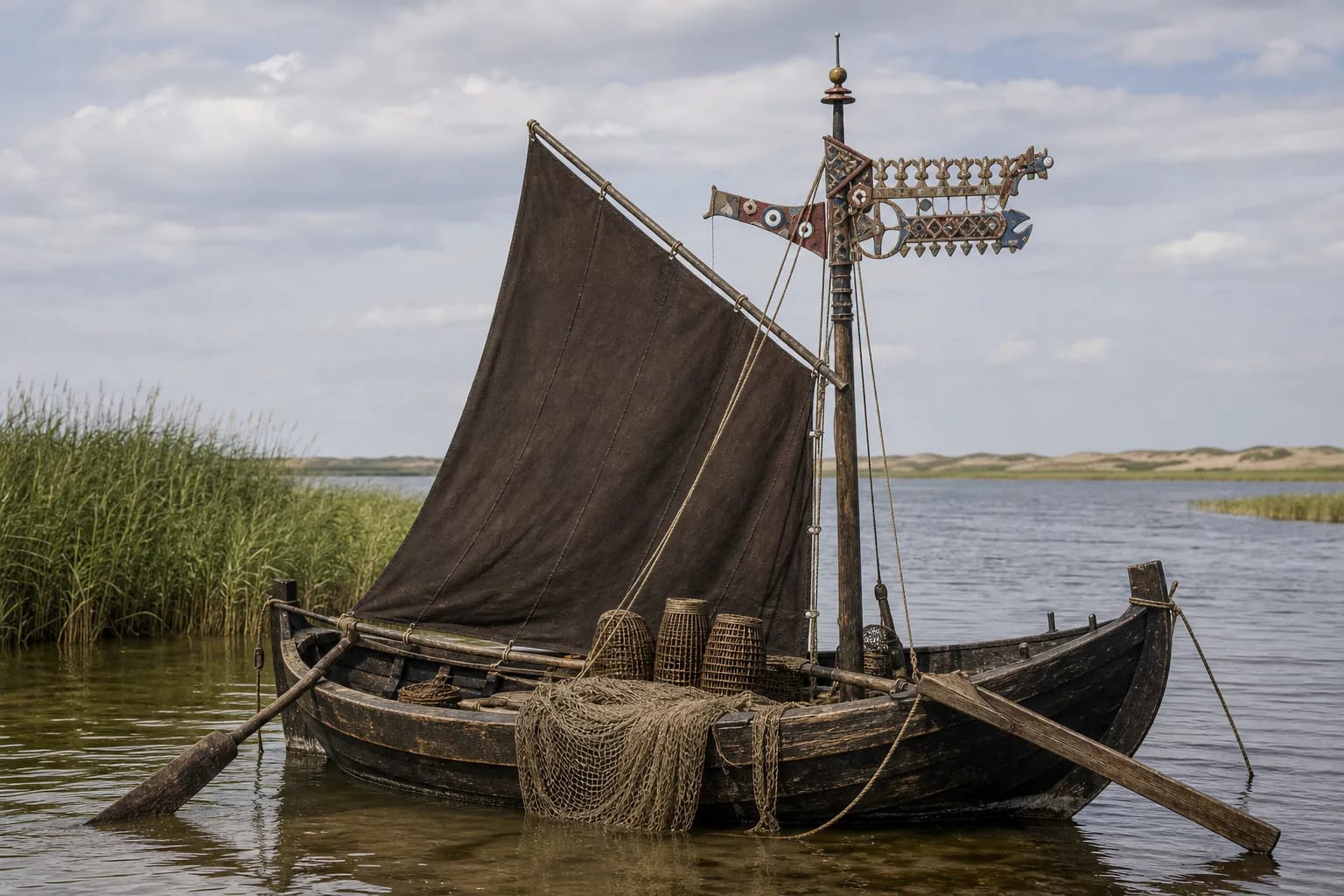
Today kurėnai are often seen as heritage and reconstruction, but their original logic was practical: fish, water, wind, nets.
Weathervanes
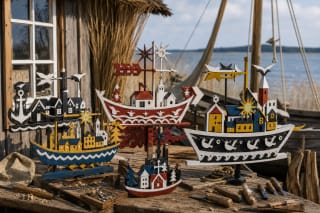
Curonian Lagoon weathervanes grew from a boat-marking system. They helped identify a fisher’s place and boat, then later became decorative symbols of Pamarys identity.
A weathervane is not only a souvenir. It belongs to the history of fishing, control, boat, wind, and place marking. It is best understood together with the lagoon fishing world.
Modern weathervanes can be folk-art objects, but their roots are practical fishers’ life.
Fyke Nets, Fish Traps, and Nets
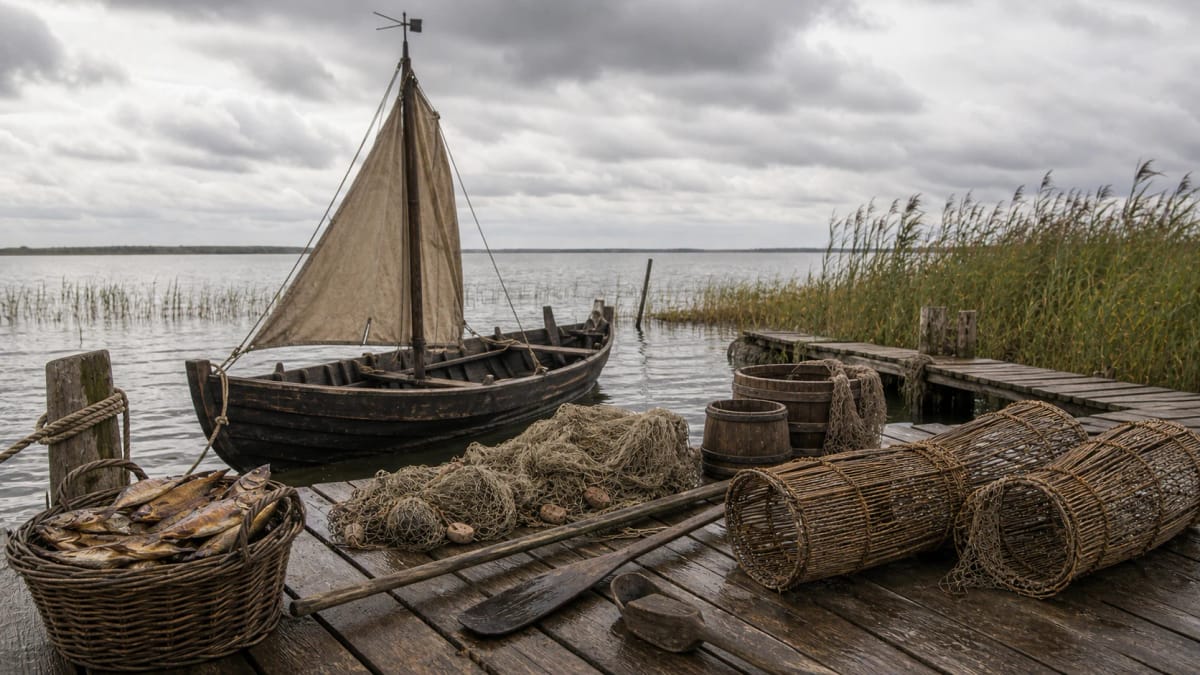
Fyke nets, fish traps, nets, longlines, and other tools were chosen according to fish, depth, season, and rules. Some tools guide fish into a trap; others work as nets or hook systems.
The tool form reflects fish behavior. Shallow water, reedbeds, and ice conditions require different solutions from open-sea fishing.
Today fishing gear is regulated by law. Heritage should be described historically and culturally without encouraging unauthorized use.
Fish and Seasons
The Curonian Lagoon held many fish: bream, pike-perch, perch, smelt, ziege, pike, eel, and other species. Abundance and species mix changed with season, migration, water condition, and human impact.
Fishing work was seasonal. Ice, spring migrations, summer winds, autumn catches, and closed periods determined when and how fishing could be done.
Today quotas, bans, and legal gear are even more important for protecting stocks.
Water Use and Rules
Historically, Curonian Lagoon fishing had rules: who could fish where, which tools were allowed, how places were marked, and how conflicts were resolved. The water was not a chaotic space.
Lithuania Minor sources show an order connected with villages, authorities, taxes, boats, and tools. This is economic and social heritage.
Modern regulation is different, but the principle remains: lagoon fishing needs rules because fish stocks and shared community space are not unlimited.
Fish on the Table
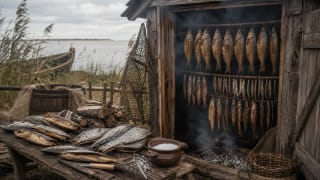
Fishing did not end when the catch was pulled out. Fish was salted, dried, smoked, boiled into fish soup, fried, or sold at market. Pamarys cuisine is strongly tied to smoked fish.
Fish smoking, fish soup, and markets turned the catch into food and income. In this way fishing became part of the region’s economy and culture.
Today smoked fish often appears in tourism, but its heritage core is fishers’ work and lagoon catch.
The Lithuania Minor Layer
Curonian Lagoon fishing belongs to Lithuania Minor culture, where Lietuvininkai, Kuršininkai, German, Lithuanian, and other local experiences met. This layer should not be erased by simplifying everything into a general Lithuanian seaside story.
Local terms, boats, fishing order, food, and weathervanes show a distinct regional identity. That identity is what makes lagoon fishing such a strong theme.
After the upheavals of the 20th century, part of the tradition was broken, but museums, local communities, and heritage practice help restore and retell it.
Responsibility Today
Any discussion of Curonian Lagoon fishing today must emphasize legality, sustainability, and safety. The lagoon is a sensitive ecosystem, and fish stocks depend on human behavior.
Learning about heritage does not allow the use of old tools without permits or fishing during closed periods. Tradition has to live together with environmental protection.
The best way to know the tradition is through museums, education, local fishers’ stories, legal events, and respectful observation of the Pamarys landscape.