- Field
- Varėna region tree beekeeping, tree hollows, geiniai, and forest bees
- Type
- traditional craft
- Heritage status
- living tradition
- Context
- Tree beekeeping, drevė, dravė, drevininkas, hollow pine, geinys, log hive, honey harvest, honeycomb, honey, wax, Musteika, Varėna, Dzūkija National Park, Čepkeliai
Drevininkystė, Forest beekeeping, Bee-tree beekeeping, Dravės
Tree Beekeeping forms and objects
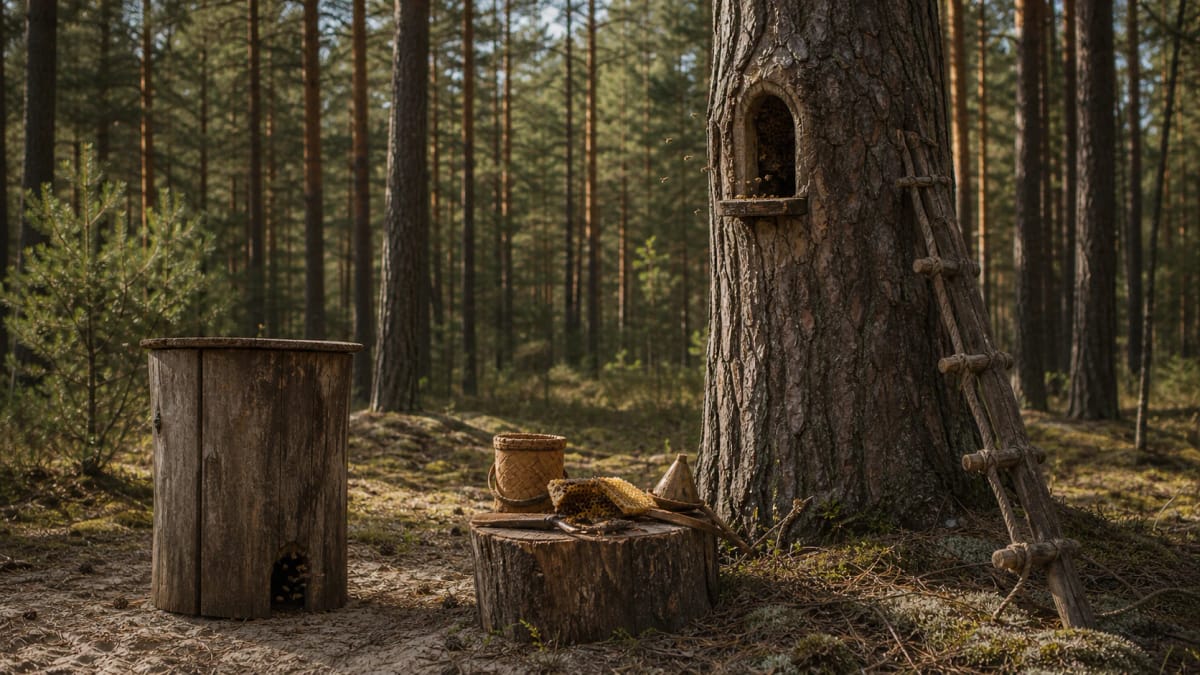
Drevė: A natural or human-made hollow in a tree where bees live and from which honey is taken.
Hollow pine: A pine with a bee hollow, often protected as an object of heritage, nature, and craft.
Geinys: A traditional climbing tool that helps the drevininkas reach a hollow high in a tree.
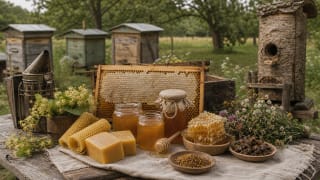
Log hive: A hive made from a tree trunk, close to the logic of tree beekeeping but standing on the ground or in a homestead setting.
What is tree beekeeping?
Tree beekeeping is the keeping of bees in tree hollows: natural or human-carved cavities, most often in pines. The drevininkas cares for the hollow, observes the bees, takes honey and wax, and must leave enough for the colony to survive.
It is an older layer of beekeeping than homestead frame hives. VLE distinguishes three stages of beekeeping: wild honey gathering, tree beekeeping in forest hollows with part of the combs taken and colonies reproducing by natural swarms, and hive beekeeping in log hives and later frame hives. The first information on beekeeping in Lithuania reaches the mid-thirteenth century. Tree beekeeping is tied to forest, rights to trees, climbing tools, protection of hollow pines, and seasonal honey harvest.
Today in Lithuania tree beekeeping is most strongly linked with the Varėna region, Musteika, Dzūkija National Park, and the Čepkeliai area, where the tradition has been revived and entered in the Intangible Cultural Heritage Inventory.
Drevė and hollow pine
A drevė is the bees' living hollow in a tree. It may be natural, but in traditional tree beekeeping people often made or adapted it so bees could live there and the beekeeper could reach the combs.
A hollow pine is not simply a tree with a hole. It is a living heritage object: tree form, height, opening, inner cavity, access, and forest surroundings determine whether bees can live there.
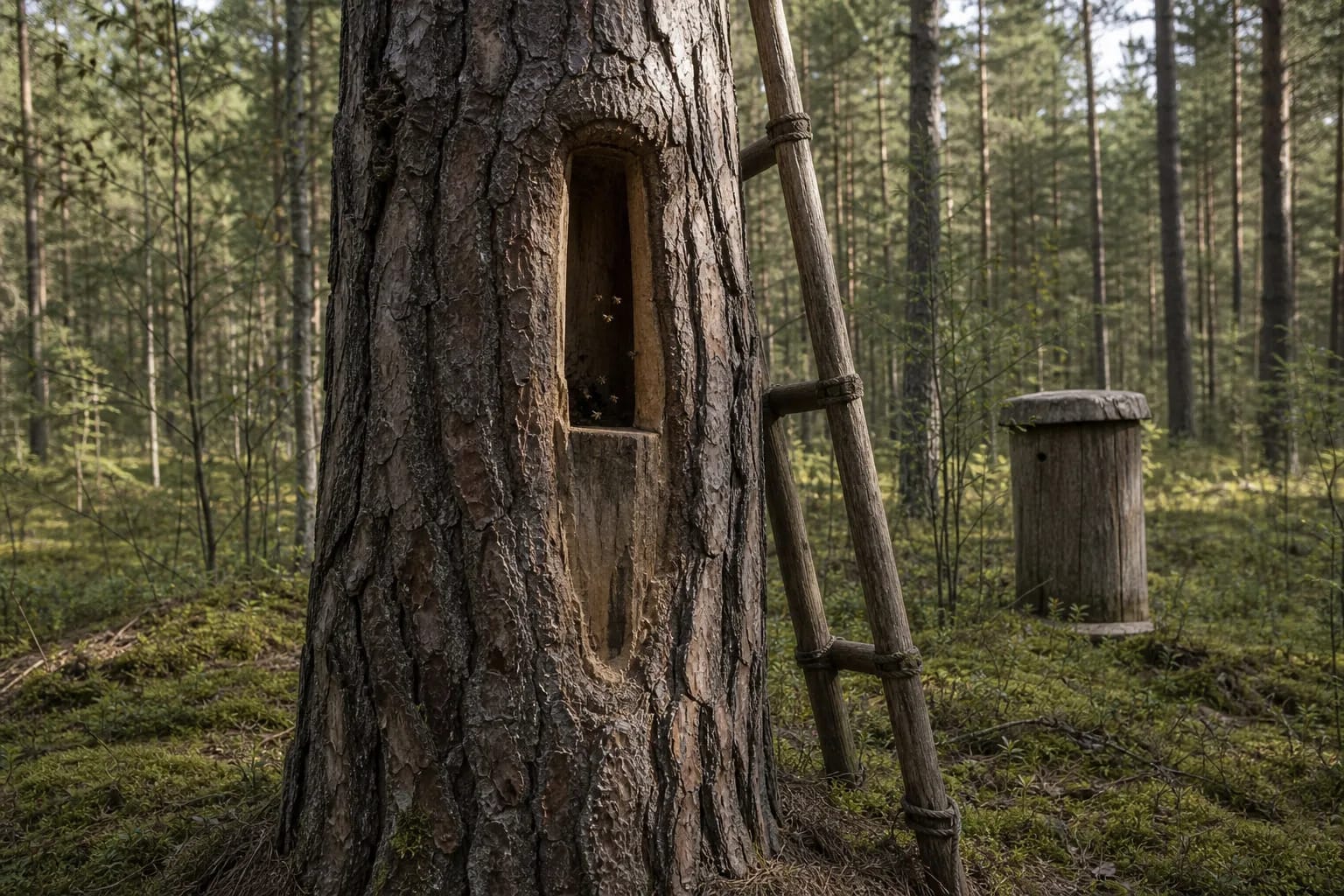
Such trees must be protected. Hollows may not be carved arbitrarily, and old pines must not be damaged. Contemporary care for the tradition has to align with nature protection.
Geinys and climbing
The geinys is a traditional tool used to reach a hollow high in a tree. It can be described as a special climbing device connected with the drevininkas' physical skill and safety.
The drevininkas had to climb, work at height, open the hollow, take part of the honey, and avoid harming the bee colony. This is the work not only of a beekeeper but of a forest master.
In contemporary education, tree climbing must be shown carefully. Heritage is not a reason to take risks without skill and safety measures.
The drevininkas
A drevininkas is the person who cares for bee hollows and bees in the forest. He must know trees, bee behavior, nectar flows, the timing of honey harvest, the condition of the hollow, and forest paths.
In the past tree beekeeping was also tied to rights: who owned the hollow, who could take honey, how hollows were marked, and how the tree was protected. This shows the craft's economic and social importance.
A good drevininkas does not take everything. He must leave food for the bees and keep the hollow alive for the next season.
Log hives
A log hive is a hive made from a tree trunk. It is close to the logic of tree beekeeping because it imitates a tree cavity, but it stands on the ground or in the homestead environment.
The move from hollows to log hives and later hives shows technological change: people moved the bees' dwelling from the forest tree closer to home and easier care.
The log hive is therefore an important intermediate object between the forest hollow and modern hive beekeeping.
Varėna, Musteika, and Dzūkija
The Varėna region, especially Musteika village and the surroundings of Dzūkija National Park, is today the most important center of memory and revival for tree beekeeping. Examples are preserved, education is organized, and tools are documented there.
The sandy pine forests of Dzūkija, the Čepkeliai bogs, old pines, and forest-life culture provide the right landscape for the tradition. It cannot simply be moved into any garden as decoration.
The Musteika exhibitions and local narratives help explain that tree beekeeping is forest heritage, not only apiary heritage.
Why did the tradition decline?
Tree beekeeping declined because of forest cutting, legal changes, changing land and forest use, the spread of more modern hives, and more convenient beekeeping technologies. VLE notes that old tree beekeeping gradually gave way to hive beekeeping.
Modern hives were more practical: bees were easier to care for, honey easier to take, colonies easier to protect, move, or manage. Tree hollows required old trees, forest rights, and more dangerous work.
Today tree beekeeping is therefore not a mass farming method but a protected, demonstrated, and revived heritage practice.
What should not be oversimplified?
Tree beekeeping should not be presented as simple tourist honey gathering. It is a complex forest craft with dangers, tree protection, and bee welfare.
It should not be claimed that it survived unchanged everywhere in Lithuania. In many places the tradition broke or declined; in the Varėna region, revival is especially important today.
Nor should paganism be over-romanticized without sources. A strong and truthful story about forest, bees, hollows, honey, and responsibility is enough.