- Field
- The Lazdijai region tradition of horse ploughing, the first furrow, ploughmen, and horse-drawn ploughs
- Type
- traditional craft
- Heritage status
- living tradition
- Context
- Horse ploughing, Lazdijai region, Veisiejai, Kailiniai village, First Furrow Festival, ploughman, single-horse plough, two-horse plough, žagrė, arklas, furrow, first furrow, Jurginės, Perkūnas, harness, fallow, harrows, rye
Horse ploughing tradition, First furrow ploughing, Ploughing with a horse, Horse-drawn ploughing
Horse Ploughing forms and objects
Ploughman: The person who controls the plough, the horse, the direction of the furrow, and the rhythm of work; a good ploughman is read from the straightness, depth, and cleanliness of the furrow.
Single-horse plough: A plough drawn by one horse, used in smaller farms and in competitions.
Two-horse plough: A plough drawn by two horses; it requires a different command of the horse pair, pace, and distribution of force.
The first furrow: The act that begins spring ploughing, associated in the Lazdijai region with Jurginės, warmer weather, the thunder of Perkūnas, and honoring the earth.
Harness: The horse's pulling equipment, which must suit the work, avoid injuring the animal, and allow the plough to be drawn evenly.
What is horse ploughing?
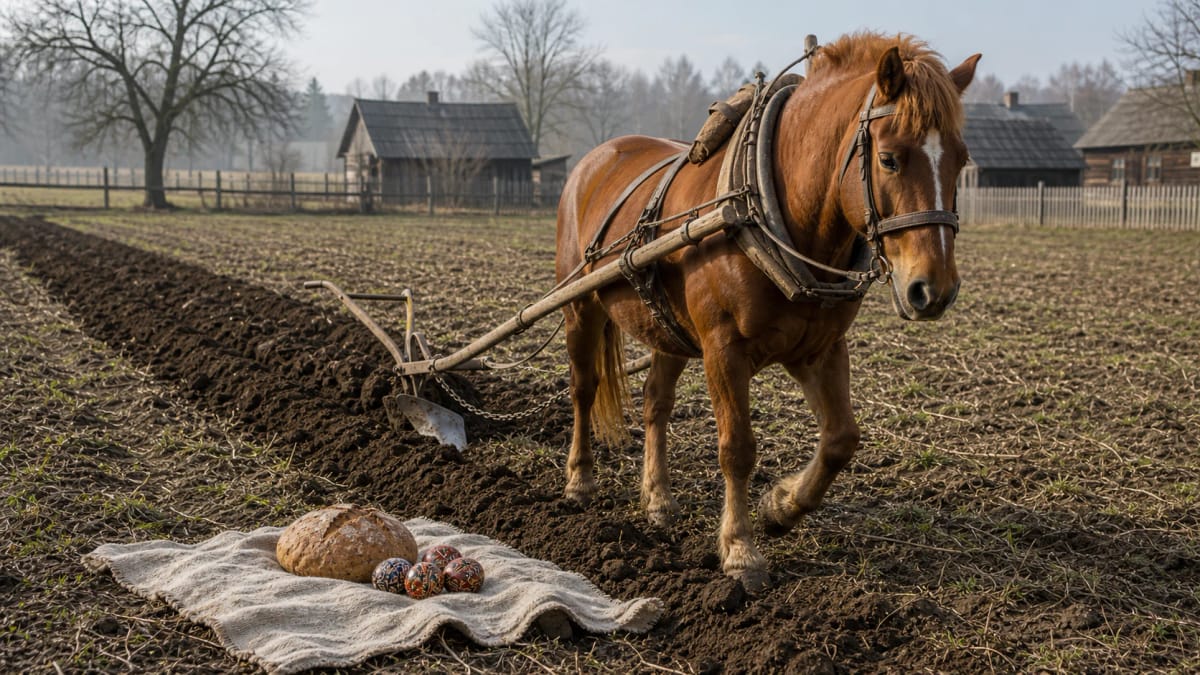
Horse ploughing is the working of soil with a horse-drawn implement: formerly an arklas or žagrė, later a plough. In today's heritage context it does not mean returning to old farming out of necessity, but preserving or reviving the skill of managing the ploughman, horse, plough, and furrow.
In the Lazdijai region this tradition is entered in the Lithuanian Intangible Cultural Heritage Inventory as a revived practice that has already disappeared in many parts of Lithuania. The Inventory emphasizes that horse-drawn ploughs are still used in small farms, while ploughmen cooperate, train, and pass on skills.
Horse ploughing should therefore be understood not as a museum of equipment but as a living relationship among body, animal, tool, and earth. The furrow is both the result of the work and the measure of mastery.
Lazdijai region and Veisiejai
The strongest contemporary center of horse ploughing is the Lazdijai region, especially Veisiejai eldership and Kailiniai village. Since 2000 the First Furrow Festival has been held here, with horse ploughing competitions, education, and community gatherings.
Reports by LRT and the Lazdijai municipality show that ploughmen of different ages gather in Veisiejai, plough with single-horse and two-horse teams, and transmit the tradition within families. Very young participants are also mentioned, learning from parents or grandparents.
This matters: the Lazdijai case is not only a performance for spectators. Competitions, communal work, and training return horse ploughing to the everyday practice of small farms, neighbors, and friends.
Ploughman, horse, and plough
Good ploughing begins with the harmony of three parts: the ploughman's hands, the horse's steadiness, and the plough's adjustment. The ploughman must hold the direction of the furrow, regulate depth, feel the soil, and prevent the horse from rushing or drifting aside.
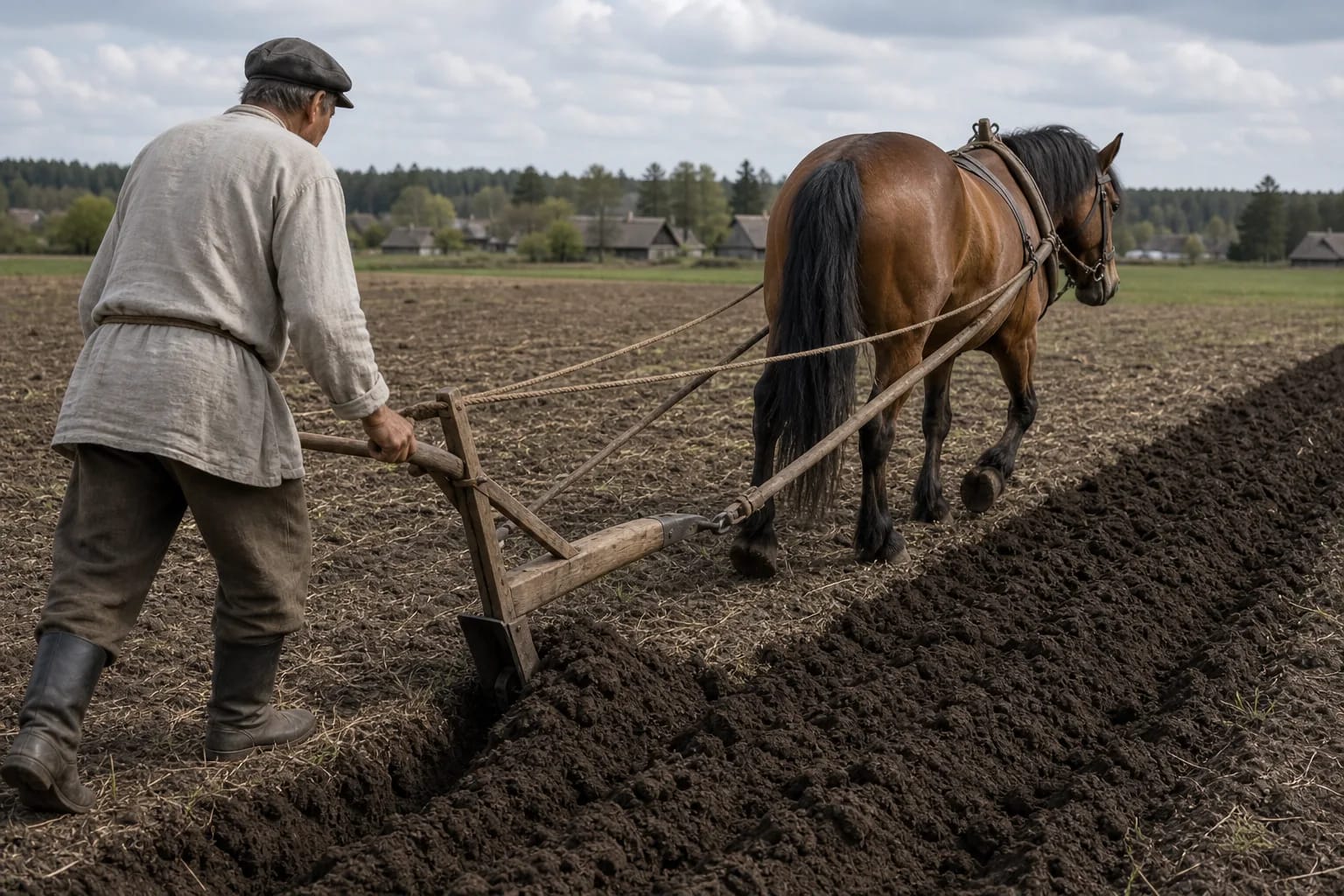
The horse is not a decorative festival attribute. It performs pulling work, so the harness must fit, commands must be clear, and the pace must be safe. A heritage description without animal welfare would be incomplete today.
The plough has to be prepared for the specific soil. Even competition rules emphasize a properly prepared plough and team, because a poor tool or bad adjustment immediately shows in the furrow.
The first furrow and Jurginės
In the Lazdijai region tradition the first furrow is ploughed after Jurginės, when the weather has warmed and, as people say, Perkūnas has thundered. This is the time when the earth is considered ready for spring work.
The Inventory mentions the custom of ploughing around Easter eggs or a slice of bread as an offering to the earth and a hope for a good harvest. VLE also describes older first-furrow customs: kissing the earth, making a protective furrow around the field, and placing bread or an egg in the first furrow.
This custom shows that ploughing was not merely mechanical work. It opened a new agricultural year, joining the person, the earth, food, the harvest, and signs from the sky.
Quality of the furrow
The quality of ploughing is not judged only by the view from a distance. Straightness, depth, width, soil turnover, gaps, burial of weeds or residues, and whether the field is ready for the next task all matter.
VLE explains that ploughing loosens, crumbles, and mixes the soil layer, destroys weeds, improves air conditions, and prepares the land for sowing. It also notes that ploughing spread in Lithuania in the first millennium after animal-drawn implements came into use; from the sixteenth to the twentieth century soil was ploughed two or three times a year: first in spring (riekimas), then at the end of June (kartojimas), and again in mid-August (trejojimas). A traditional ploughman does this not through theory but through eye, hand, and experience.
A straight furrow is therefore more than an aesthetic line. It shows the ploughman's ability to manage the animal, mouldboard, and his own body at the same time.
Single-horse and two-horse ploughing
Descriptions and competitions in Veisiejai mention single-horse and two-horse ploughs. Single-horse ploughing depends on the pull of one horse, making the horse's rhythm, commands, and the lightness of the plough especially important.
Two-horse ploughing requires control of a pair. Their step, strength, and direction must match; otherwise the plough wanders, the furrow becomes uneven, and the ploughman has to work much harder to correct mistakes.
Both forms are valuable because they show different kinds of ploughman's skill. One is not a simple copy of the other.
Fallow ploughing communal work
The Inventory mentions a fallow-ploughing communal work event held in 2023, which became a gathering of several generations of ploughmen, neighbors, and friends. Such work helps not only to show the tradition but to learn it by ploughing for real.
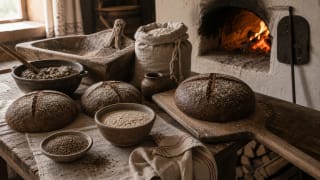
During autumn ploughing gatherings, a field may be ploughed, harrowed, and sown with rye. A loaf of bread is presented at the table, and oak wreaths honor the oldest and youngest ploughmen.
Here it is clear that tradition is alive when it has a community structure: not just a stage, but a field, food, neighborliness, tools, advice, and young learners.
How does horse ploughing differ from tractor ploughing?
A tractor can plough larger areas quickly and is the norm in modern farming. Horse ploughing is slower, more bodily, and more dependent on the horse's condition, the ploughman's experience, and the scale of a small field.
This does not mean that horse ploughing is universally better or more practical. Its heritage value lies in skill, relationship with the horse, the experience of small-scale farming, and local identity.
That is why in the Lazdijai region this tradition is protected as an ethnocultural practice, not as a replacement for mechanization.
What is easily confused?
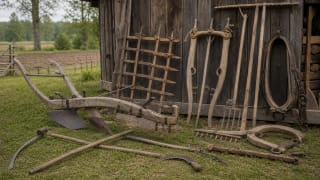
Not all old ploughing implements should be called by the same name. Arklas, žagrė, and plough have different constructions and historical layers. Local speech may vary, but technical distinctions help speak more accurately about the work.
It should also not be claimed that horse ploughing is still widespread in Lithuania today. The Inventory emphasizes its decline in many places and the importance of the Lazdijai revival.
Finally, this tradition is not only a competitive sport. Competitions are visible, but below them are family teaching, small-farm practice, communal work, customs, and care for horses.