- Field
- Lithuanian folk knitwear for hands and feet: mittens, gloves, socks, and foot wraps
- Type
- textiles
- Heritage status
- well attested
- Context
- gloves, mittens, five-finger gloves, socks, short socks, foot wraps, ties, knitting with needles, wool, national costume, Mažoji Lietuva, geometric patterns
Mittens, Five-finger gloves, Woolen socks, Short socks, Foot wraps, Leg ties
Gloves and Socks forms and objects
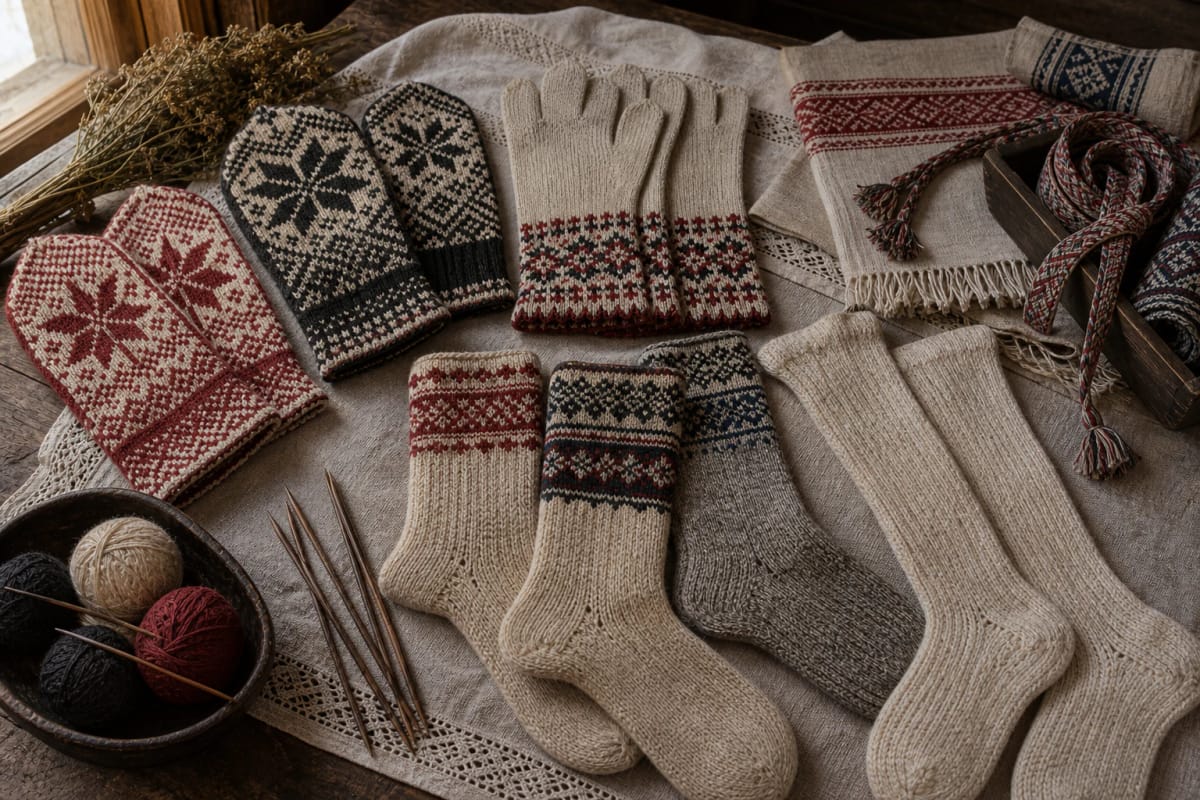
Mittens: Warm gloves with one shared space for four fingers and a separate thumb, suitable for winter, work, travel, and everyday use.
Five-finger gloves: Gloves with separate fingers, allowing more movement and often having finer, more ornate knitting.
Socks and short socks: Woolen or linen knitted items for the feet, worn with naginės, clogs, shoes, or national-costume footwear.
Foot wraps and ties: Cloth leg wrappings and cords used with traditional footwear, especially before socks became the only foot covering.
What are traditional gloves and socks?
Gloves and socks are small knitted items that protect hands and feet from cold, damp, work friction, and travel fatigue. In Lithuanian traditional clothing they functioned as both practical and decorative objects.
Gloves may be mittens or five-finger gloves. Socks may be longer, shorter, woolen, linen, patterned, or plain. Alongside them, foot wraps and ties matter as older ways of covering the foot and lower leg.
These objects look small, but their craftsmanship is large: knitting density, heel form, thumb placement, finger shaping, pattern repetition, and edge strength determine whether a knitted item is only beautiful or truly wearable.
Mittens
Mittens are the most practical for cold weather because four fingers stay together and preserve heat better. They suited sleigh travel, forest work, journeys, animal care, and everyday winter.
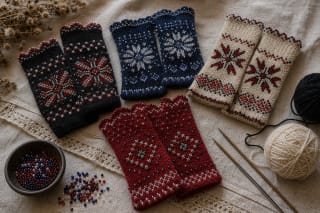
Mittens often use geometric patterns: stars, rhombi, crosses, fir trees, checks, bands, and small borders. The pattern is often made in two or more colors, so the mitten is both a warm object and a visible ornament. According to VLE, gloves in Lithuania are mentioned in sixteenth-century writings; festive mittens were fully patterned, with Žemaitian backgrounds black, grey, or white, Klaipėda-region ones usually white, and in the Klaipėda region gloves often had long wrists with knitted words or even sentences. Favorite motifs included little stars, rake motifs, and clovers, and in some places men knitted mittens too.
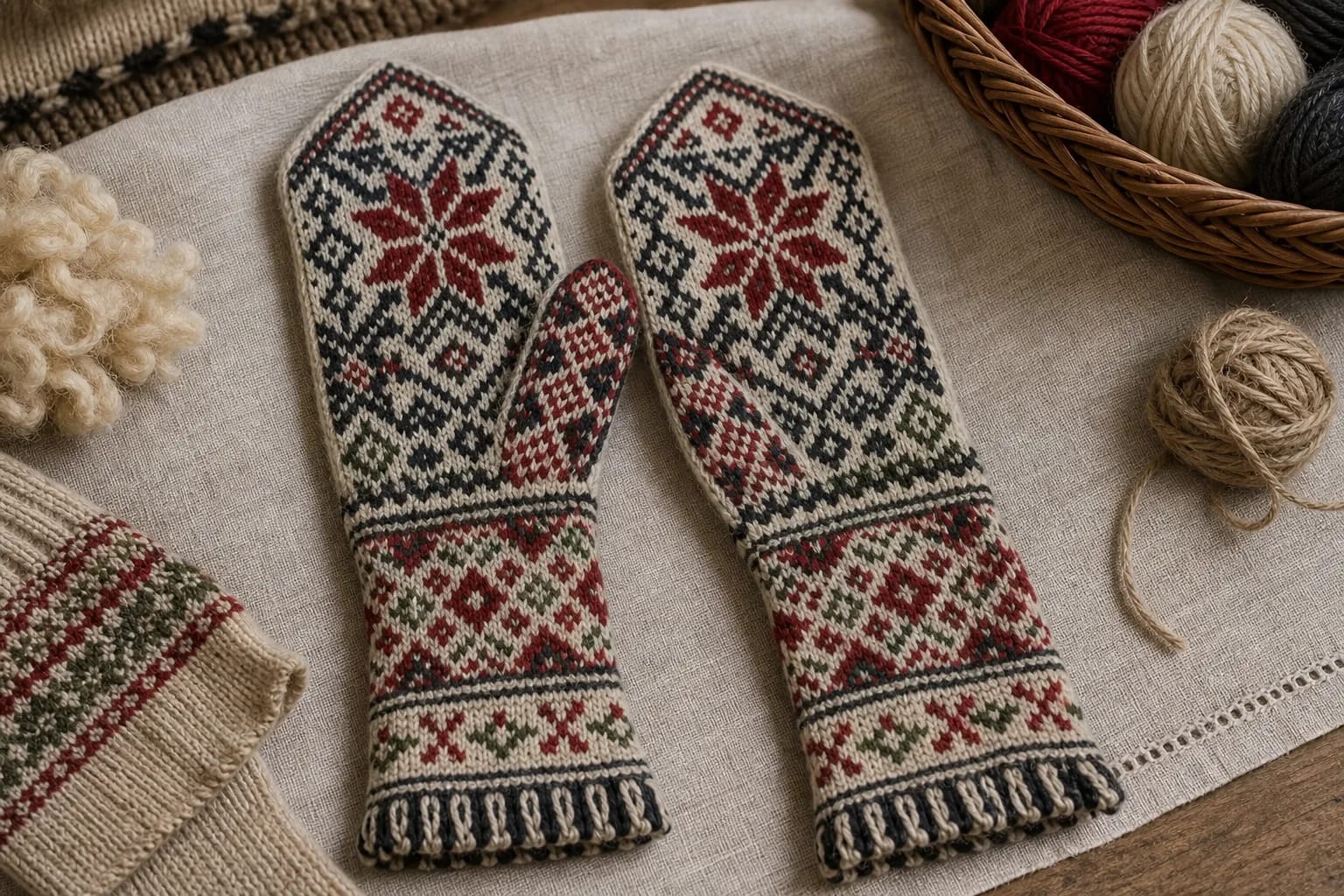
Work mittens could be thicker and simpler, while festive or gift mittens were thinner, denser, and more strongly patterned. This distinction matters when evaluating museum examples.
Five-finger gloves
Five-finger gloves cover each finger separately and therefore allow finer movements. They are more complex to knit than mittens because each finger must have the right length, width, and finish.
They often look more ornate and festive, especially when knitted from thinner yarn, with long cuffs or small colored patterns. In Mažoji Lietuva and coastal regions, sources mention thin, multicolored gloves as a significant clothing detail.
Five-finger gloves show high knitting skill. Even if the pattern is simple, a well-shaped thumb and fingers are technical signs of mastery.
Socks and short socks
Socks protected feet from cold and friction, especially when wearing naginės, clogs, shoes, or other traditional footwear. Wool was most important for winter, while linen or mixed fibers could be used for lighter or different foot coverings. VLE notes that J. Lasickis in the sixteenth century mentions Žemaitian leg coverings, socks without feet, and T. Lepner in the seventeenth century mentions woolen socks of wealthier peasants; knitted woolen socks spread widely in the nineteenth century with new footwear such as clogs, and women in Žemaitija and Užnemunė even fulled short socks to make them warmer.
Short socks or knitted coverings for the lower leg could be combined with foot wraps, ties, and footwear. It is important to see not only the sock separately, but the whole system of foot and lower leg.
In socks, patterns are often concentrated in the leg, upper part, or edges because these are visible above footwear. The heel, foot, and toe must be strong because they wear fastest.
Foot wraps and ties
Foot wraps are strips or pieces of cloth wrapped around the foot and lower leg. They were used with naginės or other footwear, especially where knitted socks were not the only or everyday form of foot covering.
Ties are cords used to fasten foot wraps or footwear to the leg. They may be simple strings, braided bands, or specially prepared ties.
This foot textile is often forgotten because the modern eye looks for socks. But in historical costume, foot wraps and ties can be as important as the skirt or shirt when accurate wearing is discussed.
Knitting technique and patterns
Gloves and socks were knitted with needles from wool, half-wool, or other yarns. The knitting must be dense enough to warm, but elastic enough not to press and to allow movement.
Patterns are created through color knitting, cables, stripes, borders, stitches, and sometimes embroidery or added decoration. Geometric motifs are especially convenient for knitting because they divide easily into stitches.
A good pattern has to fit the form. A motif that looks beautiful on a flat chart can distort at the thumb, heel, or fingers if the maker does not control construction.
Gifts, signs, and holidays
Gloves and socks were often given as gifts. Because they required much work and were practical, they suited weddings, christenings, family occasions, calendar holidays, or farewells.
A gifted pair had personal value: size was adjusted to the person, colors and patterns could be chosen for the occasion, and knitting quality showed the giver's care.
In festive costume gloves may be carried in the hand or worn outdoors. They are not always necessary indoors, but in outdoor processions, weddings, or winter events they complete the clothing.
Regional traits
Regional differences appear in colors, pattern scale, knitting density, and ways of wearing. In Aukštaitija, Dzūkija, Žemaitija, Suvalkija, and Mažoji Lietuva, knitwear fitted the general coloring of the costume.
In the clothing of Lietuvininkai of Mažoji Lietuva, gloves and socks have a distinct place because the clothing system differed from the regions of Greater Lithuania. Thinner, more colorful, or differently worn details may have a clear Klaipėda-region context.
Still, every pattern should not automatically be assigned to one region. The best basis is a museum object with a place description, family history, or researcher's comment.
How to recognize a good pair
Good gloves have an accurate thumb, neat edge, even stitch density, clear pattern repeat, and comfortable size. They should warm without overheating or restricting the hand.
Good socks have a strong heel, a foot that is not too thick, an elastic leg, and suitable length. If they are worn with national costume, they must fit the footwear and visible lower leg.
In reconstructions it is important to ask whether the knitted item is based on a concrete example or is a contemporary interpretation. Both may be valuable, but their aims differ.