- Field
- Lithuanian clay objects, potters, and traditional ceramics
- Type
- traditional craft
- Heritage status
- well attested
- Context
- Clay pots, jugs, bowls, wheel-thrown and hand-built vessels, black ceramics, glazed ceramics, stove tiles, clay whistles, the potter's wheel, kiln, and regional ceramic centers
Puodininkystė, Lithuanian ceramics, Folk ceramics, Black ceramics, Clay objects
Pottery and Ceramics forms and objects
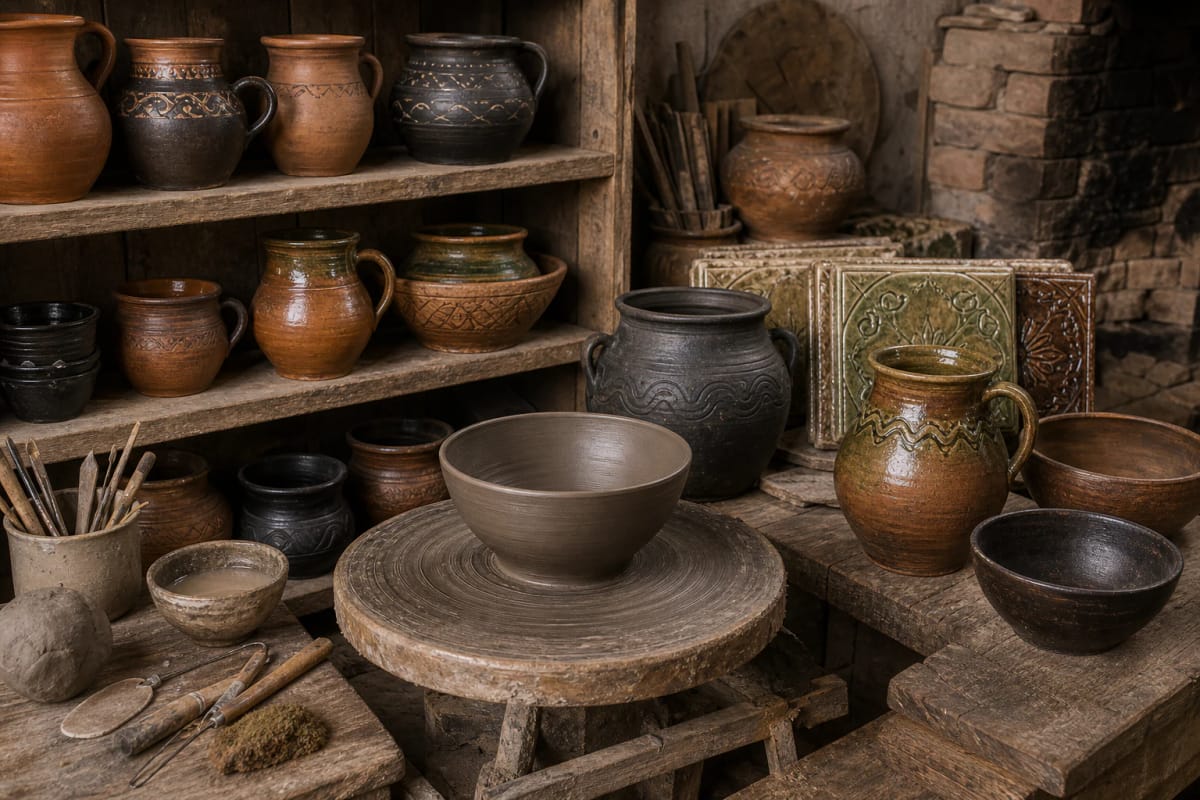
Clay pots and vessels: Everyday clay vessels for cooking, fermenting, storing, or carrying food. Their form depended on purpose, clay, and the potter's local school.
Jugs, bowls, and plates: Vessels used for water, milk, beer, soup, porridge, serving, or the festive table, often glazed or decorated with incised ornament.
Black ceramics: Ceramics blackened during firing with limited oxygen, marked by a dark surface, an archaic appearance, and a strong tactile character.
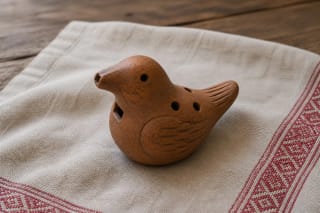
Stove tiles and decorative ceramics: Stove tiles, tiles, whistles, toys, vases, decorative plaques, and other objects show that ceramics is broader than the making of pots.
What Is Puodininkystė?
Puodininkystė is the craft of making clay vessels: clay is prepared, a vessel is hand-built or thrown on the wheel, dried, fired, sometimes glazed, and fired again. The potter creates an object that has to be both beautiful and reliable in daily use.
Ceramics is a broader word. It includes not only pots but also stove tiles, tiles, small sculptures, whistles, vases, decorative plaques, professional ceramics, and contemporary clay art. Pottery is therefore part of ceramics, but not all ceramics is pottery.
In Lithuanian culture the clay vessel long belonged to household everyday life: people cooked, stored, fermented, carried, poured, and served in it. For that reason ceramics should be understood not only as exhibition folk art, but as a craft of food, earth, fire, and the market.
How Old Is Ceramics in Lithuania?
The history of clay vessels in the territory of Lithuania reaches back to the Neolithic. Early vessels were hand-built, and their surfaces were decorated with impressions, incisions, and other patterns. These objects show that clay was one of the earliest materials people learned to control.
Later periods changed vessel forms, firing methods, surface treatment, decoration, and purpose. The Universal Lithuanian Encyclopedia notes that the potter's wheel, called a stovylas, began to be used in Lithuania in the tenth century, when the potter's craft also emerged; in towns the kick wheel appeared in the thirteenth century, and in the sixteenth century potters began to form guilds. Wheel throwing, glazes, stove tiles, urban workshops, trade, and rural potters serving local markets all spread over time.
By the nineteenth and twentieth centuries, folk pottery had clear regional centers, families of masters, and markets. In some places potters traveled to fairs; elsewhere workshops stood near clay deposits or in small towns where everyday vessels were in demand.
Clay: From Raw Material to Prepared Body
A good vessel begins with clay. Clay is dug, cleaned, soaked, kneaded, and sometimes mixed with temper so that it cracks less while drying and firing. Even the most graceful wheel throwing means little if the clay has been prepared badly.
A potter has to feel the moisture of the material. Clay that is too wet loses its shape; clay that is too dry breaks and cracks. Hands, wheel, water, and tools are constantly adjusted so that the vessel wall is thin enough but not weak.
This material side is often invisible in the finished object, but it is the foundation of mastery. In Lithuanian pottery, clay is not a neutral mass: it is tied to local earth, water, labor, and the kiln.
Hand-Building, Wheel Throwing, and Forming
The earliest vessels were hand-built. Hand-building allows thicker walls, sculptural forms, toys, and whistles. Later, the potter's wheel made it possible to create more symmetrical, thinner vessels faster.
Wheel throwing requires body rhythm. The clay must be centered, the hands must press evenly, and the wheel must turn at the right speed. A single hand movement can determine whether a bowl opens well, whether a jug is proportionate, or whether the neck of a pot breaks.
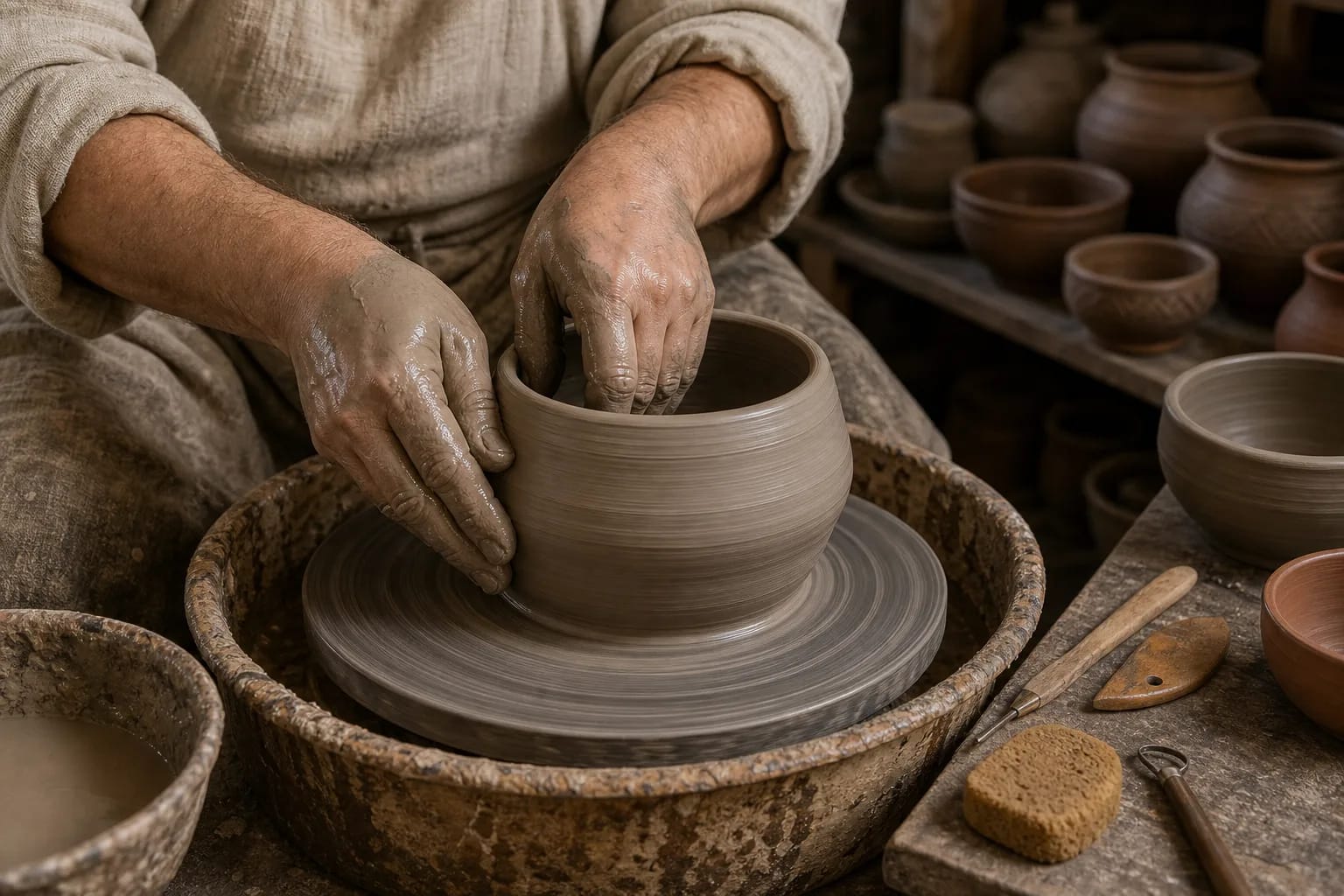
After forming, the vessel is finished: removed from the wheel, smoothed, fitted with a handle, incised with ornament, coated with engobe or glaze. Each stage has to be done at the right point of dryness.
Firing and Black Ceramics
Firing turns fragile clay into ceramics. A drying vessel can still be returned to the clay body, but once fired it becomes hard, resonant, and irreversible. The kiln is therefore the critical stage of pottery.
Black ceramics is produced by firing with little or no oxygen. Smoke and carbon alter the surface, so the vessel turns black. Such ceramics looks archaic, but it also requires precise control of the firing.
Today black ceramics is often perceived as a strong sign of Lithuanian folk art. Still, it should be explained through technology, not color alone: the essential points are reduction firing, kiln control, and the reaction of the clay surface.
Glazes, Engobes, and Stove Tiles
Glazed ceramics gives vessels sheen, color, and a degree of protection from liquids. Folk potters used brown, green, yellowish, black, and other glazes depending on materials, kiln, and period.
Engobe is a more liquid clay slip used to cover a surface before firing. It can change color, carry a painted pattern, or prepare a ground. Incised, wavy, toothed, and plant ornaments help a pot become not only a tool but a decorated household object.
Stove tiles show that ceramics is not limited to vessels. They heated homes, decorated interiors, and record the influence of urban and manor culture. Ornamented tile surfaces form a separate chapter in ceramic history.
Traditional Clay Objects
In the world of pottery, the main forms are clay pots, cooking pots, jugs, bowls, plates, bottles, storage vessels, fermenting vessels, vases, and cups. Each form grew from a need: to cook, pour, store, cool, carry, or serve.
The ceramic field is wider: whistles, toys, figurines, urns, stove tiles, tiles, decorative plaques, and sculptures. Clay whistles, for example, connect pottery with children's toys and folk musical instruments.
A good article about ceramics should not collapse all these objects onto one shelf. A pot, a stove tile, and a whistle may all be made of clay, but their purpose, form, and symbolic weight differ.
Pottery Centers in Lithuania
Pottery lived in many places in Lithuania, but some centers are mentioned especially often: towns in Žemaitija, Viekšniai, Kuršėnai, Alsėdžiai, Mažeikiai, Biržai, Kupiškis, Skriaudžiai, Šakiai, Kaunas, and Vilnius. According to the Universal Lithuanian Encyclopedia, pottery was most developed in Žemaitija; in Viekšniai in the 1920s and 1930s about seventeen craftsmen worked, the potters J. Strikys from Gečaičiai and L. Voveris were well known, and in Kuršėnai simple, natural pottery flourished because of red clay deposits. The classic study of this field is Juozas Kudirka's “Lietuvos puodžiai ir puodai” (1973).
Kuršėnai is associated with clay and potters' tradition, while the Vytautas Valiušis Ceramics Museum in Leliūnai is one of the most important contemporary points of pottery memory. Such places allow visitors to see not only individual vessels but also continuity of mastery.
Regionality should be explained carefully. Not every pattern or glaze color belongs to one place only. It is better to rely on specific museum examples, biographies of masters, and workshop histories.
Are Traditional Clay Vessels Safe for Food?
Historically clay vessels were used for food, but today old or unknown vessels should be evaluated cautiously. Glaze composition, firing temperature, porosity, and surface condition determine whether a vessel is safe to use.
Old museum or inherited vessels are better treated as decorative unless their glaze composition is known. Contemporary ceramics intended for food must be made with appropriate glazes and fired so that they withstand use.
This does not diminish traditional ceramics. It helps understand it accurately: some vessels are for daily use, others for memory, display, or education. Each has its own life.