- Field
- Traditional Lithuanian knowledge of herbs, medicinal plants, drying, and household use
- Type
- traditional knowledge
- Heritage status
- living tradition
- Context
- Herbs, medicinal plants, chamomile, thyme, mint, lemon balm, yarrow, linden, drying, tea, infusion, meadows
Medicinal plant gathering, Knowledge of herbs, Traditional herbalism, Medicinal-plant craft
Herbalism forms and objects
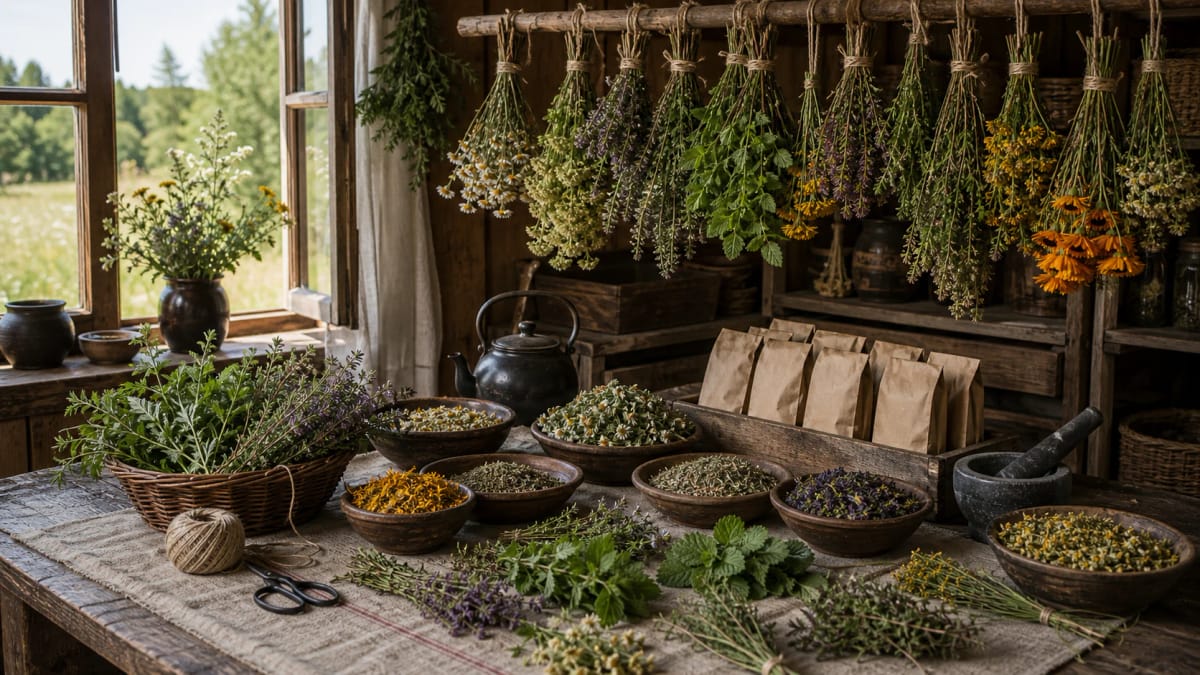
Dried Herbs: Gathered, bundled or spread, and properly dried plant parts kept for tea, scent, and traditional household use.
Herbal Teas and Infusions: Drinks made from dried or fresh plants, whose traditional use should be separated from medical recommendations.
Ointments, Balms, and Tinctures: More complex herbal preparations common in national heritage and phytotherapy contexts, requiring caution.
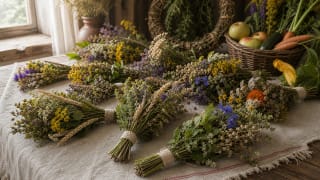
Herb Bouquets and Seasonal Bundles: Žolinė, Rasos, or other seasonal plant bundles where plant knowledge meets ritual tradition.
What Is Herbalism?
Herbalism is the tradition of identifying, gathering, drying, storing, and preparing plants. It includes medicinal herbs, aromatic herbs, culinary plants, herb bouquets, teas, infusions, decoctions, ointments, balms, and other plant preparations.
In Lithuania it lives between folk-medicine memory, food and scent culture, Žolinė and Rasos plants, modern phytotherapy, and certified national heritage.
The essential boundary is clear: traditional plant knowledge does not automatically authorize treatment claims. Plants can be strong, useful, poisonous, or unsuitable for a particular person.
Plant Identification
Herbalism begins with identification. Chamomile, thyme, mint, lemon balm, yarrow, linden, valerian, calendula, St. John’s wort, and nettle have different habitats, gathering times, and usable parts.
A name alone is not enough. Similar species must be distinguished, protected species avoided, polluted places rejected, and personal suitability considered. About 12,000 medicinal plant species are known worldwide, and about 800 wild and cultivated species are used for medicinal purposes in Lithuania.
An experienced herbalist reads a meadow like a calendar: what is just beginning to flower, what has already passed, where gathering is clean, and where plants should be left alone.
What to Gather and When
Different plant parts are gathered at different times: flowers at the beginning or height of bloom, leaves when strong and healthy, roots in another season, and seeds when mature. One date does not suit every plant.
Gathering should be moderate. Part of the plant is left, habitats are not damaged, protected species are not picked, and a whole patch is not stripped. The tradition must keep the meadow alive.
Place matters as well. Roadsides, sprayed fields, industrial areas, and polluted banks are unsuitable for gathering herbs.
Drying and Storage
Drying determines whether herbs keep scent, color, and form. They are dried in shade, with airflow, in thin layers or bundles, protected from mold and strong direct sun.
Plants that dry too slowly can mold; plants dried too hot can lose aroma. The drying place must be clean, dry, and protected from dust.
Stored plants should be kept clearly separated, and labels are not an enemy of tradition. They preserve memory of what was gathered, when, and where.
Tea, Infusion, and Decoction
In everyday language many preparations are called tea, but forms differ. An infusion is usually made by pouring hot water over plants and steeping them, while a decoction is made by boiling the plant for a shorter or longer time. A tincture is another form again.
No dosages are given here. Different plants act differently, and some interact with medicines or are unsuitable for pregnant people, children, or people with particular conditions.
Culturally, the forms and terms matter, but practical use requires responsible modern knowledge.
Herbalism and Žolinė
Žolinė is the clearest calendar feast where plant knowledge becomes a public ritual object. Field herbs, garden flowers, grain ears, medicinal plants, and harvest signs meet in the bouquet.

Herbalism does not end with Žolinė. Plants are gathered from spring to autumn depending on species, while winter is a time of storage, teas, and memory.
Rasos, Pentecost, Žolinė, and other points in the year help show herbalism as seasonal work rather than random gathering.
National Heritage and Living Masters
In contemporary Lithuania, herbalism appears in national-heritage catalogs, education, craft centers, and herbalists’ work. Certified products may include teas, herbal blends, ointments, and other preparations.
Certification does not mean every health claim is true. It more often recognizes traditional technology, raw material, production method, or craftsmanship.
Living masters matter because herbalism passes through eye, nose, hand, and place: what a ready blossom looks like, how a well-dried plant smells, and when a bundle is ready to store.
Common Mistakes and Risks
The first mistake is assuming that natural always means safe. Some plants are poisonous, some trigger allergies, some interact with medicines, and some are unsuitable for certain people.
The second mistake is gathering everything everywhere. Protected species, protected areas, polluted sites, and private land must be respected.
The third mistake is turning herbalism into mystical decoration. The tradition has symbolism, but its strength lies in practical plant knowledge, timing, drying, and caution.