- Field
- Lithuanian rye bread, sourdough, scald, and bread-oven craft
- Type
- traditional craft
- Heritage status
- living tradition
- Context
- Bread baking, rye bread, black bread, sourdough, scald, malt, caraway, dough trough, bread oven, peel, loaf, hearth bread, Daujėnų naminė duona, PGI
Rye bread baking, Homemade bread baking, Black bread baking, Duonkepystė
Bread Baking forms and objects
Rye sourdough bread: Dark bread baked from rye flour, sourdough, water, salt, and often caraway, long the basic food of the Lithuanian countryside.
Scalded bread: Bread for which part of the rye flour is scalded with hot water, sometimes with malt, to create a sweeter, richer flavor and moister crumb.
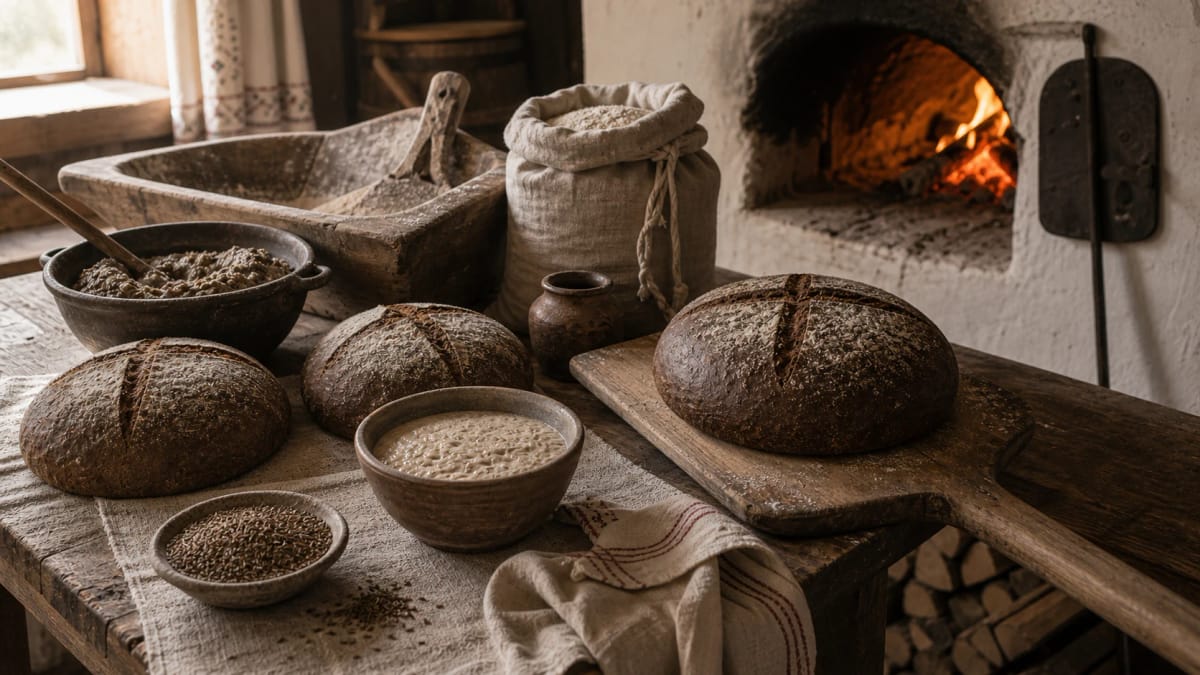
Hearth bread: A loaf baked directly on the hot oven floor, pushed in with a peel and marked by the baker's hand.
Daujėnų naminė duona: A northern Lithuanian rye bread tradition from the Daujėnai area, registered as a European Union protected geographical indication.
What is bread baking?
In Lithuania, bread baking first of all means baking rye, sourdough, often dark bread. It is not only a recipe but a craft of flour, sourdough, scald, oven, baking time, household rhythm, and respect for bread.
Rye bread was long the basic food of the village. It accompanied everyday work, travel, feasts, funerals, welcoming a guest, and the family table. According to VLE, rye bread was the main food in Lithuanian villages until the mid-twentieth century; during serfdom peasants baked so-called bėralinė, a rough bread from unwinnowed grain flour, while pure rye bread was baked only for feasts.
Today traditional bread lives through home bakers, certified products, small bakeries, museum education, and protected geographical indications such as Daujėnų naminė duona.
Rye, sourdough, and scald
The basis of Lithuanian bread is rye. Rye flour gives a darker crumb, more sour flavor, and different dough behavior than wheat flour. Rye bread therefore needs sourdough and patience.
Sourdough is the living fermenting part of the dough. It gives the bread acidity, aroma, lightness, and longer keeping quality. In the past a family sourdough could be preserved as continuity of the home, with part of one bake saved for the next.
A scald is made by pouring hot water over part of the flour, often together with malt. It helps create a sweeter, richer taste and a moister crumb. Not all bread is scalded, but the scald is an important technological layer in Lithuanian bread.
Dough trough and dough work
The duonkubilis, or bread trough, was an important baking vessel. Dough was mixed, fermented, and kneaded in it. The wood, cleanliness of the trough, remaining sourdough, and temperature affected dough quality.
Kneading rye dough is demanding because it is stickier and behaves differently from wheat dough. The baker must feel when the dough is fermented enough, whether it needs more flour, whether the scald has combined, and whether the loaf will hold its shape.
Loaves are shaped by hand and sometimes marked with a cross, impressions, or other signs. The cross on the loaf can be both a practical cut and a blessing sign.
The bread oven
The bread oven is the heart of bread baking. It must be properly heated, cleared of embers and ash, and its floor must hold heat. Even good dough will bake poorly if the oven is too cold or too hot.
The loaf is pushed into the oven with a peel, a long wooden bread shovel. According to VLE, maple, horseradish, or sweet-flag leaves were often laid on the peel or flour was sprinkled; bread was baked in ember-heated ovens, where stored heat rather than flame bakes it. Fine sifted-flour bread was baked only for major feasts.
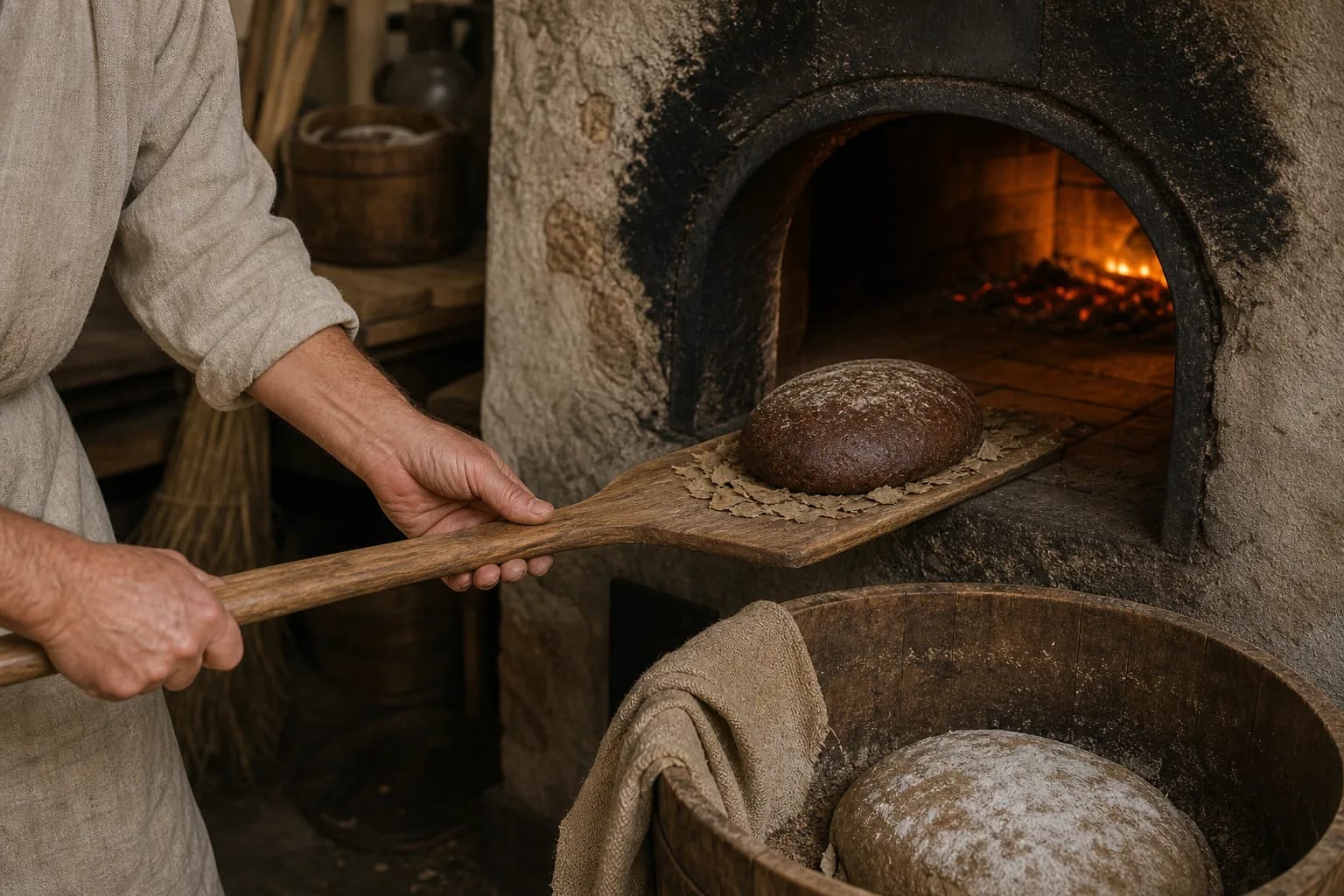
The bread oven joined food and household architecture. It heated, baked, dried, and sometimes became the center of a sleeping or work place. Bread baking is therefore inseparable from stove building and domestic space.
Caraway, malt, and flavor
Caraway is one of the most recognizable seasonings of Lithuanian rye bread. It gives aroma, though not every bread must contain it. Flavor depends on flour, sourdough, scald, salt, malt, and baking.
Malt can add sweetness, darker color, and richness. It is especially important in scalded bread. Yet malt has a technological logic, not only the role of a decorative flavor addition.
Good bread should taste neither only sour nor only sweet. Rye depth, living sourdough, oven crust, and slow baking time have to meet in it.
Respect for bread
Bread received special respect in Lithuania. Bread that fell could be picked up, kissed, or apologized to. A cross was marked on the loaf, bread was placed in an honorable place on the table, and it was shared with a guest.
These customs show that bread was considered more than food. It was a sign of work, land, God's blessing, family, and survival. Waste or disrespect toward bread was therefore seen as a bad sign.
Today these customs can be understood as a cultural ethic: food is not self-evident, and bread remains one of the strongest symbols of respect for everyday life. Pranė Dundulienė described bread's place in Lithuanian household life and customs in Duona Lietuvių buityje ir papročiuose (1989).
Daujėnų naminė duona
Daujėnų naminė duona is a northern Lithuanian bread tradition protected as a geographical indication. It shows how a local baking practice can have a clear link with place, reputation, and transmitted production method.
It is important not to merge all Lithuanian bread with Daujėnai bread. The Daujėnai name applies to a specific protected tradition, while the field of Lithuanian rye bread is much wider.
This example is useful because it allows the bread craft to be discussed precisely, not only romantically: name, place, process, reputation, and legal protection are part of culture.
Bread today
Today bread baking moves between the home kitchen, small bakeries, industry, and heritage education. Not every shop bread is traditional, but a traditional principle can survive in modern baking when sourdough, rye flavor, and process are respected.
Home bakers often return to sourdough, scalds, cast-iron pots, or modern ovens. This is not the same as baking in a masonry bread oven, but it can continue an understanding of time, fermentation, and material.
The best path for a contemporary reader is to distinguish the principles of tradition from nostalgia. What matters is not only an old tool, but respect for bread, process, grain, and the eater.