- Field
- Thick woven covers for horses, wagons, sleighs, and farm textile
- Type
- textile
- Heritage status
- well attested
- Context
- Gūnios, horse gūnia, wagon cover, sleigh cover, saddle cloth, woolen fabrics, linen and hemp covers, farm textile, weaving
Horse gūnia, Wagon gūnia, Sleigh cover, Saddle cloth, Farm cover
Gūnios forms and objects
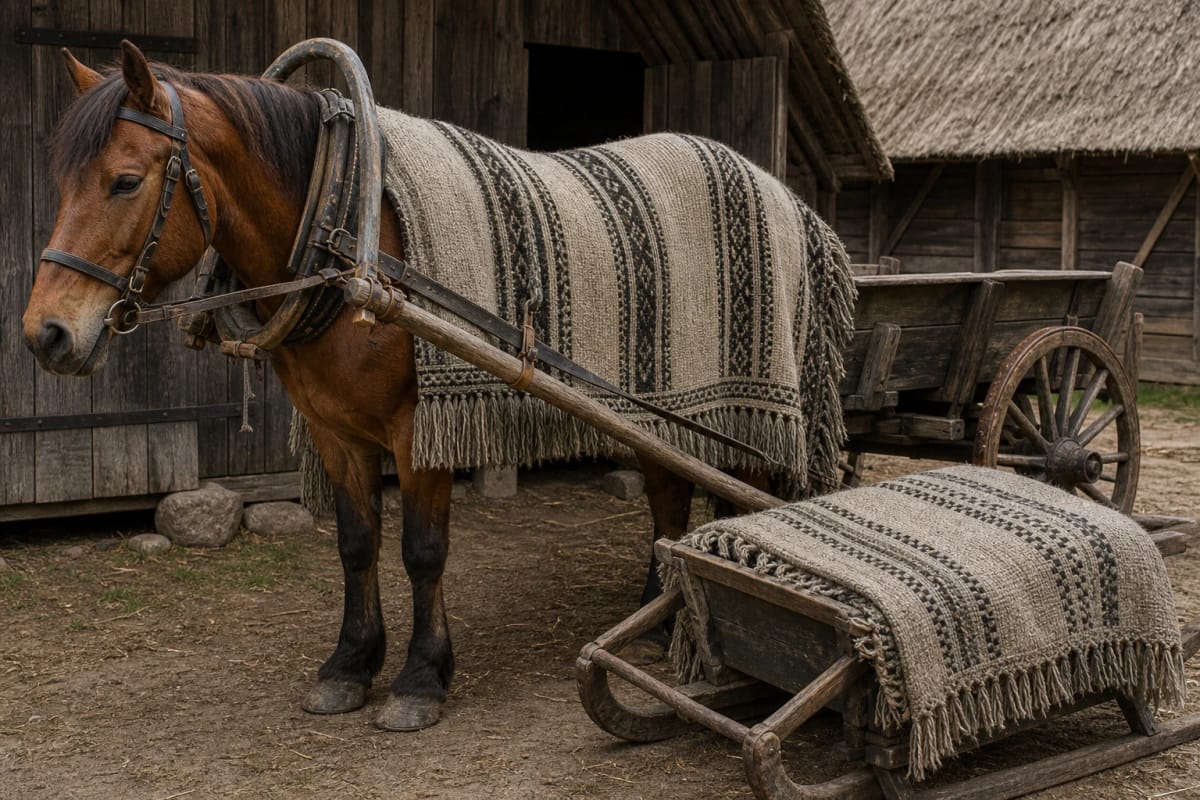
Horse gūnia: A thick fabric used to cover a horse from cold, wind, or after work, especially in winter and on journeys.
Wagon or sleigh gūnia: A cover for the seat, belongings, or passengers, giving warmth, comfort, and order.
Saddle cloth: A fabric placed under a saddle or harness, protecting the horse's back and softening friction.
Farm household cover: A stronger textile that could cover benches, chests, beds, objects, or serve as a warmer coverlet.
What is a gūnia?
A gūnia is a thick woven cover used in traditional Lithuanian farm life for horses, wagons, sleighs, saddles, and sometimes household objects. At first glance it may seem close to a bedcover or carpet, but its main logic is practical farm use.
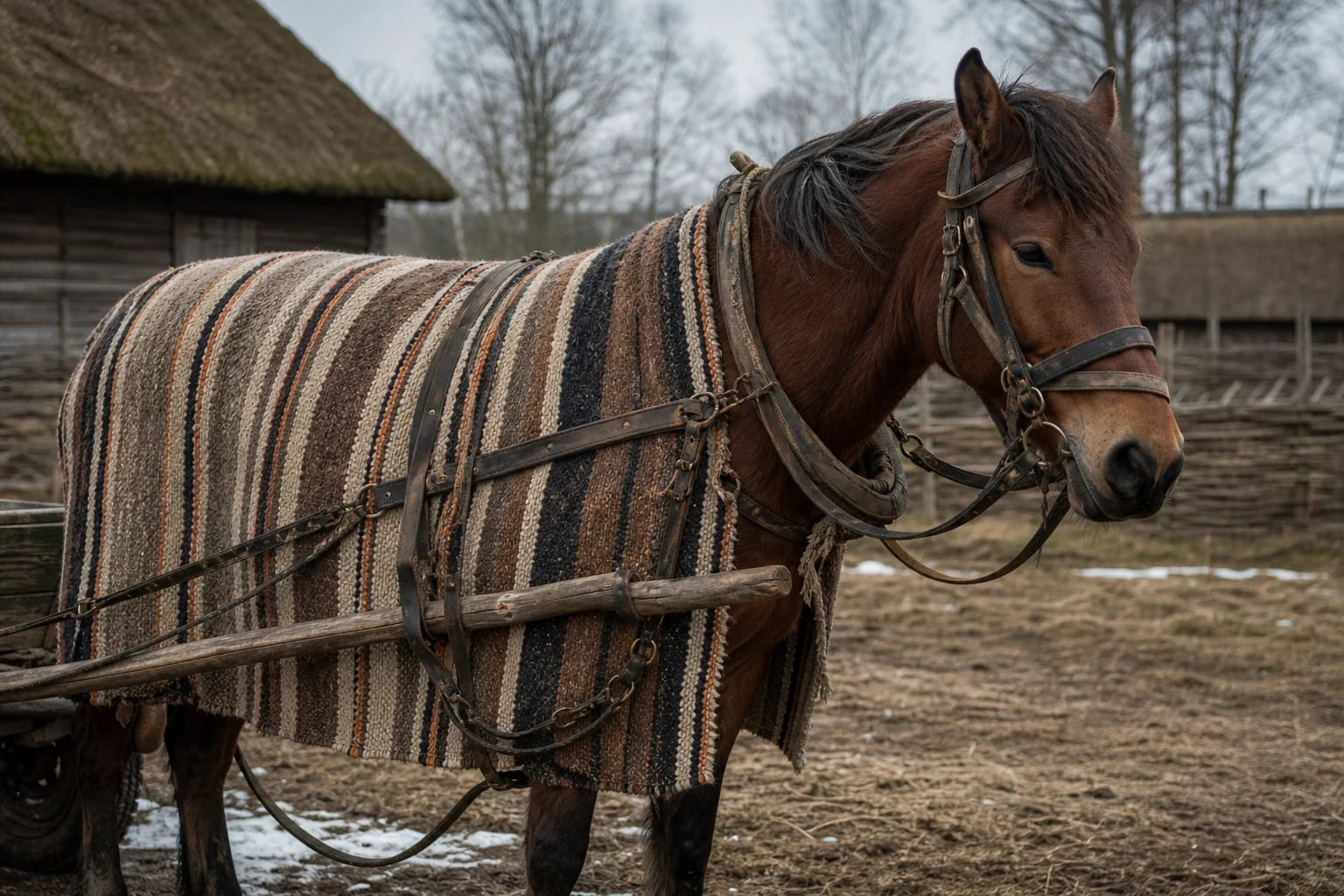
VLE defines gūnia as a cover for a wagon, wagon seat, horse, or a cloth placed under a saddle. This places it in the world of travel, work, and animal care.
A gūnia had to be strong, warm, and attractive enough to be seen publicly: on the road, at a market, at a wedding, on a winter sleigh ride, or while caring for a horse.
Materials and thickness
Gūnios were made from linen, hemp, wool, half-wool, and mixed yarns. Older or simpler covers could be linen or hemp, while warmer winter pieces were thicker, woolen or half-woolen. Remains of gūnios have been found in tenth-twelfth-century horse graves in central Lithuania at Graužiai and Veršvai: early gūnios were thick linen fabrics with bronze spirals and diamond or triangular plates attached to the edges. In the nineteenth and early twentieth centuries they were woven, sometimes with supplementary-weft patterning, from thick linen, hemp, and later woolen yarns, with patterns similar to bedcovers.
Thickness mattered because of function. A gūnia had to keep out cold, protect from wind, soften a seat, or reduce friction under a saddle. A thin decorative cloth would not do that work.
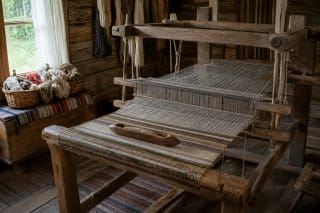
The weaving quality of gūnios is therefore judged differently from tablecloths or towels. Density, strength, warmth, durable edges, and the ability to withstand real use are central.
Horse gūnia
A horse gūnia covered the animal after work, during travel, or in cold weather. It could be thrown over the back, used near harness, or serve as a warmer cover while waiting.
Horse care was a farm necessity. A good horse was labor power and family property, so its warmth, back, and skin had to be protected from cold and friction.
On festive journeys or at market, a finer gūnia also showed the owner's orderliness. The horse's covering, harness, and blanket acted as the public face of the farm.
Wagon and sleigh gūnios
In a wagon or sleigh, a gūnia covered the seat, passengers, or goods. It warmed, softened, and protected from dirt, rough wood, and cold.
In winter a sleigh without a good cover would be uncomfortable and cold. The gūnia gave not only warmth but dignity, especially when going to church, a wedding, the market, or visiting.
The wagon gūnia can therefore be understood as travel textile. It is not home decoration but a public fabric connected with movement between homestead, road, and community.
Saddle cloth
A gūnia placed under a saddle or harness protected the horse's back from friction and pressure. It had to be soft enough but not slippery, because wrinkled fabric could injure the animal.
This function shows that a gūnia belongs not only to decoration but to the ergonomics of body, animal, and tool.
Modern saddle blankets or decorative riding cloths are not simply the same object. The traditional gūnia should be assessed in relation to period harness, wagons, working horses, and weaving technology.
Patterns and colors
Gūnios often have stripes, checks, darker tones, and earth-color combinations because such fabrics are practical and hide wear. Festive or better gūnios, however, could be brighter and more ornate.
The pattern often comes from fabric structure and color rhythm. Large stripes, checks, borders, and fringes work well across a large textile surface visible on a horse or wagon.
Not every pattern needs to be explained as a symbol. Often the main point is a practical, beautiful, and recognizable weaving rhythm.
Gūnia and bedcover
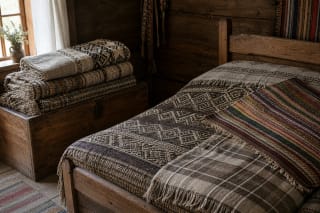
Gūnia and bedcover are both covers, but their purpose differs. The bedcover primarily covers the bed and shapes the home interior, while the gūnia is more connected with farm work, travel, horse, and wagon.
Of course, household objects could move between uses: a thick cover might cover a bench, chest, bed, or sleigh. Still, the main function should remain clear in the text.
The gūnia is a good example of how traditional textile was not always delicate or decorative. Many fabrics were working textiles, strong and made for intensive use.
Regions and survival
Gūnios were used widely, but patterns, colors, and materials differed according to region, farm type, use of horses, winter conditions, and the family's textile resources.
In museum collections, gūnios often appear with other rural textile and transport objects: harnesses, sleighs, wagons, saddles, bedcovers, and examples of gūnia weaving.
Today gūnios are more often seen in museums, folklore or equestrian heritage events, ethnographic homesteads, and reconstructions. Their everyday farm function has almost disappeared, but the weaving logic remains understandable.
How to recognize a good gūnia
A good gūnia should be strong, dense, have durable edges, enough weight, and a clear purpose. If intended for a horse or wagon, it must withstand friction, folding, and outdoor conditions.
When assessing a museum gūnia, signs of wear matter. Fading, fold lines, or repairs can show how the fabric was used.
A contemporary interpretation may be a beautiful interior detail, but a historically grounded gūnia should explain whether it is meant for a horse, sleigh, wagon, saddle, or household cover.