
Lithuanian sutartinės
Lithuanian sutartinės
Read English introductions to Lithuanian sutartinės while the original multipart-song texts remain preserved in Lithuanian.
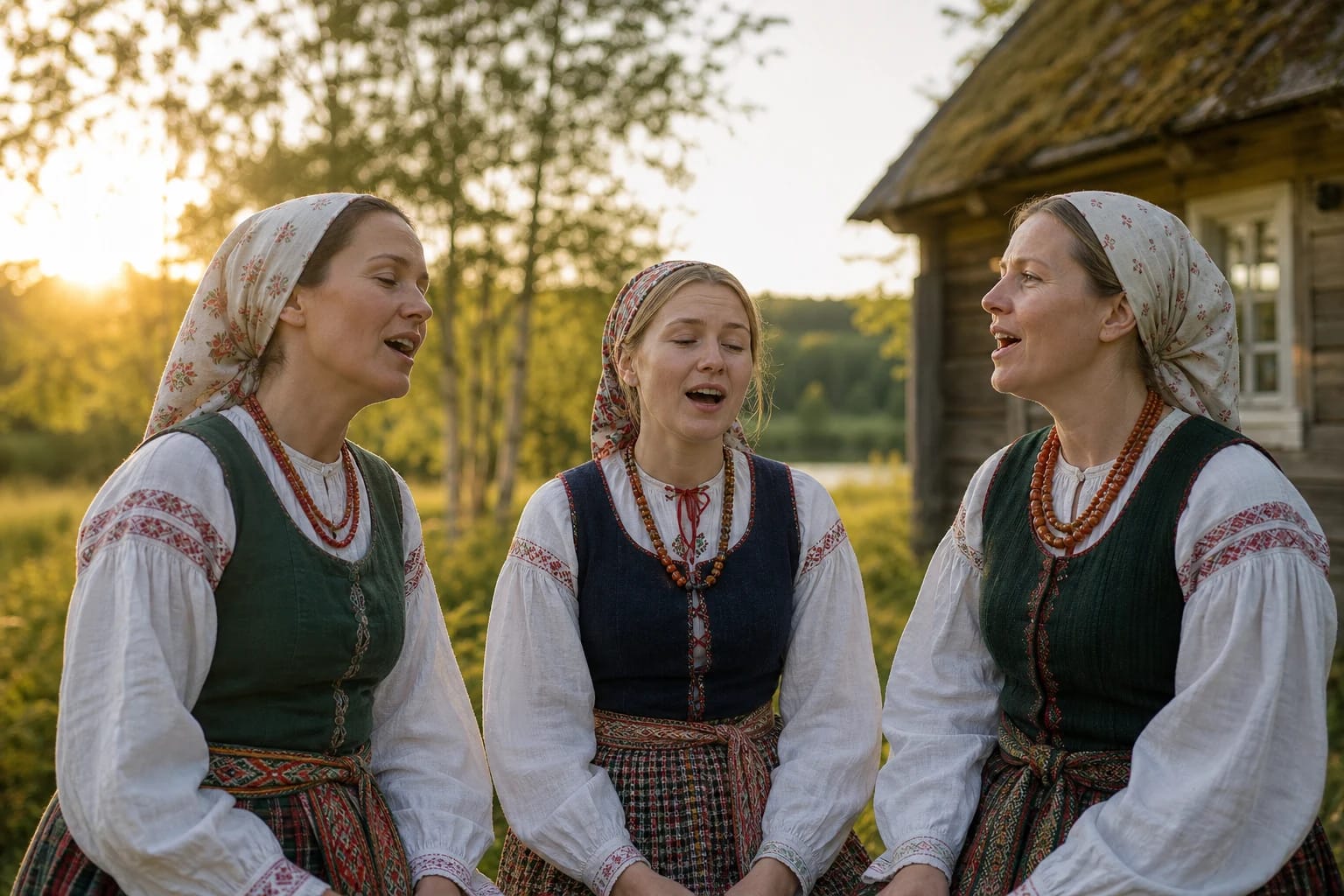
Sutartinės by type
Sutartinės are grouped by the number of voices or singer groups. Choose a type below, or search by title.
Dvejinės sutartinės
Sung by two voices or two groups, with tightly coordinated beginnings, endings, text lines, and melodic parts.
How I Sowed the Flax: English context for a Lithuanian dvejinė work sutartinė about flax from sowing to cloth, women's labor, dowry, sage, and FAQ.
The Drake Called the Duck sutartine: Paželviai source, dvejinė structure, Daugava water imagery, hunting danger, false-lover warning, and FAQ.
Trejinės sutartinės
Three-part sutartinės, often built from interweaving entries, repeating refrains, and strong rhythmic motion.
A Guelder Rose Grew with a Rowan sutartine: two-voice structure, tree-pair imagery, bride symbolism, flowering, berries, fertility, and FAQ.
Aglala, Tall One, Laduto sutartine: Taujėnai source, trejinė form, cuckoo and nightingale imagery, world-tree reading, symbols, and FAQ.
Clover, Little Clover sutartine: Vepriai and Slaviūnas variants, clover refrain, wind and forest riddle, young brother motif, sound recording, and FAQ.
Dill Trampled the Little Clover sutartinė: golden ring, courtship promise, trampled clover, ūtara voice part, and FAQ.
Great One of Ours, Our Deity: English context for a rare prayer-like Lithuanian sutartinė, with keys, wreaths, unity, ritual interpretation, history, and FAQ.
I Sowed Hemp sutartine: Lithuanian work song about hemp processing, fiber work, agrarian ritual meaning, women's labor, symbols, and FAQ.
I Went in the Morning, Čiūta: English context for a Lithuanian work and family sutartinė about rye sowing, harvest, helping parents, generations, and FAQ.
Lead the Goat into the Street: English context for a dramatic Lithuanian sutartinė about a goat, mimicry, family dance, carnival, Užgavėnės, fertility, and FAQ.
Lioj Gardens, Lioj Evening sutartinė: lullaby-like care for parents, mint, southernwood, grave herbs, Kupiškis 1937 source, and FAQ.
Lioj Lylia, Little Crane: English context for a Lithuanian dialogue sutartinė from Rageliai, Rokiškis, with crane, grain, harvest, interpretation, and FAQ.
Lylio Lelijo sutartine: blooming linden, brother, wreath, church variant, bride farewell, wedding symbolism, and FAQ.
Mourning Linden: English context for a Lithuanian sutartinė about the linden tree, nine branches, nine daughters, marriage, loss, lament, symbols, and FAQ.
Oh Sister, Sister sutartinė: matchmaking, wedding guests, child care, motherhood, rings, Slaviūnas III-1404, and FAQ.
Pijolka Rue, Čiūta sutartinė: birch-bark tar making, two young men, playful courtship irony, Mataučizna source, and FAQ.
Poppy, Little Poppy sutartine: Taujėnai singers, trejinė form, poppy symbolism, bride-seeing-off imagery, builinė tradition, and FAQ.
Rimo, Rimo Tuto sutartinė: English context for a short sound-word trejinė, its Slaviūnas source, vocal coordination, refrain language, and FAQ.
The Bright Sun Rises sutartinė in English: Juška song text, Girjaukis melody adaptation, Saulė and Laima myth, nine mornings, symbols, and FAQ.
Turėja liepa, liaj sudijo sutartinė in English: linden and mother with nine daughters, atitartinė variants I-119a/b, rue, symbols, and FAQ.
Turėja liepa, lioj taduvėla sutartinė in English: linden and nine daughters, atitartinė singing, V. Katinienė 1985 source, symbols, and FAQ.
The Little Brother Will Ride Out, Sodauto: English context for a Kupiškis sutartinė about a brother's ride to Riga, a golden ring, wedding symbolism, and FAQ.
The Oat Pleaded sutartine: Jukoniai work song, personified grain, sowing-to-feast sequence, agrarian magic, Slaviūnas I-194, and FAQ.
The Red Sun Set in the West sutartinė: sunset, returning family, atitartinė performance, cosmic order, trejinė form, and FAQ.
The Sister Planted an Orchard sutartinė in English: family exchange, golden apple tree, silver apples, dowry, reciprocity, symbols, and FAQ.
The Willow Was Green sutartinė in English: žilvytis willow motif, 1935 Taujėnai and Siesikai singers, LLTI recording, marriage reading, symbols, and FAQ.
Trepute Martela sutartinė in English: flax work from sowing to spinning, young wife motif, Skominai and Ukmergė source context, symbols, and FAQ.
Trijula Tatato sutartinė in English: fox-hunting song, hunter, fur transformation, Slaviūnas I-2a source context, symbols, and FAQ.
Tumsumai sutartinė in English: family and work song about night, dew, obedience to parents, horses and oxen, maturity, symbols, and FAQ.
Tuta Tutela sutartinė in English: hay-raking work song, two sisters in a green meadow, rinkinys and pritarinys parts, rhythm, symbols, and FAQ.
Saulala Riduolela sutartinė in English: equinox sun song, rising-sun ritual context, gifts, father-in-law motif, wedding-song parallels, and FAQ.
When There Were Good Years, Kadujo: English context for a Lithuanian sutartinė about bees, honey abundance, good years, hyperbole, ritual wishing, and FAQ.
Who Has Seen It, Tutaitai?: English context for a Lithuanian sutartinė from Kėriškės about hills, lilies, maidens, uncertain performance form, and FAQ.
Who Is Coming Through the Manor Yard sutartinė: wedding meaning, the bride's woven gifts, the silent father-in-law, ash-tree refrain, and FAQ.
Whose Roosters Are Those sutartinė: rooster-call refrain, dawn symbolism, playful sound imitation, trejinė form, and FAQ.
Why Are You Sad, Little Bee?: English context for a Lithuanian sutartinė about bee and sister, captivity, brother in hardship, rescue by tenderness, and FAQ.
Why Are You Sad, Little Birch sutartinė: hidden sorrow, birch, brother, sister, rue, wedding lament, trejinė form, and FAQ.
Keturinės sutartinės
Four-part or four-group sutartinės, among the most complex forms of Lithuanian multipart singing.
A Wolf Runs Across the Reaping Strip sutartine: keturinė ruginė form, Rupinai source, wolf and rue imagery, rye-harvest ritual, and FAQ.
Dijūta on the Hill sutartine: keturinė form, vocables, hill and birch imagery, užtarimas and patarimas voice parts, ritual sound, and FAQ.
Dūno River sutartine: keturinė water imagery, lylio refrain, brother in dark water, fish and fisherman symbolism, fate and lament reading, and FAQ.
Flax, Flax, Flax Blossom sutartinė: blue flax flower, weaving, dowry cloth, dance note, Galvokai 1936 source, and FAQ.
Kupolio Rose, Little Kupole sutartinė: Joninės and Rasos, midsummer herbs, Jonas, the flute joke, keturinė form, and FAQ.
Little Bee, Bee, Kadaujo sutartine: early Miežinis manuscript, keturinė wedding form, bee symbolism, courtship, weaving, maturity, and FAQ.
Little Cuckoo in the Orchard: English context for a Lithuanian keturinė sutartinė about cuckoo calls, spring awakening, dance, and Slaviūnas variants.
The Horse Neighs, Dolija sutartinė in English: keturinė with riderless horse, fallen brother, war and family lament, symbols, and FAQ.
What, Little Bee?: English context for a Lithuanian keturinė sutartinė about a bee, drone, silk clothes, rain, separation, clover refrain, dialect, and FAQ.
Why Did You Not Grow, Little Birch sutartinė: birch and sister parallelism, weaving, maturity, keturinė form, and FAQ.
Other and unclassified sutartinės
Sutartinės whose sources clearly preserve the genre but do not give a reliable two-, three-, or four-part type.