- Field
- Lithuanian textiles and national-costume sashes
- Type
- textiles
- Heritage status
- living tradition
- Context
- rinktinės, kaišytinės, braided, twined, plain, and knitted sashes, national costume, gifts, wedding rites, and everyday tying work
National sashes, Woven sashes, Rinktinės sashes, Kaišytinės sashes, Braided sashes, Twined sashes
Lithuanian Sashes forms and objects
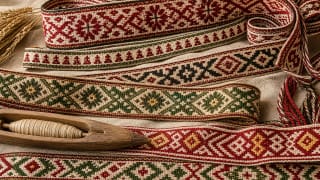
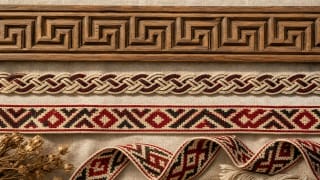
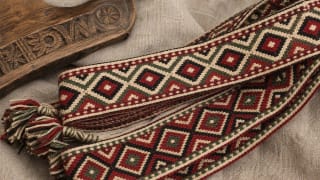
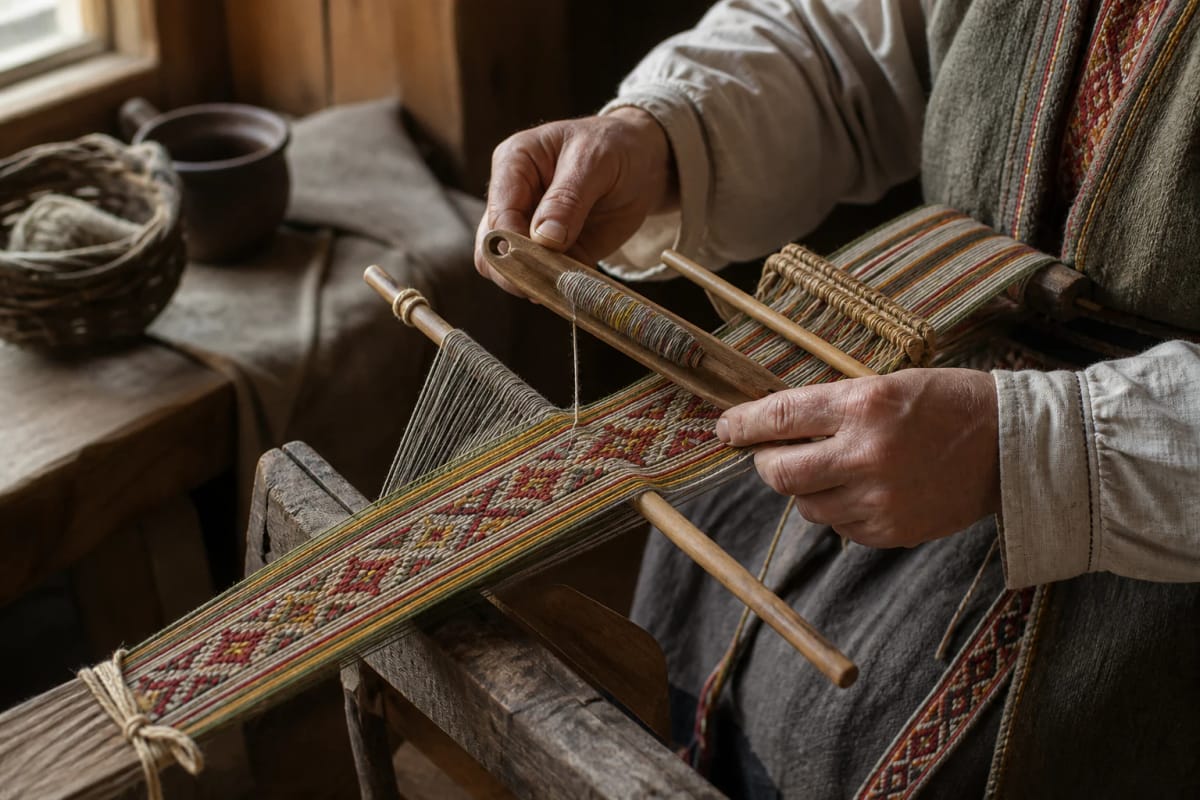
Rinktinė sash: A patterned woven sash whose ornament is created by selecting warp threads. Rinktinės sashes are known for complex geometric and sometimes plant-like patterns.
Kaišytinė sash: A woven sash in which additional colored threads are inserted into the pattern. In southern Lithuania they are especially associated with rhythmically repeated sunburst motifs.
Braided sash: A finger-braided, usually woolen sash of Aukštaitija. It is distinguished by checks, rhombi, fir-tree motifs, and a living braiding tradition.
Twined sash: A sash twined with threads or tablets, also called kaladėlės or burtukės. This is one of the oldest sash-making technologies in Lithuania.
Plain and knitted sash: Simpler everyday sashes used to tie clothing, foot cloths, bundles, or household objects. Knitted sashes were rarer and better known in the northwest.
What are Lithuanian sashes?
Lithuanian sashes are narrow textile bands used for girding, tying, decorating, gifting, and marking important moments in a person's life. They were part of women's and men's clothing, accents of national costume, dowry textiles, wedding gifts, and practical household tools.
The Universal Lithuanian Encyclopedia defines sashes as one of the oldest types of Lithuanian folk fabric. In traditional village culture they were inseparable from clothing: women used them to gird skirts and fasten stockings or waistcoats, while men girded shirts, trousers, and outer garments or tied foot cloths.
Yet the sash was never only a belt. It tied a baby, a bundle, a seed basket, a cradle, a coffin, horse harness, and wedding gifts. In Lithuanian culture the sash therefore naturally became a sign of connection, respect, passage, and order created by human hands.
Main types of sashes
By technique, Lithuanian sashes are divided into woven, braided, twined, and knitted sashes. Woven sashes are further divided into rinktinės, kaišytinės, and plain types. This classification matters because different techniques create different appearance, rhythm, thickness, purpose, and regional recognizability.
A rinktinė sash is usually recognized by its clearly selected geometric pattern. A kaišytinė sash has additional colored threads inserted into the pattern, so its ornament often looks rich and rhythmic. A braided sash is made not on a loom but by braiding threads with the fingers. A twined sash is twisted by hand or with tablets, which can make it very strong.
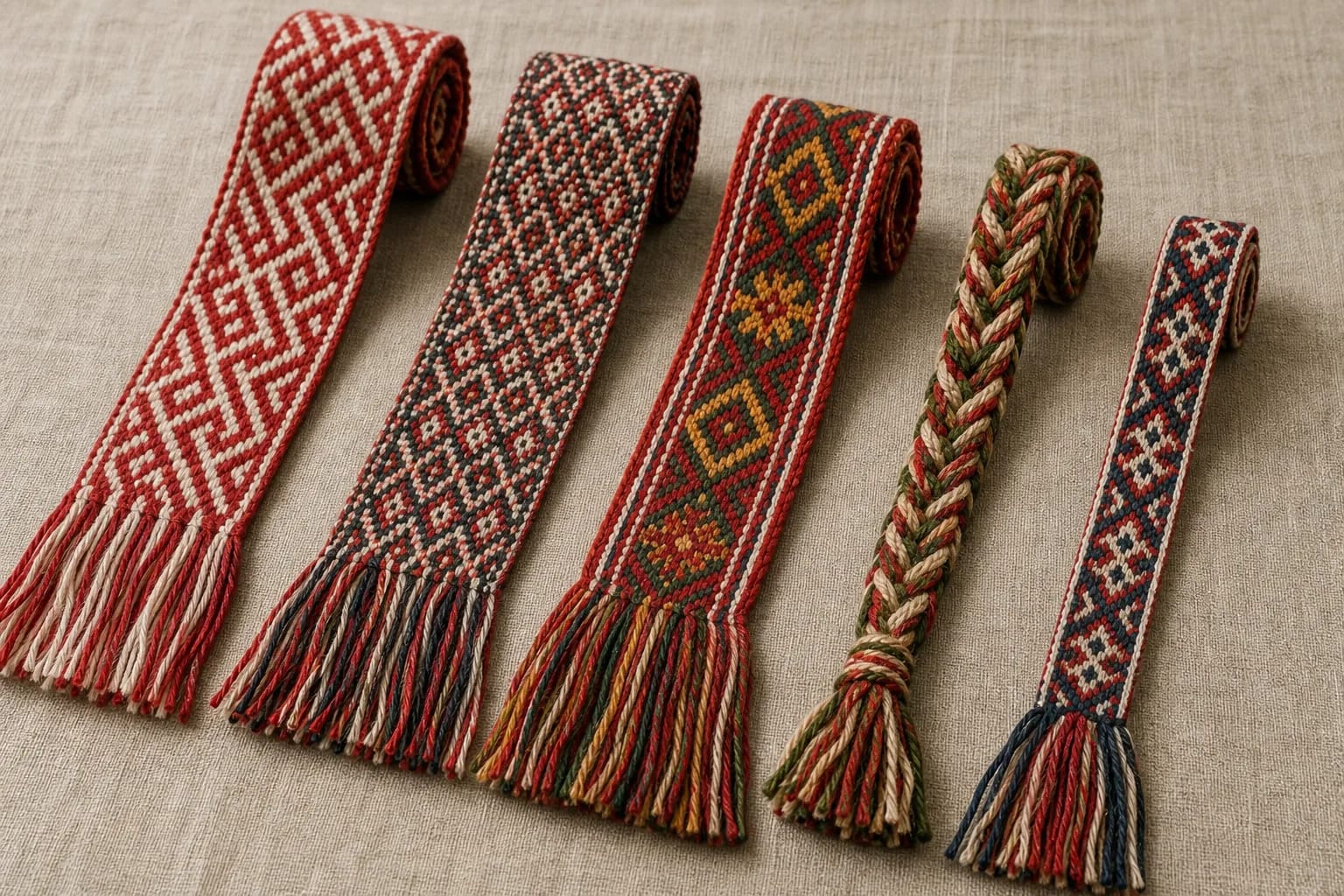
In everyday speech these terms are sometimes collapsed into the phrase national sash, but a better presentation should name the technique. A national sash may be a modern representative object, while rinktinė, kaišytinė, braided, or twined tells how it was actually made.
Materials, length, and structure
Traditional sashes were made from linen, woolen, and later cotton threads. VLE notes that they often reached about two or three meters in length, while the width could range from a few to more than ten centimeters. Length depended on tying method, purpose, and garment.
The ends of a sash are an important part of the object. They can be finished with tassels, pom-poms, woven-in threads, little cloth pieces, color transitions, or additional braiding. A well-made end shows that the sash was created as a whole, not merely as a long patterned fabric.
Strength was as important as beauty. Twined and some braided sashes suited places where holding power was needed: foot cloths, basket or bundle handles, and harness. Rinktinės and kaišytinės sashes were more often seen as parts of festive dress, gifts, or ritual textiles.
How old are Lithuanian sashes?
The history of sashes in Lithuania reaches very ancient times. VLE mentions fragments of twined sashes from the Medžionys grave, dated to the fourth-fifth centuries BCE. This allows twined sashes to be considered one of the earliest known sash technologies.
By the end of the first millennium and the beginning of the second, sash techniques were already more varied. Archaeological contexts preserve not only textile remains but also miniature tools for sash making. A tenth-eleventh-century remnant of a rinktinė sash is mentioned from the Paragaudis burial ground, and sashes were also used to decorate the manes of war horses, with remains found in tenth-thirteenth-century horse graves at Pakalniškiai and Veršvai. The earliest information about woven sashes in Mažoji Lietuva comes from seventeenth-century works by T. Lepner and M. Pretorius and early nineteenth-century drawings by E. K. S. Gisevius.
Later, in the nineteenth century, sashes became one of the most visible parts of village clothing and dowry textiles. In the late nineteenth and early twentieth centuries they entered the idea of national costume, and today they remain one of the easiest signs of Lithuanian textiles to recognize.
How were sashes used in everyday life?
The everyday purpose of the sash was highly practical. It tightened clothing, tied foot cloths, and girded shirts, skirts, or outer garments. Sashes could be sewn into apron or skirt waistbands, head ornaments, or handles for bundles.
A sash also functioned as a household object. It tied baskets, a seed basket, a cradle, a baby's swaddling cloths, and sometimes lowered a coffin into a grave. This wide use shows that the sash was not a display souvenir, but an everyday textile technology.
This practical side explains why sashes survived so strongly in memory. They were beautiful enough to enter dowries and museums, but strong and necessary enough to live in daily work. VLE notes as many as 16 ways of tying a sash: women most often tied them at the front or one side in loops, while men wrapped them twice around the waist and let the ends hang down on both sides. Until the early twentieth century almost all village women knew how to weave sashes.
Weddings, gifts, and the sash as a sign of connection
In southern Lithuania the sash was one of the most important wedding gifts. The bride gave sashes to the wedding inviter, matchmaker, groomsmen, the husband's relatives, and neighbors. This was not only a gift but a recognition of a new bond: the sash, as it were, connected people, homes, and the road from one family to another.
On the way to her husband's home the bride might tie a sash to a roadside cross, yard gate, or well, and in the husband's home she could bind important household objects. In such places the sash acts as respect and blessing: it marks a boundary, entrance, water, and center of the home.
Sashes therefore should not be explained only as ornamented textiles. They belong to action. A sash has to be tied, gifted, carried, girded, or hung. Only then does its meaning unfold as a practice of connection and transition.
Regions: how sashes differ
Rinktinės sashes were known throughout Lithuania, but their colors and ornaments differed by region. Museum material from Dzūkija, Suvalkija, and Mažoji Lietuva allows distinctive color and ornament choices to be recognized, but overly strict rules should be avoided: one family, weaver, or small town could have its own taste.
Kaišytinės sashes are most strongly associated with southern Lithuania, especially the Alytus, Lazdijai, and Varėna areas. Braided sashes are characteristic of northern and partly central Lithuania, and today the Aukštaitian tradition of braiding sashes is inscribed in Lithuania's Intangible Cultural Heritage Inventory.
Twined sashes are more strongly connected with eastern and southeastern Lithuania. Knitted sashes were rarer and more widespread in the northwest. Such a map is useful, but a sash is best identified first by technique, material, and a concrete museum or family tradition.
Patterns: what do they mean?
Sash patterns often include rhombi, fir trees, sunbursts, crosses, triangles, squares, teeth, plant motifs, and repeated geometric rhythms. Some sashes look like very dense texts of signs: the pattern runs along the full length, repeats, changes, and maintains a clear direction.
It is important not to go beyond the sources. It is not reliable to assign one unchanging ancient meaning to every sign. The same rhombus or fir-tree motif can be understood through beauty, weaving logic, local fashion, family tradition, plant or sky imagery, but it does not always have a single written translation.
The best way to read a sash is to look at the whole: technique, colors, rhythm, regional tradition, purpose, and the situation in which it was used. A wedding gift, a man's shirt sash, and a harness detail may share a similar technique but carry different social weight.
Living tradition today
Sash making is alive today through folk artists, weavers, braiders, museums, culture centers, educational programs, song festivals, national-costume reconstruction, and preservation of family heritage. In the case of braided sashes, the work of Panevėžys Local Lore Museum, Aukštaitian cultural organizations, and the community of makers is especially important.
Tablet twining, loom weaving, rinktinės sash courses, and braided-sash workshops help a contemporary person understand not only the final pattern but also the rhythm of work. When thread is threaded, selected, inserted, or braided, the logic of the pattern becomes bodily.
When buying or wearing a sash responsibly, it is worth asking about its technique, regional connection, and whether it is based on a museum copy, family tradition, or contemporary interpretation. A contemporary sash can be beautiful and meaningful, but its value grows when its relationship with sources is clear.