Learning and listening to music →
Voice entries, beginner guides, repertoire and clearly labelled practice exercises.

Explore Lithuanian folk instruments in English, from kankles and shepherd pipes to drums, horns, rattles, and sound tools used in village music and ritual life.
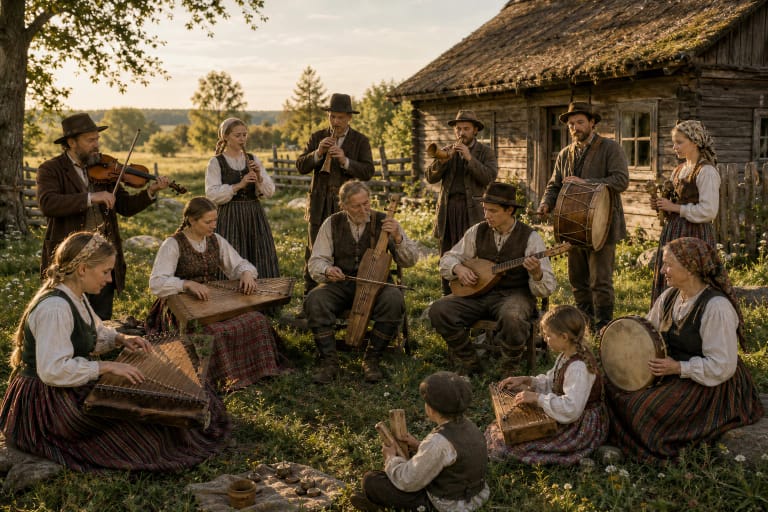
| Family | Sound and examples |
|---|---|
| Wind instruments | Pipes, horns, trumpets, and shepherd instruments shaped by work, ritual, and open-air sound. |
| String instruments | Kankles, fiddle, bass strings, and other chordophones in home music and ensemble practice. |
| Percussion instruments | Drums, clappers, bells, and rhythmic tools used in dance, signal, and ritual settings. |
| Other sound tools | Self-sounding and unusual instruments that connect sound with work, play, and seasonal customs. |
Air-sounding instruments: skuduciai, birbyne, lamzdelis, daudytes, horns, ozragis, and bagpipe.
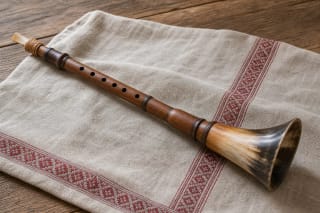
Birbynė is a Lithuanian reed wind instrument whose history runs from shepherds' straw or feather pipes to the refined stage birbynė with an animal-horn bell.
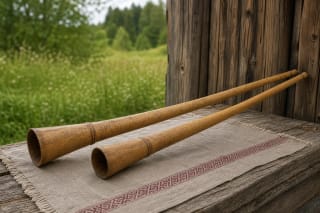
Daudytės are long Lithuanian wooden lip trumpets, 140-250 cm birch-bark-wrapped tubes, used by men in pairs in northeastern Lithuania to play sutartinės and…
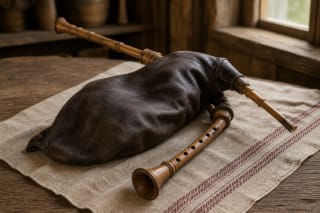
Dūdmaišis, or Labanoro dūda, is a Lithuanian reed bag aerophone with a leather bag, melodic pipe, and drone pipes; it spread in Lithuania from the sixteenth…
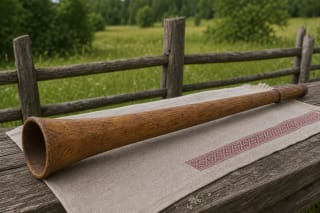
Kerdžiaus trimitas is a Lithuanian mouthpiece aerophone: a wooden signal trumpet wrapped in birch bark or bark, used by herdsmen to manage the herd and by…
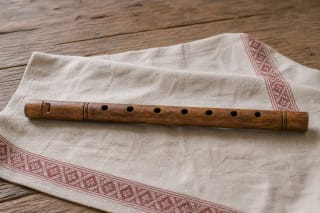
Lamzdelis, also called lumzdelis, is a Lithuanian end-blown whistle flute with 3-8 finger holes, known especially through makers and players from the Kupiškis…
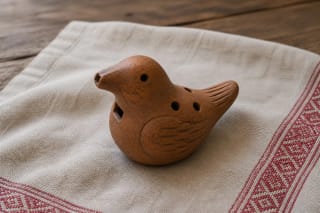
Molinukas is a Lithuanian clay whistle: a whistle vessel flute close to the ocarina, often shaped like a bird or small animal and associated with children and…
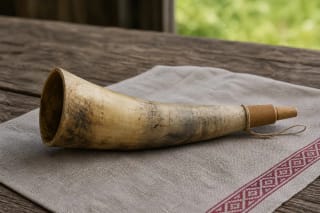
Ožragis is a Lithuanian wind instrument made from a goat horn: a lip or reed aerophone used throughout Lithuania for herdsmen's signals and song or dance…
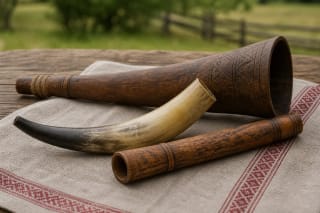
Ragai are Lithuanian lip-blown wind instruments made from animal horn, metal, or wood.
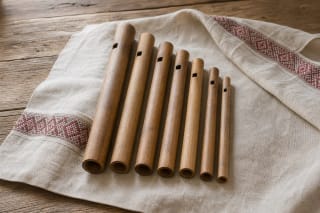
Skudučiai are one of the most important Lithuanian wind instruments: a set of 5-8 separate pipes used by a group of players to create the polyphonic sound…
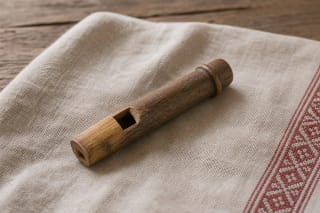
Švilpa is a long Lithuanian whistling instrument: a natural flute without finger holes, regarded as a prototype of the modern transverse flute and associated…
Instruments sounded by strings: kankles, cimbolai, fiddle, bass strings, and pusline.
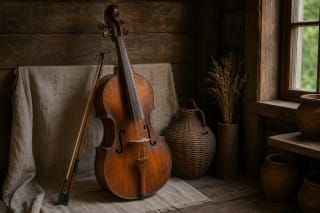
Basetlė is the bass bowed instrument of Lithuanian village bands: a double-bass or cello type with 2-4 strings, known in Lithuania, especially Žemaitija, from…
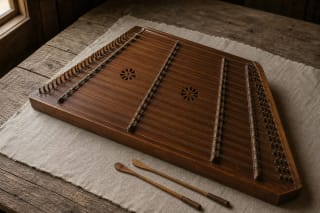
Cimbolai are a Lithuanian struck string instrument: a trapezoid resonator with 12-33 metal strings struck with small hammers, especially associated with…
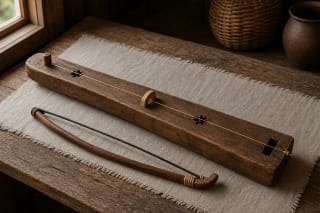
Dzindzinis is a Lithuanian bowed monochord: a wooden board about 100 cm long with a single lengthwise string, used by young people in the first half of the…
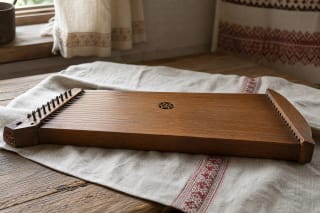
Kanklės are the most important Lithuanian plucked string instrument: a chordophone of the Baltic psaltery family, linked with sutartinės, home music-making,…
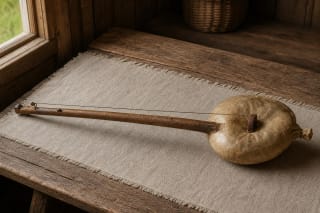
Pūslinė is a simple Lithuanian folk bass string instrument made from a wooden stick, an inflated dried pig bladder, and 1-3 strings, providing a low…
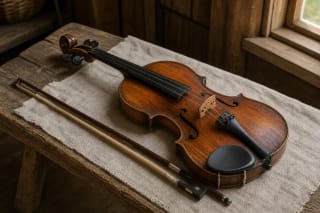
In Lithuanian ethnic music, smuikas became one of the main melody-leading village-band instruments.
Rhythm and procession instruments: drums, small drums, and hollowed wooden signal tools.
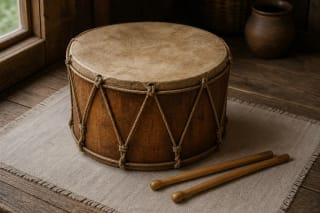
In Lithuanian tradition, būgnas is a struck membranophone used from old times as a ritual and signaling instrument, a military kettledrum, and later a…
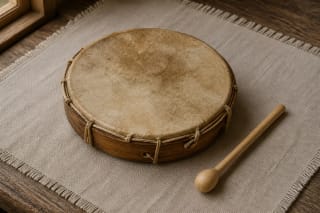
Būgnelis, or tambourine, is a small Lithuanian struck membranophone: a skin-covered frame with metal plates or jingles that supports rhythm in village bands and…
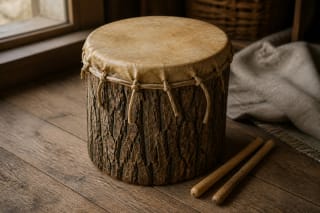
Kelmas is a drum type common in Žemaitija, with a body made from a whole or rotten tree stump and one end covered with dog or goat skin.
Self-sounding tools, rattles, and wooden signal instruments: skrabalai, tabalai, kleketai, terksle, and dambrelis.
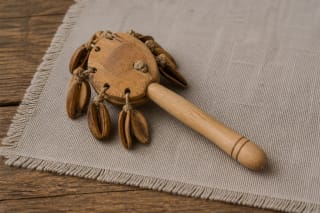
Barškutis is a Lithuanian shaken idiophone and toy: a rattle made from a bladder, clay, wickerwork, or a wooden ball with pebbles, whose sound comes from…
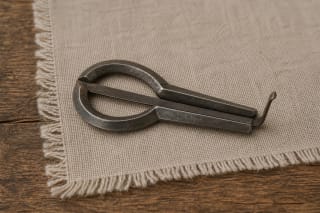
Dambrelis is a small plucked idiophone: a metal, more rarely wooden, frame with a tongue vibrated by a finger, while the mouth cavity shapes the sound; it has…
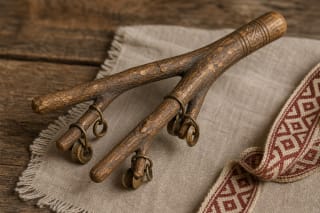
Džingulis is a Lithuanian shaken idiophone: a decorated branched staff used by the wedding inviter in Užnemunė and Lithuania Minor, with magical power…
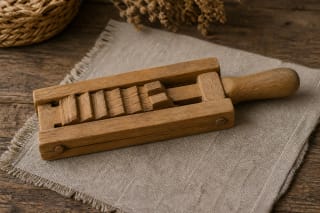
Kleketas is a Lithuanian shaken idiophone: a board with a handle and wooden beaters, used as a clacking signal and rhythm instrument by herdsmen, night…
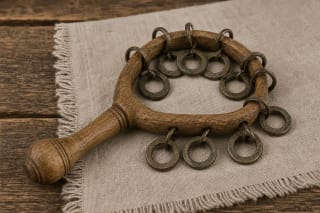
Rinkinė is a Lithuanian herding signal tool and shaken idiophone: a forked or cross-shaped staff strung with stove rings, used by shepherds to discipline cattle…
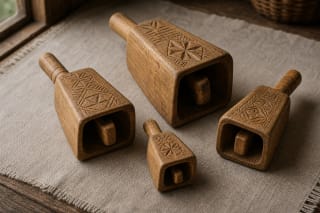
Skrabalai are Lithuanian shaken idiophones: wooden or metal boxes with clappers, once hung on livestock necks and later adapted for rhythm and even…
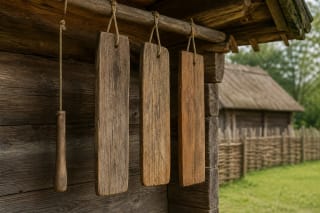
Tabalai are Lithuanian struck idiophones: horizontally hung maple or ash boards whose beating announced death, called people to work, communal labor, or…
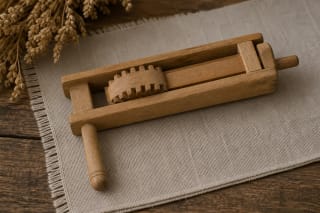
Terkšlė is a Lithuanian scraped idiophone: a frame with a toothed cylinder and slapping slats, used as a signal instrument for calendar festivals, church rites,…
Voice entries, beginner guides, repertoire and clearly labelled practice exercises.