- Field
- Žolinė herb bouquets, harvest bundles, and blessed seasonal plants
- Type
- traditional craft
- Heritage status
- living tradition
- Context
- Herbs, bouquet, Žolinė, grain ears, medicinal plants, garden flowers, rye, wheat, flax, harvest, Mary, blessing
Žolinė bouquets, Herb bundles, Blessed herbs, Harvest bouquets
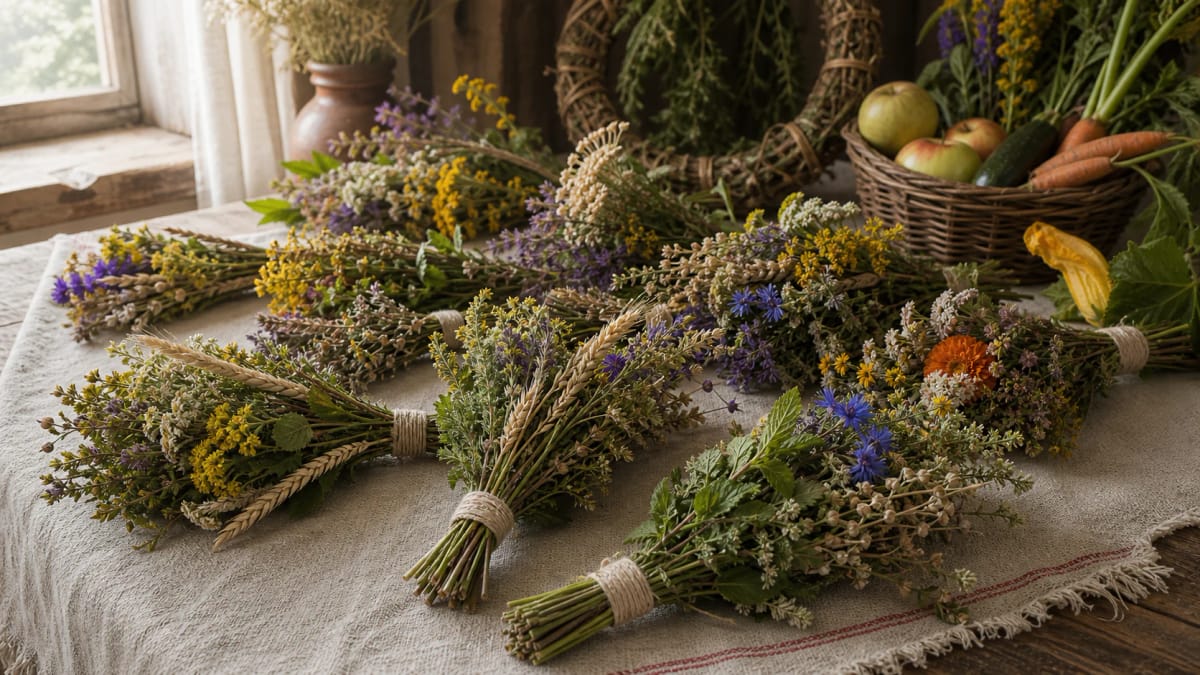
Herb Bouquets forms and objects
Žolinė Bouquet: A bouquet of field and garden plants taken to church on August 15 and kept at home after blessing.
Grain and Harvest Bouquet: A bouquet with visible rye, wheat, barley, or oat ears, flax, fruit, or garden produce.
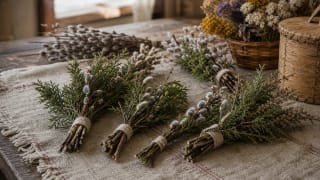
Medicinal-Herb Bundle: A bundle of thyme, mint, oregano, yarrow, mugwort, or other herbs traditionally linked with household protection and healing beliefs.
Wreaths, Arches, and Festive Decoration: In Krekenava and other feast settings, herbs are used not only for bouquets but for wreaths, arches, and procession decoration.
What Are Herb Bouquets?
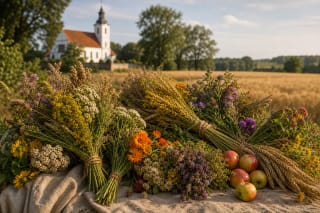
Herb bouquets are late-summer bundles made and blessed at Žolinė on August 15. They include field herbs, garden flowers, medicinal plants, grain ears, flax, fruit, or garden produce, forming a compact object of harvest, gratitude, and plant knowledge.
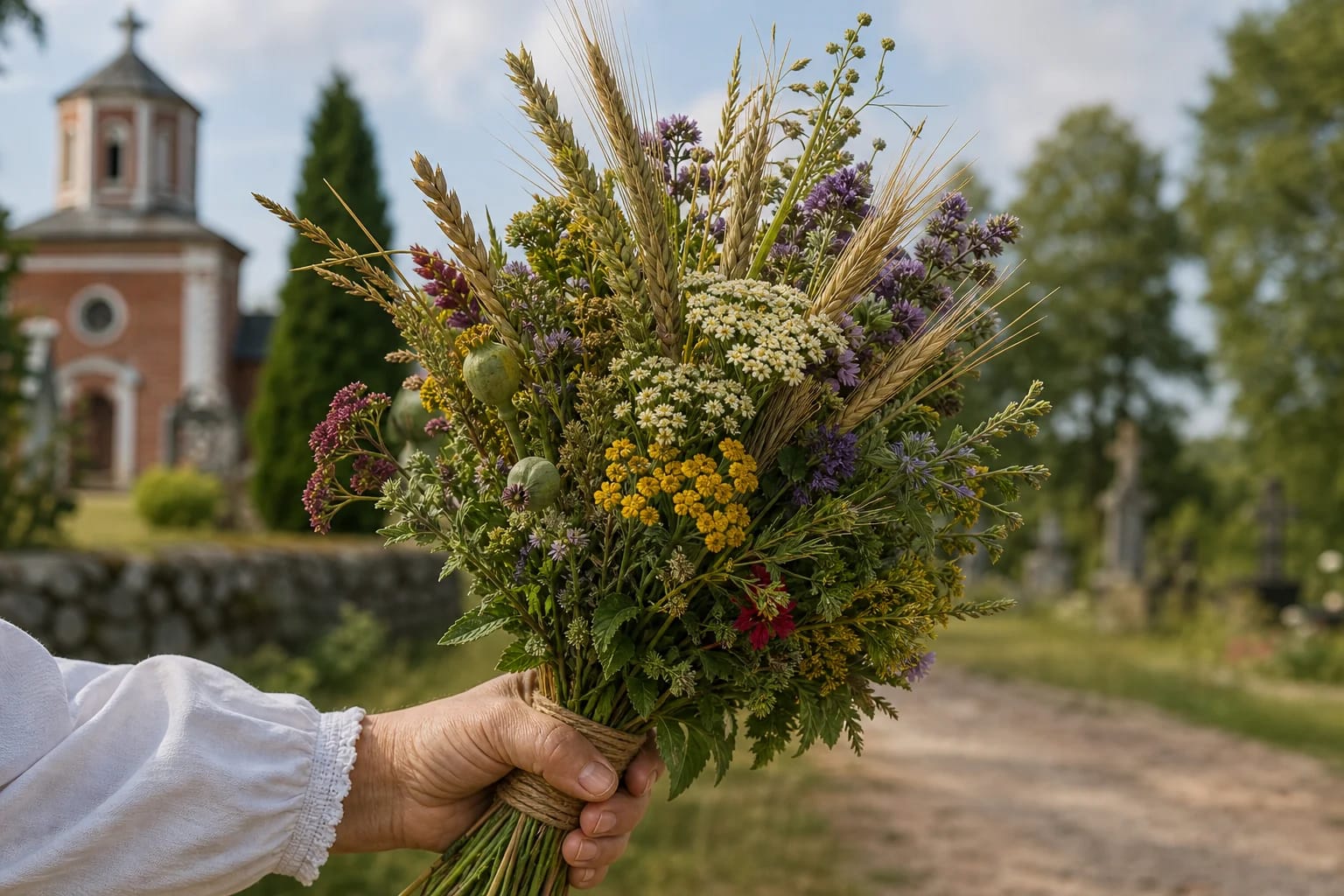
The tradition joins the Feast of the Assumption of the Blessed Virgin Mary with the agrarian yearly cycle. In Lithuanian practice church and older seasonal layers meet through plants, harvest, and home.
The bouquet is not merely decorative. It shows what a person knows in meadow, garden, field, and orchard: which plants have ripened, which flowers bloom, which grain has been cut, and which herbs will be kept for winter.
Which Plants Are Included?
Žolinė bouquets often include grain ears, field and garden flowers, aromatic herbs, medicinal plants, and sometimes flax, fruit, or vegetables. Rye, wheat, oats, mint, thyme, oregano, yarrow, mugwort, St. John’s wort, and summer flowers are often named.
There is no single plant list required for all Lithuania. Some places emphasize grain, others garden flowers, herbs, or local plants. The bouquet should reflect place, season, and family custom.
Plants must be gathered responsibly. Protected species, protected areas, and rare meadows should not be damaged for a symbolic object. The tradition is stronger when it protects local nature.
Grain Ears and Harvest Thanks
Grain ears are among the clearest signs in a Žolinė bouquet. Rye, wheat, barley, or oats show that summer has reached harvest fullness and recall bread, labor, field, and dependence on the earth.
In some places apples, vegetables, flax, or other produce are added to bouquets or carried with them. This is a gesture of thanks: a person brings part of what has been grown, gathered, or received.
For that reason the bouquet should not be reduced to a floral accessory. It is closer to a small harvest altar in the hands, tied, carried, blessed, and kept at home.
Medicinal Herbs and Beliefs
Žolinė is closely connected with medicinal herbs. In traditional culture, plants gathered and blessed at the feast were believed to have special protective or healing power, which explains why bouquets were dried and kept all year.
These claims need careful wording. Ethnographic belief is not modern medical advice. Herbs can be culturally important for scent, memory, and family tradition, but treatment promises belong outside a cultural description.
Bouquet herbs could be used to fumigate the home or animals, placed near holy pictures, kept in the attic, or used at calendar-year transitions. In this way the herb moved from feast to everyday household life.
Regional Differences
Žolinė bouquets varied by region. Dzūkija sometimes mentions compositions of three or nine plants, but that is not a rule for all Lithuania. In Žemaitija, thistle or other local plants can matter, while Suvalkija emphasizes garden, orchard, and grain combinations.
In Aukštaitija parishes the bouquet often belongs to the visual world of the feast and community. Krekenava has such a strong Žolinė indulgence tradition that it is listed in Lithuania’s intangible cultural heritage inventory.
Regionality is best shown through material and action: which plants are gathered, how they are tied, where they are taken, and how they are kept. Color description alone does not reveal the full tradition.
Krekenava Žolinė
Krekenava is one of Lithuania’s strongest Žolinė places. Its indulgence feast joins pilgrimage, church celebration, herb bouquets, wreaths, arches, community festivity, and local identity.
The heritage inventory emphasizes preparation as well as the day itself: decorating spaces, community involvement, herb gathering, and the atmosphere of the feast. The bouquet is part of a larger ritual environment.
Krekenava shows how a place can strengthen a national custom. The bouquet is recognizable everywhere, but in a particular shrine it gains local history and community memory.
How Is the Bouquet Tied?
The bouquet is tied so it holds and can be carried. Heavier grain or fruit must be secured firmly, and fragile flowers protected from breaking. The base is tied with cord, thread, or natural fiber.
The form may be modest or abundant. A modest bouquet shows each plant clearly; a full one expresses harvest abundance. Traditional binding need not hide the stems, because handwork and real material are part of its truth.
If the bouquet is taken to church, it should not shed, dirty the space, or be awkward to hold. A ritual object has to work in a real feast situation.
Keeping the Blessed Bouquet
After Žolinė the bouquet is often dried and kept at home. It may hang near holy pictures, sit on a shelf, be stored in the attic, or occupy another honored place. In some homes it remained until the next Žolinė or until a particular custom.
Drying needs a dry, ventilated corner. Too much moisture brings mold; strong sun bleaches flowers. If the bouquet includes fruit or vegetables, those usually do not suit long storage and should be separated from the dried herbs.
An old bouquet was often not simply thrown away. Blessed herbs could be burned, respectfully used, or replaced with new ones. The key is a respectful relation to an object that belonged to feast and household belief.