
Spring
Easter in Lithuania
The first Sunday after the first full moon after the spring equinox, in March or April
Easter is one of Lithuania's main spring feasts, joining the Resurrection of Christ with nature's awakening. Marguciai, swings, egg rolling, and Velyku bobute show it as a feast of life, light, and a new cycle overcoming winter.
Tradition context
- When
- The first Sunday after the first full moon after the spring equinox, in March or April
- Season
- Spring
- Themes
- Resurrection of Christ, marguciai, swings, egg rolling, Velyku bobute, verbos, lalavimas
Easter in Lithuania celebrates Christ’s Resurrection and spring: decorated eggs, swinging, egg rolling and the Velykų bobutė accompany festive visiting and the singing rounds called lalavimas.
What Is Easter and When Is It Celebrated?
Easter is a spring feast celebrating Christ's Resurrection and nature's awakening. It is movable: the first Sunday after the first full moon after the spring equinox, so it falls in March or April. The Gregorian calendar places Easter between March 22 and April 25, while the Orthodox calculate it by the Julian calendar; the dates of the other movable feasts, Ascension and Pentecost, also depend on the Easter date.
Easter Sunday is solemn and centred on family and church; Monday commonly brings visits, games and community gatherings. Lalavimas could begin on Sunday evening. Lent precedes the feast.
How Lithuanian Marguciai Are Decorated
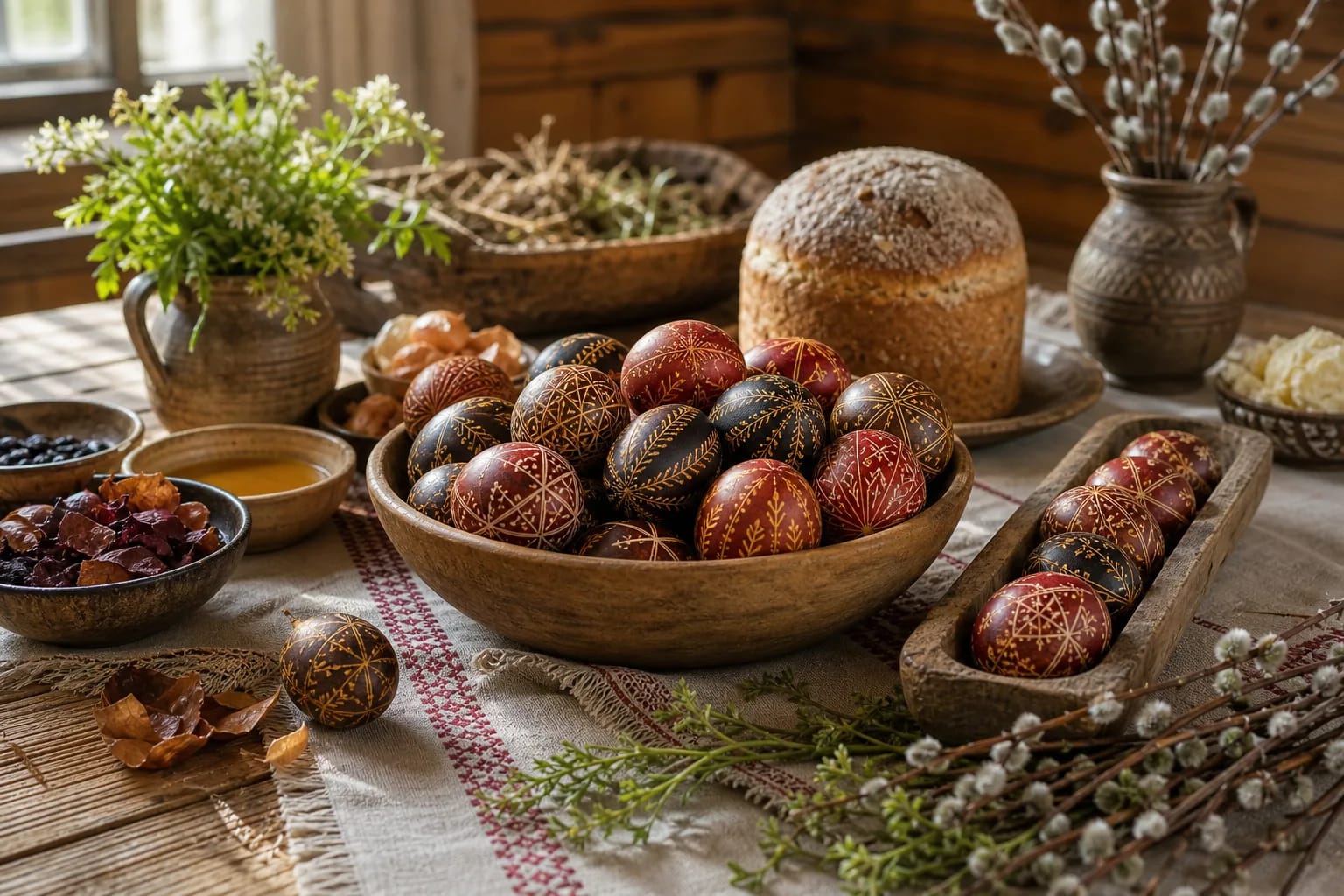
The margutis is the main Easter symbol. The egg has long been a sign of life, fertility, and rebirth, so decorating it became a deep tradition. Lithuania uses several main techniques.
Wax-resist decoration draws patterns in melted wax before dyeing; after the wax is removed, light ornaments remain. Scratching cuts patterns into an already dyed egg. Natural dyes use onion skins and plants. Common motifs include suns, stars, and plants.
Swings and Egg Rolling
Swinging is an old spring custom. People believed that the higher one swung, the better the harvest and health would be. Swings were also a place for young people to meet and socialize.
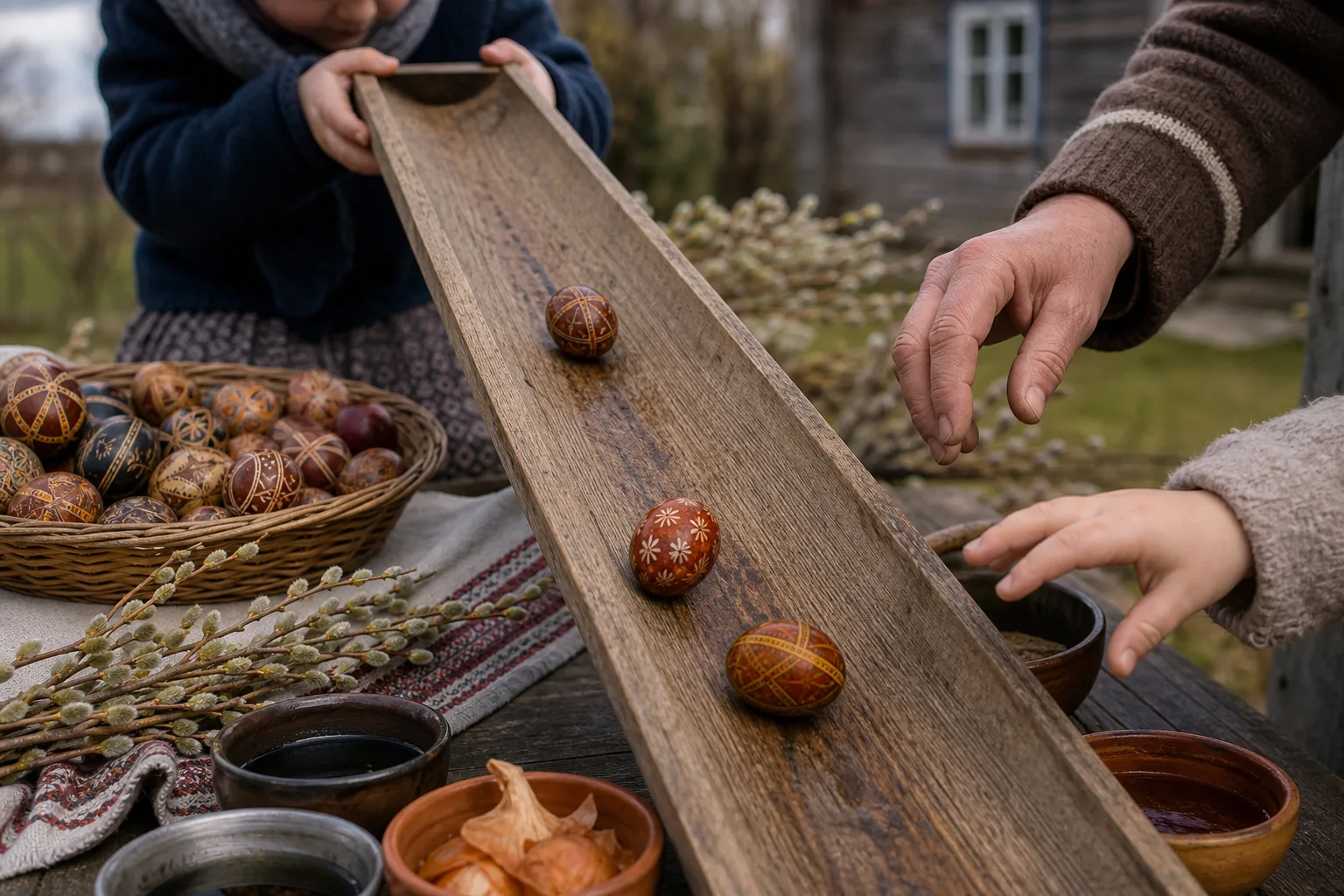
Egg rolling is a playful Easter game. Marguciai are rolled down a sloped board, and the winner's egg rolls farthest or touches others. The game is linked with luck, strength, and fertility.
Who Is Velyku Bobute?
Velyku bobute is a Lithuanian Easter figure. Stories say she visits homes on the night before Easter and leaves marguciai for children. She is the Lithuanian counterpart of the western Easter bunny.
The figure keeps Easter playful for children while tying it to the symbol of the egg. A margutis given by Velyku bobute becomes a gift of life and spring joy.
Palm Sunday and Lalavimas
The Sunday before Easter is Palm Sunday. Verbos made of willow, juniper, and dried herbs are blessed in church, kept at home as protection, and used with the saying “not I strike, the verba strikes, Easter in a week.”
Lalavimas was not confined to Easter Monday. The Lithuanian Museum of Ethnography describes visiting rounds from Easter evening until the following morning. The group, usually young men, offered songs and good wishes and received decorated eggs or refreshments. Its timing and repertoire should be tied to a particular local account.
Keeping Lithuanian Easter Traditions Today
Easter is easy to mark at home by decorating marguciai, preparing the festive table, and playing egg rolling or egg tapping with family. Even onion-skin dyeing gives the feast a living traditional feel.
For a deeper experience, visit museum programs that teach wax decoration, set up swings, and present lalavimas. They show Easter as a community spring feast, not only a family celebration.
Main Easter customs and meanings
Easter customs join the Christian meaning of Resurrection with older spring symbols. Egg, swinging, and water speak about life, fertility, and nature waking after winter.
Decorating marguciai. Eggs are decorated with wax, scratched with a knife, or dyed with natural dyes, especially onion skins. Common patterns include suns, stars, tree of life, and plant motifs.
Giving and tapping eggs. Marguciai are exchanged and given to relatives. Tapping egg ends tests which is strongest; a winning egg is traditionally regarded as a sign of good luck.
Swinging. People swing in specially built swings. It was believed to bring health, protect from evil, and ensure good harvest.
Egg rolling. Marguciai are rolled down a sloped board; the winner's egg rolls farthest or hits other eggs.
Velyku bobute. This Lithuanian Easter figure is believed to bring children marguciai at night, a local counterpart to the Easter bunny.
Palm Sunday. The Sunday before Easter, verbos of willow, juniper, and herbs are blessed. Tapping with a verba brings wishes of health.
Lalavimas. Singing groups often began their visiting rounds on Easter Sunday evening and continued at night, with local variation. They greeted households and received decorated eggs or refreshments.
Easter table. After Lent, the table is rich again: marguciai, meat, cakes, and curd dishes express abundance and joy.
Where to experience it
Where to experience Easter in Lithuania?
Easter is first celebrated at home and in church, but marguciai decoration, swings, and lalavimas can also be seen in museums, ethnocultural education, and community events.
Home and Church
The main Easter places are family homes and churches, with Resurrection Mass and the festive table.
Lithuanian Ethnography Museum in Rumsiskes
Easter programs teach marguciai decoration, traditional swinging, and lalavimas.
Ethnoculture Centers
Vilnius, Kaunas, and other cities organize wax and scratching-technique egg-decorating workshops.
Community Feasts
Local communities hold Easter events with swings, games, and marguciai contests, so the feast can be celebrated widely.
Easter: songs, sutartines, and related pages
Easter closes Lent, which begins after Uzgavenes, and continues the spring cycle. It connects with Uzgavenes, Jore's greenery, and folk songs.
Easter: frequently asked questions
When is Easter celebrated in Lithuania?
Easter is movable: the first Sunday after the first full moon after the spring equinox, so it falls in March or April.
How are Lithuanian marguciai decorated?
They are decorated with wax, scratched with a knife, or dyed naturally, often with onion skins. Common motifs include suns, stars, and plants.
Why do people swing at Easter?
Swinging is an old spring custom believed to bring health, guard against evil, and ensure good harvest. Swings were also youth meeting places.
How is egg rolling played?
Marguciai are rolled down a sloped board. The winning egg rolls farthest or hits other eggs; the game is tied to luck and fertility.
Who is Velyku bobute?
Velyku bobute is the Lithuanian Easter figure believed to bring children marguciai at night, comparable to the Easter bunny.
What is Palm Sunday?
It is the Sunday before Easter, when verbos of willow, juniper, and herbs are blessed. Tapping with a verba brings wishes of health.
What is lalavimas?
Lalavimas is Easter house-visiting with songs and good wishes. Many accounts place its beginning on Easter Sunday evening, continuing at night; local timing varied. The singers received decorated eggs and refreshments.
What does the margutis mean?
The egg has long symbolized life, fertility, and rebirth. The margutis is the main Easter sign joining Resurrection and spring awakening.