- Field
- Christmas Eve tradition of kūčiukai, šližikai, prėskučiai, poppy milk, and fasting baked goods
- Type
- ritual craft
- Heritage status
- living tradition
- Context
- kūčiukai, šližikai, prėskučiai, parpeliai, kleckučiai, poppy milk, Kūčios, kūčia, kissel, kalėdaitis, plotkelė, fasting, 12 dishes, empty plate, ritual baked goods, Christmas
Kūčiukai, Šližikai, Prėskučiai, Parpeliai, Kleckučiai, Ritual Kūčios baked goods
Kūčiukai and Ritual Baked Goods forms and objects
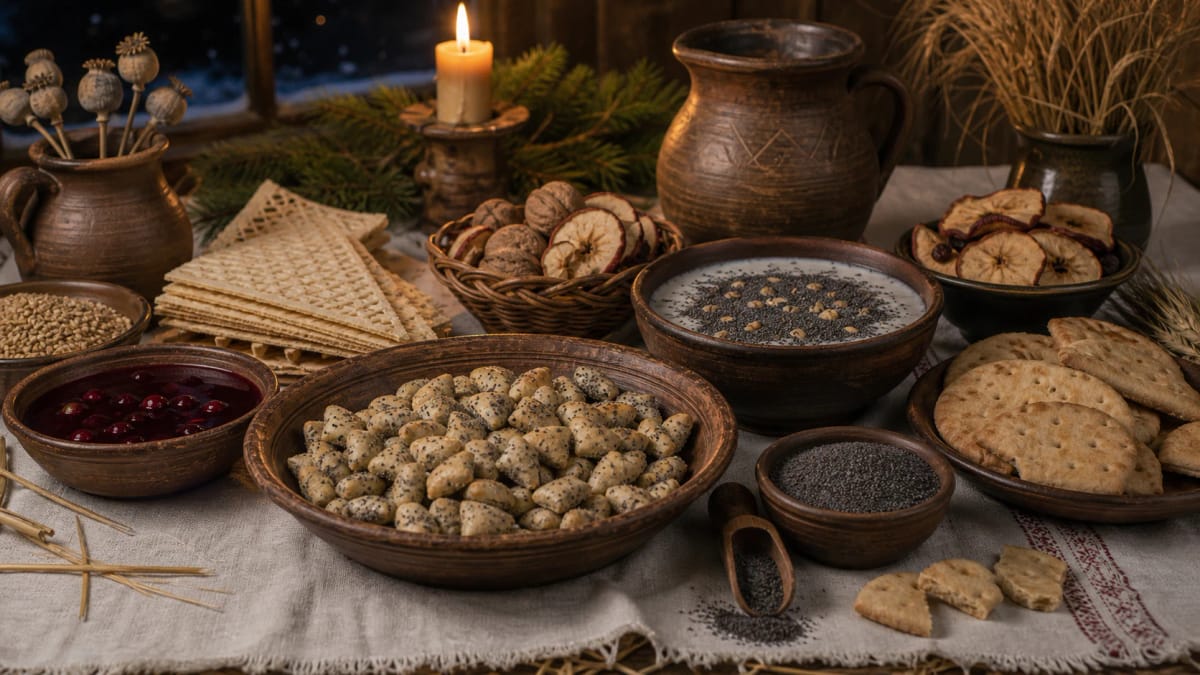
Kūčiukai: Small pieces of fasting dough with poppy seeds, eaten dry or soaked in poppy milk.
Šližikai, prėskučiai, parpeliai: Regional names for kūčiukai or related Kūčios baked goods, showing the variety of local language and family custom.
Kalėdaitis or plotkelė: A blessed wafer shared during Kūčios, connected with the Christian family gesture of reconciliation and blessing.
Other ritual baked goods: Restrained fasting wafers, buns, or grain-based baked goods belonging to the family's and region's Kūčios table tradition.
What are kūčiukai?
Kūčiukai are small fasting baked pieces, usually made from flour dough with poppy seeds and eaten during Kūčios. They may be eaten dry, but very often they are soaked in poppy milk. Their meaning is revealed not as candy or cookies, but as part of the Kūčios table.
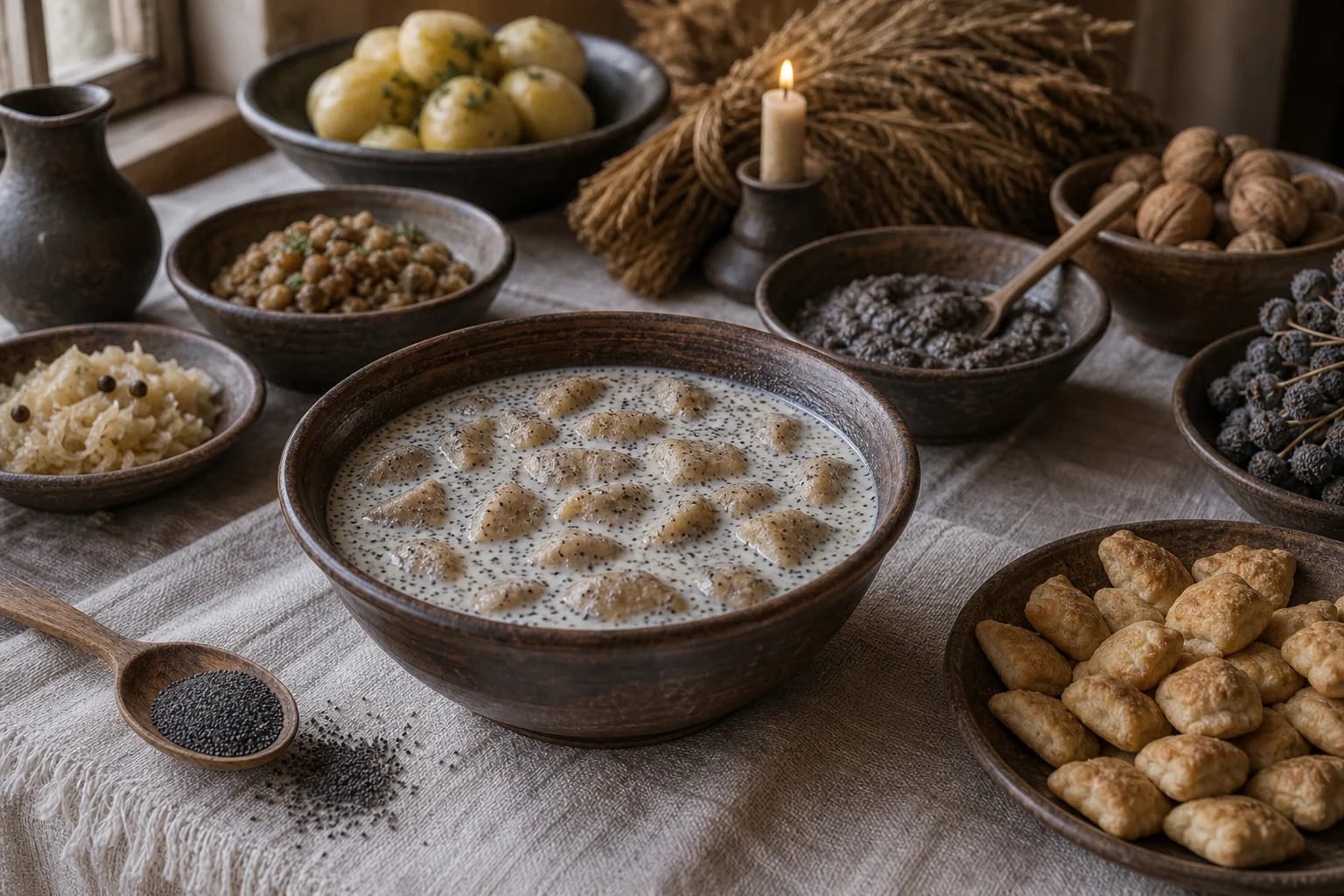
Different areas and families use various names: šližikai, prėskučiai, parpeliai, kleckučiai, and others. These names show that the tradition lives in language as well as in recipe.
Kūčiukai belong to the wider field of ritual baked goods: grain, poppy seed, fasting, waiting for Christmas, remembrance of ancestors, and family reconciliation.
Kūčios, not simply Christmas cookies
The greatest mistake is to present kūčiukai as ordinary Christmas cookies. They belong to Kūčios, the evening of December 24, which in Lithuania has its own restrained, fasting, family-ritual world.
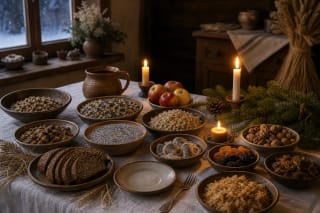
The Kūčios table is traditionally meatless, often without dairy products, and includes fish, grains, poppy seeds, kissel, kūčia, vegetables, mushrooms, and other dishes. Kūčiukai have a small but very recognizable place on this table.
A page about kūčiukai should therefore speak about the evening, the table, and the ritual, not only about baking technique.
Poppy seeds and poppy milk
Poppy seeds are the most important sign of kūčiukai. They are added to the dough, and poppy milk is prepared as a separate Kūčios drink or pouring liquid in which kūčiukai are soaked. This combination is strongly recognizable in Lithuanian tradition.
Poppy milk has a mild, white, ritually restrained appearance. It is not a luxurious dessert, but part of a fasting table. For that reason kūčiukai with poppy milk carry a different emotion from decorated Christmas sweets.
The abundance of poppy seeds is also associated with fertility, seeds, smallness, and multitude. Such meanings should be presented as a field of traditional symbolism, not as one compulsory explanation.
Regional names
Šližikai, prėskučiai, parpeliai, and kleckučiai are not only curious words. Regional names show that families make similar but not identical baked goods. In one place they are smaller, elsewhere larger; in one family sweeter, in another entirely plain.
The word prėskučiai emphasizes plainness, restraint, and fasting simplicity. Šližikai and other names point more to local speech and family memory. The Universal Lithuanian Encyclopedia describes prėskučiai, also called papeliai, kūčiukai, or sližikai, as bun-like small pieces made of fine wheat flour, usually baked by Catholics with poppy seeds for the Kūčios supper and eaten with sweetened poppy milk or kissel; in Suvalkija, larger prėskučiai were baked on a dried cabbage leaf and also served as an everyday dish.
The tradition of kūčiukai is therefore better described not as one standard recipe, but as a family of Kūčios baked goods.
Ritual baked goods and kalėdaitis
The world of Kūčios table baked goods also includes the kalėdaitis, also called plotkelė. This is a blessed wafer shared by the family before the meal or at its beginning, with wishes for peace and blessing.
Kalėdaitis is not the same as kūčiukai. It belongs to the Christian gesture of family reconciliation and sharing, while kūčiukai are small fasting baked pieces with poppy seeds. Both stand on the same table, but they have different functions.
Other ritual baked goods may be family or regional customs: plain buns, wafers, or grain-based foods whose meaning comes from the restraint of Kūčios evening.
Kūčia, grain, and remembrance of ancestors
The name Kūčios is connected with kūčia, a dish of grains, poppy seeds, honey, or other ingredients, opening a very old layer of grain, harvest, and memory. Kūčiukai, as small grain-based baked goods, live in the same symbolic field.
Remembrance of the dead is also important on Kūčios evening. The empty plate, quiet table, straw under the tablecloth, reconciliation, and family gathering show that the food is not only dinner.
Kūčiukai may look simple, but their place on the table is very strong: they are food of sharing, waiting, and generational memory.
Baking and texture
Kūčiukai are usually baked small so they are easy to eat with poppy milk. They may be harder or softer depending on family tradition, dough, and baking. If they are too large, they lose the character of a small ritual baked piece.
The dough is usually restrained. This is not a rich buttery dessert, but a fasting baked good. Modern sweeter variants are possible, but they should not hide the traditional plainness.
The poppy seeds in the dough should be visible and perceptible, because they connect kūčiukai with poppy milk and the symbolism of the whole Kūčios table.
What should not be confused?
Kūčiukai should not be confused with decorated Christmas cookies, gingerbread, or Western-style cookie baked goods. They have a different table, a different time, and a different meaning.
It should also not be claimed that there must always be exactly twelve dishes everywhere or that every family follows the same order. The twelve-dish pattern is widespread, but concrete practices differ.
One-sided explanation should also be avoided: Kūčios is not only pagan and not only ecclesiastical. In Lithuania it joins Christian, family, and older agrarian symbolic layers.