- Field
- Spoons, ladles, scoops, troughs, and bowls hollowed or carved from one piece of wood
- Type
- traditional craft
- Heritage status
- well attested
- Context
- Lithuanian spoon making, carved wooden vessels, scoops, troughs, bowls, hollowing, carving, clog makers, linden, alder, aspen, maple, wooden kitchen
Wooden spoon making, Carved wooden vessels, Hollowed wooden vessels, Wooden spoon carving, Hollowing and carving
Wooden Spoon Making and Carved Wooden Vessels forms and objects
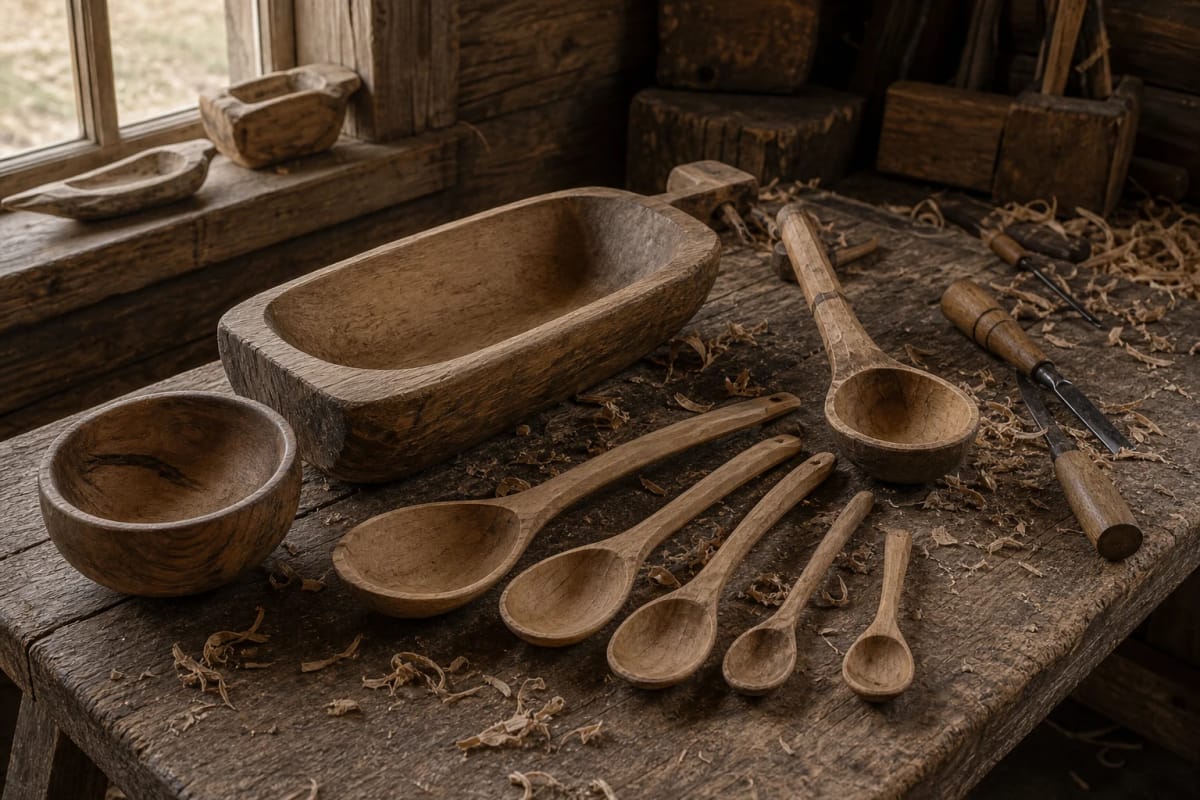
Spoons, Ladles, and Scoops: Eating, stirring, and measuring tools carved from a handle and a hollowed bowl: everyday wooden spoons, long-handled ladles for soup, and scoops for water, kvass, or grain.
Troughs and Kneading Tubs: Large vessels hollowed from a single block of wood for kneading bread, salting meat at slaughter time, washing laundry, bathing children, or feeding animals; a lovys is a long trough-like vessel.
Bowls and Table Vessels: Hollowed wooden bowls, plates, and smaller containers used for food, salt, flour, fat, and other kitchen needs.
Kitchen Implements: Rolling pins, paddles, stirrers, mashers, and other carved or hollowed kitchen tools where handwork served a practical task.
What Are Spoon Making and Hollowed Wooden Vessels?
Šaukštadirbystė, the making of wooden spoons, belongs to the wider craft of hollowing and carving useful objects from a single piece of wood. A spoon’s structure - a handle and a hollowed head - explains the craft in miniature: one part remains strong for the hand, while another is carved out for food, water, dough, or grain.
The same principle shaped larger village utensils. Ladles, scoops, kneading tubs, troughs, bowls, and other kitchen vessels were hollowed or carved from one block of wood, forming much of the Lithuanian rural kitchen before metal, ceramics, and industrial goods became common.
This work is more practical than decorative carving, but it still belongs to folk art. A good spoon, bowl, or trough is light enough to use, strong enough to last, balanced in the hand, and honest about the wood from which it was cut.
Historical Depth
The spoon is among humanity’s oldest tools. According to the VLE, spoons were made of bone and stone already in the Stone Age, and in ancient Egypt around 5000 BC of wood and stone, later also of ivory; spoons were used in ancient Greece and ancient Rome, and the familiar modern spoon form settled in the second half of the 17th century.
Wood rarely survives as well as stone or metal, so very old wooden vessels are uncommon. The technique itself is archaic: with a sharp edge, a curved gouge, and suitable wood, a maker can create useful hollow forms without complex machinery.
In Lithuania, hollowing remained widely used into the mid-20th century for both wooden building elements and household goods such as troughs and ladles. It was not a rare specialization but a broad rural woodworking skill.
Wood and Raw Material
Hollowed vessels need wood that can be carved cleanly and does not split easily. Linden, alder, and aspen were especially useful because they are soft, workable, and do not give food a sharp smell or taste.
For spoons and smaller tableware, denser woods such as maple could be chosen because they wear well and keep a smooth surface; aromatic juniper was also used. Large tubs and troughs required a wide, healthy section of trunk without large knots.
Preparation mattered as much as carving. If the wood dried too quickly or unevenly, the vessel cracked. Some makers roughed out large vessels from greener wood and then dried them slowly so the hollow and walls settled without splitting.
Tools and the Principle of Hollowing
Traditional spoon making used a knife, a curved gouge or hook knife for the bowl, chisels, drills, and an axe for rough shaping. Larger log grooves could also be cut with a specialized hollowing axe.
The work moves from outside to inside. First the maker roughs out the silhouette: the handle and bowl of a spoon, or the outer wall of a vessel. Then the inner cavity is opened gradually with a curved tool, and the surface is finished with a knife and smoothing.
Grain direction is crucial. Cutting against the fibers causes tearing and splitting, so the tool angle, pressure, and path must follow the wood. Around knots, the maker works slowly; a hollowed vessel records that constant negotiation with the material.
The Process Step by Step
A spoon begins with a suitable blank, often split rather than sawn so the grain runs along the handle. The maker roughs it with an axe or knife, marks the relation between handle and head, and carves an outside shape that sits comfortably in the hand.
The bowl is then hollowed gradually with a curved gouge or hook knife. The walls must remain even, the lip thin enough for eating, and the whole spoon light and balanced. Edges are rounded so they do not cut the mouth, and tool marks may be smoothed or left subtly visible.
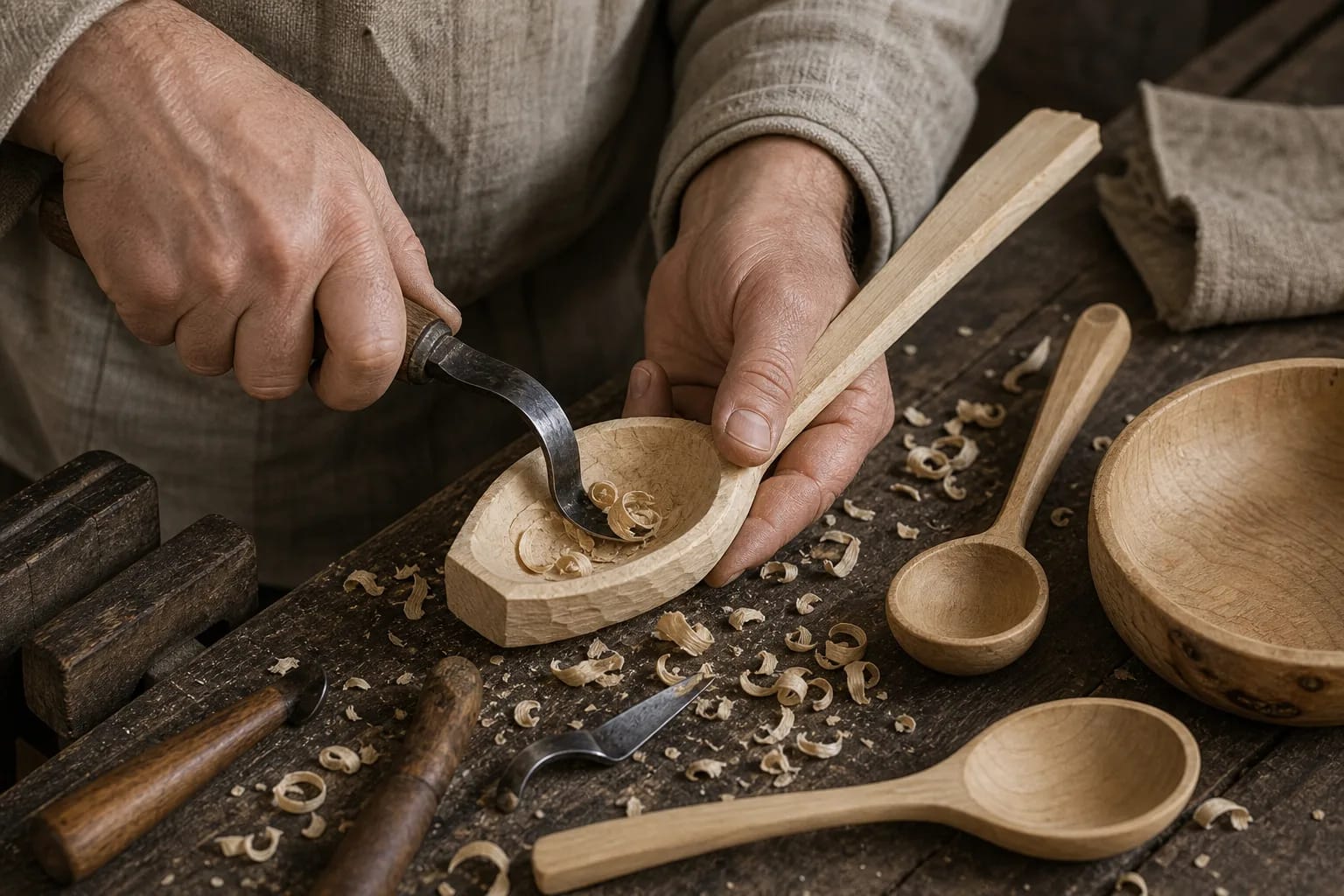
Large objects such as troughs, tubs, and bowls follow the same logic at heavier scale. The outside is shaped from a thick log section, the inside is hollowed with chisels and gouges, the walls are kept even, and the finished object is dried slowly to prevent cracking.
Objects and Their Uses
The smallest and most common objects were spoons, ladles, and scoops. Wooden spoons served daily eating; long-handled ladles lifted soup or stew from pots; scoops measured or carried water, kvass, or grain. In the 18th century silver spoons were found only in the homes of nobles, wealthy townspeople, and manors.
The largest hollowed vessels were geldos and loviai. A gelda could hold bread dough, salted meat, laundry water, or even a child’s bath; a lovys was a long trough, often used for animal feed. Hollowed bowls, small salt or flour dishes, rolling pins, paddles, and stirrers filled out the kitchen set.
From the early 20th century, decorative wooden spoons also appeared: carved as gifts or wall pieces rather than eating tools. By the second half of the 20th century, everyday spoons were mostly made from metal alloys, especially stainless steel, while wooden spoons remained useful for stirring and cooking.
Makers, Clog Makers, and Village Life
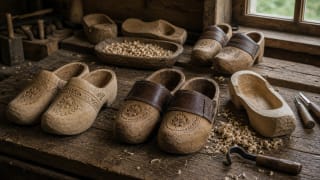
Hollowed wooden vessels were not made only by specialists. Peasants often made their own wooden spoons, and village clog makers - klumpdirbiai - also carved spoons because both clogs and spoon bowls require controlled hollowing.
Larger troughs, kneading tubs, and big bowls more often came from skilled village makers who had the strength, good timber, and experience to prevent splitting. Objects were made as needed, exchanged, or bought at markets and fairs.
This craft stood close to everyday life. A farmer with basic woodworking skill might carve a spoon during winter evenings, while more demanding pieces went to a recognized local master whose tools could serve a household for decades.
Hollowed Vessels and Other Wood Crafts
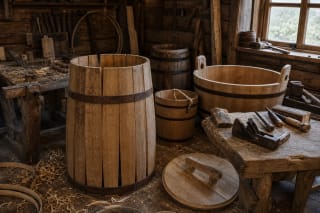
Hollowed vessels must be distinguished from stave-built vessels. A hollowed vessel is carved from one piece of wood and has no joints; barrels, tubs, buckets, and similar stave vessels are assembled from separate boards tightened by hoops. Both are wooden containers, but they are different crafts.
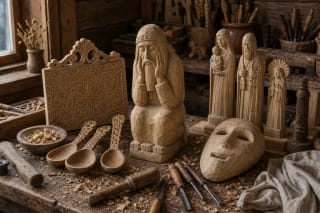
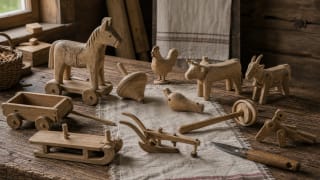
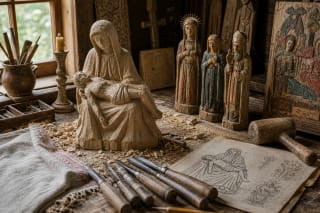
Spoon making is tied closely to wood carving as a practical domestic branch. The same linden wood, knives, and gouges could make a spoon, a distaff, a toy, or a devotional figure; what changes is the purpose - utility, ornament, play, or piety.
Wooden vessels belonged to a wider world of rural wooden household goods that also included birch-bark objects, woven baskets, and furniture. In Lithuanian villages, wood was the most accessible and versatile material for much of kitchen and household life.
How to Recognize and Evaluate a Hollowed Vessel Today
A true hollowed vessel is made from one block of wood. It has no glued seams, nailed boards, or stave joints, and the grain runs through the wall. Old pieces often show light gouge marks inside, evidence of hand hollowing rather than machine production.
It also matters whether the object was meant to be used or displayed. A daily spoon, trough, or bowl has a practical form, worn surface, and solid structure. A decorative spoon, especially from the 20th century, may be more ornate but functions more as gift, souvenir, or wall piece.
Today the craft survives through folk artists, craft centers, museum education, and workshops. The strongest new work knows whether it is a safe everyday spoon, a museum-based reconstruction, or an original piece, and old wooden vessels should be protected from extreme dryness and humidity swings.