- Field
- Northern Lithuanian homemade beer, malt, wort, and communal hospitality tradition
- Type
- traditional craft
- Heritage status
- living tradition
- Context
- homemade beer, farmhouse beer, Biržai, Kupiškis, malt, wort, hops, yeast, fermentation, brewer, žaldokas, barrel, tub, strainer, Kaimiškas Jovarų alus, PGI
Farmhouse beer, Home brewing, Biržai beer, Kupiškis beer tradition
Homemade Beer forms and objects
Homemade barley beer: Beer fermented from barley malt, water, hops, and yeast for household and village festive needs.
Biržai and Kupiškis region beer: A living Northern Lithuanian tradition in which brewing knowledge is transmitted in families and communities.
Kaimiškas Jovarų alus: A Pakruojis-region farmhouse beer registered as a protected geographical indication, connected with family yeast and local production reputation.
Festive hospitality beer: Beer made for weddings, christenings, work gatherings, funerals, parish feasts, or guests, not for everyday drinking.
What is homemade beer?
Homemade beer is a fermented drink made from malt, water, hops, and yeast in a household or village setting. In Lithuania it is especially strongly associated with Northern Lithuania, the Biržai and Kupiškis regions, where brewing knowledge is passed on in families and communities.
This phenomenon should be understood more broadly than a recipe. Homemade beer was a social object, made for weddings, christenings, funerals, work gatherings, parish feasts, guests, and community meetings. The brewer had to know not only technology but also occasion.
Because it is an alcoholic drink, a page about it must be responsible. Heritage is not an invitation to consume. The focus is craft, knowledge, agriculture, hospitality, and regional identity.
Malt, wort, and hops
The basis of homemade beer is malt: sprouted, dried, and prepared grain, usually barley. Malt gives sugars, flavor, and color. Without good malt beer has no firm base.
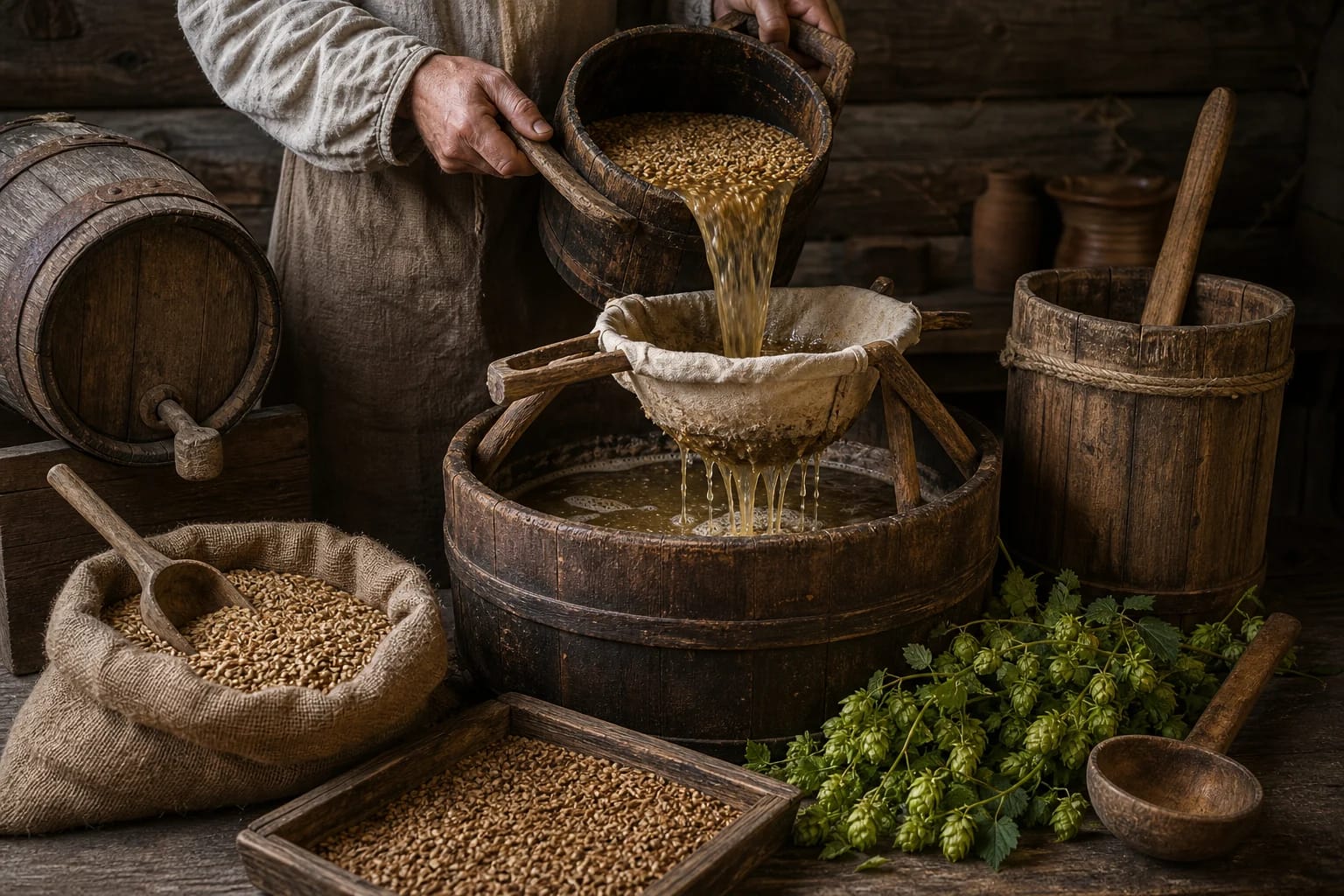
Wort is the liquid infusion of malt that is later fermented. Its quality depends on temperature, straining, water, and malt preparation. A traditional brewer must sense when the wort is rich enough.
Hops provide bitterness, aroma, and help the drink keep. In Lithuanian brewing, hops were not only an ingredient but a homestead plant that had to be grown, gathered, and stored.
Tools and vessels
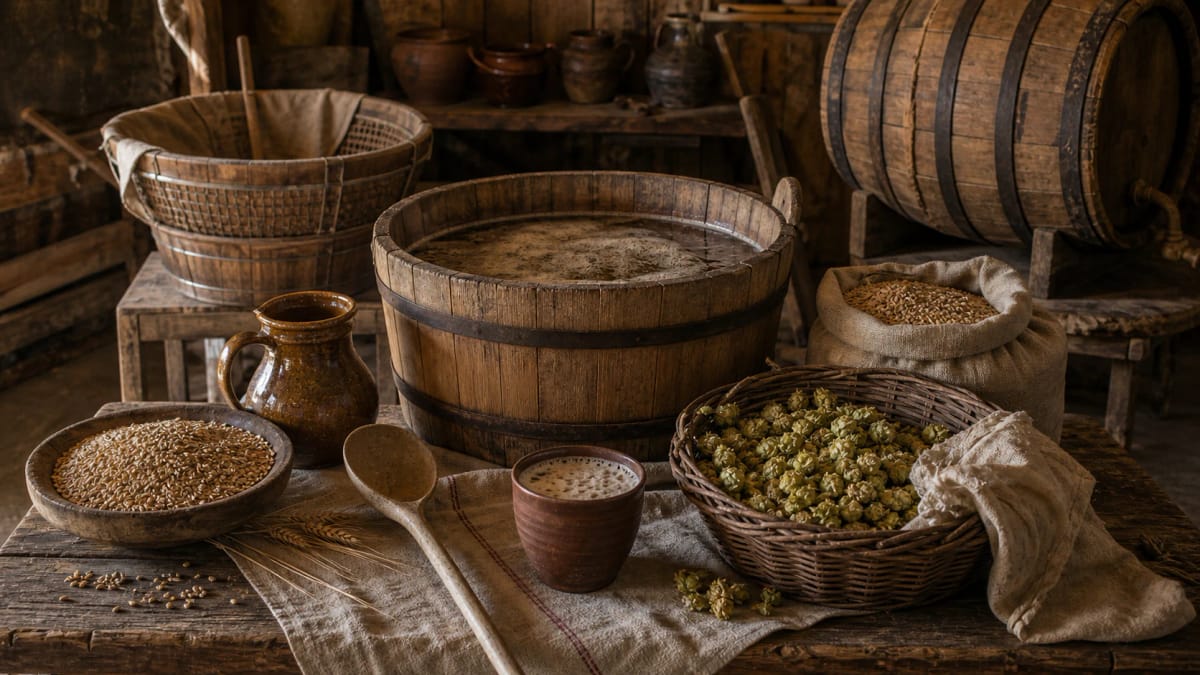
Homemade beer making uses tubs, barrels, strainers, ladles, troughs, and vessels for wort and fermentation. Wood and cleanliness mattered greatly. A poorly kept vessel could spoil all the beer.
A strainer helps separate liquid from malt solids. A barrel or other fermentation vessel holds the drink until the feast. Each vessel has a purpose, so brewing is also knowledge of household equipment.
In contemporary education it is important not to romanticize dirt or accident. Traditional beer could be made with simple tools, but a good brewer cared for cleanliness, temperature, and order.
Biržai and Kupiškis
The homemade beer tradition of the Biržai and Kupiškis regions is inscribed in Lithuania's Intangible Cultural Heritage Inventory. This shows that the craft is valued not only as a product but as a communal system of knowledge.
In Northern Lithuania beer is connected with brewing families, hospitality etiquette, local stories, museum displays, and regional identity. Biržai Region Museum Sėla helps present this tradition publicly.
The region should be understood carefully. Beer was made elsewhere in Lithuania too, but Biržai and Kupiškis are among the strongest centers of living tradition, not merely a tourist brand. VLE notes that homemade beer has been made in Lithuania since the eleventh century; in Central and Northern Lithuania, especially Biržai and Pasvalys, it is usually made from barley malt, hops, and water, with sugar added for strength and peas for foam, while in Žemaitija weaker bread beer was made from dried bread.
Brewer and žaldokas
The brewer is the person who knows the whole process: malt preparation, wort work, amount of hops, fermentation, storage, and the moment of hospitality. In tradition the brewer could have strong authority because the quality of the festive drink depended on him.
The name žaldokas is connected in Lithuanian culture with the beer maker and home brewing. Such names show that the craft had its own language and social role.
A good brewer has not only technique but moderation. He knows that beer is part of hospitality, not an occasion to cross limits.
Celebrations and community
Homemade beer was made for clear occasions: weddings, christenings, funerals, work gatherings, community meetings, and receiving guests. In such situations it acted as a sign of hospitality and the shared table.
Beer could be served according to an established order. Hospitality had etiquette: who pours, who drinks, how the guest is honored, and how the seriousness or joy of the occasion is observed.
Today, valuing the tradition means seeing its social limits too. Heritage is not the same as commercial mass consumption. Occasion, community, and responsibility matter in homemade beer culture.
Kaimiškas Jovarų alus
Kaimiškas Jovarų alus is a Lithuanian farmhouse beer registered as a protected geographical indication. It is connected with the Jovarai setting in the Pakruojis region, family experience, and the reputation of local production.
It is important not to say that all homemade beers are Jovarai beer. The protected indication applies to a concrete name and specification. It helps explain how a traditional drink can be legally protected but does not cover all Lithuanian brewing.
The Jovarai example complements the Biržai and Kupiškis tradition: one field speaks about living community heritage practice, the other about protected product reputation.
Difference from keptinis beer
Homemade beer can be diverse, but keptinis beer is a separate tradition in which barley malt dough or loaves are baked in a bread oven before wort is prepared. Keptinis beer is therefore not just any homemade beer.
This distinction matters because the two phenomena have different technological memory. On the homemade beer page the basis is malt, wort, and fermentation; on the keptinis beer page the key stage is baking in the oven.
Both phenomena show that Lithuanian brewing was much more varied than the single general word beer.
Responsible view today
Home brewing today meets questions of law, food safety, alcohol regulation, and responsible consumption. Heritage can be learned in museums, education, or from certified makers, but production and distribution must follow current rules.
Homemade beer should not be confused with distillates or illegal production. Beer is a fermented drink, while distilling is another technology and another legal field.
The best contemporary reading of the tradition is to respect the brewer's knowledge, region, and community, while treating alcohol responsibly.