
Lithuanian mythology
Lithuanian symbols and meanings
Explore Lithuanian symbols as a living language of songs, tales, rites, folk art, textiles, woodcarving, regional heritage, and old worldview.
How to read Lithuanian symbols
Some symbols are strongly attested in folklore and custom, while others are clearer in folk art or later reconstructions. The English pages separate widely witnessed motifs from more cautious readings.
Symbol guides
English symbol pages distinguish well-attested folklore and custom from later reconstruction, and explain how motifs move between song, craft, and ritual.
Mythological animals
Explore this family →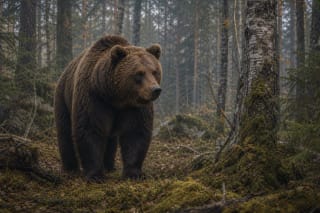
In Lithuanian folklore the lokys or meška, the bear, is a symbol of forest strength, winter, heavy bodily power, and a beast close to humans yet dangerous.
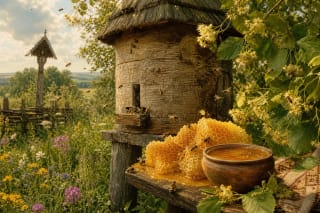
In Lithuanian tradition the bee, hive, and honey bring together diligence, sacred household order, bičiulystė or bee-based friendship, healing sweetness, and…
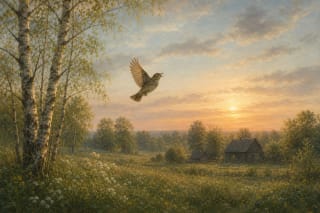
In Lithuanian folklore the bird is a symbol of message, sky, spring, soul, and boundary: it sings, foretells, returns from afar, and the vėlė is often imagined…
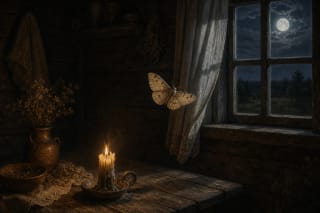
In Lithuanian folklore the butterfly or moth was linked with the human soul and the vėlė, the spirit of the dead: a winged being in which the departing soul…
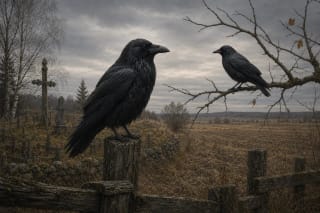
In Lithuanian folklore the crow and raven are birds of death, fate, and prophecy: black carrion-eaters circling homes and cemeteries.
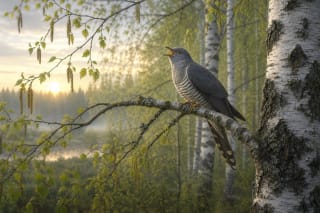
In Lithuanian folklore the cuckoo is a symbol of the voice of spring, counting time, questions of fate, and often orphanhood or longing.
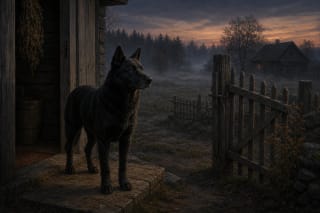
In Lithuanian folklore the dog is a threshold and chthonic guardian that senses death and the nearness of the other world.

In Lithuanian folklore the duck is a bird of water and the world's beginning.
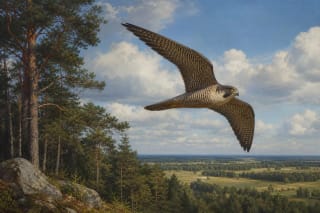
In Lithuanian songs and symbolism the falcon most often appears as an image of high flight, the young man, nobility, vigor, and a message from afar.
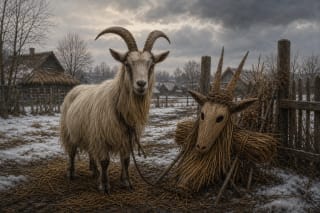
In Lithuanian folklore the goat is connected with Perkūnas, whose heavenly cart is drawn by goats in legends, and with fertility and harvest rites.
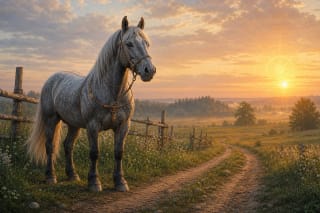
In Lithuanian songs, archaeology, and mythological imagery the horse is a symbol of journey, warrior, courtship, solar movement, and fateful return or…
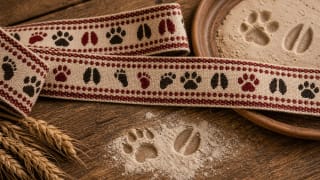
Little footprints, cat-paws, and goat-hoof motifs are small track-like Lithuanian patterns that connect ornament with animals, road, the household world,…
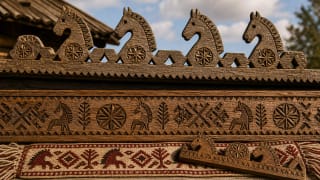
Little horses in ornaments connect the mythological importance of the horse with traditions of roofs, lėkiai, woodcarving, and household protection.
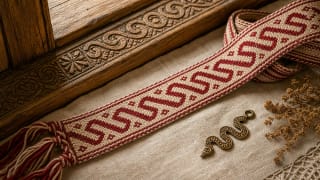
Little žaltys, little snake, and S pattern are winding-line motifs that in Lithuanian tradition may be connected with the žaltys, household protection, water…
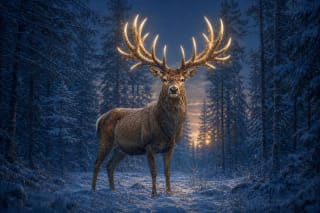
The nine-antlered stag is a mysterious image in Lithuanian calendar songs: a cosmic winter-festival animal carrying smiths, a chamber, or a flame on its antlers…
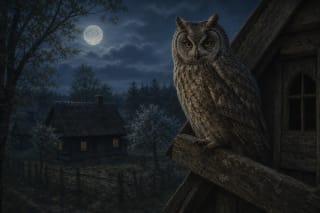
In Lithuanian and Prussian folklore the owl is a bird of night and fate: its hooting near the house was considered an omen of death or illness.
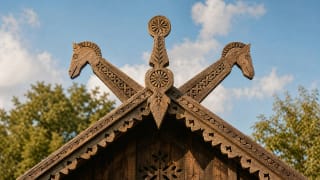
Lėkiai and roof horse heads are ornaments of Lithuanian wooden architecture, marking the roof ridge, a protected boundary, bird or horse motifs, and belief in…
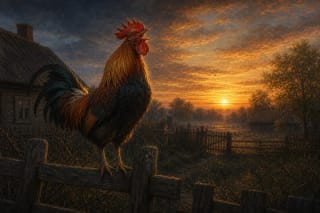
In Lithuanian folklore the rooster is a bird of dawn and fire: its crowing ends the night and the power of night beings such as laumės, devils, and ghosts, so…
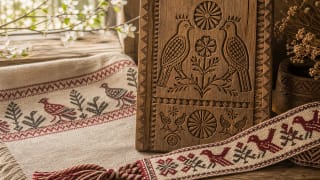
Small birds in ornaments connect Lithuanian bird symbolism with motifs of sky, message, soul, weddings, woodcarving, and textiles.
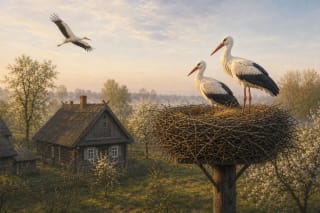
In Lithuanian folklore the stork is a sacred bird of the home, almost a family member: it brings back spring, brings children and luck, and a nest on the…

In Lithuanian folklore the toad and frog are animals of household luck and fertility: killing them brings misfortune or rain.
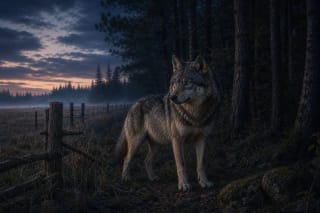
In Lithuanian folklore the wolf is a symbol of the wild boundary, forest threat, predation, and transformation, especially close to werewolf legends.
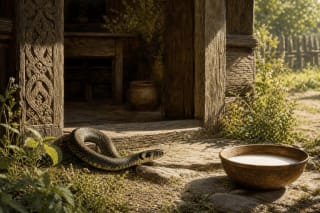
Žaltys is one of the most recognizable symbols of Lithuanian mythology: a sacred household guardian, a sign of vital powers, earth, ancestral memory, and…
Mythological plants
Explore this family →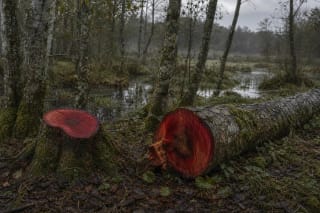
In Lithuanian folklore the alder is a chthonic tree associated with Velnias: freshly cut alder wood quickly reddens as if with blood, and legend explains this…
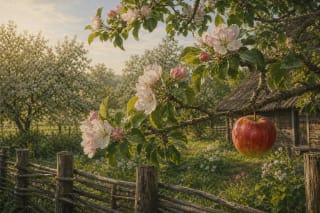
In Lithuanian songs and garden culture, the apple tree and apple mean flowering, fertility, love, family continuity, and the fullness of the home garden.
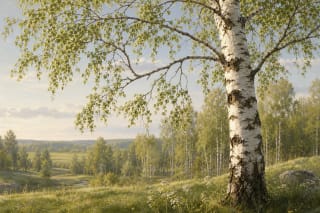
In Lithuanian songs and customs the birch is a symbol of whiteness, spring, youth, sensitivity, and sometimes an orphan girl's sorrow, joining the awakening of…

In Lithuanian songs clover is a symbol of greenery, the fullness of the field, youth, refrain rhythm, and luck, often acting as a poetic address.
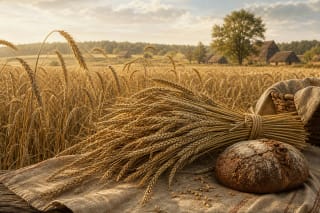
In Lithuanian tradition crops, rye, and grain mean harvest, bread, earth's fertility, household plenty, communal work, harvest completion rites, and connection…
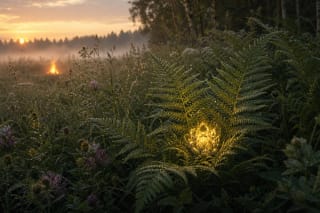
Dew and the fern flower are strong symbols of Rasos and Joninės: dew is linked with health, harvest, and morning renewal, while the fern flower means hidden…
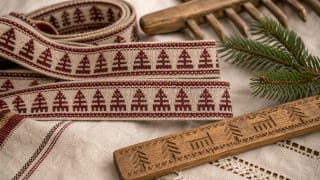
Fir-tree motifs, teeth, and little rakes are small Lithuanian pattern motifs that join plant form, border rhythm, tool imagery, and agrarian order.
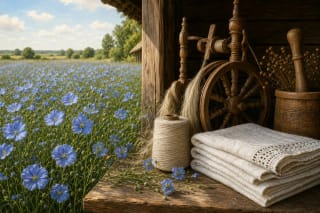
In Lithuanian tradition flax, thread, and linen connect flax work, the world of women, dowry preparation, the thread of life, cleanliness, and the sacred…
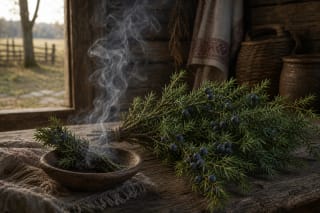
In Lithuanian tradition juniper is a plant of purification and protection: its smoke was used to cleanse homes, barns, livestock, and the house of the dead; it…
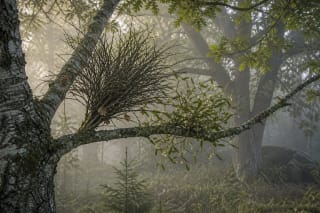
Laumė's broom and mistletoe are liminal tree images: one looks like an unusual broom of branches, the other grows on a tree, so both are easily connected with…

In Lithuanian songs the lily often acts as a plant of beauty, purity, youth, and poetic transformation, especially when a human fate is retold in the language…
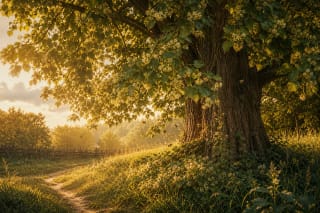
In Lithuanian symbolism the linden is linked with care, femininity, family, song poetics, images of Laima, flowering, bees, and a gentler layer of the sacred…

In Lithuanian mythology and tradition the oak is a symbol of the sacred tree, strength, lineage, masculine power, Perkūnas, and the sacred grove.

In Lithuanian tradition the poppy is a plant of sleep, quiet, and contact with the souls of the dead, especially at Kūčios: poppy milk and kūčiukai are shared…
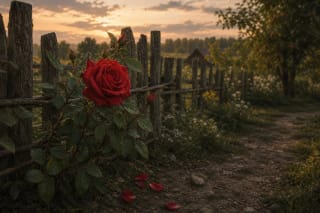
In Lithuanian songs the rose is an intense flower symbol: it means beauty, love, and youth, but sometimes also blood, death, or remembrance.
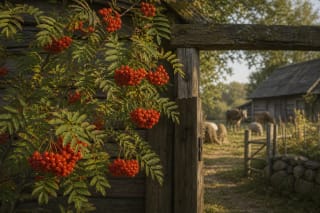
In Lithuanian folklore the rowan is a protective tree guarding people, livestock, and the homestead from witches, laumės, and Velnias; its branches are put on…

Rue is the clearest Lithuanian plant of maidenhood and virginity, the green herb most frequently sung in folklore: the rue garden marks a girl's youth, and the…

In Lithuanian ornament the spiral, coil, and fern shoot are associated with growth, the movement of life, renewal, old coiled ornaments, and plant patterns.

In Lithuanian folklore the spruce joins evergreen life, the winter forest, a woman's name, transformation into a tree, and one of the best-known tales, Eglė…
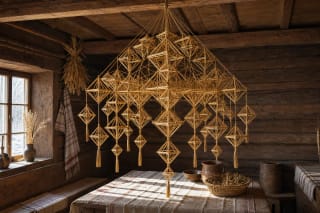
Lithuanian straw gardens, or sodai, are an intangible-heritage symbol: a spatial form tied from straw that speaks about household harmony, festive order,…
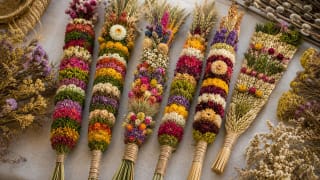
Vilnius verbos are sacred and artistic compositions made from plants, joining Palm Sunday, the vitality of spring plants, household protection, Kaziukas Fair,…
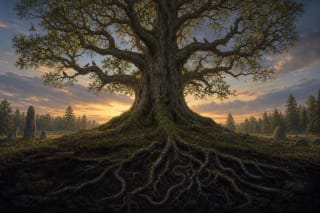
In Lithuanian and broader Baltic symbolism, the world tree helps explain the structure of the world: branches connect with the sky, the trunk with the human…

In Lithuanian songs and customs, wreath, rue, and ring signify maidenhood, a festive state, transition, weddings, the power of herbs, remembrance, and the…
Sky and cosmos
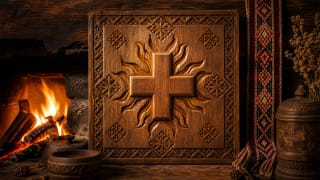
The Fire Cross is a rotating-cross type sign whose interpretation emphasizes fire, warmth, vital energy, and protection, but in Lithuanian context its name must…

In Lithuanian ornament, the Lightning Sign is a sharp zigzag or broken-line motif interpreted through Perkūnas, storm, heavenly fire, and protection, but its…
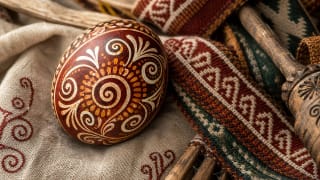
The little whirl is an ornament of turning movement, helping explain why cross, sun, wind, and water signs in Lithuanian folk art are often read as living forms…
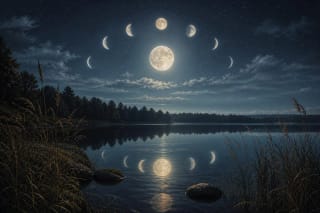
In Lithuanian mythology and folklore, the Moon helps explain night light, the cycle of phases, the rhythm of growth and waning, and relationships with the Sun,…

The Perkūnas Cross is a swastika-type sign that should be interpreted cautiously; it is connected with the symbolism of Perkūnas, fire, and lightning, but its…
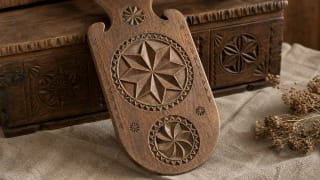
The rosette and segmented star are geometric signs of sun and light, especially important in Lithuanian distaff boards, wooden objects, and folk ornament.
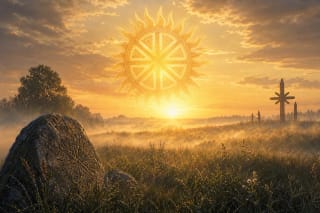
The Sun and sun wheel are among the strongest symbols in the Lithuanian worldview: they join light, warmth, life, time, calendar festivals, songs, and folk-art…
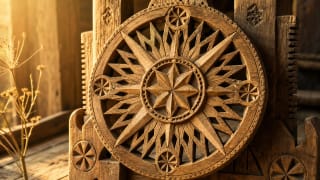
The sunburst is one of the most recognizable Lithuanian ornaments, signifying light, sun, the wheel of life, and sacred radiance in folk art, cross-crafting,…
Ritual and sacred objects
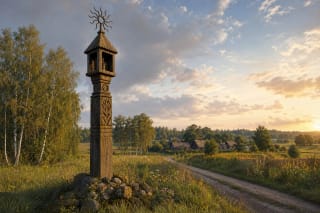
Cross-crafting, roofed poles, and sunbursts are Lithuanian sacred-space signs in which the Christian cross merges with solar, wooden, road, and local-protection…
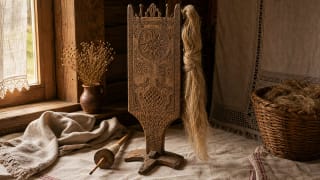
In Lithuanian tradition the distaff is not only a spinning device, but also a symbol of thread, women's work, a finely made gift, wedding acceptance, flax…
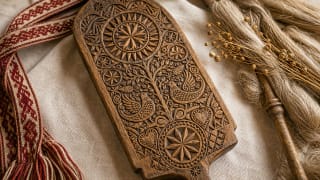
The distaff board is the decorated board of a spinning wheel, where Lithuanian woodcarving ornaments are especially concentrated: suns, segmented stars, little…
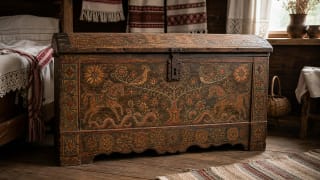
In Lithuanian tradition the dowry chest is a symbol of home, dowry, a woman's life transition, and decoration, often painted with motifs of the tree of life,…
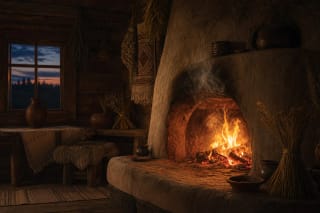
In Lithuanian mythology and custom, fire joins sacred fire, the household hearth, Gabija's protection, offering, safety, warmth, danger, and everyday respect…

In Lithuanian tradition, the margutis and egg are central symbols of spring life, renewal, luck, solar signs, and Easter customs.
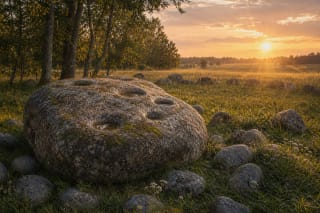
In Lithuanian mythology and sacred-place tradition, stone is a sign of memory, offering, boundary, local sacredness, and legend, especially in ritual stones…
Water, journeys and boundaries

In Lithuanian folklore, boat, sea, and bridge form a field of boundary and journey symbols: water separates, the boat carries across, and the bridge lets a…
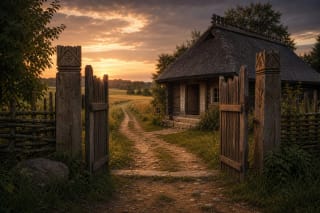
In Lithuanian folklore and custom, the road, gate, and threshold mark passage: from home into the world, from maidenhood into marriage, from the old year into…

In Lithuanian mythology and folklore, water joins life, cleansing, healing power, springs, rivers, lakes, the boundary between worlds, and the dangerous mystery…

Zigzag and wavelet are linear Lithuanian ornaments that may mean water, wave motion, movement, boundary, a snake's curve, or the path of lightning, depending on…
Signs and ornament
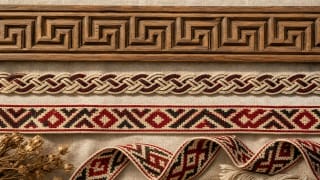
In Lithuanian ornament, the braid, meander, and band pattern act as symbols of boundary, road, continuous bond, and ordered sequence of signs.

The equal-armed cross and crosslets are among the simplest but most important Lithuanian ornaments, joining center, four directions, fire sign, Christian layer,…
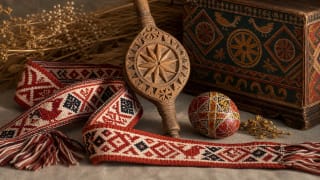
Lithuanian ornaments and patterns are a language of signs in which geometric forms, plants, animals, solar motifs, and fire motifs move through textiles, wooden…
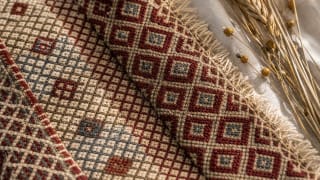
In Lithuanian ornament, the net pattern creates a structure of repeated cells, rhombuses, and connections that may mean order, field, abundance, protection, and…
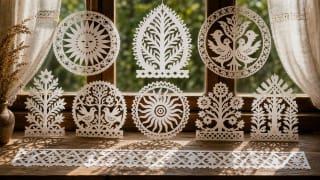
Paper cuttings are a Lithuanian paper-ornament tradition in which symmetry, cut patterns of light and shadow, plants, birds, and festive household decoration…
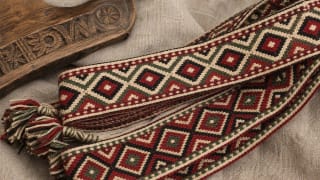
The rhombus and little eyes are important motifs in Lithuanian textiles and sashes, where a geometric form may mean earth, field, sun, wreath, fire, activity,…
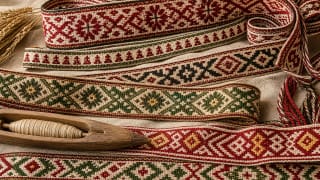
The woven sash is one of the oldest Lithuanian folk textile forms, where thread, pattern, gift, protection, and national identity come together as a wearable…
Lithuania Minor and the coast
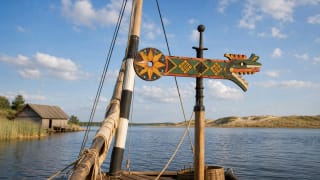
Curonian Lagoon weathervanes are a unique sign of lagoon fishers, serving wind-direction, aesthetic, and identification functions before becoming one of the…
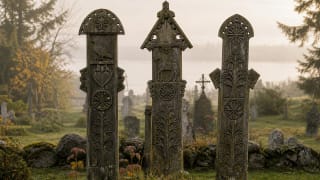
Krikštai are wooden grave markers of Lithuania Minor whose symbolism is linked with the World Tree, the soul's journey, birds, horses, little stars, hearts, and…