- Field
- Lithuanian linen tablecloths for everyday, festive, dowry, and ritual tables
- Type
- textiles
- Heritage status
- well attested
- Context
- Tablecloth, table, white linen, flax, lace ends, crochet, embroidery, Kūčios, weddings, dowry
Linen tablecloths, Table linens, Festive tablecloths, Woven tablecloths, Dowry tablecloths
Tablecloths forms and objects
Everyday Tablecloths: Simpler, sturdier table linens used for meals, work, or protecting the table, less ornate and washed more often.
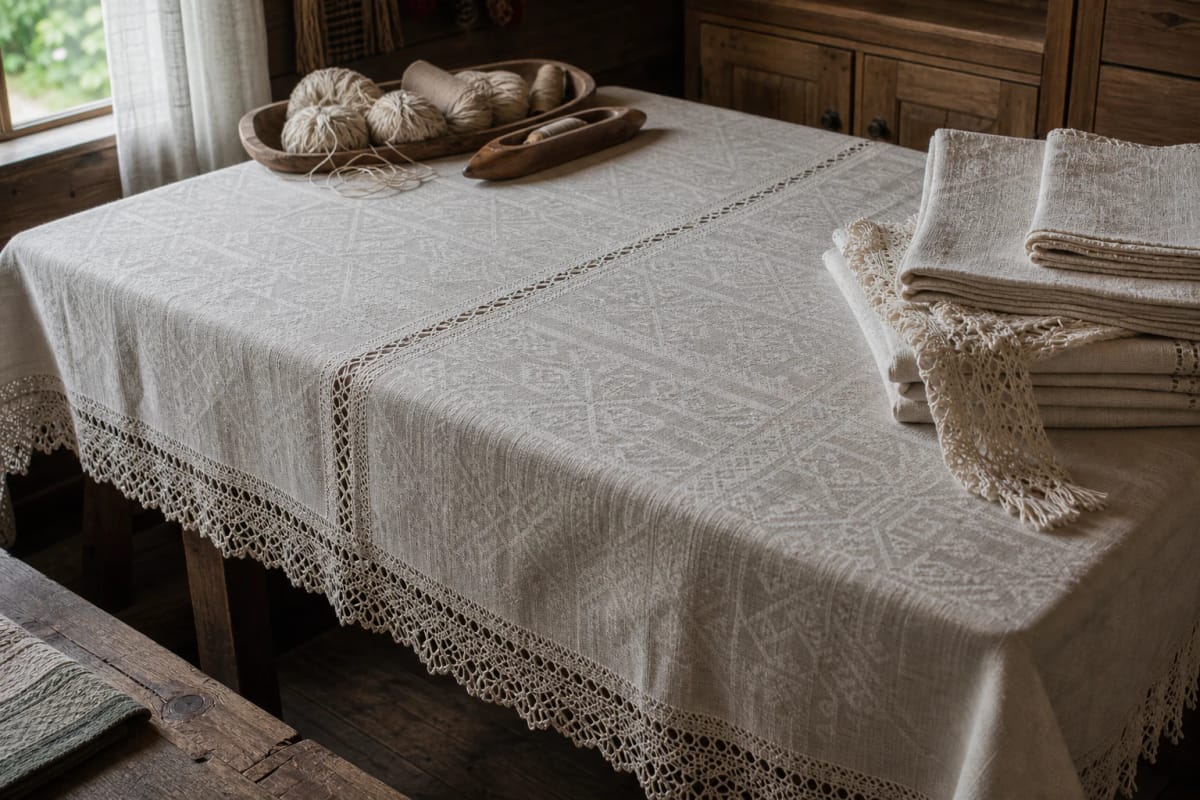
Festive Tablecloths: Whiter, finer, patterned, or decorated tablecloths for guests, family celebrations, weddings, Kūčios, and calendar feasts.
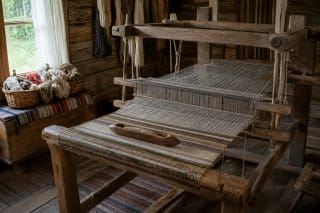
Two-Panel Tablecloths: Tablecloths made from two or more woven panels because home looms limited the width of a single cloth.
Tablecloths with Pinikai, Lace, or Embroidery: Linens with handmade joins, borders, embroidery, drawn-thread work, or lace showing additional textile skill.
What Is a Traditional Tablecloth?
A tablecloth covers a table, but in Lithuanian culture it also covers the most important place of family gathering. It marks where people eat, pray, receive guests, make decisions, celebrate weddings, sit for Kūčios, and perform household rituals.
A linen tablecloth was expected to be clean, white, neatly folded, and ready for the occasion. An everyday cloth could be simpler; a festive one might be whiter, patterned, edged with pinikai, lace, embroidery, or drawn-thread work.
The tablecloth shows how fabric becomes a rule of behavior in the home. A covered table signals readiness, respect, celebration, and the boundary between ordinary work and special time.
Materials: Why Linen Matters
Tablecloths were most often woven from linen because linen cloth is strong, absorbent, washable, bleachable, and suited to a solemn white surface. Flax was also a local and culturally valued fiber.
Later tablecloths used cotton, mixed, silk, or industrial threads, but the visual norm remained tied to white or light linen. In the 19th and early 20th centuries linen tablecloths were common; later, cotton warp with linen or silk weft also appeared.
A good tablecloth was not merely pretty. It had to be dense enough, smooth, washable, correctly sized, and finished so the edges did not fray and the decoration did not hinder use.
Panels, Joins, and Loom Width
Many older tablecloths were sewn from two or more woven panels because home looms could not always produce a cloth wide enough in one piece. A central seam or join is therefore a trace of technology, not a defect.
Panels could be joined with a plain seam or decoratively, using pinikai, openwork, lace, or drawn-thread techniques. Sometimes the join becomes one of the most beautiful parts of the tablecloth.
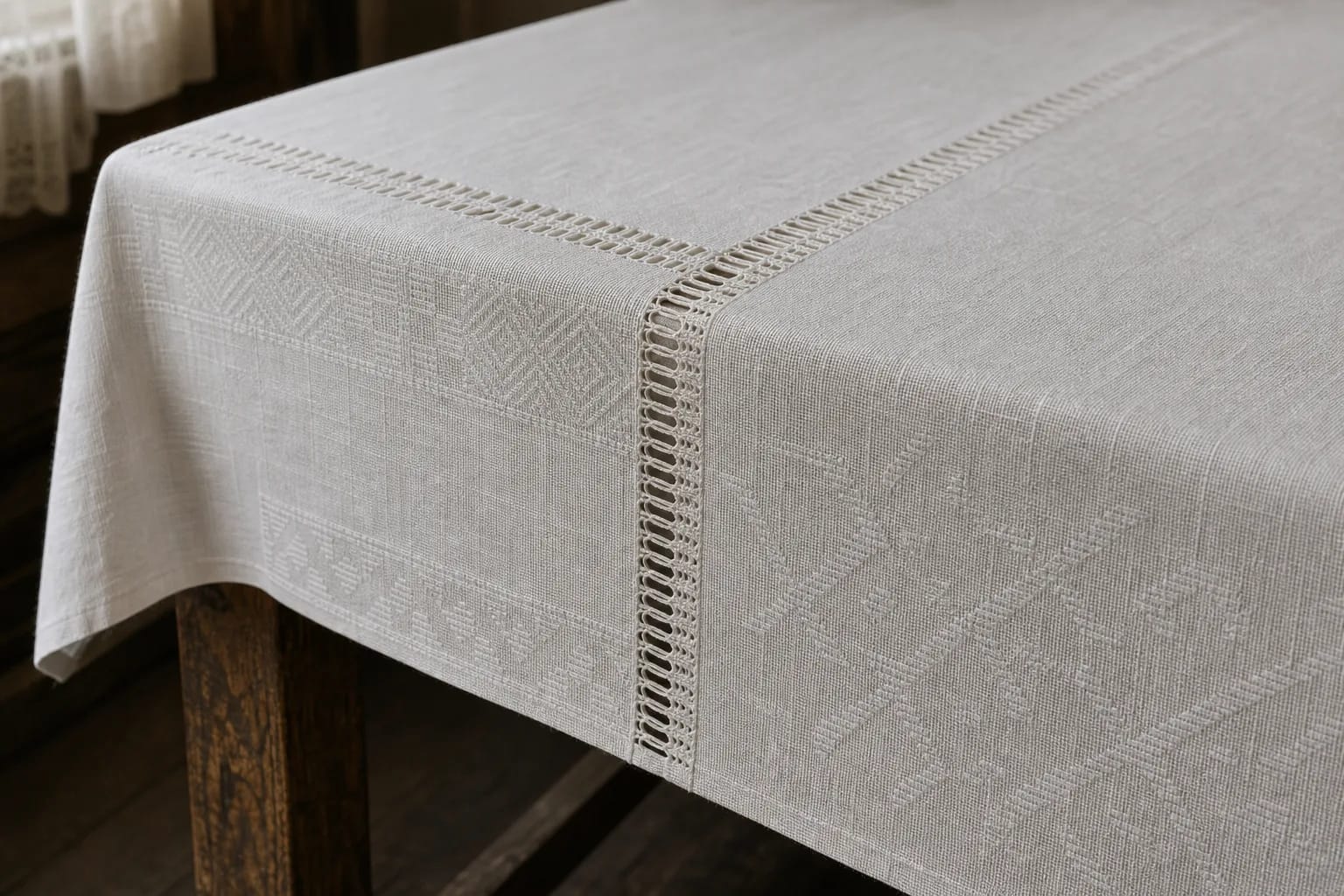
When looking at an old tablecloth, it is worth asking whether its proportions fit a particular table, whether they come from loom width, or whether the cloth was altered later. Such construction details are important textile history.
Patterns: From Plain Cloth to Damask-Like Surface
Simpler tablecloths could use plain weave, small stripes, or decoration concentrated at the ends. These suited everyday use or less formal occasions.
More elaborate tablecloths used servetinis, damask-like, diminis, selected, or other patterned weaving. Geometric checks, diamonds, stars, plant stylizations, and light-shadow ornament are created by the structure of the fabric itself. Older tablecloths often used bleached and unbleached linen shades, later two or three colors; from the mid-20th century crocheted tablecloths also became common.
The pattern has to be read on a horizontal surface. Unlike a towel, where the ends often matter most, a tablecloth’s ornament can work across the entire table, forming the background for eating, hospitality, and ceremony.
Decoration: Pinikai, Lace, and Drawn-Thread Work
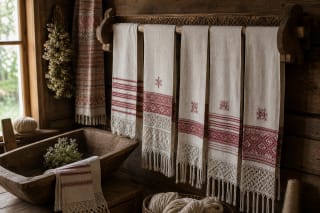
Pinikai, lace, fringes, drawn-thread work, embroidery, and pulled-thread techniques added handwork value to tablecloths. Decoration usually appeared at edges, corners, panel joins, or compositionally important places.
Pinikai are especially important as both joining and decoration. They may connect two panels, finish an edge, or create an openwork space between fabric parts. They are part of the textile’s structure, not an applied afterthought.
A decorated tablecloth should be judged as a whole: whether the decoration serves the function, whether the edges are clean, whether the embroidery is purposeful, and whether the pattern suits the weave.
Everyday and Festive Tablecloths
An everyday tablecloth protected the table, caught crumbs, softened the wooden surface, and created an orderly place for meals. It needed to be practical, washable, and strong.
A festive tablecloth was brought out for guests, weddings, baptisms, calendar feasts, harvest endings, and family occasions. White cloth changed the mood of the room and showed that the time was special.
The same object could therefore have two lives: wear in daily use and a protected festive status in the chest. The best tablecloths often survived longer than ordinary household cloths.
The Kūčios Table and Ritual Meaning
At Kūčios, the Christmas Eve supper, a white tablecloth is one of the central signs of the table. In some traditions hay or straw is placed beneath it, recalling Christ’s birth, harvest, animals, and the agrarian year.
The tablecloth acts as a boundary: it covers the ordinary table and creates a solemn, orderly surface for the family. On it are placed dishes, bread, kalėdaitis, candles, or other family ritual elements.
Kūčios customs differ by region, family, and time, so one universal description would be misleading. Still, the white tablecloth as a sign of cleanliness, seriousness, and gathering is very strong.
Weddings, Guests, and Dowry
Tablecloths belonged to dowry textiles together with towels, bedcovers, sheets, pillowcases, and cloth. They showed that the future home would have textiles for both everyday life and ceremony.
At wedding feasts the table is the central social place. The tablecloth covers the table where kin gather, food is served, blessings are spoken, and customs are observed.
A clean table laid for a guest showed respect. Even simple food gained a different status on a white tablecloth because the textile changed the meaning of the situation.
Tablecloths Today
Old tablecloths are now preserved in museums, family chests, folk-art collections, and interiors. Some are still used for feasts; others are too fragile or too tied to family memory for daily use.
A new handmade tablecloth may be a historical reconstruction, a folk-art work, or a contemporary interpretation. It is strongest when the technique, regional basis, and intended use are clear.
The heritage of the tablecloth survives best when its place is understood: table, family, celebration, linen, weaving, handwork, and respectful use.