Lithuanian mythology

Lithuanian gods and goddesses

An English gateway to Lithuanian deities, their source status, domains, and cultural traces.

A source note on Lithuanian gods and goddesses

Old Lithuanian religion is reconstructed from written sources, folklore, ethnography, language, and place memory. The pages distinguish better-attested figures from late lists and cautious interpretation.

Deity guides

English pages about Lithuanian gods and goddesses, with sources, symbols, and cultural context.

Gods

Male deities in Lithuanian mythology, from sky, storm, and fire powers to household, road, and herd guardians.
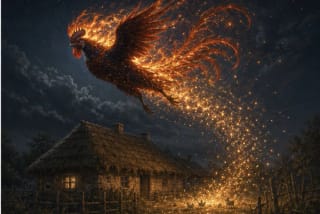
Aitvaras in Lithuanian mythology as a fiery being flying above a homestead roof
God · folkloricAitvaras

Aitvaras is a Lithuanian mythical household spirit who in legends flies as a ball of fire and brings its owner grain, money, or abundance, often taken from other people, so keeping one was judged ambivalently.

Andojas Andajus in Lithuanian mythology stands on a high hill beneath the sky
God · well attestedAndojas / Andajus

Andajus (Andojas) is mentioned in the 1261 insertion in the Slavic translation of John Malalas' Chronicle among the most important Lithuanian gods. Researchers treat him as one of the highest gods, often identified with Nunadievis, and as a possible euphemism for the heavenly Dievas.

Ašvieniai, two twin heavenly horses, accompanying the Sun in a red evening sky
God · disputedAšvieniai (Dievo sūneliai)

Ašvieniai is a scholarly name for the Baltic divine twins, heavenly horses who draw the Sun and protect her daughters. The name itself is a twentieth-century reconstruction; the actual folklore name is Dievo sūneliai, with the Latvian parallel Dieva dēli.
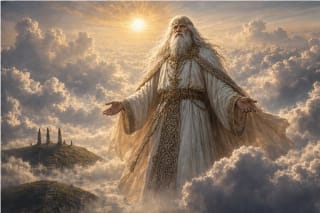
Aukštėjas Visagalis in Lithuanian mythology shown above clouds and a sacred hill
God · late sourcesAukštėjas Visagalis

Aukštėjas Visagalis (Auxtheias Vissagistis) opens Jan Łasicki's list of Samogitian gods. The name means the highest, all-powerful god, but his place is assessed cautiously because the source itself is disputed.
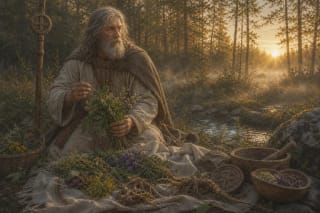
Aušautas, Prussian healing god, with a bundle of medicinal herbs and a sign of health
God · well attestedAušautas

Aušautas is an Old Prussian god of healing, guardian of the sick and the healthy, compared in sources with the classical healing god Asclepius. In Prussian god lists he appears high in the hierarchy, after the supreme Okopirmas and the light god Svaikstikas.
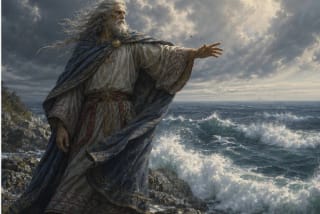
Bangpūtys in Lithuanian mythology by stormy Baltic Sea waves and wind
God · attested in late sourcesBangpūtys

Bangpūtys is a western Lithuanian and Old Prussian sea god, close to Vėjopatis. Matthäus Prätorius described him as a storm god; later writers compared him with Neptune, and his name also appears in a folk song recorded by Liudvikas Rėza.
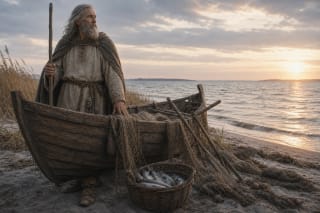
Bardaitis, Prussian god of seafaring, by the coast with a fishing boat and nets
God · well attestedBardaitis

Bardaitis (Prussian Bardoayts) is an Old Prussian god of seafaring, patron of sailors, fishers, and ships, to whom fish were offered. According to Kazimieras Būga, his original name may have been Gardaitis, from garda, meaning ship.
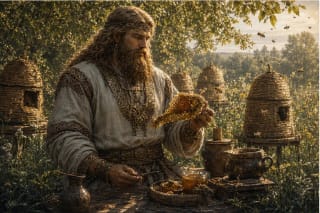
Bubilas holds honey near old hives and bees
God · in late sourcesBubilas

Bubilas is mentioned in sixteenth-century sources as a Lithuanian bee god to whom honey was offered so that bees would swarm better. Algirdas Julius Greimas compared him with the drone and treated him as the counterpart of the bee goddess Austėja.

Dievas, the Lithuanian sky god, stands above clouds in a bright sky
God · well attestedDievas

In old Lithuanian religion Dievas is the supreme sky deity, often thought to correspond to Andajas; in folklore he becomes Dievas senelis, the old God who creates the world, walks the earth, and rewards or punishes people.

Dimstipatis protects an old homestead yard and household hearth
God · in late sourcesDimstipatis

Dimstipatis is mentioned in sources as a Lithuanian god of home and fire: lord of the homestead, protecting the house from fire and guarding housewives. His name is derived from dimstis, 'yard, homestead', and pats, 'lord'.

Ežerinis in Lithuanian mythology by a quiet lake, reeds, and a moon reflection
God · attested in late sourcesEžerinis

Ežerinis is the Lithuanian god of lakes, mentioned by Jan Łasicki in the sixteenth century. Folklore preserves stories about a mythical being living in a lake, and a custom of offering animals to a lake was still known into the twentieth century.
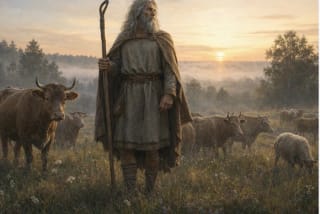
Ganiklis protects herds and pasture near an old Lithuanian village
God · in late sourcesGaniklis

Ganiklis is recorded in Maciej Stryjkowski's list as a god of shepherds, Goniglis Dziewos. His name comes from ganyti, 'to herd or graze', and his field is the protection of grazing herds and livestock in pasture.
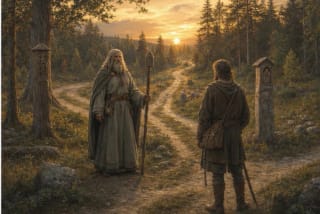
The God of Roads in Lithuanian mythology by a forest crossroads and an old road
God · attested in late sourcesGod of Roads

The God of Roads (Kielu Dziewos) is mentioned in Maciej Stryjkowski's list of gods as a guardian of roads, a deity connected with journeys, crossroads, and movement in the peasant worldview.

Kovas Karorius in Lithuanian mythology by a hillfort with a shield and spear
God · disputedKovas / Karorius

Kovas (Karorius) is a deity reconstructed from Maciej Stryjkowski's list of gods whose function is disputed: in some readings the entry is a horse god (Chaurirari), while W. E. J. Mannhardt's etymology from karas, war, makes it a war-related Karorius.

Kremata in Lithuanian mythology shown by an old farmstead and pig pen
God · attested in late sourcesKremata

Kremata is a deity known from Jan Łasicki's list of Samogitian gods, connected with pigs and the protection of domestic animals. It is one of the late list names that must be evaluated cautiously.
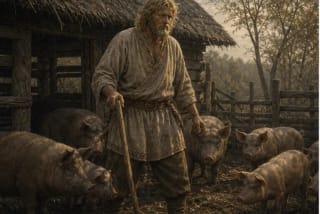
Krukis in Lithuanian mythology near an old farm, pigs, and a barn
God · in late sourcesKrukis

Krukis is a deity known from Jan Łasicki's list of Samogitian gods, connected with pigs and domestic animals. The name onomatopoeically echoes a pig's grunt, while the evidence is late and must be evaluated cautiously.
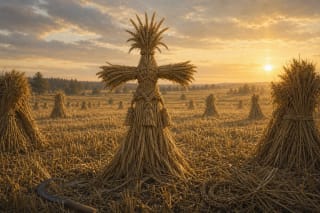
Kurkas, a Prussian harvest idol, bound from the last ears of grain in a reaped field
God · disputedKurkas

Kurkas, recorded as Curche, is the earliest documented Baltic deity, first mentioned in the 1249 Treaty of Christburg as an idol that Prussians made each year after harvest from the last ears of grain. His nature is disputed: he may be a harvest god, a grain spirit of the last sheaf, or a ritual idol.

Lietuvonis in Lithuanian mythology brings gentle rain to a grain field
God · attested in late sourcesLietuvonis

Lietuvonis (Lituwanis) appears in Maciej Stryjkowski's list as a deity who sends rain. His name comes from lietus, rain, not from Lietuva, Lithuania, and his field is the water from the sky needed for harvest.
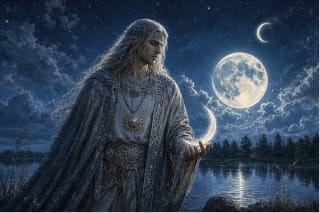
Mėnuo Mėnulis in Lithuanian mythology standing by a lake under a starry sky
God · folkloricMėnuo / Mėnulis

Mėnuo or Mėnulis is the Lithuanian god of the moon, married to Saulė in folklore and punished by Perkūnas for infidelity with Aušrinė. He is linked with night light, timekeeping, and the changing phases of the moon.

Nunadievis Numadievis in Lithuanian mythology standing on a hill near an old hillfort
God · well attestedNunadievis / Numadievis

Nunadievis is named first among the gods secretly worshipped by King Mindaugas in the Galician-Volhynian Chronicle. Researchers treat him as one of the highest Lithuanian gods and a possible euphemism for the Sky God, though his functions are reconstructed cautiously.

Patrimpas in Baltic mythology beside a spring, grain, and a snake symbol
God · well attestedPatrimpas

Patrimpas is one of the most important Prussian gods, described unevenly in the sources: either as a god of success and grain, shown as a beardless youth with a wreath of ears of grain, or as a god of flowing waters, rivers, and springs, compared with Neptune.

Pergrubrijus, Prussian spring god, awakens greenery over reviving fields
God · well attestedPergrubrijus

Pergrubrijus is an old Prussian god of spring, vegetation, and fertility who grows leaves and grass and drives out winter. The spring offering festival dedicated to him before plowing was one of the most important rites in the Prussian agricultural year.
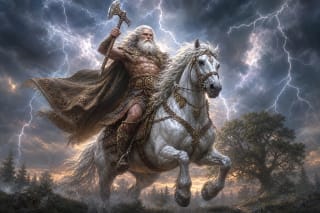
Perkūnas rides a white horse through storm clouds with lightning and a raised axe
God · well attestedPerkūnas

Perkūnas is one of the clearest gods in Lithuanian and broader Baltic mythology: lord of thunder, lightning, storm, and rain, a pursuer of Velnias in folklore, guardian of cosmic order, and a figure associated with the oak, hill, stone, axe, and sacred fire.

Pikulas Patulas in Baltic mythology among underworld roots and the realm of the dead
God · well attestedPikulas / Patulas

Pikulas (Patulas) is a Prussian god of the underworld and darkness, listed after Perkūnas in the Prussian divine triad. He is associated with death, fear, and misfortune, and in later sources his name began to be used for the devil.
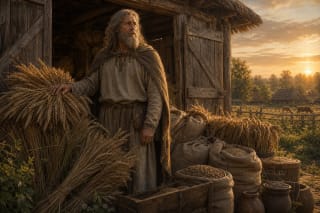
Pilvytis, Prussian god of wealth, beside a full grain barn with sheaves
God · well attestedPilvytis

Pilvytis, called Pilnytis in the Sudovian Book, is an old Prussian god of wealth and abundance who enriches people and fills barns. Sources compare him with the Roman god Pluto and place him high in Prussian lists of gods.

Prakorimas in Lithuanian mythology shown at the first dawn and beginning of the world
God · late sourcesPrakorimas

Prakorimas (Prokorimos) is named by Maciej Stryjkowski as the supreme god in his list of gods. The reconstructed form, linked with kurti, to create, connects him with the idea of beginnings and creation.
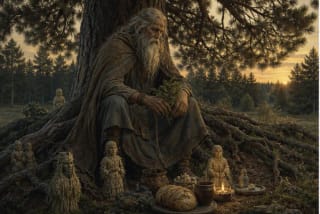
Pušaitis in Lithuanian mythology near tree roots, offerings, and the world of kaukai
God · in late sourcesPušaitis

Pušaitis (Puškaitis) is mentioned in sixteenth-century sources as a deity connected with earth and the underworld, living beneath a sacred elder tree and ruling small underworld beings, the barstukai or kaukai, who brought household prosperity when given bread and beer.

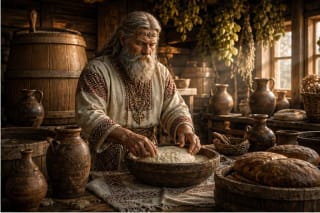
Rūgutis or Raugų Žemėpatis beside leaven, bread, and vessels of beer
God · in late sourcesRūgutis / Raugų Žemėpatis

Rūgutis, recorded by Maciej Stryjkowski as Ruguczis, is named as a god of fermented foods. His name comes from rūgti, 'to ferment or sour', and his field includes leaven, fermentation, beer, and bread, the foods and drinks transformed through fermentation.

Sutvaras in Lithuanian mythology near a herd of cattle in a field
God · late sourcesSutvaras

Sutvaras (Sotwaros) is described in Maciej Stryjkowski's list as a god protecting cattle. Later, the reconstructed name, linked with sutverti, encouraged associations with forming, creation, and ordering, so the source function and the etymology point in different directions.
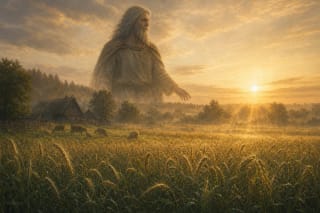
Svaikstikas, Prussian god of light, spreading golden light over grain fields
God · well attestedSvaikstikas

Svaikstikas is an old Prussian god of light, believed to promote the growth of grain, grass, and livestock. In sixteenth- and seventeenth-century Prussian god lists he is usually second after Okopirmas, and his name is derived from Prussian swāikstan, light.
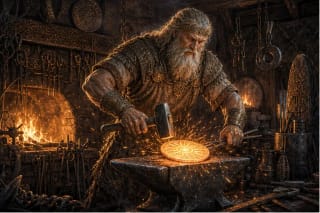
Teliavelis Kalvelis in Lithuanian mythology forging a glowing solar disk in a smithy
God · well attestedTeliavelis / Kalvelis

Teliavelis is mentioned in the Hypatian Chronicle among the gods of King Mindaugas, and in the 1261 Malalas Chronicle insertion he is called a smith who forged the Sun and threw it into the sky. Researchers connect him with an earth god and the folklore devil-smith.

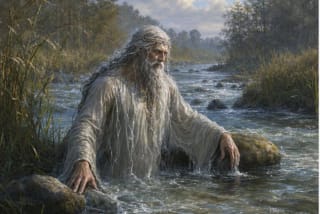
Upinis Dievas in Lithuanian mythology by a flowing river, stones, and reeds
God · attested in late sourcesUpinis Dievas

Upinis Dievas (Upinis Dewos) is mentioned by Maciej Stryjkowski as a deity ruling rivers, to whom white piglets were offered so that river water would be clear. He is a local deity of flowing water.
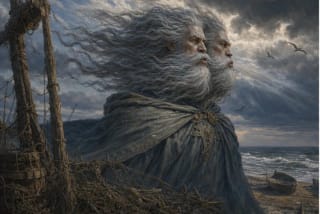
Vėjopatis in Lithuanian mythology as a ruler of wind by the coast and storm clouds
God · attested in late sourcesVėjopatis

Vėjopatis is the Lithuanian god of wind, worshipped by fishers according to Prätorius. His idol was described as two-faced, winged, with a small barrel and a fish in its hands and a rooster on its head, while his functions are close to those of the sea god Bangpūtys.

Velnias Vėlinas in Lithuanian mythology near forest, stone, water, and underworld treasures
God · folkloricVelnias / Vėlinas

Velnias in Lithuanian folklore is the most common chthonic mythical being, whose prototype is linked with the older underworld god Vėlinas: a figure of the dead, livestock, wealth, water, magic, and the eternal opponent of Perkūnas.

Žemėpatis guards an old homestead, field, and household economy
God · well attestedŽemėpatis

Žemėpatis is an old Lithuanian god of earth and homestead: the lord of the farmstead, on whom household prosperity depends. Offerings were made to him or to his sister Žemyna at the beginning and end of farm work, and at birth, marriage, and funerals.
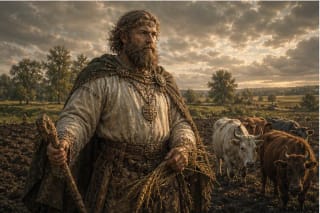
Žemininkas stands by a plowed field, grain, and livestock
God · in late sourcesŽemininkas

Žemininkas, recorded by Maciej Stryjkowski as Ziemiennik, is an earth god in whose honor sacred grass snakes were fed with milk. The largest Lithuanian autumn festival, with abundant offerings, was dedicated to him.

Goddesses

Female deities connected with earth, fate, the hearth, water, harvest, household, and seasonal life.

Aušrinė in Lithuanian mythology appears at dawn with the Morning Star above fields
Goddess · folkloricAušrinė

Aušrinė is the goddess of the Morning Star, the Lithuanian name for the planet Venus when it is visible in the east before sunrise. In folklore she is linked with dawn, Saulė's retinue, and heavenly-family stories.
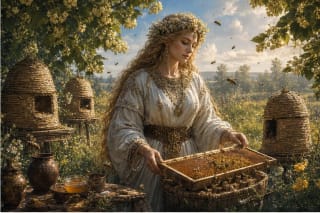
Austėja tends bees and hives in a flowering linden tree
Goddess · in late sourcesAustėja

Austėja is mentioned in sixteenth-century sources as a Lithuanian bee goddess. According to Algirdas Julius Greimas, she forms a pair with the bee god Bubilas, while bee swarming is mythologically compared with the growth of a family.
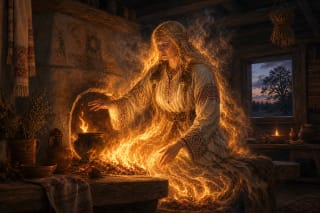
Gabija protects sacred fire beside an old Lithuanian household hearth
Goddess · folkloricGabija

Gabija is the Lithuanian guardian goddess of domestic fire, the hearth, and sacred flame. In folklore she protects the family hearth, demands respect for fire, and shows that household fire was not only a practical tool but a living power that had to be tended.
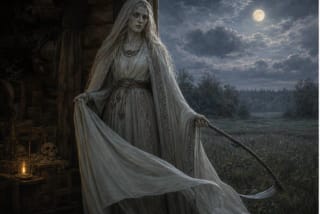
Giltinė in Lithuanian mythology at the threshold between a house and the night outside
Goddess · folkloricGiltinė

Giltinė is the Lithuanian goddess of death and a personification of death: in folklore she is a threatening, often blind being who kills by touch or with a poisonous tongue. Her name is linked with words for stinging and yellow, and her counterpart is Laima, the goddess of life.

Javinė stands near a granary, sheaves of grain, and a golden harvest
Goddess · in late sourcesJavinė

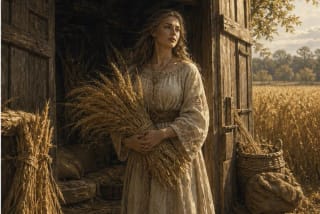
Javinė is a deity of grain and the jauja, the drying and threshing barn, mentioned in late sources. Her name comes from javai, 'grain crops', and the testimony is modest, so she should be treated cautiously.
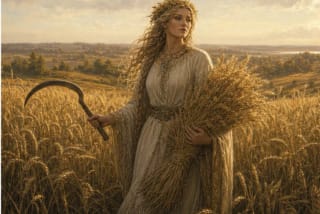
Krūminė stands in a rye and wheat field with sheaves of grain
Goddess · in late sourcesKrūminė

Krūminė is mentioned by Maciej Stryjkowski in 1582 as a deity who gives grain, Kruminie pradziu warpu. Low-combed hens were offered to her so that rye would grow dense and bear large ears; most mythologists treat her as a possible grain goddess.
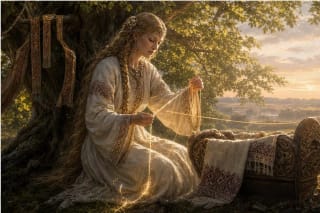
Laima in Lithuanian mythology spins the thread of fate beside a cradle and a linden tree
Goddess · folkloricLaima / Laimė

Laima (Laimė, Laimės Motė) is the Baltic goddess of birth and fate: she cares for pregnant women, helps at childbirth, and determines a newborn's lot. It was believed that every person and even every domestic animal has its own laimė.
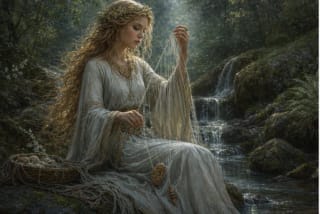
Laumė in Lithuanian mythology by a stream weaving linen thread among stones and forest
Goddess · folkloricLaumė

Laumė is one of the mythical female beings most often mentioned in Lithuanian legends: she is associated with water, weaving and spinning, protecting or stealing children, and, in scholarly reconstructions, with a thunder god's wife who was punished and descended to earth.

Lazdona in Lithuanian mythology among hazel trees, nuts, and autumn forest light
Goddess · attested in late sourcesLazdona

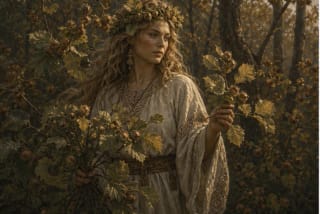
Lazdona is a goddess of hazel trees and hazelnuts mentioned in Jan Łasicki's list of Samogitian gods. Her name comes from lazdynas, hazel, and her image belongs to the field of plant and tree guardians.
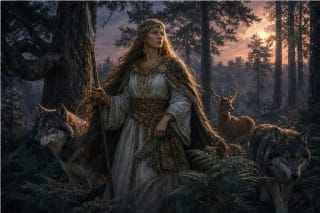
Medeina Žvorūna in Lithuanian mythology stands in a sacred forest with wolves and deer
Goddess · well attestedMedeina / Žvorūna

Medeina, associated with Žvorūna, is a goddess of forests, animals, and hunting, first mentioned in the Hypatian Chronicle among the gods secretly worshipped by King Mindaugas. She is one of the few Lithuanian goddesses attested in early sources.

Ragana in Lithuanian mythology in a forest with herbs, moonlight, and symbols of transformation
Goddess · folkloricRagana

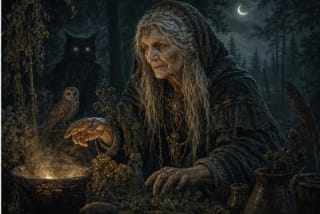
In Lithuanian folklore, Ragana is a being with special powers, supposedly allied with evil forces: she can cast spells, fly, turn into an animal or object, and judge a person's fate. The name is also linked with regėti, to see or foresee.

Saulė in Lithuanian mythology rides a golden carriage across the morning sky
Goddess · folkloricSaulė

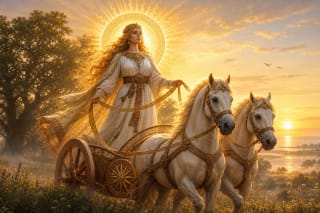
Saulė is the Lithuanian and Baltic goddess of heavenly light, warmth, life, and the daily cycle. She is strongly preserved in songs, legends, riddles, and calendar symbolism, where the Sun is imagined as a motherly, traveling, life-giving heavenly being.

Vakarinė in Lithuanian mythology beside a twilight sky and the Evening Star
Goddess · folkloricVakarinė

Vakarinė is the Lithuanian goddess of the Evening Star, connected with Aušrinė and Saulė. In folklore motifs she escorts the Sun to sleep, and according to Matthäus Prätorius, Vakarinė and Aušrinė were considered independent of the star god.
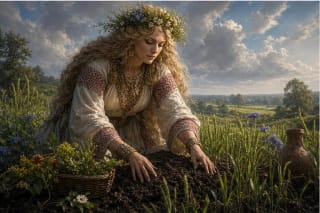
Žemyna touches the earth among grain fields and flowering land
Goddess · well attestedŽemyna

Žemyna is the old Lithuanian earth goddess, making the land fertile and protecting grain, fruit, livestock, and people. Offerings were made to her at the beginning and end of agricultural work and, during wakes, to ask protection for the soul of the dead.