- Category
- Home and Animal Symbols
- Domain
- Household protection, vital powers, earth, ancestors, protection, sacredness of the homestead
- Source status
- well attested
grass snake cult, household žaltys
What does žaltys mean?
In Lithuanian mythology the žaltys, the non-venomous grass snake, is a sacred animal and a symbol of household protection. It is not simply a reptile: in tradition the žaltys is connected with vital powers, earth, the welfare of the homestead, ancestors, and protection. It is also important that Lithuanians distinguished the harmless žaltys from the venomous snake: the creature treated as guardian and honored was specifically the žaltys.
As a symbol, the žaltys works through nearness to the home. It appears near the threshold, stove, barn, yard, or boundary of the homestead. Its meaning is therefore not abstract but deeply domestic: it protects the place where a person lives, feeds the family, and keeps connection with the dead.
The žaltys cult in sources
The Visuotinė Lietuvių enciklopedija describes the grass-snake cult as an important phenomenon in Lithuanian mythology: the žaltys was treated as an embodiment of chthonic and vital powers, a good household spirit, and a guardian. It is one of the firmer symbols, because written sources, folklore, beliefs, and folk-art motifs all speak about it.
More than one older author mentioned reverence for žalčiai: Jerome of Prague in the fifteenth century told of Lithuanian tribes that kept and fed them, and Jan Długosz claimed that Lithuanians worshipped snakes and žalčiai. These testimonies show that the žaltys cult was not merely a village superstition, but something noticed even by outside observers.
Threshold, milk, and household protection
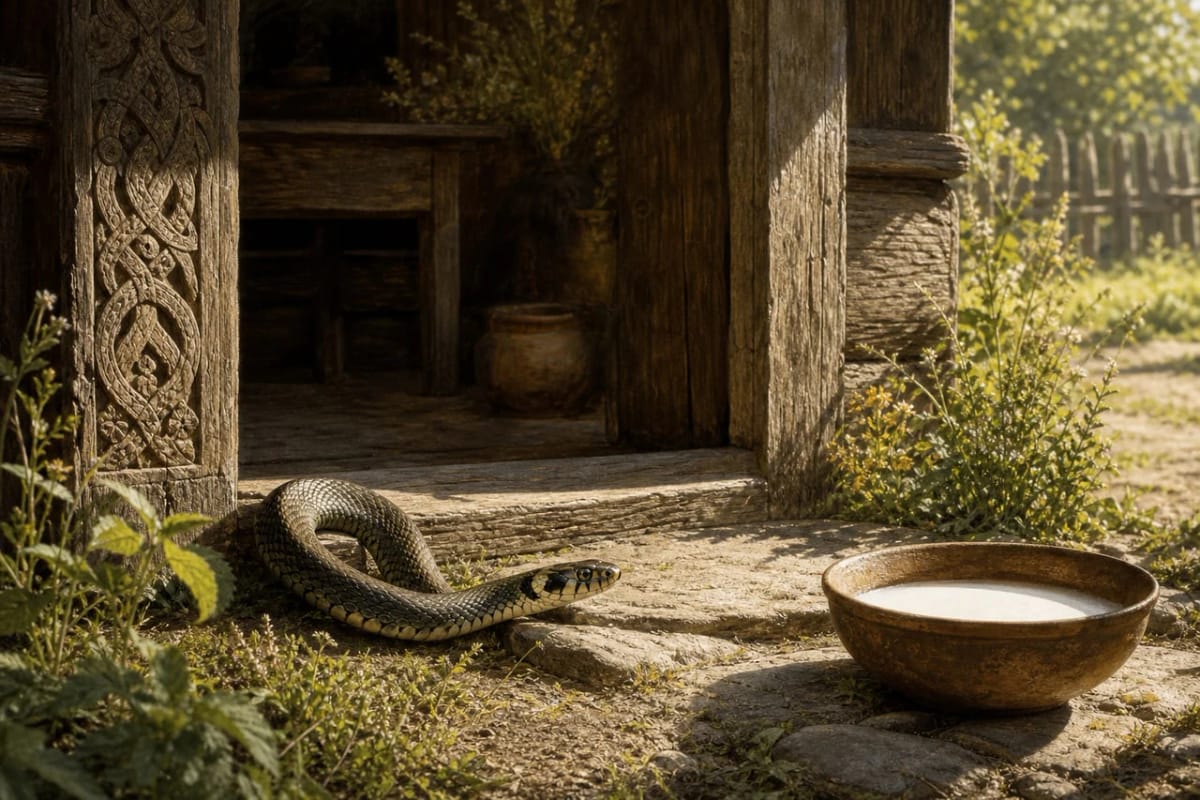
The threshold is one of the most important places for the žaltys because it marks the boundary between inside and outside. A žaltys at the threshold symbolically protects passage: household order from outdoor chaos, one's own from the foreign, the living from uncontrolled force. It was believed that the household žaltys lived under the floor, stove, or threshold and brought the family luck and abundance.
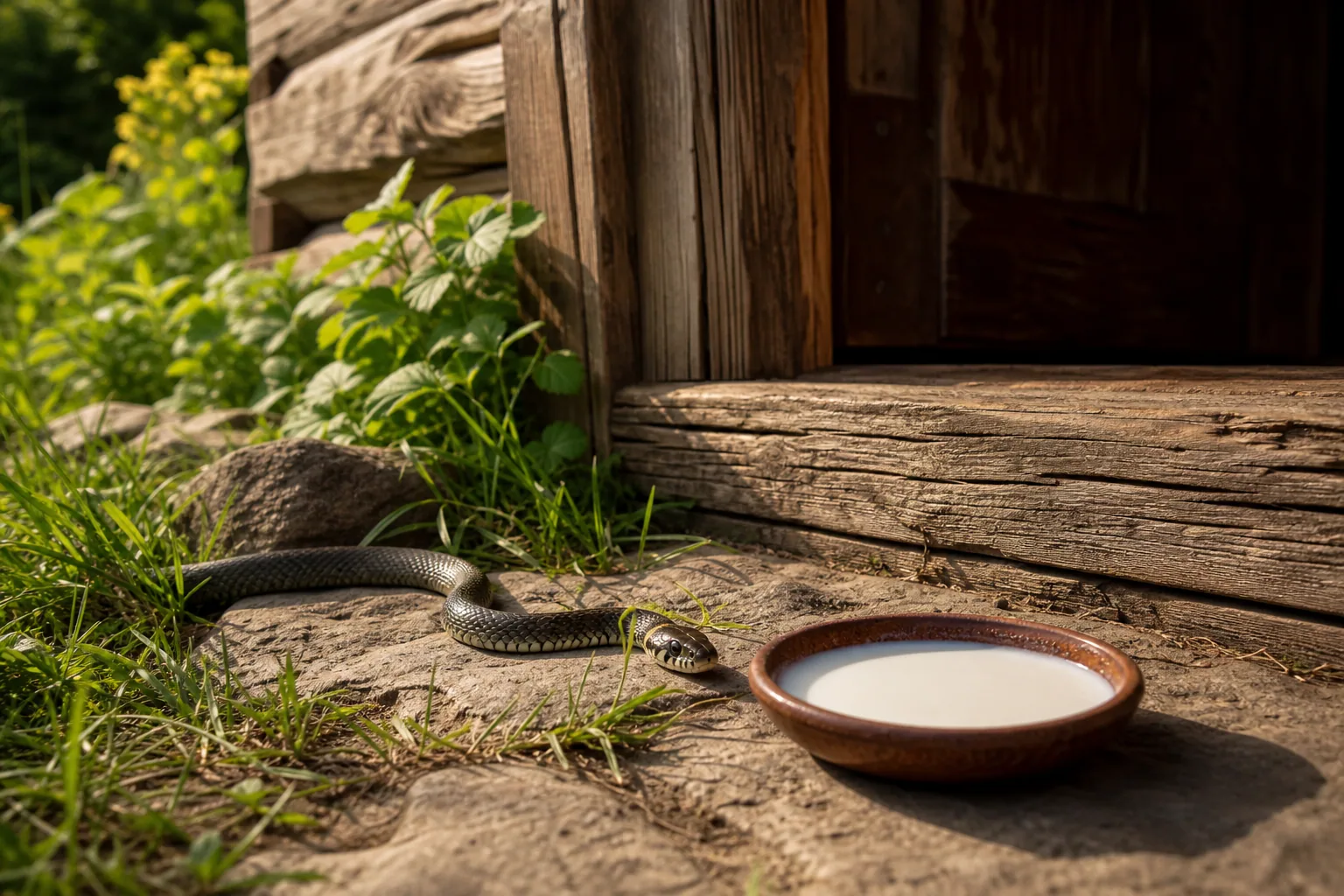
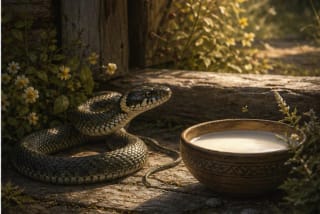
In stories the žaltys is fed with milk, left in a bowl or trough. Milk here is not an exotic detail but a sign of relationship: the home accepts the žaltys as guardian, not as enemy. It was believed that if a household žaltys was harmed or killed, misfortune, illness, or death would strike the family.
Žaltys and 'Eglė the Queen of Serpents'
The best-known image of the žaltys in Lithuanian culture is the tale 'Eglė the Queen of Serpents,' one of the most famous and most often recorded Lithuanian tales. In it the žaltys Žilvinas rises from the sea or a lake, becomes the husband of the maiden Eglė, and takes her to an underwater world, where they have children.
The tale ends tragically: Eglė's brothers trick her children into revealing Žilvinas' call and kill him, and Eglė and the children turn into trees: spruce, oak, ash, birch, and aspen. The plot joins the žaltys with love, transformation, water, and death, so here the žaltys is not only a household guardian but also a being of another world and part of human fate.
Žaltys, earth, and ancestors
The žaltys moves close to the earth, hides, and appears from cracks, foundations, or grass, so its symbolism is connected with the chthonic world: below, dampness, roots, ancestors, and hidden life force. Marija Gimbutas treated the snake and grass-snake image as one of the oldest signs of life and renewal in Old Europe.
This connection helps explain why the žaltys can be both household guardian and life sign. It comes from the earth but protects the living space. The žaltys therefore joins two layers: the homestead and the underground realm of ancestors and vital powers.
How should žaltys be read today?
Today the žaltys is often used as a sign of Lithuanian identity, respect for nature, and household protection. Its image connects mythology, respect for nature, and folk art.
Still, the distinction between symbol and animal matters. The mythological žaltys speaks about the sacredness of home and life, but the real grass snake is a protected wild animal and should not be romanticized as a pet.