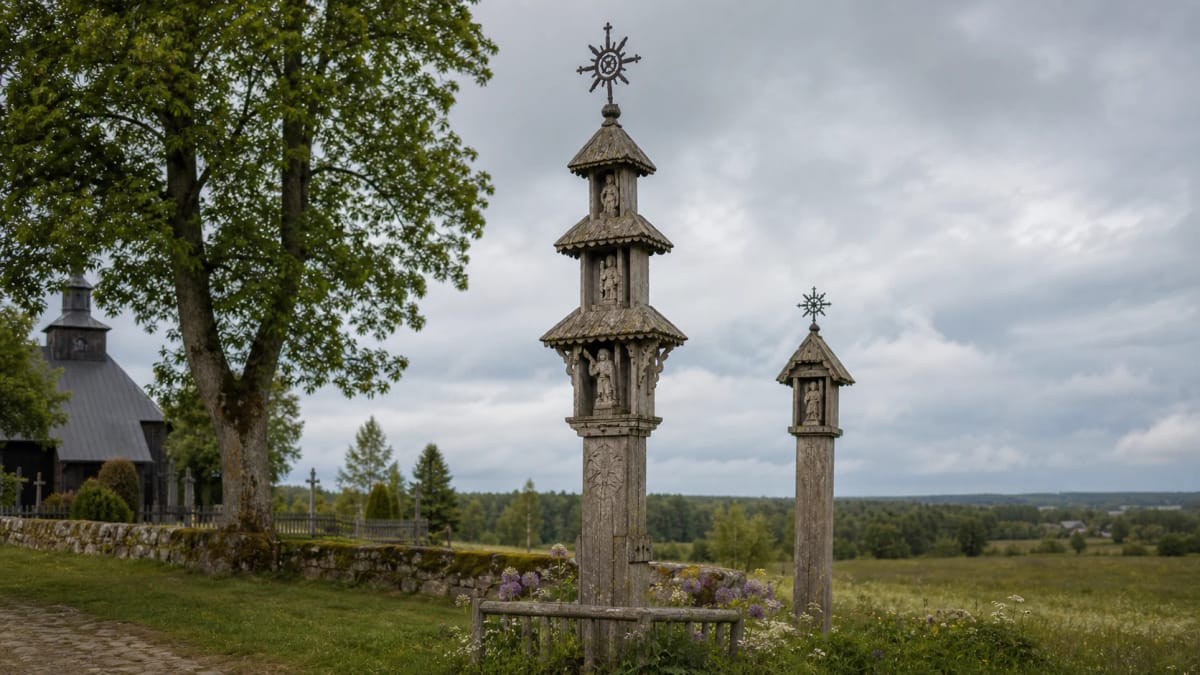
- Field
- Lithuanian roofed sacred pillars within the cross-crafting tradition
- Type
- traditional craft
- Heritage status
- UNESCO-linked tradition
- Context
- Roofed pillar, small roof, pillar, saint figures, Rūpintojėlis, sunburst, crosslet, rays, openwork, roadside, Aukštaitija, cemetery
Roofed pillar shrine, Roofed post, Multi-tier roofed pillar, Cross-crafting roofed pillar
Roofed Pillar Shrines forms and objects
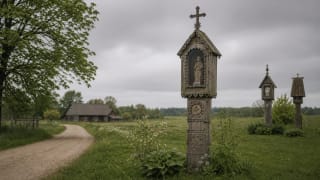
Single-Roofed Stogastulpis: A post with one small roof sheltering a figure, cross, or religious sign; a modest but clearly recognizable form.
Multi-Tiered Stogastulpis: A monument with two, three, or more roofs, often holding different saint figures in separate tiers and forming a vertical sacred narrative.
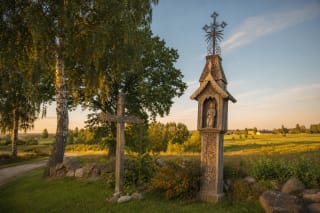
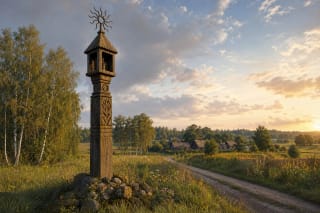
Stogastulpis with a Saulutė: A roofed post crowned by a wooden or blacksmith-made metal sunburst, small cross, or radiant finial.
Cemetery or Churchyard Stogastulpis: A memorial and prayer monument placed in cemeteries, churchyards, or community memory sites, often smaller and closely tied to remembrance of the dead.
What Is a Stogastulpis?
A stogastulpis is a Lithuanian cross-crafting monument: a wooden post with one or more small roofs under which saint figures, images of Christ or Mary, small crosses, ornaments, or other sacred signs may stand. Its defining feature is the roof, not a chapel-box.
It is a vertical form of small sacred architecture. It may be modest, with one roof, or elaborate and multi-tiered, with carved supports, figure niches, and a blacksmith-made Saulutė, or sunburst, at the top.
Prototypes include 1-3 m grave monuments related to the krikštai of Lithuania Minor. Stogastulpiai themselves were mostly erected in the 19th and first half of the 20th centuries by homesteads, roadsides, and cemeteries; one dated example is the 1894 stogastulpis in Lažai village by the maker Bataitis. Related roofed-post forms are known in Austria, Latvia, Romania, Russia, Finland, and Germany.
Stogastulpiai belong to the same Lithuanian cross-crafting tradition as crosses, chapel-posts, and small chapels. UNESCO recognition safeguards not just the object form but the craft, intention, place, symbols, community relation, and care around it.
The Roof’s Meaning and Practical Function
The small roof first protects. It shields the figure, cross, or ornament from rain, snow, and direct sun. For a wooden monument this matters because moisture damages paint, softens the surface, and encourages splitting.
The roof also gives the monument architectural rhythm. Even a small stogastulpis looks like a miniature sacred building: the post becomes the axis, the roof the covering, the figure the center, and the finial a sign of the sky.
In multi-tiered monuments the roofs create a vertical narrative. Lower figures stand closer to the viewer, upper tiers draw the eye upward, making the stogastulpis lighter and more open than a chapel-post.
Multi-Tiered Stogastulpiai
The shaft may be square, polygonal, or round, sometimes profiled, and about 3-8 m high. By number of roofs, stogastulpiai can be single-, double-, or triple-tiered. Polychrome wooden figures may be fixed under the roofs on one, two, or four sides, and the top is often finished with an openwork Saulutė. Taller monuments become a striking landmark, and different tiers may have different ornament.
Each tier can hold one or several figures. Because the figures are often small, their silhouette, halo, clothing color, or attribute must be legible from a distance. The maker had to balance the figure's scale with the roof's depth and the viewing distance.
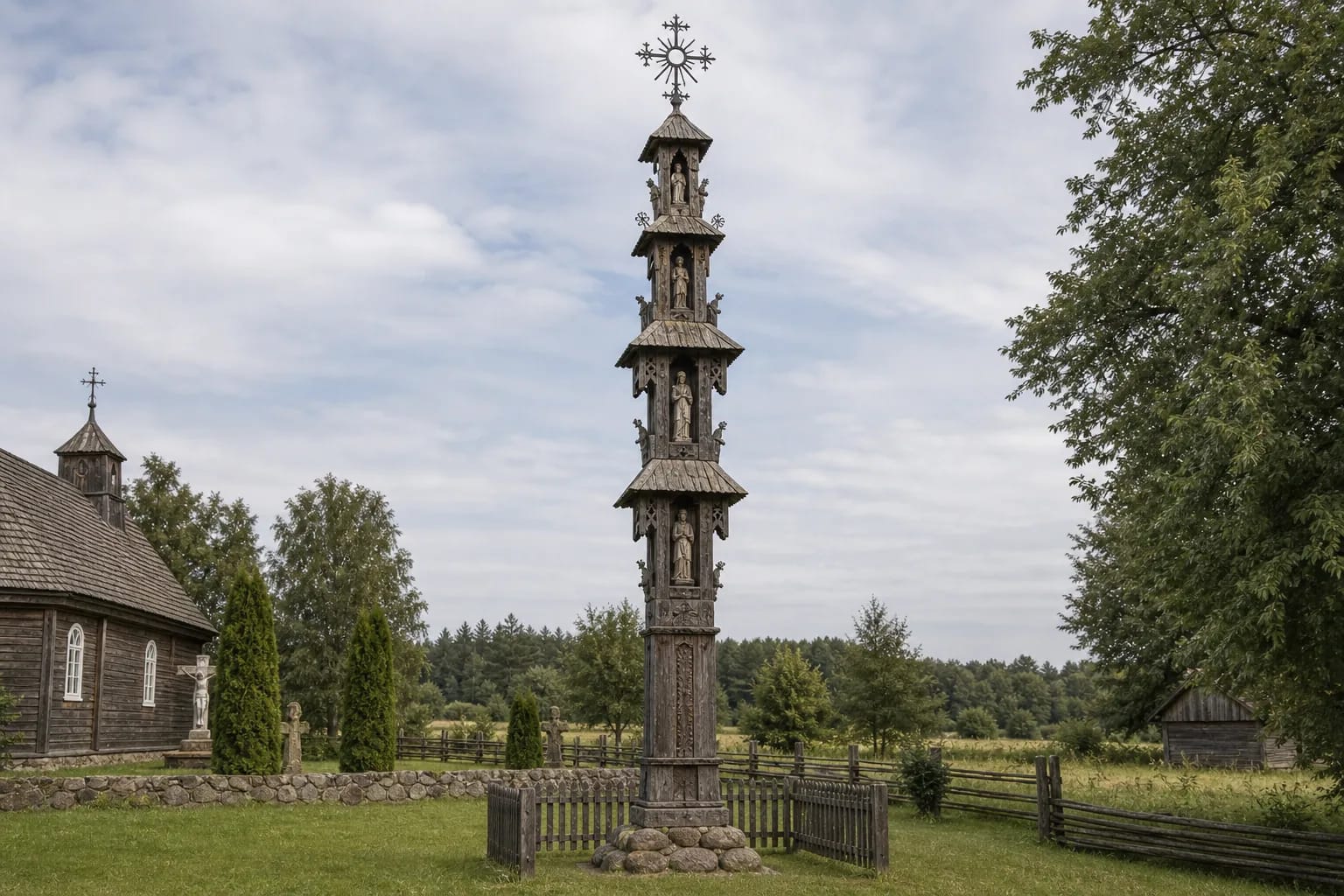
A multi-tiered stogastulpis demands structural precision. The higher the monument, the more important the base, shaft proportion, roof weight, water runoff, and finial attachment become.
Saint Figures Beneath the Roofs
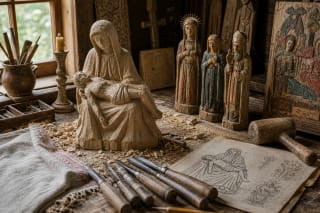
Figures under the roofs may include Rūpintojėlis, the Crucified Christ, Mary, the Pietà, Saint John Nepomuk, Saint George, Saint Isidore, Saint Agatha, or other saints important to local devotion.
A figure under an open roof works differently from one inside a closed chapel. It is more visible in the landscape but also more exposed to weather, so many old figures have decayed, been repainted, replaced by copies, or moved to museums.
The figure should not be separated from the monument. A stogastulpis without a sculptural or sacred center can become only a decorative post; in traditional cross-crafting, roof, figure, finial, and place work together.
Aukštaitija and Regional Features
Stogastulpiai are especially associated with Aukštaitija, where high, multi-tiered, richly ornamented examples are common. They emphasize vertical line, roof rhythm, and the lightness of carved details.
In Žemaitija, chapel-posts and small chapels are more prominent, though stogastulpiai also occur. In Dzūkija, Suvalkija, and other regions, forms mix and adapt to local makers, parishes, and patrons.
Regional labels are guides, not absolute rules. Every particular monument has its own story: who erected it, when, why, which figure was placed in it, and how the community cared for it.
Finials, Saulutės, and Blacksmith Work
The top often carries a Saulutė, cross, radiant cross, or blacksmith-made metal finial. Supports, roof edges, and sometimes the shaft itself may be decorated with geometric, plant, animal, or openwork carving. The finial completes the vertical line and gives the monument a sign of light, heaven, and sacred protection.
The Saulutė should not be explained only as a pagan sun or only as decoration. In cross-crafting it often joins several layers: Christian cross, light symbolism, heavenly order, blacksmith skill, and folk ornament.
The union of wood and iron is central to Lithuanian cross-crafting. Wood gives warmth and form, while the blacksmith gives the finial strength, openwork, and a clear silhouette against the sky.
How Does a Stogastulpis Differ from a Koplytstulpis?
A stogastulpis is recognized by a roof or several roofs. A koplytstulpis is recognized by a chapel-like box, niche, or small shrine on a post. Both may contain saint figures, so confusion is natural.
If the main form is a closed or half-closed shrine with walls, it is more often a koplytstulpis. If the rhythm rises through open roofs under which figures or ornaments stand, it is a stogastulpis.
Some monuments combine traits. In such cases the form should be described precisely rather than forced into one name: a post with a shrine and roof, a multi-tiered monument with figure niches, or a stogastulpis with a more enclosed upper part.
Where Are Stogastulpiai Erected?
Stogastulpiai stand by roads, homesteads, cemeteries, churchyards, village centers, crossroads, fields, and memory places. Their location reveals purpose: protection, thanks, prayer, remembrance, a sign of misfortune, or a community vow.
A tall stogastulpis is visible from far away and marks the landscape. It is not merely an attractive object; it stops the eye and reminds people that a road, field, or cemetery carries cultural and spiritual memory.
New stogastulpiai are often erected for village anniversaries, deportation or partisan remembrance, parish jubilees, family homesteads, and folk-art initiatives. A good new monument has a clear intention, fitting scale, and respect for traditional form.
Care and Preservation
Stogastulpiai are vulnerable because they stand outdoors and have many small wooden details. Roofs, supports, figures, openwork carving, and finials decay quickly when water collects or wood touches the ground.
Care requires regular condition checks, documentation, attention to water runoff, and careful structural repair. Old figures or polychromy should not be repainted casually because important historical layers may survive on the surface.
Sometimes the best solution is to move the original to a safer place and put a copy outdoors. That is not a betrayal of tradition: wooden monuments have always lived through renewal, but today conservation, copying, and new creation should be distinguished.