
Spring
Uzgavenes: Lithuanian Carnival
Tuesday before Lent, 47 days before Easter
Uzgavenes is one of the most joyful and colorful Lithuanian feasts, meant to send off winter and welcome spring. It combines older nature rites with Christian preparation for Lent: masks, costumed visitors, pancakes, burning More, and loud driving out of winter.
Tradition context
- When
- Tuesday before Lent, 47 days before Easter
- Season
- Spring
- Themes
- Driving out winter, More, Lasininis and Kanapinis, masks, costumed visitors, pancakes, waiting for spring
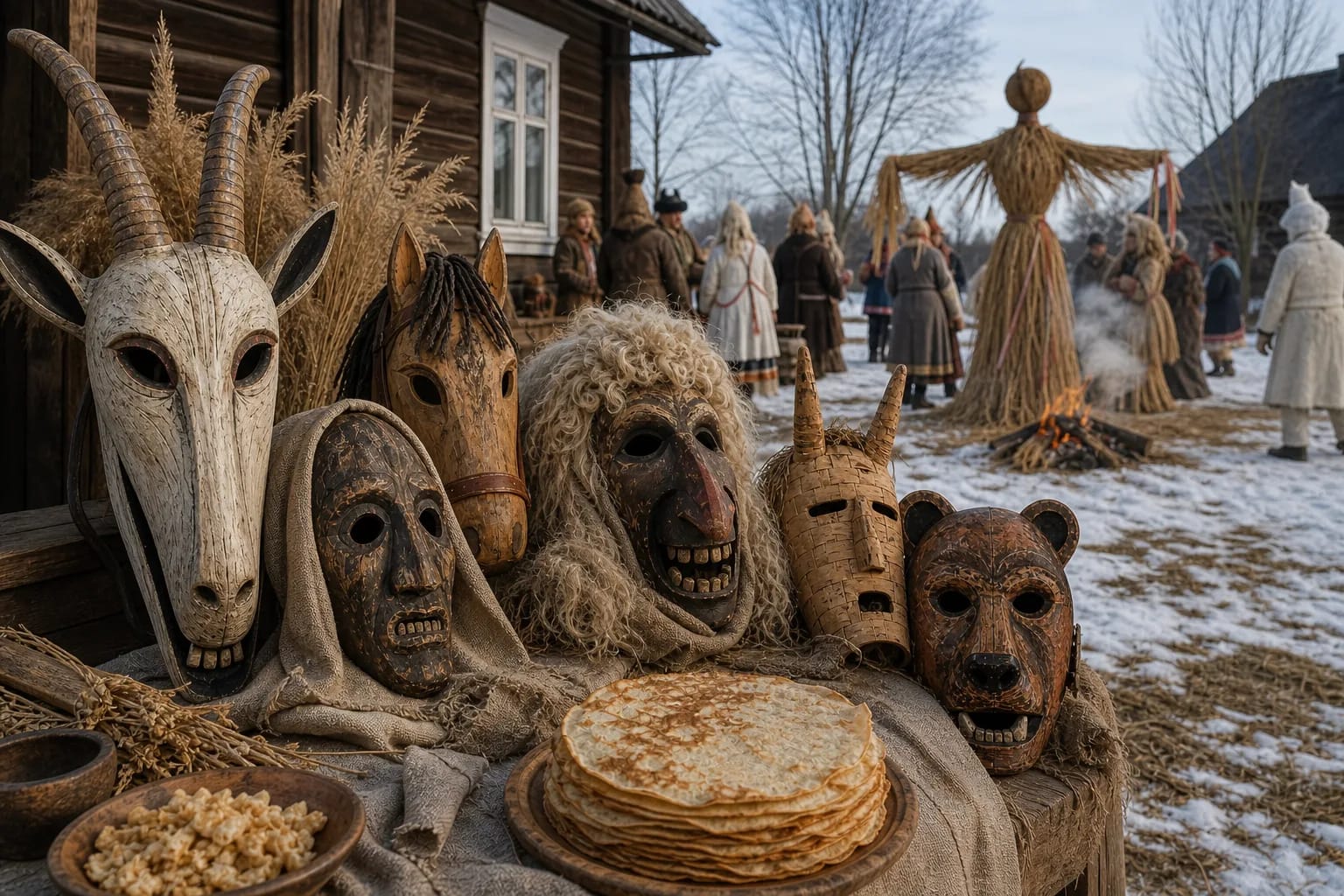
Uzgavenes is Lithuania's joyful winter-sending feast: the straw figure More is burned, Lasininis fights Kanapinis, masked visitors roam, sun-like pancakes are fried, and winter is loudly chased from the yard.
What Is Uzgavenes and When Is It Celebrated?
Uzgavenes is a feast of waiting for spring and sending off winter. It is celebrated on the Tuesday before Lent, nearly seven weeks before Easter, so the date changes every year. VLE notes that Lithuanians once called Uzgavenes the feast of Ragutis (ragučio šventė) and celebrated it at the spring equinox; after Christianization the timing was adjusted to the church calendar and falls between February 3 and March 9.
Uzgavenes is not a state holiday, but it is one of the most popular ethnocultural days. Its essence is loud, joyful driving out of winter and symbolic awakening of spring. It is the last rich day before the quieter Lenten period.
What Does More Mean and Why Is She Burned?
More is a straw doll, often dressed in women's clothing and carried or wheeled during the feast. She embodies winter, cold, evil, and the misfortunes of the past year.
The climax of Uzgavenes is burning More in the bonfire. This symbolizes the end of winter and the sending away of evil. Once More burns, the way opens for spring, light, and a new natural cycle.
Who Are Lasininis and Kanapinis?
Lasininis and Kanapinis are the two main Uzgavenes figures. Lasininis is fat, rich, and heavy, standing for winter and abundant food. Kanapinis is lean and stands for spring and the coming fast.
During the feast they stage a fight. Kanapinis traditionally wins, meaning spring defeats winter. The playful duel explains the meaning of Uzgavenes simply: the end of the old rich time and the beginning of a new cycle.
Why Are Masks Worn?
Masks and disguise are the clearest feature of Uzgavenes. Costumed visitors become goats, witches, Death, devils, bears, or Roma figures. Wooden masks, especially in Samogitia, were considered able to frighten away evil spirits and winter darkness.
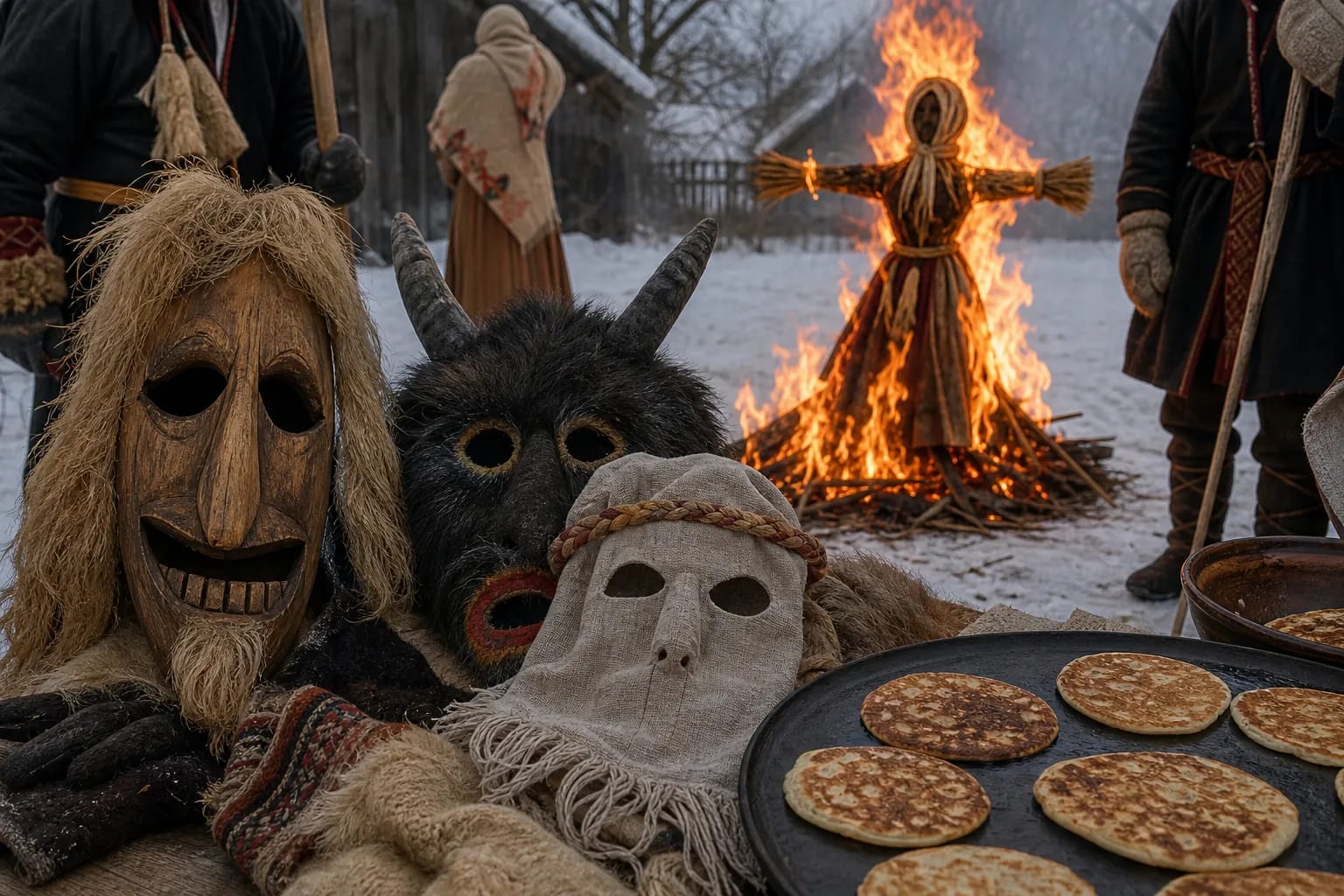
Masked guests visit homes, joke, and ask for food. Hosts treated them with pancakes, doughnuts, and bacon, because receiving guests was tied to luck and good harvest. The custom is related to Christmas kaledojimas.
Why Are Pancakes Fried?
Pancakes are the central Uzgavenes food. Their round shape and golden color recall the sun, warmth, and returning light, making them both food and spring symbol.
People believed that the more pancakes were eaten on Uzgavenes, the richer and more fertile the coming year would be. Today pancakes are the simplest way to mark the feast at home, even without attending a large event.
Celebrating Uzgavenes Today
Uzgavenes can be celebrated at a large event or at home. Museums and city squares hold mask processions, Lasininis and Kanapinis fights, More burnings, fairs, and folklore programs. They are good places to see the living mask tradition.
At home, make pancakes, create a mask, sing, and drive out winter loudly with children. The key is the mood of the feast: humorous noise, movement, and the desire to hurry spring.
Main Uzgavenes customs and meanings
Uzgavenes customs are noisy, playful, and symbolic. They help a community say goodbye to winter, awaken spring life, and prepare for the quieter Lenten season before Easter.
Burning More. The straw figure More, dressed in women's clothes, symbolizes winter, evil, and misfortune. Burning her marks the sending off of winter.
Lasininis and Kanapinis. Two figures fight: Lasininis represents rich, fatty winter, while Kanapinis represents lean spring and fasting. Kanapinis usually wins.
Masked visitors. People dress as goats, witches, Death, devils, Roma figures, bears, and other characters. Wooden masks, especially in Samogitia, were thought to drive away evil spirits.
House-to-house visiting. Masked guests go through the village, visit homes, joke, tease, and ask for food. Hosts fed them well so the year would be successful.
Pancakes. Round warm pancakes resemble the sun and returning light. Eating many pancakes was believed to help bring a fertile year.
Driving out winter. With the cry “Ziema, ziema, bek is kiemo,” people loudly chase winter from yards and homes.
Dances, songs, and games. Music, circle dances, and performances fill the feast; noise and movement are part of waking spring.
Preparing for Lent. Uzgavenes is the last rich day before Lent, so people ate generously and fattily before the fast.
Where to experience it
Where to experience Uzgavenes in Lithuania?
Uzgavenes is brightest where mask and visiting traditions are cultivated. Samogitia is known for wooden masks, while museums and city squares hold large celebrations with More burning.
Plateliai and Samogitia
Samogitia is famous for wooden Uzgavenes masks. Plateliai has one of the best-known mask collections and highly traditional celebrations.
Lithuanian Ethnography Museum in Rumsiskes
One of Lithuania's largest Uzgavenes celebrations, with maskers, More burning, crafts, pancakes, and folklore.
Vilnius and Kaunas
City squares and ethnocultural spaces hold processions, masks, and fairs convenient for families.
Community and School Celebrations
Local communities and schools celebrate with pancakes, masks, and winter-driving, so the feast can be marked almost anywhere.
Uzgavenes: songs, sutartines, and related pages
Uzgavenes closes the winter feast cycle and opens spring. It connects with Easter, Christmas masking traditions, and folk songs.

Uzgavenes: frequently asked questions
When is Užgavėnės celebrated?
Užgavėnės is celebrated on the Tuesday before Lent, nearly seven weeks before Easter. The date changes every year because it depends on Easter.
What does Morė symbolize?
Morė is a straw figure representing winter, evil, and misfortune from the past year. Burning her is the feast's climax and a symbolic farewell to winter.
What do Lašininis and Kanapinis represent at Užgavėnės?
They are two Užgavėnės figures. Lašininis represents rich winter, Kanapinis lean spring. Kanapinis wins, symbolizing spring's victory.
Why are pancakes eaten at Užgavėnės?
Round pancakes resemble the sun and returning light. People believed that eating many pancakes would help make the coming year fertile.
Why are masks worn?
Masks, especially Samogitian wooden ones, were thought to frighten away evil spirits. Masked visitors entertained the community and brought wishes.
What does “Žiema, žiema, bėk iš kiemo” mean?
It means “Winter, winter, run from the yard.” It is shouted to drive winter out of homes and yards and hasten spring.
Where is the best place to celebrate Užgavėnės in Lithuania?
Samogitia and Plateliai are known for wooden masks and traditional forms. Large celebrations also take place in Rumšiškės, Vilnius, and Kaunas.
How is Užgavėnės connected with Easter?
Užgavėnės is the last rich day before Lent. Lent, the period of preparation for Easter, begins the next day, Ash Wednesday.