
Lithuanian folk instruments
Other Lithuanian folk instruments
Some Lithuanian sound tools sit outside neat instrument families, but they show how music, work, children, ritual, and everyday materials met in folk culture.
Sound tools outside neat families
Some instruments sit between toys, work tools, ritual sound, and music. This section keeps those border cases visible instead of forcing them into a single modern category.
Other instrument guides
Read about unusual sound tools, self-sounding instruments, and folk objects used musically.
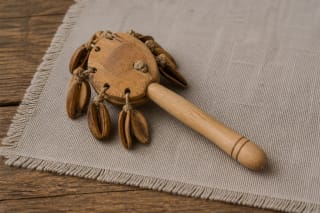
Barškutis is a Lithuanian shaken idiophone and toy: a rattle made from a bladder, clay, wickerwork, or a wooden ball with pebbles, whose sound comes from…
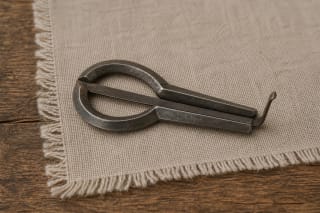
Dambrelis is a small plucked idiophone: a metal, more rarely wooden, frame with a tongue vibrated by a finger, while the mouth cavity shapes the sound; it has…
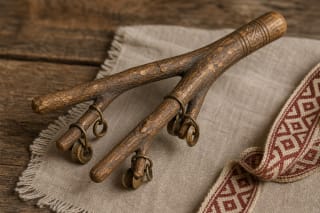
Džingulis is a Lithuanian shaken idiophone: a decorated branched staff used by the wedding inviter in Užnemunė and Lithuania Minor, with magical power…
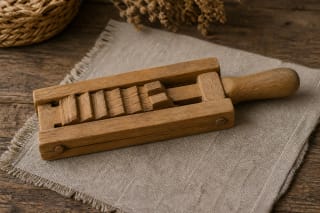
Kleketas is a Lithuanian shaken idiophone: a board with a handle and wooden beaters, used as a clacking signal and rhythm instrument by herdsmen, night…
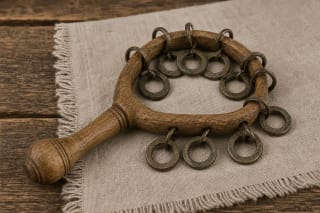
Rinkinė is a Lithuanian herding signal tool and shaken idiophone: a forked or cross-shaped staff strung with stove rings, used by shepherds to discipline cattle…
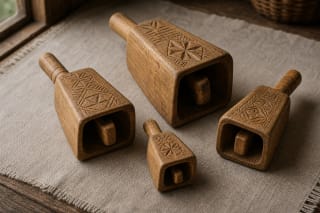
Skrabalai are Lithuanian shaken idiophones: wooden or metal boxes with clappers, once hung on livestock necks and later adapted for rhythm and even…
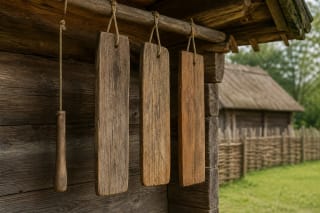
Tabalai are Lithuanian struck idiophones: horizontally hung maple or ash boards whose beating announced death, called people to work, communal labor, or…
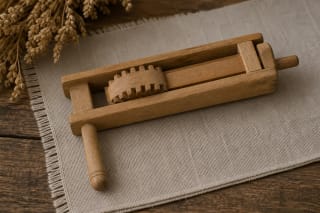
Terkšlė is a Lithuanian scraped idiophone: a frame with a toothed cylinder and slapping slats, used as a signal instrument for calendar festivals, church rites,…