- Field
- Jūžintai-region baked beer, baked malt loaves, and bread-oven brewing
- Type
- traditional craft
- Heritage status
- regional tradition
- Context
- Keptinis beer, Jūžintai region, barley malt, barley dough, malt loaves, bread oven, baked loaves, wort, fermentation, hops, home-brewed beer, brewer
Jūžintai-region baked beer, Keptinis beer, Making keptinis beer
Baked Beer forms and objects
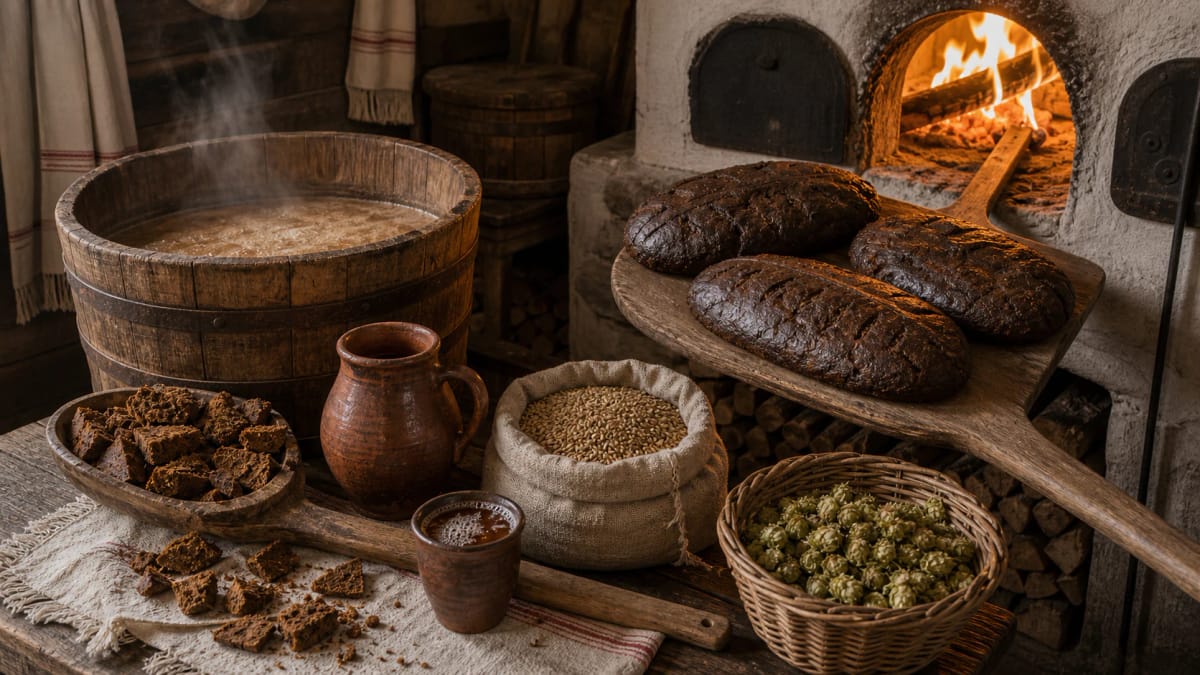
Baked malt loaves: The key intermediate object of baked beer: loaves formed from barley malt dough, baked in the oven, and later used for wort.
Baked beer wort: The malt liquid obtained from crushed baked malt loaves and water, later strained and fermented.
Jūžintai-region baked beer: A regional tradition entered in the Lithuanian Intangible Cultural Heritage Inventory and preserved in the memory of the Rokiškis and Jūžintai area.
Festive baked beer: Beer made for family and community occasions, funerals, feasts, or local gatherings when a more special beer was needed.
What is baked beer?
Baked beer is a brewing method in which barley malt is made into dough, shaped into loaves, baked in a bread oven, and then used to prepare wort and ferment beer. The word baked refers not to baking the finished beer but to the baking stage before fermentation.
This tradition is especially associated with the Jūžintai region around Rokiškis and is entered in the Lithuanian Intangible Cultural Heritage Inventory. It is rare because it requires both brewing knowledge and bread-oven baking knowledge.
Baked beer is not ordinary home-brewed beer under another name. Its technological core is baked malt loaves, which change the flavor, color, and cultural meaning of the future drink.
What is baked?
For baked beer, the baked object is not bread intended for eating but loaves of malt dough. They are formed from barley malt mass and placed in a bread oven. Once baked, they may look like dark loaves, but their purpose is to become the basis of wort.
These loaves are later broken, soaked, or poured over with water so malt substances are extracted. The liquid is then strained, supplemented according to local practice, and fermented.
Baked beer is therefore a strong example of how one tool, the bread oven, can work not only in bread-making but also in beer technology.
The Jūžintai-region tradition
Jūžintai baked beer survived as regional memory and living practice, where local brewers, family stories, oven use, and community feasts all matter. The Inventory presents it as one of Lithuania's early documented intangible-heritage values.
Regionality here is not decorative. The craft requires concrete knowledge: how to prepare malt, what thickness the dough should have, how long to bake the loaves, how to break, strain, and ferment them.
Baked beer is therefore best understood as a local technology, not only as an unusual drink name.
Difference from home-brewed beer
Home-brewed beer is usually explained through malt, wort, hops, and fermentation. Baked beer has an additional, decisive baking stage: malt-dough loaves go into the oven.
This baking changes the malt mass. It takes on roasted, caramel, darker qualities that later pass into the wort. Yet baked beer does not necessarily mean a smoky beer or a modern craft-beer experiment.
In short, every baked beer belongs within the wider field of home-brewed beer tradition, but not every home-brewed beer is baked beer.
Bread oven and peel
Without a bread oven, the baked beer tradition loses its essence. The oven must store heat, bake the malt loaves properly, and give them the right surface. Too hot an oven burns them; too cold an oven leaves them underbaked.
A peel or similar wooden paddle helps push loaves in and take them out. It belongs to the same family of tools known from bread baking. Baked beer shows that farm tools often had more than one purpose.
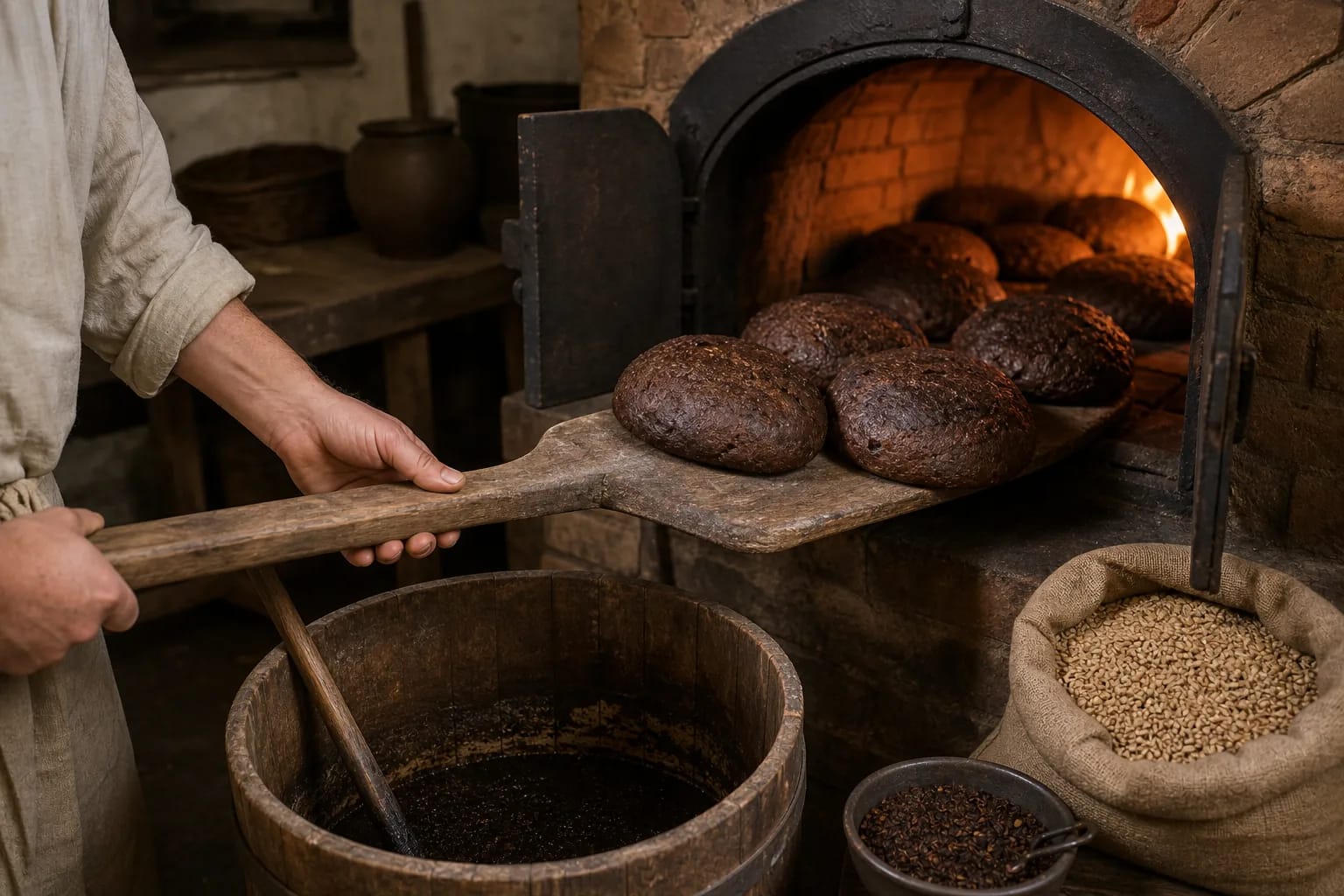
The oven stage also requires planning. Beer is not made quickly: malt, loaves, wort, and fermentation all have their own rhythm.
Wort and fermentation
The baked malt loaves are broken and poured over with water to make wort. This stage must draw the right flavor and substances from the baked mass without making the liquid uncontrollably thick or burnt.
The wort is strained and fermented with yeast. As in other beer, fermentation is a living process: temperature, yeast condition, and time shape the result.
An honest heritage description should not become a recipe. The heritage value here is technological memory, not an instruction to make alcohol at home.
When was it consumed?
Baked beer was not made every day. It is associated with family, village, and community occasions: funerals, larger feasts, gatherings, and sometimes holidays when a more special beer was needed.
As with home-brewed beer, the order of serving mattered. The tradition is not about purposeless drinking but about a social table where the drink has an occasion, host, and responsibility.
A contemporary reader should see baked beer as cultural technology and regional heritage, not as encouragement to consume.
What is often confused?
A common mistake is to think baked beer is beer baked after fermentation. In fact the malt preparation is baked before wort making. The finished beer is not baked.
Another mistake is to call it simply smoked beer. The oven may give roasted notes, but the essence is not smoke flavor. The essence is baked malt and regional technology.
A third mistake is to merge Jūžintai baked beer with all rural beer variants. Baked beer is a distinct, narrower tradition.