- Field
- Linen national-costume shirts, tunic cut, shoulder pieces, and cuffs
- Type
- textiles
- Heritage status
- well attested
- Context
- Lithuanian shirts, linen cloth, tunic cut, body panel, sleeves, cuffs, collar, front slit, shoulder pieces, gussets, žičkai, whitework embroidery
Linen shirts, National-costume shirts, Women's shirts, Men's shirts, Homespun linen shirts
Linen Shirts forms and objects
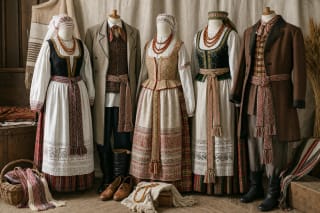
Women's shirts: Long linen shirts worn under skirt, apron, and waistcoat; visible collar, cuffs, sleeves, and chest ornament mattered.
Men's shirts: Linen shirts worn with trousers, sash, waistcoat, sermėga, or frock coat; usually more restrained in ornament but structurally important.
Tunic-cut shirts: Shirts made from straight linen pieces, with a rectangular body, sleeves, gussets, and shoulder reinforcements.
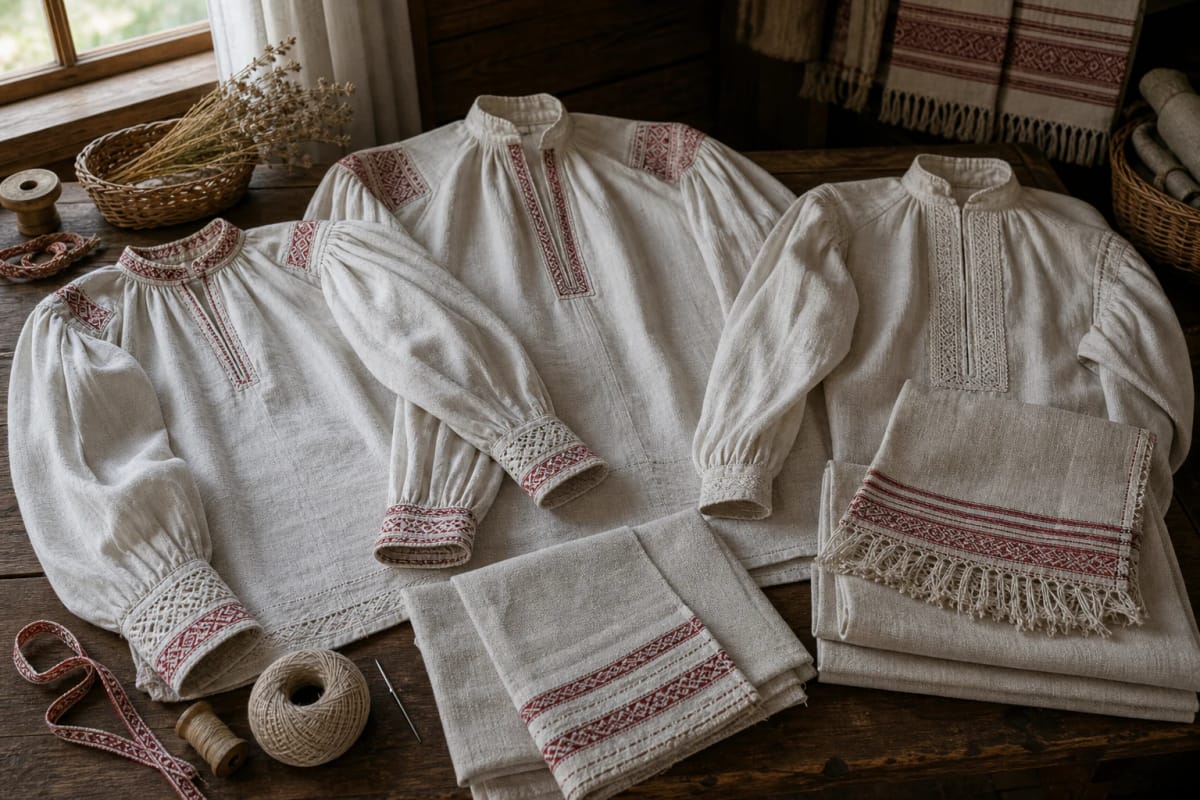
Decorated shirts: Shirts with žičkai, whitework, openwork, hemstitching, embroidered cuffs, collar, or shoulder pieces.
What are traditional shirts?
Shirts are the basic linen body garment in traditional Lithuanian clothing. They are worn closest to the body, under a skirt, apron, waistcoat, trousers, sermėga, or other outer garments.
At first glance a shirt may seem like a simple white garment, but its cut holds much traditional sewing logic: rectangular pieces, shoulder pieces, gussets, sleeves, collar, cuffs, front slit, and careful edge finishing.
In national costume the shirt is the foundation of cleanliness and layering. It must be visible where the costume requires it: at the neck, cuffs, sleeve volume, chest, or shoulder ornament.
Every girl preparing for marriage was expected to know how to sew shirts. According to VLE, a bride gave white linen shirts to her future husband, father-in-law, brothers-in-law, and other men of his family; shirts were also considered good gifts for the matchmaker, godfather, neighbor, and at Christmas for hired workers. At the beginning of major summer work, especially rye harvesting, a farmer put on clean white linen shirts.
Linen cloth and the body layer
The key material for shirts was linen cloth. Linen absorbs moisture, is strong, can be bleached, and carries a clear moral and aesthetic connection with cleanliness.
Everyday shirts could be coarser, tow-based, or less white, while festive shirts were thinner, whiter, more carefully sewn, and decorated. The lower part could sometimes be made from simpler cloth because it was not visible.
This shows practical textile thinking: more expensive, whiter, and more ornate linen was used in visible places, while less visible parts could be simpler.
The tunic principle
Many traditional shirts are based on a tunic cut. The main part, or body panel, is made from straight pieces of cloth, while sleeves, shoulder reinforcements, and gussets are inserted so the garment allows movement.
This cut saves cloth, because linen was the result of work, not a cheap material. A system of rectangular pieces leaves almost no waste and adapts to the width of cloth woven on the loom.
To a modern eye a tunic-cut shirt may look less shaped, but in traditional clothing the form is made by layers: shirt, waistcoat, skirt, apron, sash, and outer garments.
Shoulder pieces and gussets
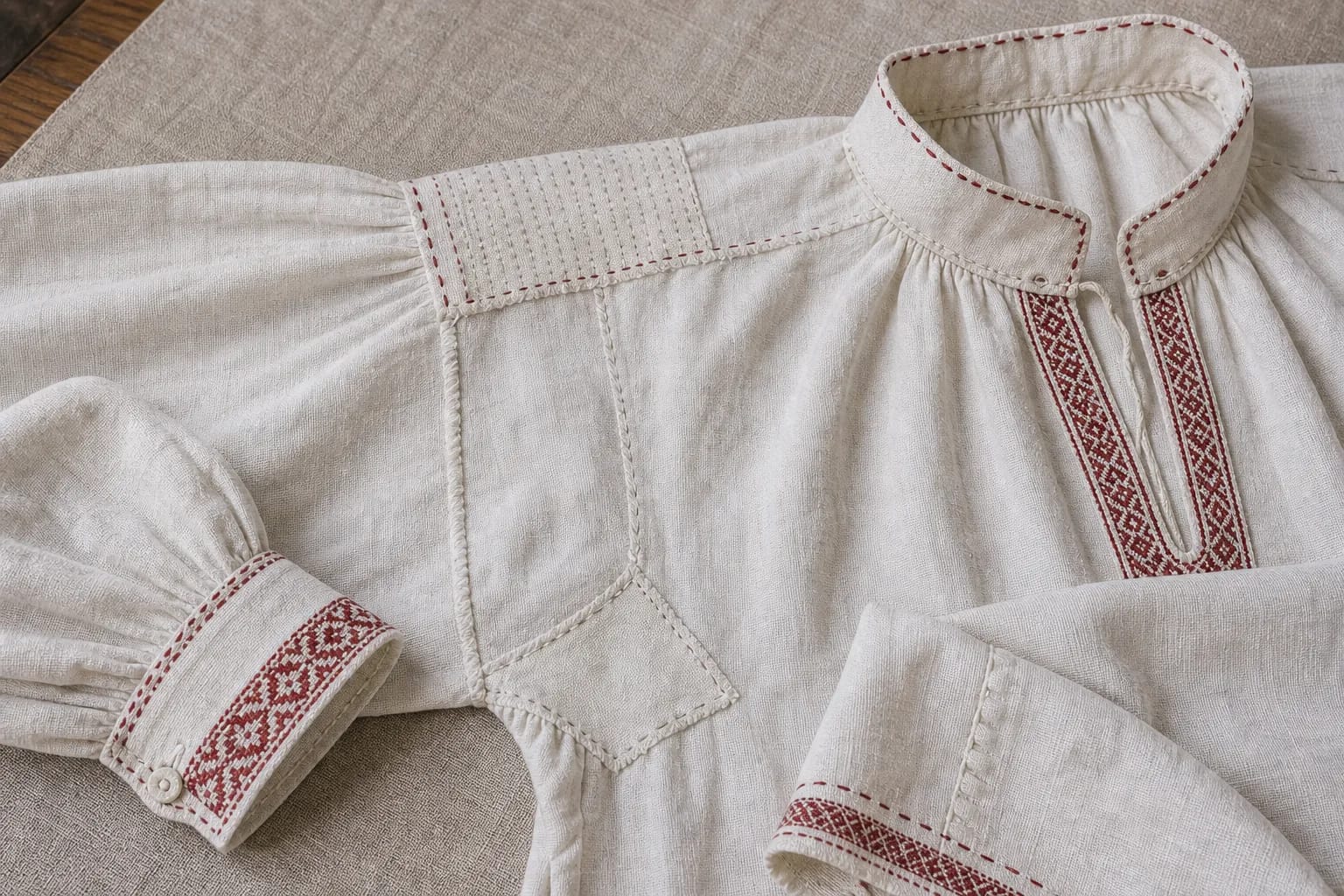
Shoulder pieces are reinforcements or added cloth sections that help the shirt hold its form and protect the shoulders from wear. They can also become a place for ornament. VLE notes that shoulder pieces were sewn from thinner linen or cotton two or three fingers wide, and square linen gussets were inserted under the arms so the shirt would tear less; the standing collar was earlier tied or fastened with a bone or wooden toggle, later with a button.
Gussets inserted under the arms or at the sides give freedom of movement. Without them a rectangular shirt would pull, tear, or fall uncomfortably when the arm is raised.
These details show that traditional cutting is not primitive. It is economical, clear, and highly functional when its logic is understood.
Collar, front slit, and cuffs
The collar and front slit are among the most visible shirt zones. The slit allows the shirt to be put on, and the collar frames the neck and works with the waistcoat, scarf, sash, or men's outer garment.
Cuffs matter because they are visible under a waistcoat, sermėga, or jacket. They may be narrow or wide, buttoned, tied, embroidered, or decorated with žičkai or whitework.
If sleeves or cuffs are hidden incorrectly in national costume, a large part of the textile is lost. The shirt should speak together with the upper layer, not disappear under it.
Embroidery and žičkai
Shirts could be decorated with whitework, hemstitching, openwork, red žičkai, small geometric or plant motifs. The most common decorated places are collar, cuffs, front slit, shoulder pieces, and parts of the sleeves.
White embroidery on white linen can look restrained, but it requires great technical control. Light and texture create an ornament that is not loud but very precise.
Red žičkai or colored accents give the shirt regional and festive character. Decoration, however, must be coordinated with the whole costume so the shirt does not look separate from the clothing ensemble.
Women's shirts
Women's shirts were often long because they also functioned as an undergarment. The visible places, neck, sleeves, cuffs, chest, and shoulders, were the most ornate.
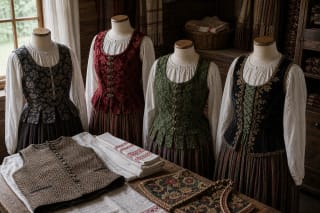
With skirt and apron the shirt creates a vertical clothing system. A waistcoat may cover part of the shirt, but it should not hide all its work: sleeves, cuffs, and collar must remain alive.
Regional differences appear not only in ornament but also in sleeve width, collar form, places of decoration, and combination with waistcoat and head covering.
Men's shirts
Men's shirts were also linen and tunic-cut, worn with trousers, sash, waistcoat, sermėga, or frock coat. Their ornament was often more restrained, but collar, chest, and cuffs remained important.
A men's shirt has to fit the sash and outer garment. A shirt that is too long, too short, or cut in a modern way immediately changes the whole proportion of national costume.
Men's shirts should therefore not be replaced with ordinary modern white shirts. Construction, fabric, and collar are essential elements of the historical look.
How to recognize a good national-costume shirt
First look at material: whether it is linen, or at least a cloth that follows linen logic. Then look at the cut: whether there is a tunic principle, shoulder pieces, gussets, a proper collar, cuffs, and proportion.
Next evaluate ornament. It must be regionally and technically grounded, not randomly added. Cuff and collar embroidery should fit the waistcoat, skirt, apron, or men's costume.
A good reconstruction names region, period, and model. A contemporary interpretation can be beautiful, but historical national costume needs precision.