- Field
- Traditional wooden building, log structures, corner joints, rafters, and the carpenter's craft
- Type
- traditional craft
- Heritage status
- well attested
- Context
- Dailidystė, dailidė, wooden building, log structure, wall log, corner joint, corner, beam, rafter, ridge, wall crown, log house, smokehouse dwelling, granary, barn, axe, broad axe, chisel, drill, plumb bob, square
Dailidė craft, Traditional wooden building, Log-building construction, Wooden house building
Traditional Carpentry forms and objects
Log structure: A log-wall construction in which wall logs are laid one over another and joined at the corners.
Wall log: A log or squared timber from which the wall of a wooden building is formed.
Corner joint: A log corner connection that lets wall logs lock together and hold the building's shape.
Rafter: A structural element of the roof slope, supporting battens and roofing.
Broad axe: A broad-edged axe-like tool used to hew logs and shape flat surfaces.
What is dailidystė?
Dailidystė is the craft of traditional wooden building. A dailidė builds wooden buildings: pirkios, gryčios, granaries, barns, storehouses, sheds, farm buildings, small bridges, and other structures where the main concern is not fine decoration but a load-bearing timber system.
VLE describes dailidės as builders of wooden buildings and masters of wooden structures. This helps distinguish a dailidė from a joiner, furniture-maker, or carver: the dailidė first deals with wall, corner, beam, rafter, roof, and structural strength.
Traditional carpentry requires the ability to choose timber, hew it, lay it, join it, measure it, and anticipate how a building will behave through rain, frost, sun, settling, and decades of aging.
A dailidė is not a joiner
A joiner is more often associated with windows, doors, furniture, interior details, and more precise wooden products. The dailidė works with the building structure: wall logs, log walls, beams, rafters, roof form, and large logs.
A carver may create sculpture, ornament, or decoration for a household object. A dailidė may know how to carve, but his primary responsibility is the building, its corners, and its ability to stand.
This distinction is not a hierarchy. It lets each craft have a clear value: the dailidė builds the house's body, the joiner handles precise parts, and the carver gives form artistic expression. In practice, rural masters often combined tasks; until the first half of the twentieth century joiners and carpenters laid floors and ceilings, made doors, windows, and shutters, and decorated houses with carved vergeboards, lėkiai, and window surrounds.
Wall logs and log structure
The log structure is one of the most important forms of traditional wooden building. Wall logs are laid one on another and joined at the corners so the walls hold without a mass metal frame.
The dailidė must decide which log belongs where. Timber thickness, bend, knot, heartwood, moisture, and grain determine whether a wall log should be lower, higher, near a window, in a corner, or elsewhere.
A log building is not simply stacked timber. It is precise matching of logs so the walls settle, the corners do not open, and the gaps remain tight.
Corner joints and corners
Corners are the carpenter's examination. A corner joint must hold the wall logs, keep the walls from sliding, and form a tight corner.
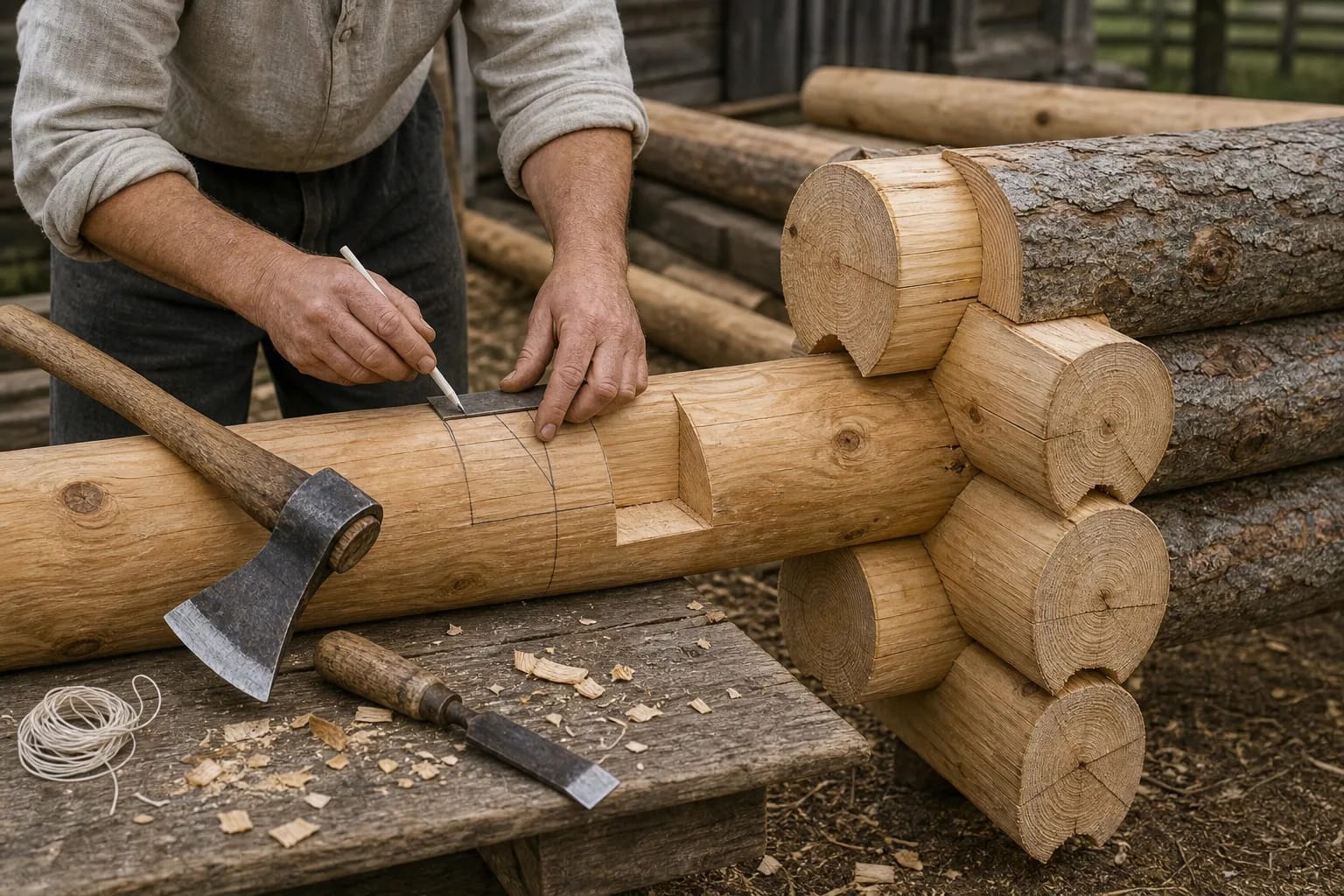
Different corner solutions were used in different regions and periods. Some leave the log ends projecting beyond the corner, while others hide the joint more neatly. Names and structural details also vary.
An inaccurate corner later becomes a place of cold, moisture, and structural weakness. The dailidė therefore measures, marks, cuts, and checks many times.
Beams, rafters, and roof
Dailidystė does not end with the walls. Beams carry floors or ceilings, rafters form roof slopes, the ridge completes the top, and battens receive the roofing. Each part has to transfer loads downward.
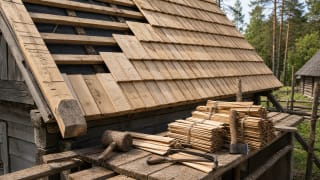
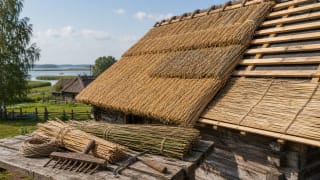
The roof structure must suit the covering. Shingles, shakes, straw, reeds, and other coverings differ in weight, pitch, and fastening, so the carpenter's work must anticipate the roofer's technology.
A good wooden building is visible not only in the facade. It can be read in the attic: in rafters, beams, joints, ridge, and wooden connections.
Tools and measuring
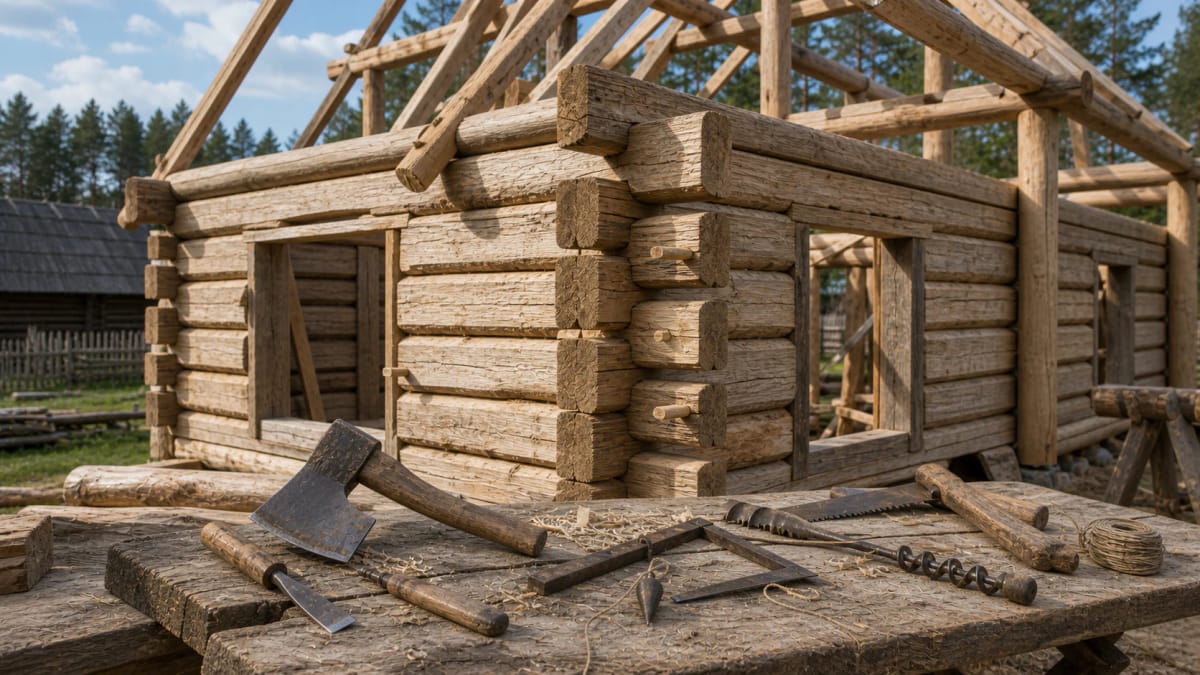
The dailidė's tools were both rough and precise: axe, broad axe, saw, chisel, drill, bit, hammer, square, plumb bob, cord, and marking tools turned a log into a structural part.
With a broad axe or axe, wood can be removed quickly, but the carpenter must control the edge so the log does not lose strength. Chisel and drill are needed for pegs, sockets, and more accurate joints.
Measuring in traditional building is not only a metric ruler. Level, vertical, angle, cord line, trained eye, and the building's proportions all matter.
Choosing timber
A wooden building begins in the forest. The dailidė or patron had to know which timber suited wall logs, which beams, which rafters, and which smaller details.
Straight, healthy, properly dried timber is more reliable than a wet log used in haste. Wood shrinks, settles, splits, and moves, so a good carpenter plans not only the building day but the coming years.
In contemporary heritage restoration, choosing timber is even more important, because authentic construction, safety, regulations, and building use must be reconciled.
Wooden heritage and restoration
Cultural heritage institutions often stress that wooden heritage is vulnerable: it is destroyed by moisture, unsuitable repairs, plastic substitutes, rushed cladding, and lack of understanding of structures.
Carpentry knowledge is needed not only for a new ethnographic building. It is essential in restoring old granaries, homesteads, wooden churches, chapels, and other wooden buildings, when an old joint must be preserved and only what is truly lost replaced.
Good repair is not replacing everything with new material. It often begins with documentation, removing the source of moisture, repairing part of a damaged log, and understanding the structure.
A living craft today
Dailidystė is alive today in several fields: heritage restoration, museum education, traditional architecture building, homestead reconstruction, and master training. Still, it is not a mass skill.
The greatest danger is assuming that a wooden house can simply be copied from a photograph. Without understanding joints, timber, structure, and moisture, a traditional form becomes only decoration.
A good account of dailidystė should show not only a beautiful log corner but the whole way of thinking: tree, tool, joint, roof, weather, water, and time.