- Field
- Lithuanian wooden footwear and the craft of clog-making
- Type
- traditional craft
- Heritage status
- well attested
- Context
- Klumpės, clog-makers, wooden shoes, Lithuania Minor, Užnemunė, Samogitia, willow, alder, aspen, leather uppers, work footwear, dance clogs
Wooden clogs, Klumpdirbystė, Clog-making, Wooden shoes, Work clogs
Lithuanian Clogs forms and objects
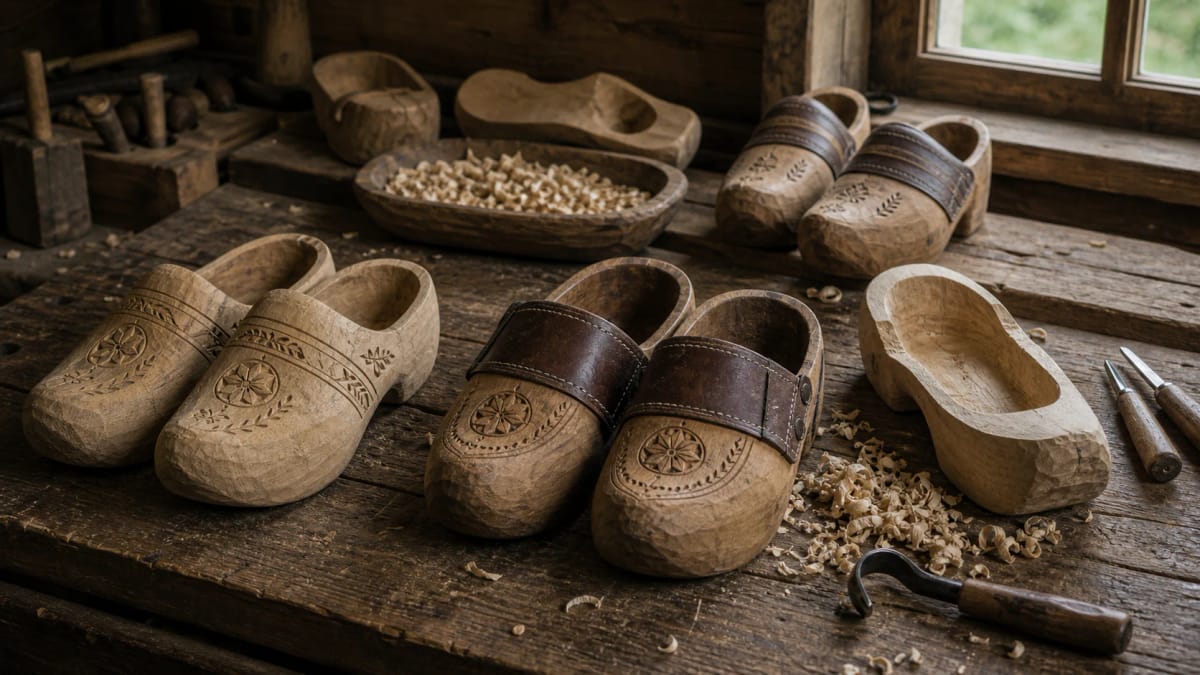
All-wooden clogs: Footwear hollowed from a single wooden blank, with a wooden sole and upper, used for farmyard, household, workshop, or damp work settings.
Clogs with leather uppers: A wooden sole combined with a leather upper, making the footwear lighter, more flexible, and more comfortable for longer wear.
Work clogs: Practical, sturdier, less ornamented clogs that protected the foot from mud, damp ground, and farmyard dirt.
Festive or dance clogs: Lighter, more decorative, or sound-emphasizing clogs, today often associated with folklore ensembles and the klumpakojis dance.
What are klumpės?
Klumpės are wooden clogs, either hollowed from a wooden blank or made from a wooden sole with a leather upper. In Lithuania they are most strongly associated with the western lands: Lithuania Minor, Užnemunė, and Samogitia, not with the whole country in the same way.
They were practical work footwear. Wood protected the foot from mud, dampness, farmyard ground, wet paths, and cold surfaces. Clogs suited the farm, yard, cowshed, workshop, or short errands, but they were not always comfortable for long journeys.
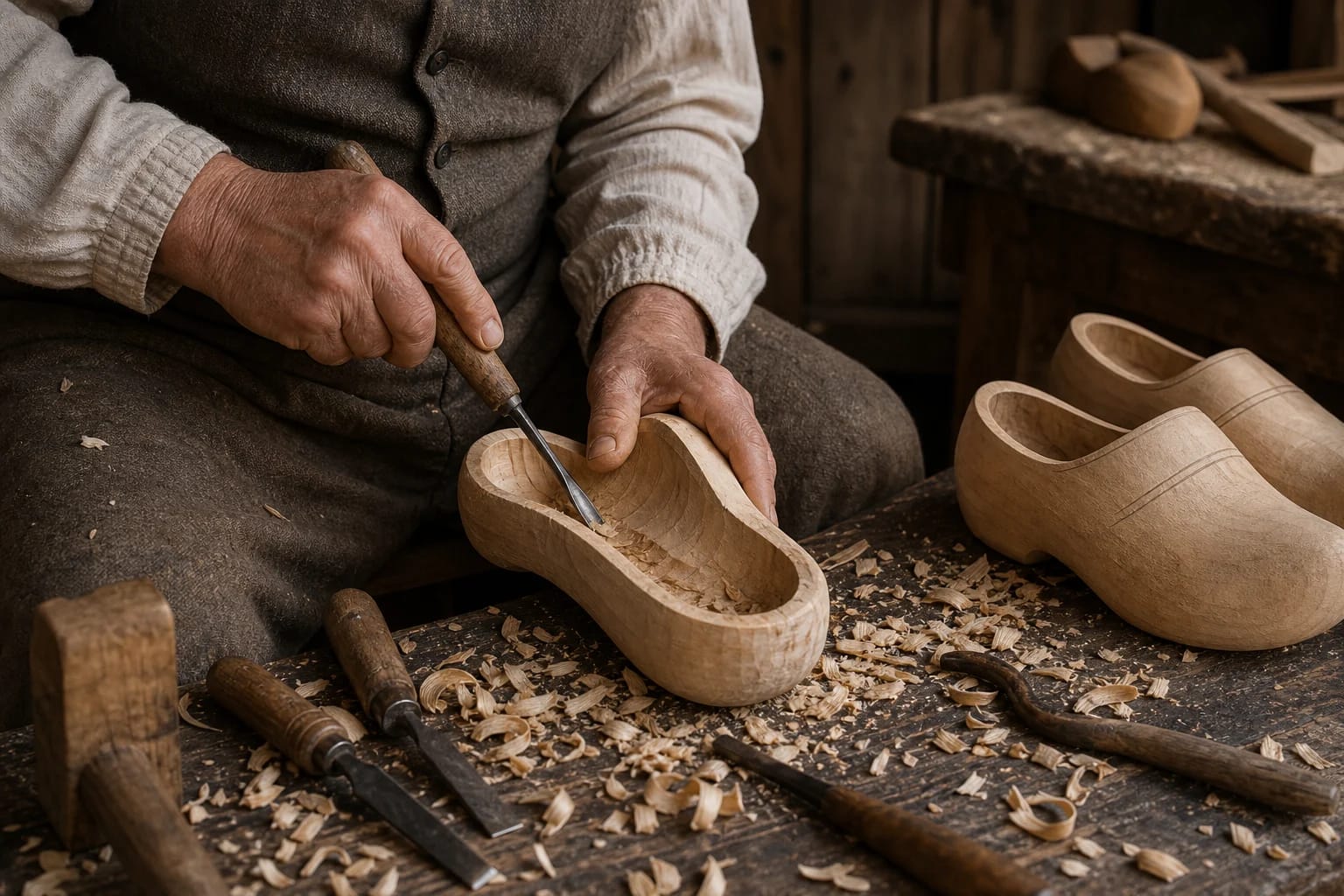
The craftspeople who made them were called klumpdirbiai. Their work joined wood selection, rough shaping, hollowing, sole forming, smoothing the inner cavity, sometimes attaching leather, and adding modest decoration.
Historical spread in Lithuania
It is important not to project clogs onto the earliest footwear history of all Lithuania. Sources connect them with Western European and Lithuania Minor influences: in Lithuania Minor they began to be worn in the 18th century, brought by colonists from France and Switzerland, and in the 19th century they spread in Užnemunė and Samogitia.
In Samogitia, clogs survived in some places into the middle of the 20th century. This helps explain why they are now strongly tied to a Samogitian image, folklore ensembles, the klumpakojis dance, and the memory of western Lithuania.
In other parts of Lithuania, traditional footwear is more often represented by naginės leather shoes, vyžos bast shoes, leather boots, or later factory products. Klumpės should therefore be presented as a regional, later, and very practical form of wooden footwear.
Wood: why willow and alder?
Clogs required wood that was light enough, easy enough to hollow, and not too hard against the foot. The Universal Lithuanian Encyclopedia notes willow and alder wood, while women's clogs were sometimes made from aspen because it was lighter. Wood that is too hard makes the shoe heavy; wood that is too soft breaks quickly.
The blank had to be free of large knots and splits. The clog-maker needed to anticipate where the heel, toe, inner hollow, sole thickness, and upper would be. A poorly chosen blank splits or presses the foot.
The wood also had to dry properly. A clog that is too wet later deforms; a blank that is too dry may split while being hollowed. For that reason, the clog-maker's experience mattered as much as the tools.
How are clogs made?
Making a clog begins with a blank. The wood is chopped into an approximate foot shape, then the sole, heel, and upper are formed. The inside is hollowed with special knives, gouges, chisels, or curved tools until the foot can slide in comfortably.
The outside is smoothed, the edges rounded, and the sole adjusted so walking is possible. A wooden clog has no flexible sole, so its shape has to help the step: toe, heel, and center of weight matter greatly.
If the clogs are made with leather uppers, the wooden sole is prepared separately and the leather is fastened with small nails, rivets, or other methods. This form can be more comfortable and lighter, but it requires additional leatherworking skills.
All-wooden clogs and clogs with leather uppers
All-wooden clogs are sturdier and protect better from damp ground, but they can be heavier and stiffer. Such forms suited short work in yards, cowsheds, or muddy places, and clogs intended for deep snow or fishing could have uppers attached.
Clogs with leather uppers combine a wooden sole with a more flexible upper part. They can be more comfortable for longer wear, adapt better to the foot, and press less on the top of the foot.
Both forms may be decorated with incised patterns, sunbursts, twigs, geometric motifs, or simple lines. In work clogs, however, decoration was usually restrained because durability mattered most.
Clogs, naginės, and vyžos
Klumpės should be clearly distinguished from other traditional footwear. Naginės are leather shoes, often tied with laces. Vyžos are woven from bast, fiber, or other plant materials. Clogs are wooden or have a wooden sole.
Their settings also differ. Vyžos are lighter, naginės more flexible, while klumpės protect better from dampness and mud but can be noisy and less comfortable for long walking.
Lithuanian traditional footwear is therefore not one object. It should be read by region, period, work, material, and social context.
Samogitia, folklore, and klumpakojis
Today many people associate klumpės with Samogitia and klumpakojis, a staged and folkloric dance in which wooden footwear becomes a rhythmic instrument. The sound of clogs on boards or floors creates a clear, lively accent.
Folklore use does not mean that all clogs were festive dance footwear. Many were work objects. Yet the stage and ensembles helped keep clogs visible after wooden shoes were no longer needed in daily life.
For that reason, klumpės today have two layers: the historical layer of work footwear and the living layer of folklore and identity. Both meanings matter when they are clearly distinguished.
Clog-making today
Today klumpdirbystė continues through folk artists, museum education, folklore ensembles, dance props, and certified national-heritage products. Makers may reconstruct historical forms or create more comfortable clogs for the stage.
A good contemporary clog should preserve the logic of wood: proper sole thickness, a comfortable hollow, rounded edges, a blank that is not too heavy, and a clear link with regional tradition.
When clogs are sold as souvenirs, it is important not to overload them with ornament or call them the oldest footwear of all Lithuania. Accuracy is part of cultural respect.
Care and wearing
Wooden clogs should be protected from prolonged soaking, rapid drying near heat, and large temperature swings. Wood can split, deform, or become too dry, while a leather upper can harden or tear.
If clogs are used for dance, the sole and heel condition should be checked. Cracks, loosened leather, or an overly slippery surface can be dangerous. A stage clog must be sturdy but suited to the specific floor surface.
Museum clogs or old family clogs should not be sanded, varnished, or treated with random oils at home. The old surface, wear marks, and even cracks may be valuable parts of the object's history.