
Winter
Kucios: Lithuanian Christmas Eve
Evening of December 24
Kucios is the quietest and most symbolic Lithuanian winter feast. Celebrated on the evening of December 24 before Christmas, it joins family unity, a fasting meal, remembrance of ancestors, and old divinations about the coming year.
Tradition context
- When
- Evening of December 24
- Season
- Winter
- Themes
- Family meal, 12 dishes, kaledaitis, hay under the tablecloth, ancestral souls, divinations, reconciliation
Kucios is the most important Lithuanian winter family meal on the evening of December 24: twelve fasting dishes, sharing the kaledaitis wafer, hay under the tablecloth, remembrance of ancestral souls, and calm reconciliation before Christmas.
What Is Kucios and When Is It Celebrated?
Kucios is a solemn family meal on the evening of December 24, Christmas Eve. It is the most important evening of Advent, when the family sits at one table, shares the kaledaitis, and begins the meal of twelve dishes.
The meal traditionally begins when the first star appears. Kucios is not a night of feasting heavily; its essence is recollection, reconciliation, ancestor remembrance, and quiet waiting for Christmas. VLE notes that the word Kucios comes from East Slavic kut'ja (Belarusian kuccja), a ritual grain dish whose name came to designate the whole evening; in the Catholic Church Kucios is celebrated on December 24, and in the Orthodox Church on January 6.
What Do Twelve Kucios Dishes Mean?
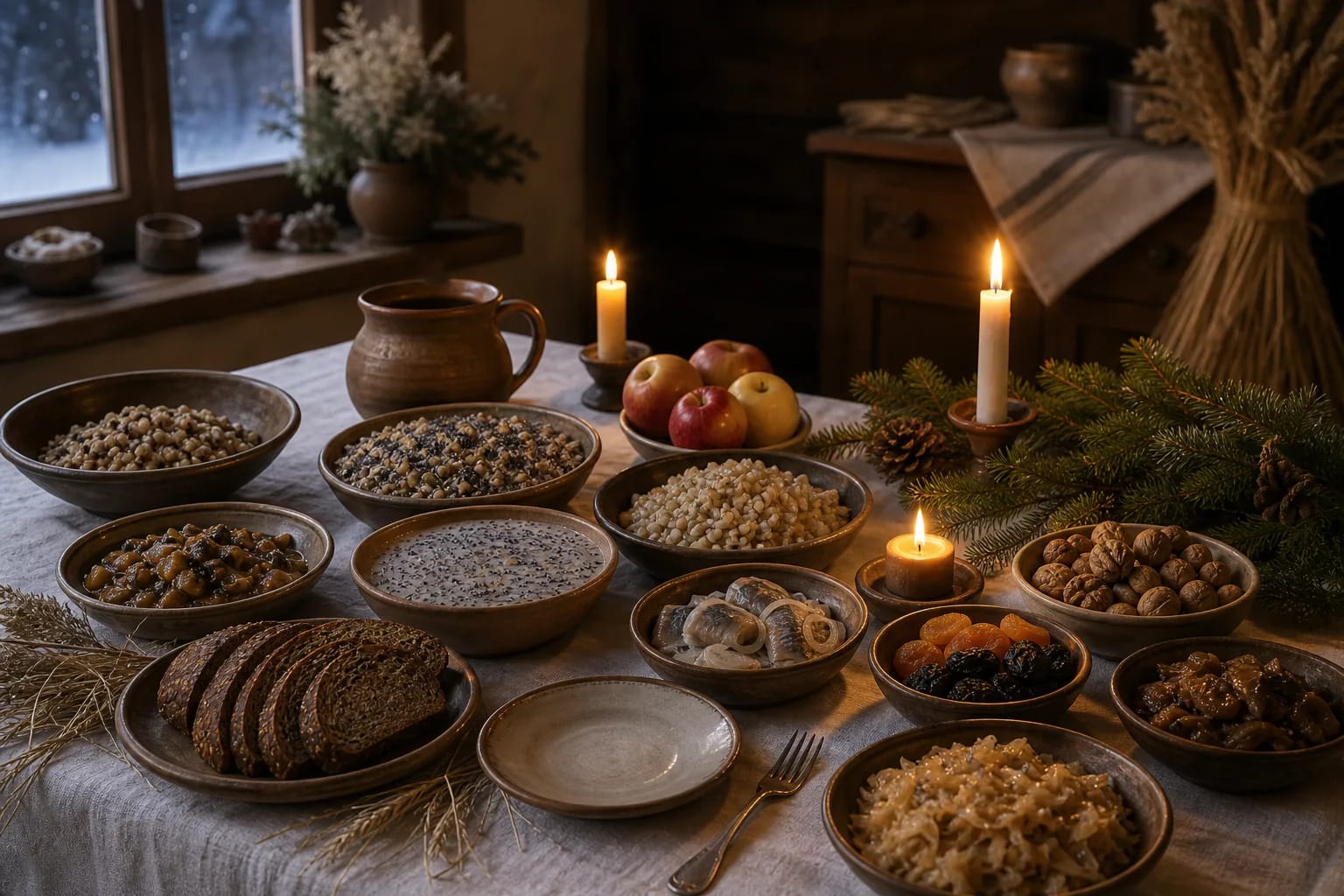
The Kucios table holds twelve dishes, usually linked with the twelve months or twelve apostles. All foods are fasting foods, without meat, dairy, or eggs, and are made from grain, fish, mushrooms, vegetables, poppy seeds, honey, and fruit.
Common dishes include herring, mushrooms and vegetables, cranberry kisielius, poppy milk with kuciukai, boiled or stewed wheat, bread, and honey. Tradition asks everyone to taste each dish so the whole year will be full and harmonious.
Kaledaitis and Hay Under the Tablecloth
The kaledaitis, often called plotkele, is a thin white wheat wafer. Family members break and share it, wishing one another health, peace, and forgiveness. This act is the central sign of reconciliation at Kucios. According to VLE, the kaledaitis is unleavened, blessed bread - a symbol of the body of Jesus Christ - that believers bring home from the parish church during Advent; the custom of sharing it is characteristic specifically of Lithuanian and Polish Catholics.

Hay is placed under the white tablecloth. It recalls the manger, humility, and earthiness. It also has a divinatory role: at the end of the meal straws are pulled, and their length or form is read for the coming year.
Why Souls Are Remembered at Kucios
In Lithuanian tradition Kucios is not only a family evening but also an evening of ancestors. People believed that on the night of December 24 the souls of the dead returned to visit the home, so a free place, plate, and some food were left at the table.
This custom links Kucios with the broader Lithuanian tradition of honoring souls, most visible at Velines. On Kucios evening the living and the dead symbolically sit at one table, which makes the evening festive but deeply serious.
Kucios Divinations and Beliefs
After dinner, older tradition invited people to tell the future of the coming year. The best-known divination is drawing a straw from under the tablecloth: a long straw meant long life, a short or split one was unlucky, and a branched straw could suggest marriage.
People also believed that miracles occurred on Kucios night: water in wells became special and animals in the byre spoke in human language. Today these stories are read as symbols of a boundary night and the mystery of nature.
Keeping Kucios Today
Contemporary Kucios can be simple but meaningful. It is enough for the family to sit together, light a candle, share kaledaitis, taste twelve dishes, and make time for calm conversation without hurry or screens.
Keep at least a few signs: an empty place for the departed, hay under the tablecloth, kuciukai with poppy milk, and one divination. These small actions turn dinner into living tradition rather than only a festive meal.
Main Kucios customs and meanings
Kucios customs explain why this evening is treated as special. They involve family reconciliation, the bond between the living and the dead, modesty, respect for harvest, and a calm waiting that separates Kucios from the noisier joy of Christmas.
Twelve fasting dishes. The table holds twelve foods without meat, dairy, or eggs. The number is linked with the twelve months or the apostles, and fasting stresses the evening's seriousness.
Sharing the kaledaitis. The thin white wafer, also called plotkele, is broken and shared among family members with wishes for health, forgiveness, and peace.
Hay under the tablecloth. Hay is placed under the white tablecloth to recall the Nativity manger and humility. Later straws are drawn for divination.
Remembrance of ancestors. A free place and some food are left for deceased relatives. People believed souls returned to visit the home on Kucios night.
Lighting a candle and common prayer. The meal begins with a candle, recollection, and thanks. Kucios is eaten slowly and without anger.
Kuciukai and poppy milk. Small unleavened biscuits with poppy seeds are soaked in poppy milk; poppies are linked with quiet, sleep, and ancestors.
Kucios divinations. After dinner people draw straws and predict health, harvest, or marriage. A long straw promised long life; a short or split one was unlucky.
Gathering the whole family. Families tried to have everyone at the Kucios table, even those living far away. The evening is a time of reconciliation and togetherness.
Where to experience it
Where to experience Kucios in Lithuania?
Kucios is first celebrated at home around the family table. Its traditional order can also be learned in museums, ethnocultural education, and community evenings.
The Home
The true place of Kucios is the family home. The key is not luxury but a shared table, quiet, kaledaitis, and time together.
Lithuanian Ethnography Museum in Rumsiskes
Education programs show the traditional Kucios table, village-house setting, and winter customs.
Ethnic Culture Centers
Vilnius and Kaunas ethnoculture centers often hold Kucios education, kuciukai baking, and Advent evenings before Christmas.
Community and Parish Evenings
Communities and parishes organize shared Kucios meals for lonely people or those far from family so no one is left alone that evening.
Kucios: songs, sutartines, and related pages
Kucios evening is inseparable from Advent quiet, hymns, and winter traditions. It connects with Christmas, Velines themes of souls, and folk songs.


Kucios sources and useful pages
Kucios: frequently asked questions
When is Kūčios celebrated?
Kūčios is celebrated on the evening of December 24, Christmas Eve. The meal traditionally begins when the first evening star appears.
Why are there twelve dishes on the Kūčios table?
The twelve dishes are usually linked with the twelve months or twelve apostles. They are fasting dishes without meat, dairy, or eggs.
What is kalėdaitis and how is it shared?
Kalėdaitis, also called plotkelė, is a thin white wafer. Family members break and share it, wishing health, peace, and forgiveness.
Why is hay placed under the Kūčios tablecloth?
Hay recalls the Nativity manger, humility, and earthiness. Straws drawn from under the tablecloth were also used for divination.
What foods appear on a Kūčios table?
Common foods include herring, mushroom and vegetable dishes, cranberry kisielius, kūčiukai with poppy milk, boiled wheat, bread, and honey. All are fasting foods.
Why is an empty place left at the table?
A free place and some food are set aside for deceased relatives. Traditionally, people believed ancestral souls returned to visit the home on Kūčios evening.
What role do kūčiukai have in the Kūčios supper?
Kūčiukai are small unleavened biscuits with poppy seeds, eaten soaked in poppy milk and among the most important signs of the Kūčios table.
What are the best-known Kūčios divinations?
The best-known divination is drawing a straw from under the tablecloth. A long straw meant long life, while a short or split one was unfavorable.
Is Kūčios a religious or ethnic feast?
It is both. Kūčios combines Christian Advent and Christmas waiting with older Baltic customs of ancestor remembrance and nature divination.