The working year, month names and weather lore →
Look up historical month names, read recorded weather sayings and explore the working year.

Lithuanian traditions
Explore life-cycle rites, household and community customs, and the seasonal ritual year through evidence that keeps region, period, faith, and social setting visible.
Ritual year
All calendar traditions in one annual cycle: winter thresholds, spring greenery, midsummer, harvest time, Velines, Advent, Kucios, and Christmas.
The detailed record is strongest for rural communities of the nineteenth and early twentieth centuries. The guides distinguish local evidence, religious practice, social pressure, later reconstruction, and living custom instead of presenting one timeless national script.
Each guide explains a particular rite or social custom, its historical setting and variants, the evidence behind it, and related songs, objects, or pages.
Birth, childhood, courtship, marriage, death, mourning, and remembrance across changing Lithuanian communities.
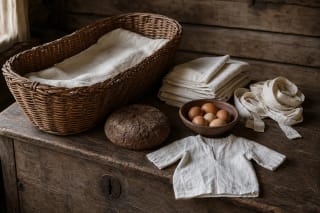
Lithuanian birth customs encompassed far more than the moment of delivery.
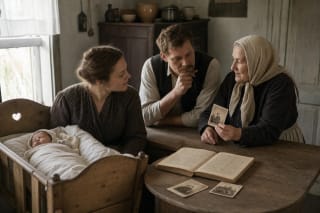
The word vardynos covers several very different phenomena: a poorly documented pre-Christian past, the long history of names associated with baptism and family…
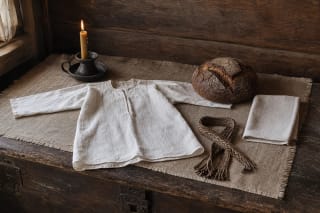
Lithuanian baptism celebrations joined the church rite with a child's admission into family, neighborhood, and parish relationships.
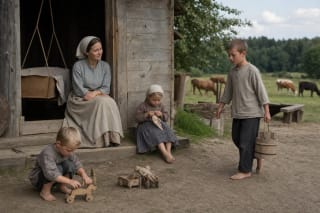
Traditional childhood in rural Lithuania included close family life, lullabies, children's own folklore, and play, but also early work, unequal social standing,…
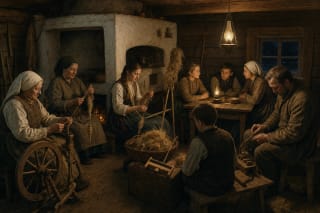
Vakarojimai were not simply parties.
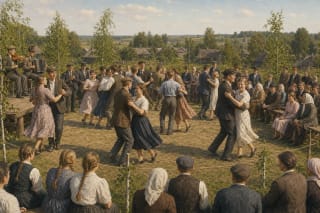
The geguzine was an outdoor youth gathering that spread through Lithuania from the late nineteenth century, bringing dance, music, courtship, voluntary…
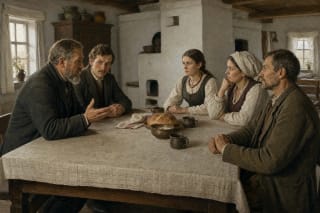
Traditional pirslybos were not a single romantic proposal but a sequence of meetings between families: a preliminary inquiry, introductions, negotiations,…
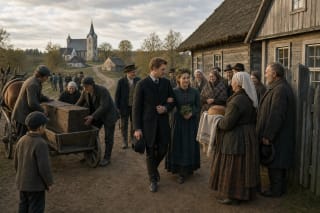
A traditional Lithuanian wedding was not merely a marriage service.
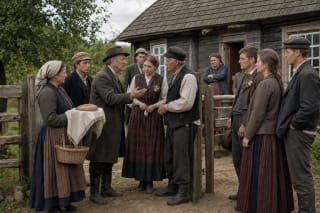
A Lithuanian wedding party was a temporary system of duties, not decorative entourage: the pirslys negotiated, the svocia guided and served, the marsalka…
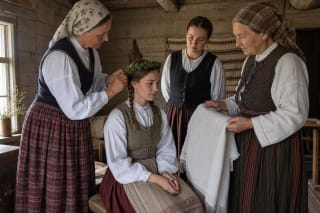
The bride's farewell was a long transition of status: a bridal evening and songs prepared her to leave, farewell and dowry accompanied her from home, and…
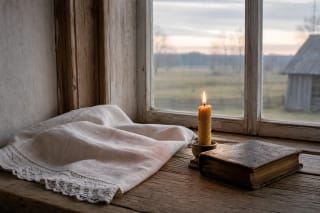
Lithuanian funeral customs formed a sequence extending from the approach of death through preparation of the deceased, vigil, farewell, burial, pakasynos,…
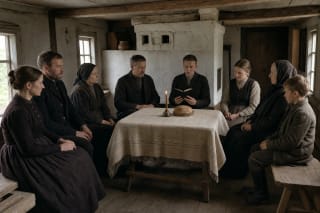
Lithuanian post-funeral remembrance could take place after several days, around one month, and on the first anniversary of a death.
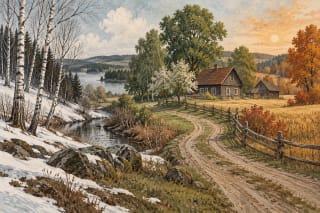
In Lithuania Minor, confirmation marked a religious commitment and a passage from childhood into the youth community.
Creating and transferring households, reciprocal work, neighbourly obligations, hospitality, and customary order.
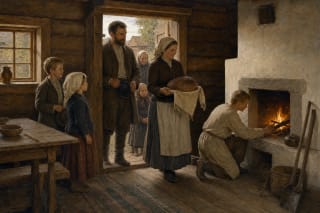
A Lithuanian housewarming was more than a party in a new building.
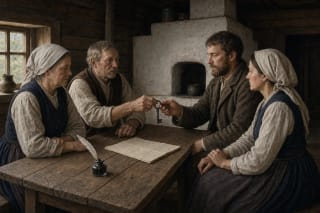
Transferring a farm in rural Lithuania meant more than inheriting land.
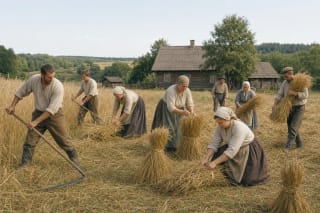
Talkos were forms of collective work in which neighbors, relatives, household members, and sometimes hired workers gathered for an urgent task or one requiring…
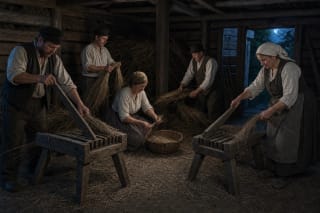
Linamynis was a flax-breaking talka in which workers used wooden brakes to crush the woody parts of dried stalks in a drying house or bathhouse.
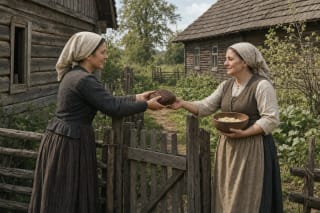
Neighborhood customs connected nearby farms through borrowing, sharing food, reciprocal labor, help during illness, death, or fire, and the common table.
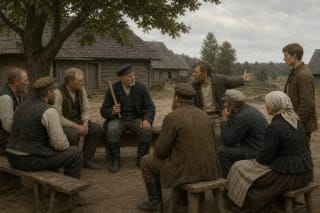
A Lithuanian village assembly, often called a kuopa, dealt with common pasture, roads, bridges, obligations, damage, and mutual assistance.
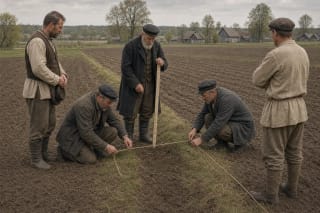
Customary law consisted of unwritten rules that a local community regarded as binding.
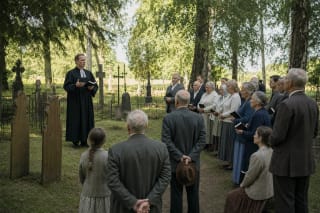
Lithuanian cemetery festivals are summer services found principally in Protestant communities in western and northern Lithuania.
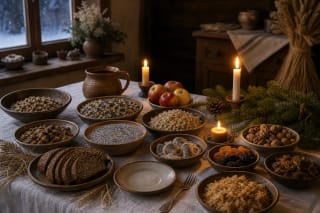
Kucios is the most important Lithuanian winter family meal on the evening of December 24: twelve fasting dishes, sharing the kaledaitis wafer, hay under the…
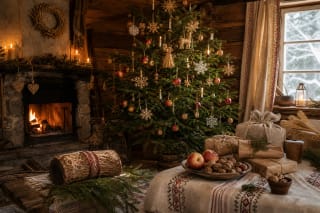
Christmas is the main Lithuanian winter feast on December 25, joining the birth of Christ, the Christmas tree, gifts from Kaledu Senelis, and older customs such…
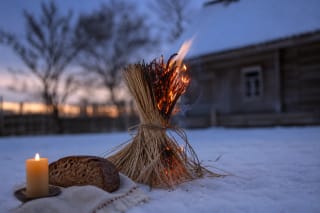
In Lithuanian custom, New Year belongs to the in-between festive time from Christmas to Three Kings: families ate a richer evening meal, wished one another…
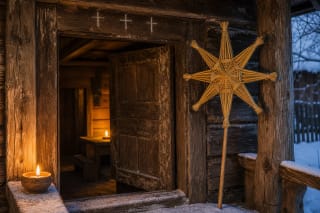
Three Kings on January 6 closes the Christmas in-between season.
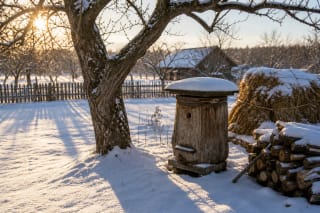
Pusiauzemis, usually marked on January 25, is the middle of winter and a turn toward spring.
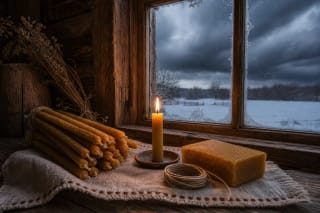
Grabnycios on February 2 is linked in Lithuanian tradition with blessed wax candles called graudulines.
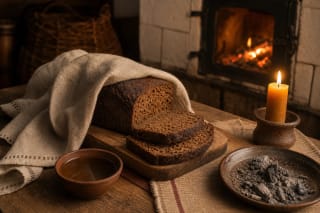
Agotines on February 5 is the Lithuanian day of St Agatha, Gabija, and bread.
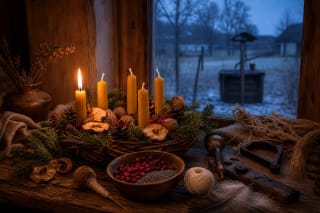
Advent in Lithuania is a season of waiting for Christmas that joins church recollection with older customs of the dark part of the year.
The Šyvis custom maintained in Gražiškiai brings together household visits, good wishes, music and masked performance.
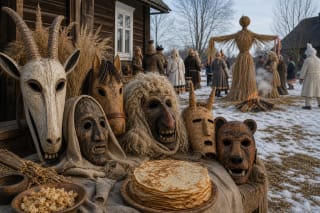
Uzgavenes is Lithuania's joyful winter-sending feast: the straw figure More is burned, Lasininis fights Kanapinis, masked visitors roam, sun-like pancakes are…
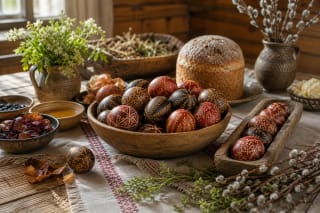
Easter in Lithuania celebrates Christ’s Resurrection and spring: decorated eggs, swinging, egg rolling and the Velykų bobutė accompany festive visiting and the…
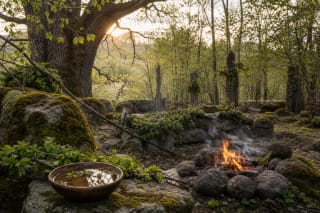
Jore is a Lithuanian spring greenery festival marking the awakening of nature, the first force of growth, the light of Perkunas, community gathering, and the…
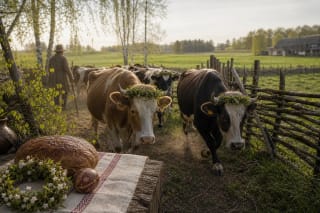
Jurgines is the April 23 spring feast when St George, guardian of fields and livestock, symbolically unlocks the earth.
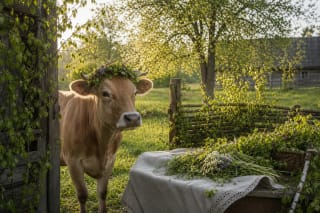
Sekmines is a late-spring feast of greenery and shepherds, celebrated on the seventh Sunday after Easter.
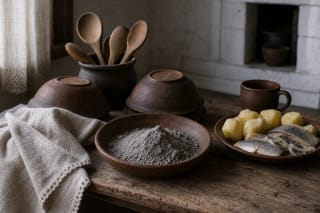
Ash Wednesday, or Pelene, is the Wednesday after Uzgavenes and the first day of Lent.
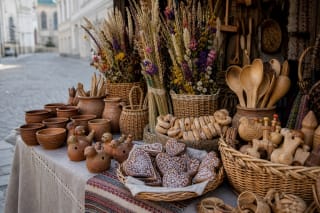
Kaziukas Fair is the early-March craft festival of Vilnius and Lithuania, growing from St Casimir's Day.
Lalavimas is Easter house visiting with hymns, songs and good wishes, reciprocated with decorated eggs or other food.
Atvelykis falls on the Sunday after Easter and is also called Little Easter or Children’s Easter.
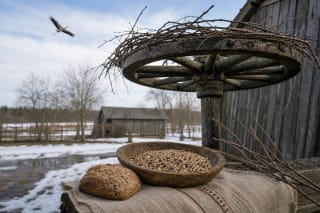
Gandrines, or Bloviesciai, on March 25 marks a spring threshold and the return of the stork.
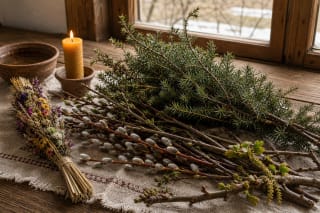
Palm Sunday is the last Sunday before Easter.
In folk belief, the first spring thunder could mark the earth’s awakening and a new phase of seasonal work.
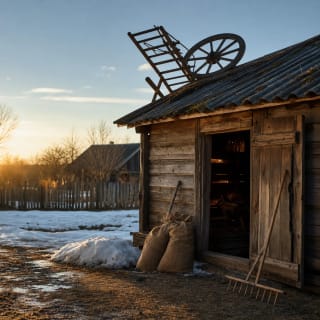
Melagiu diena, or Aprilis, on April 1 was more than a joke day in Lithuanian tradition.
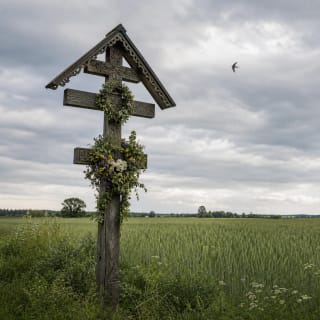
Sestines is a movable spring feast on the fortieth day after Easter.
In some Aukštaitija parishes, the resonance of a large drum announces Easter morning.

Rasos is the old Lithuanian summer solstice festival, centered on herbs, dew, bonfire, water, songs, and greeting the sun at dawn.
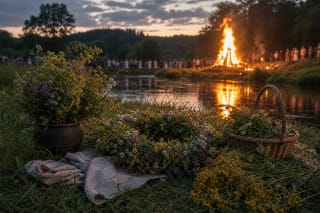
Jonines in Lithuania joins St John's Day, name-day greetings, and older summer-solstice customs: bonfires, wreaths, kupoles herbs, songs, and the legend of the…
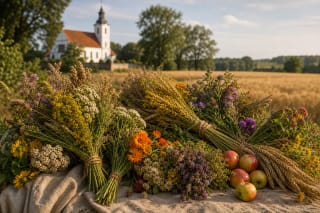
Zoline on August 15 is a feast of harvest and herbs.
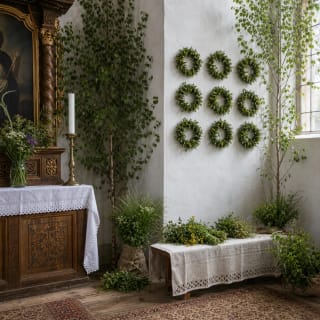
Devintines, the feast of the Most Holy Body and Blood of Christ, stands out in Lithuanian custom through greenery: churches decorated with birches, nine wreaths…
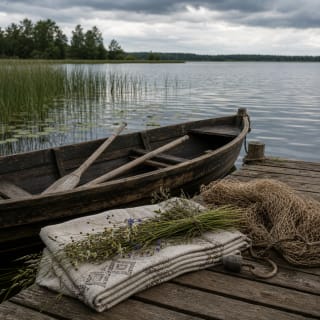
Petrines, the day of Saints Peter and Paul on June 29, acts in Lithuanian custom as the second midsummer feast after Jonines.
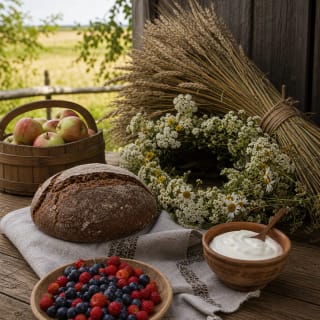
Onines on July 26 stands beside Jokubines in the Lithuanian calendar and marks high summer, new bread, and the end of rye harvest.
Rye-harvest customs bring together work, communal help, singing and honouring the crop.
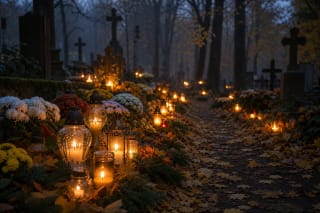
Velines is the Lithuanian remembrance of the dead observed around November 1-2.
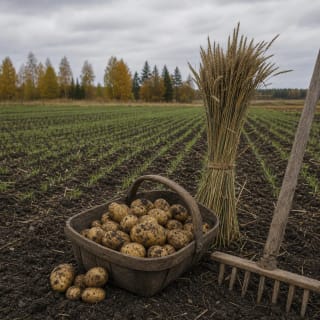
Mykolines on September 29, St Michael's Day, belongs in the Lithuanian autumn calendar with the older Dagotuves layer: sprouted winter crops, thanks at…
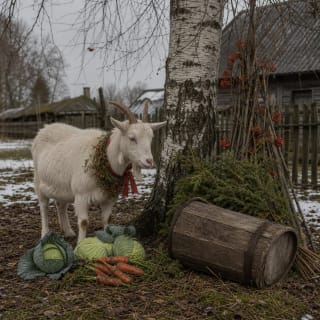
Martynines on November 11 marks the end of autumn, the settling of hired workers' accounts, and the close of the grazing season.
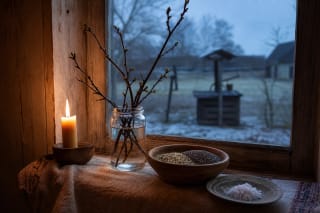
Andriejines at the threshold of November 30 mark the waiting before Advent and a quiet time of household divination.
Traditions that do not belong to one fixed stage of life, social setting, or season.
Look up historical month names, read recorded weather sayings and explore the working year.