- Type
- Goddess
- Domain
- Earth, fertility, growth, life, agricultural rites
- Source status
- well attested
Žemė Motina, Earth Mother, Žemynėlė, Zemyna
Who is Žemyna in Lithuanian mythology?
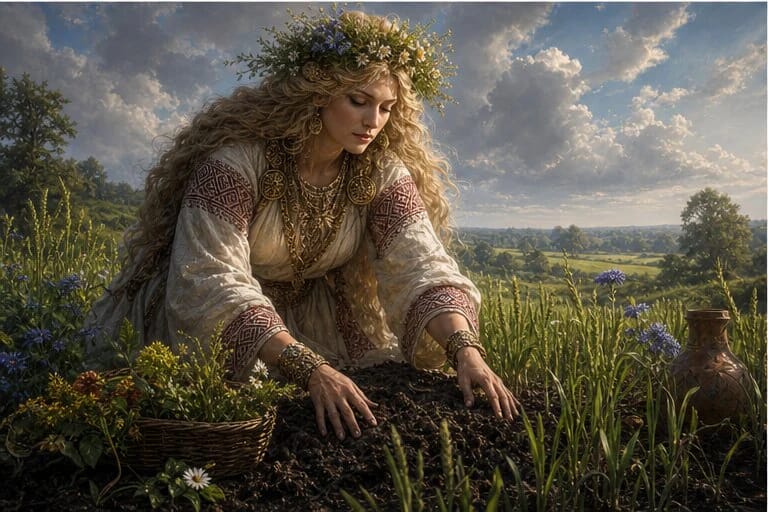
Žemyna is the old Lithuanian earth goddess, one of the most important deities in an agrarian worldview. Her name is directly connected with žemė, 'earth', so tradition often understands her as Žemė Motina, Earth Mother, who gives birth to and feeds everything that grows.
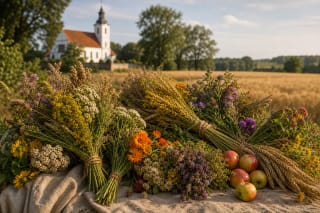
Unlike sky gods, Žemyna is close to everyday life: soil, grain, bread, and livestock. It was believed that she made the earth fertile and protected grain, fruit, animals, and people, so honoring her was woven into the farmer's yearly cycle.
Sources and testimony for Žemyna
Žemyna was first mentioned as an earth goddess by Jan Łasicki in the sixteenth century. In the seventeenth century, Matthäus Praetorius describes her as the sister of Žemėpatis, who makes the earth fertile, while Daniel Klein compares Žemyna with the Roman harvest goddess Ceres.
These testimonies matter because Žemyna belongs among the better-attested Lithuanian deities. She is mentioned by more than one source, and her cult is also reflected in ethnographic agricultural and funeral customs. She is therefore treated not as a late invention, but as a real part of the old religion.
Offerings to Žemyna: spring and autumn
Offerings to Žemyna were usually made twice a year: in spring when agricultural work began and in autumn when it ended. This reflects the nature of the goddess herself, who accompanies the whole growing cycle from sowing to harvest.
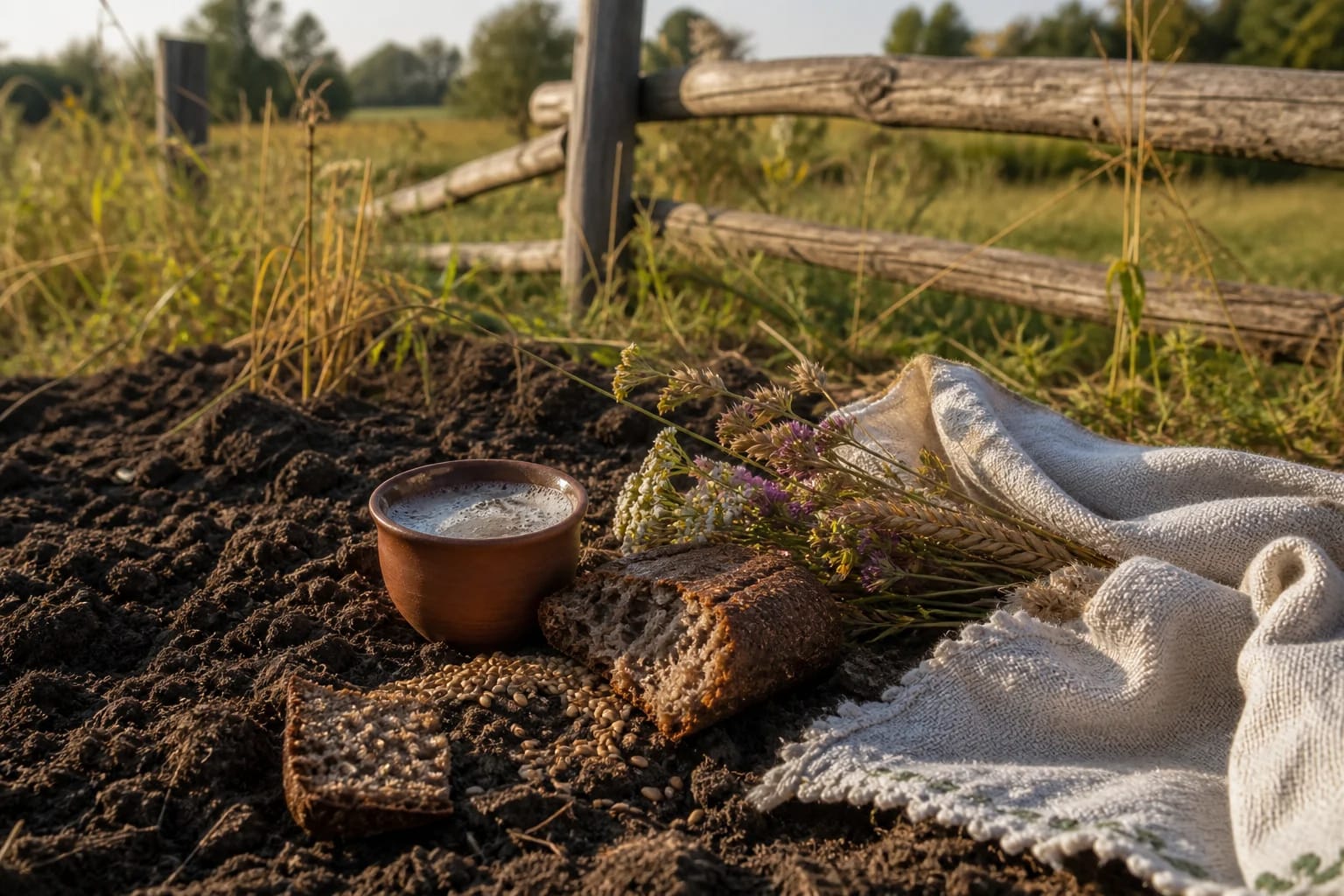
In autumn harvest rites, beer was drunk in Žemyna's honor. Such a gesture of thanks shows that the harvest was not taken for granted: it had to be received from the goddess and properly repaid.
Žemyna, death, and wake customs
Žemyna's power did not end with the harvest; it also touched death. During wakes, three small pieces of bread and meat were thrown to the ground and beer was poured out to her, asking that Žemyna be gracious in the other world or in heaven and protect the dead person's soul.
This custom shows that the earth was understood both as the source of life and as the receiver of the dead. Žemyna stands at that boundary: she grows and shelters, so her image joins fertility with care after death.
Everyday respect for the earth
Žemyna's cult also left traces in customary etiquette toward the earth. Tradition treated the earth as sacred: it was wrong to strike it needlessly, spit on it, or dishonor it, and the spring soil was awakened respectfully. Such prohibitions are indirect signs of the goddess' presence.
Because of this everyday sacredness, Žemyna helps explain the whole worldview of the Lithuanian farmer, in which bread, soil, and harvest are not only economics, but a relationship with a living, generous, and respected power.
Žemyna today: why she matters
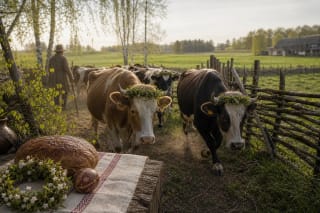
Today Žemyna matters as one of the clearest Lithuanian Earth Mother images and as a key to agricultural festivals such as Jurginės, Jorė, Žolinės, and harvest customs. Through her it is easier to understand why grain, bread, and soil have such deep symbolic meaning in Lithuanian culture.
Žemyna should still be read carefully: although she is well attested, some details are reconstructed from uneven sources. Her connection with fertility, offerings, and respect for the earth remains one of the strongest cores of Lithuanian mythology.