Lithuanian culture articles

Lithuanian culture articles

Read source-based English articles that connect Lithuanian heritage, symbols, dress, UNESCO places, and cultural context for visitors, diaspora readers, and researchers.

Travel and places

A sequence of grassy Lithuanian hillfort ridges above winding river valleys in warm sunrise mist, with a timber path in the foreground

10 Most Beautiful Hillforts in Lithuania: Kernavė to Rambynas

Ten of Lithuania's most impressive hillfort landscapes, from UNESCO-listed Kernavė to Rambynas in Lithuania Minor. Each entry explains the historical core of the site, what makes its setting distinctive, and when to visit.

Read story
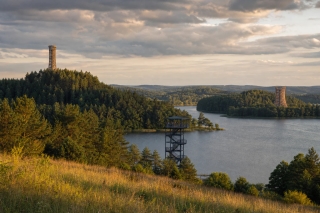
A broad Lithuanian lake-country panorama with three distinct observation towers among forests and water

10 Observation Towers with Lithuania's Best Panoramas

Ten viewpoints revealing some of Lithuania's finest panoramas: the lake country of Labanoras and Aukštaitija, Anykščiai Pinewood, Samogitian lakes, the Nemunas Loops, the Curonian Lagoon, and Vilnius from roughly 170 metres above the city.

Read story
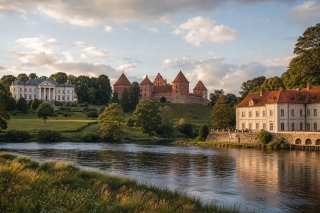
A Lithuanian heritage panorama with a red-brick castle, a Neoclassical manor, and a Renaissance riverside residence

12 Best Castles and Manors in Lithuania

A guide to twelve outstanding Lithuanian castles and manor estates: the Gothic castles of Trakai, Vilnius, Kaunas, and Medininkai; residences along the Panemunė road; the Radvila fortress at Biržai; and aristocratic estates from Pakruojis to Palanga, with history, museums, and practical routes.

Read story

Wind-shaped dunes and a windswept Baltic beach beside pine forest, with a distant lighthouse

Curonian Spit and Lithuania's Coast: 15 Places to See

Fifteen places along Lithuania's Baltic coast, the Curonian Spit, and the Nemunas Delta: from Palanga Pier and Birutė Hill to Parnidis Dune, Ventė Cape, fishing villages, lighthouses, and practical advice for planning a journey from Palanga to the lagoon country.

Read story
Food heritage

Illustrative view of a traditional food table, rather than a reconstruction of a particular historical recipe

A day at the Lietuvininkai table: reading the rhythm of meals

Read historical meals in Lithuania Minor through place, season and work, using a source-based day plan without inventing one universal regional menu.

Read story
Illustrative view of a traditional food table, rather than a reconstruction of a particular historical recipe

From grain to groats: pounding, grinding and sifting

Understand grain, groats and flour by following the actions between them, reading the Nalšia account of grucė and asking better questions about museum tools.

Read story
Illustrative view of a traditional food table, rather than a reconstruction of a particular historical recipe

Historical food and modern recipes: making the distinction clear

Separate historical evidence, a living food tradition and your own cooking trial, and explain changes to ingredients, tools and serving without overstating authenticity.

Read story
Illustrative view of a traditional food table, rather than a reconstruction of a particular historical recipe

How to read a historical recipe: sources, words and omissions

A practical guide to old recipes: separate publication and memory dates, investigate unfamiliar words, and keep uncertain measures and missing actions visible.

Read story
Illustrative view of a traditional food table, rather than a reconstruction of a particular historical recipe

Kafija and palaunagė: a drink and a shared occasion

Discover kafija beyond a single coffee recipe, understand palaunagė, and learn how to record the people and memories behind this Lithuania Minor tradition.

Read story
Illustrative view of a traditional food table, rather than a reconstruction of a particular historical recipe

Razavi and pikliuoti flour: reading an old ingredient name

Learn to separate the grain, milling and sifting in old Lithuanian flour names, using the Įstrica zacirka tradition and a museum mill as starting points.

Read story
Illustrative view of a traditional food table, rather than a reconstruction of a particular historical recipe

Regional food names: 24 words from Lithuania Minor

A concise guide to 24 food words attested in a Lithuania Minor source, with meanings, source locations and advice for exploring a family food memory.

Read story
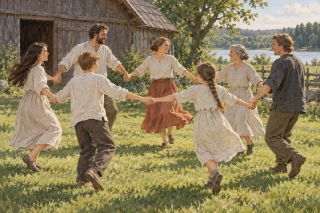
Learning traditional music

General illustration of Lithuanian music and circle games; not a record of a specific historical performance

Advent songs: matching lyrics, scores, recordings and games

A practical Advent repertoire guide with two exact LLTI records and archive references, plus a method for matching a text, melody and game to the same variant.

Read story
General illustration of Lithuanian music and circle games; not a record of a specific historical performance

First sutartinės lesson: hearing two independent voices

A preparatory lesson for two people: a shared pulse, independent parts, a listening exercise and a careful move to a documented song variant.

Read story
General illustration of Lithuanian music and circle games; not a record of a specific historical performance

Keturinės: užtarimas, patarimas and alternating pairs

A four-person preparation lesson: two simultaneous parts within each pair, pair changes and identification of the correct Dijūta kalnali variant.

Read story
General illustration of Lithuanian music and circle games; not a record of a specific historical performance

Lithuanian shepherd calls and signals: following the recorded evidence

Two documented calls from Skuoliai, a distinction between signals and raliavimai, and a practical guide to reading a recording record without inventing melodies.

Read story
General illustration of Lithuanian music and circle games; not a record of a specific historical performance

Trejinės: finding and keeping your voice entry

A three-part preparation lesson with visible entries, rests and endings. Its original canon exercise is clearly separate from traditional melodies.

Read story
General illustration of Lithuanian music and circle games; not a record of a specific historical performance

Tuning five-string kanklės: a D–E–F–G–A example

A tuning example for northeastern Aukštaitija five-string kanklės, with a checking sequence and digital reference notes. The maker determines the instrument’s register.

Read story
Community cultures

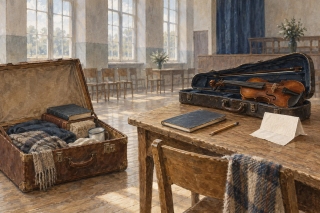
A conceptual illustration of continuity through learning and music: a suitcase, notebook and violin in a shared hall.

Culture in Lithuanian DP camps: schools, print and performance

Lithuanian displaced-person camp life after the Second World War through school records, newspapers, concert documents and everyday objects.

Read story
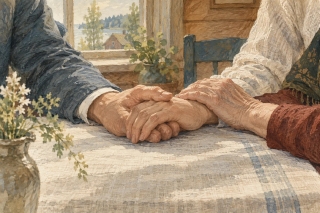
A symbolic illustration of family connection: three adults’ hands on a linen-covered table.

Karaim wedding and family traditions: sequence and meaning

Understand Karaim wedding stages, the betrothal document, the ataman and family transmission through community-published sources.

Read story
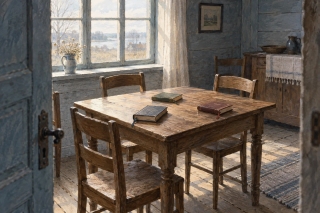
A conceptual space for shared reading: three closed books on a table surrounded by chairs.

Lietuvininkai prayer gatherings and hymnbooks

Surinkimai, lay preachers and family hymnbooks: local examples from Priekulė and the relationship between home, faith and song.

Read story
An imagined still life of family memories: a suitcase with linen, envelopes, a camera, a key and a small box.

Lithuanian diaspora objects: a scout shirt and an editor’s card

Explore Lithuanian diaspora heritage through Pranas Dauknys’s scouting objects, Antanas Vaivutskas’s papers and the questions their provenance raises.

Read story
An imagined conversation between women of two generations at a table with an audio recorder.

Lithuanian Roma oral history: a guide to listening

A guide to Lithuanian Roma oral history: narrators, language, translation, personal testimony and questions for independent learning.

Read story

Conceptual illustration of closed old books, a pen and an ink vessel on a wooden table.

Lithuanian Tatar manuscripts: kitab, chamail and family memory

Learn to distinguish Lithuanian Tatar manuscript types, script from language, and family inscriptions from the main text.

Read story
Conceptual illustration of a closed book and a burning candle beside a window overlooking a forest at dusk.

Old Believer culture in Lithuania: prayer, books and language

Explore Lithuania’s Old Believer religious tradition, books, houses of worship and local dialects through dated institutional sources.

Read story
A conceptual landscape of remembrance with a path, birches and uninscribed stones.

Tatar funeral traditions in Lithuania: rites and remembrance

Explore prayer, the dalavaras, cemeteries and changing Tatar funeral practices in Lithuania through historically dated sources.

Read story
Understanding Folklore

Conceptual illustration of a folklore library

Folklore Genres: Telling a Folktale, Sakmė and Place Legend Apart

A practical comparison of Lithuanian folklore genres: what a story explains, whether it asks to be believed, and how place, music and listeners shape it.

Read story
Conceptual illustration of a folklore library

How to Read Folklore Sources: Archive References and Your Own Notes

A practical guide to checking sources: distinguish the teller from the collector, recording from publication dates, and catalogue descriptions from manuscripts you have actually read.

Read story
Conceptual illustration of a folklore library

How to Tell a Chain Tale: Repetition, Rhythm and Listeners

Prepare to tell a chain tale with an original short exercise: keep the sequence clear, invite listeners to join in and distinguish a new performance from an archival one.

Read story
Conceptual illustration of a folklore library

Kaukas and Aitvaras: Differences and Overlapping Names

A comparison of Lithuanian household beings that considers regional names, forms of assistance and attitudes to wealth as well as appearance.

Read story
Conceptual illustration of a folklore library

Short-Form Folklore: Genres and What to Do with Them

Riddles, proverbs, sayings, counting-out rhymes and tongue-twisters are more than short texts: each invites a different way of thinking, speaking or playing.

Read story
Conceptual illustration of a folklore library

Why Folklore Has Variants and How to Compare Them

Distinguish a traditional variant, a feature of its recording and a modern retelling without assuming that one version must always be the most correct.

Read story
Understanding historical households

Editorial illustration of historic household objects, not a photograph of a specific museum exhibit

Grain and dairy tools in the historical kitchen

Follow two branches of work to connect storage baskets, mortars, querns, dough tubs, churns and cheese presses to different products.

Read story
Editorial illustration of historic household objects, not a photograph of a specific museum exhibit

Historical volume measures: reading gorčius, kvorta and pūras

Why an old unit needs a place and date, with carefully limited examples and a method for recording uncertainty.

Read story
Editorial illustration of historic household objects, not a photograph of a specific museum exhibit

Laundry before electric appliances: objects and actions

A trough, washing paddle, roller and charcoal iron perform different tasks. Learn to connect museum objects to the work they actually did.

Read story
Editorial illustration of historic household objects, not a photograph of a specific museum exhibit

Lighting before electricity: splints, wick lamps and lanterns

Compare five lighting objects through fuel, support and enclosure, and avoid treating every household as one simple sequence of progress.

Read story
Calendar and language

Thematic illustration of the seasons and rural work, not a documentary photograph of a particular custom

Historical Lithuanian Month Names: A Searchable Guide

Look up recorded historical names against the twelve modern months, with guidance on why a name did not always mean the same part of the year.

Read story

Practical craft lessons

Original diagram with a neutral diamond and four stages of ornament examination

How to check an ornament’s meaning: from visible form to supported interpretation

Create an evidence record for one ornament by separating its shape, recorded name, object context and scholarly interpretation.

Read story
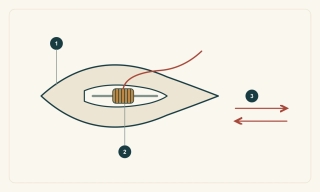
Original tool-examination diagram: outline, working part and movement direction

How to identify a historic tool: shape, working surface and movement

Learn to describe an unfamiliar household tool and compare its mechanism with documented examples, from loom accessories to laundry tools and a churn.

Read story
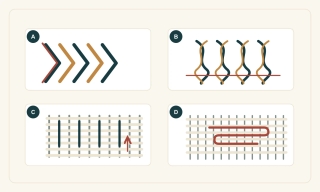
Original teaching diagram with four windows for examining yarn structure

How to identify sash techniques: follow the yarn on both sides

Compare plaited, tablet-woven, pick-up and supplementary-weft sashes through yarn paths, edges and reverse sides, using a simple observation record.

Read story
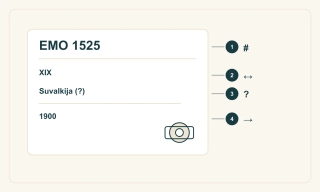
Original teaching diagram of a museum label with fields for inventory number, date and provenance

How to read a museum label: provenance, dates and uncertainty

Read museum data using the National Museum of Lithuania’s bodice EMO 1525: preserve uncertainty and distinguish the object from its photograph.

Read story
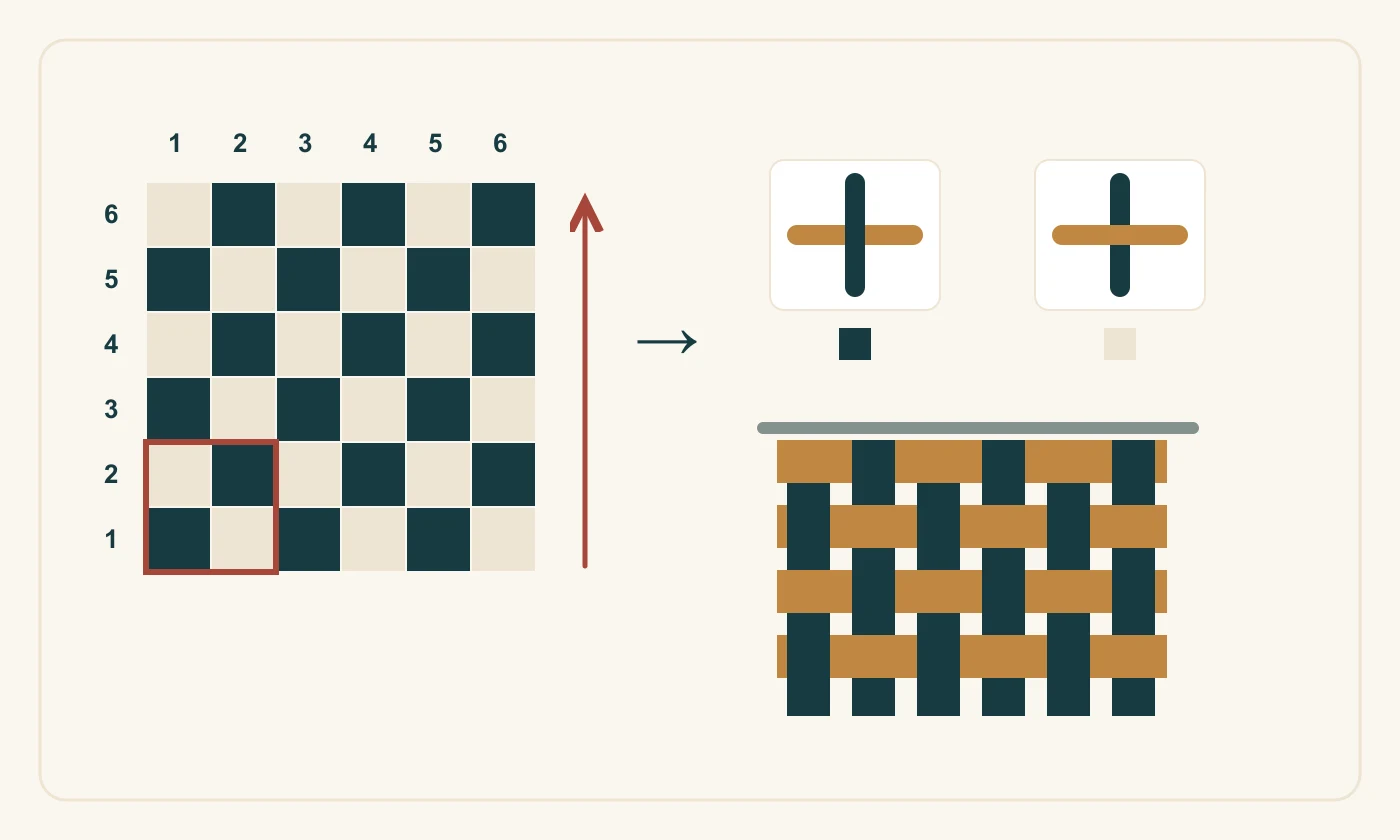
Original plain-weave grid with numbered rows and columns

How to read a weaving grid: your first plain-weave exercise

Read an original teaching grid, test it with paper strips and learn what further information is needed for a complete loom draft.

Read story
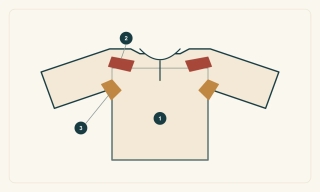
Original simplified shirt-construction map, not a pattern taken from a museum garment

How to read traditional shirt construction: body, shoulder pieces and gussets

Learn to distinguish fabric pieces, seams and decoration in a shirt photograph. A paper model explains tunic construction without claiming to be a sewing pattern.

Read story
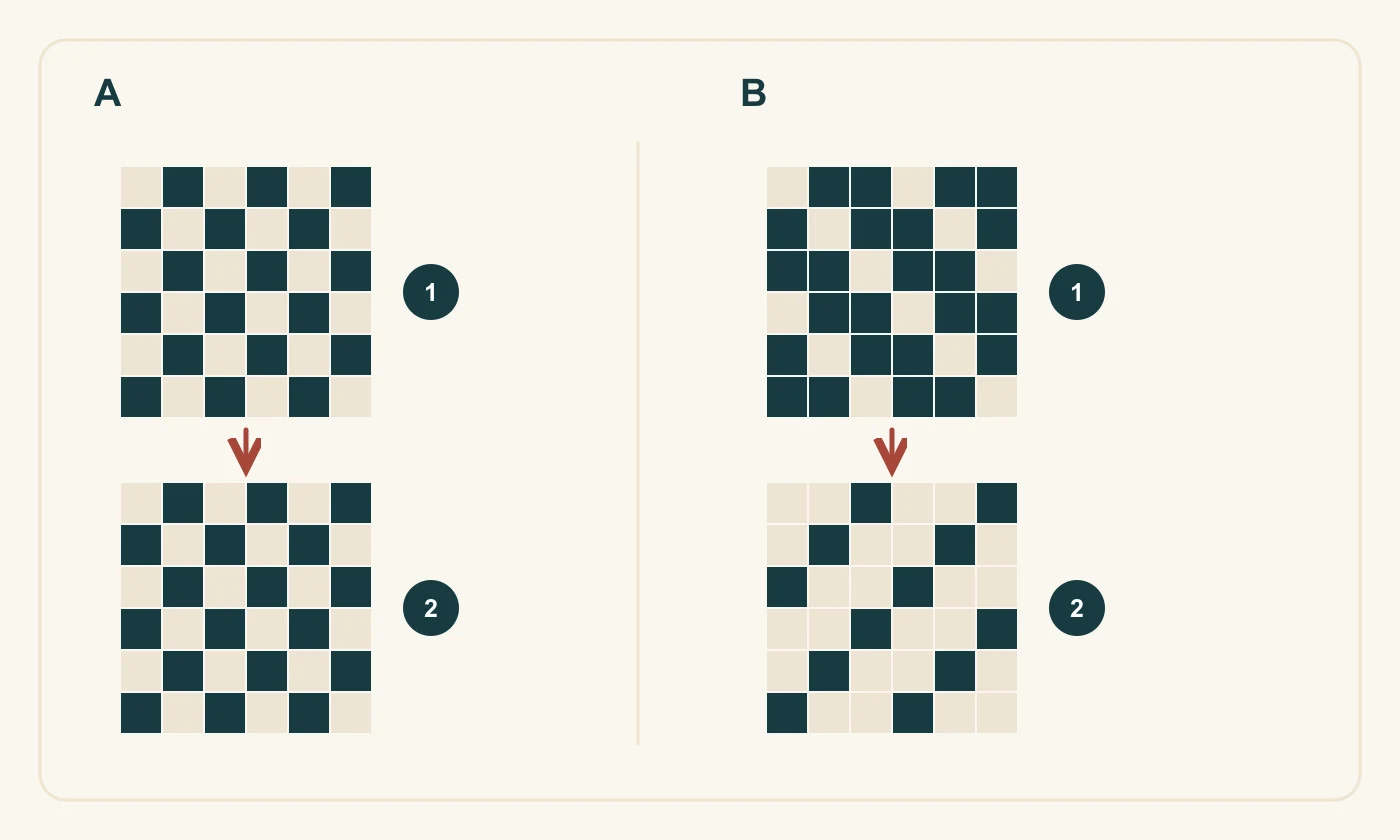
Original teaching diagram: plain-weave and twill grids, not photographs of historic textiles

How to recognise a weave: a face-and-reverse lesson

Use a magnifier and paper strips to compare plain weave and twill, separate structure from coloured pattern, and record an evidence-based conclusion.

Read story
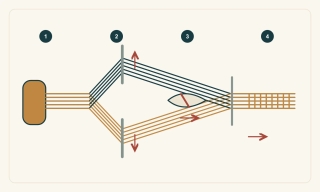
Original functional weaving diagram showing tensioned warp, an open shed, weft and cloth

Loom anatomy: a practical lesson in warp, weft and the shed

Follow the fabric path through a loom and understand how heddles, shed, shuttle and reed work together, using a simple thread model.

Read story
Folk Art and Identity

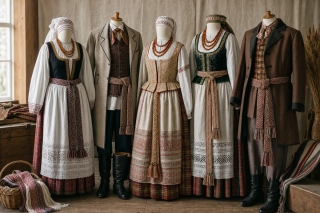
Women's national costumes from the five Lithuanian ethnographic regions shown side by side, with different skirt colors, aprons, sashes, and head coverings

How to Read Lithuanian National Costume: A Guide to the Five Ethnographic Regions

A practical guide to recognizing Lithuania's ethnographic regions through national costume: colors, fabrics, skirt, apron, sash, and head covering.

Read story
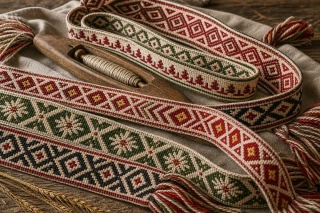
Woven Lithuanian sashes with rhombus, sunburst, star, and fir-tree patterns arranged in rhythmic rows

Lithuanian Sash Patterns: What Rhombuses, Sunbursts, Grass Snakes, and Other Signs Mean

A detailed guide to reading Lithuanian sash patterns: what a sash is, how ornaments are composed, and what researchers say about rhombuses, sunbursts, stars, fir-tree motifs, and grass-snake signs.

Read story
Lost settlement histories

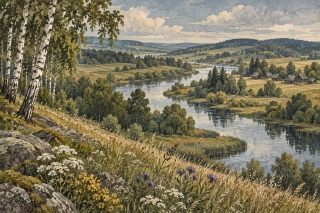
Shared illustration for the landscape and place-memory collection, not a documentary view of a particular site

Kampiškės and Šlienava: A Timeline of a Flooded Village

Kampiškės from its 1744 record to a memorial chapel: relocation, the dismantling of its church and the community connection with Šlienava.

Read story
Shared illustration for the landscape and place-memory collection, not a documentary view of a particular site

Nagliai Village: Moving Homes and Conflicting Dates

A timeline of Nagliai: early references, a shifting settlement, departures from 1836 and conflicting accounts of its disappearance in 1846–1854.

Read story
Shared illustration for the landscape and place-memory collection, not a documentary view of a particular site

Old and New Rumšiškės: A Relocation Timeline

School records and traces of earlier villages explain Rumšiškės relocation: the old site, the new town from 1959 and the school opening in 1960.

Read story
Shared illustration for the landscape and place-memory collection, not a documentary view of a particular site

The Disappearance of Karvaičiai: A Village Timeline

Karvaičiai from its 1509 written mention to the departure of its last residents in 1797: documented dates, the dune and the memory of a village.

Read story

Language and regions

An illustrative Lithuanian landscape evoking language and place

Listening to Lithuanian dialects: six source dossiers

Choose dialect sources, compare transcripts and distinguish speech areas from cultural regions through six practical dossiers with clear audio availability notes.

Read story
An illustrative Lithuanian landscape evoking language and place

Lithuanian folk-song glossary: 30 words explained

Understand 30 Lithuanian folk-song words, including bernelis, pasoga, žalnierėlis and diemedėlis, with contextual explanations and precise LKI sources.

Read story
An illustrative Lithuanian landscape evoking language and place

Lithuanian place names: 50 accent and case cards

Learn 50 Lithuanian place names with verified accent marks and case forms from the LKI dictionary, including how to say where you are and where you are going.

Read story
An illustrative Lithuanian landscape evoking language and place

Old Lithuanian household words: 20 objects and buildings

Understand klėtis, jauja, ubladė, kuodelis and žagrė through 20 sourced vocabulary cards explaining household objects, farm buildings and changes in meaning.

Read story

Heritage and UNESCO

Panorama of Vilnius Old Town with church towers and Gediminas Castle Hill, one of Lithuania's UNESCO World Heritage properties

Lithuania's UNESCO Heritage: Complete Guide to World Heritage and Intangible Heritage

All of Lithuania's UNESCO heritage in one place: five World Heritage properties, four intangible cultural heritage elements, and one Memory of the World inscription, with exact years and places.

Read story

Reading the landscape

Shared illustration for the landscape and place-memory collection, not a documentary view of a particular site

Old Routes Across Wetlands: Sietuva and Aukštumala

How to read evidence for Lithuanian wetland roads: Sietuva’s recording dates, the Aukštumala settlement route and the limits of modern trails.

Read story
Shared illustration for the landscape and place-memory collection, not a documentary view of a particular site

Polders of the Lagoon Region: Reading Dykes and Pumping Stations

How Lithuania’s lagoon polders work: dykes, drainage and pumps, summer and winter protection, and Uostadvaris’s documented 1904–1907 development.

Read story
Shared illustration for the landscape and place-memory collection, not a documentary view of a particular site

Reading Marks on Stone: Bowls, Footprints, Millstones and Boundaries

A guide to separating a stone’s visible shape, proposed use, recorded story and original location, using Lithuanian museum collections.

Read story

Everyday life and the calendar

Thematic illustration of the seasons and rural work, not a documentary photograph of a particular custom

The Traditional Lithuanian Working Year: Local Rhythms

A source-based guide to soil preparation, grazing, haymaking, the rye harvest, flax, threshing and winter spinning, with named local examples.

Read story

Nature and folklore

Thematic illustration of the seasons and rural work, not a documentary photograph of a particular custom

Weather in Lithuanian Folk Observation: 40 Recorded Signs

Forty recorded weather beliefs involving plants, animals, the sky, the home and calendar days, including contrasting versions of the same sign.

Read story

Community and diaspora culture →

Manuscripts, customs, oral memory, hymnbooks and objects in migration illuminate different cultural experiences connected with Lithuania.
