- Field
- Grotesque masks of Lithuanian Shrovetide processions
- Type
- traditional craft
- Heritage status
- living tradition
- Context
- Užgavėnės masks, ličynos, masqueraders, Morė, Gavėnas, Lašininis, Kanapinis, goat, horse, bear, Giltinė, driving out winter
Ličynos, Užgavėnės ličynos, Masquerader masks, Žemaitija Užgavėnės masks
Užgavėnės Masks forms and objects
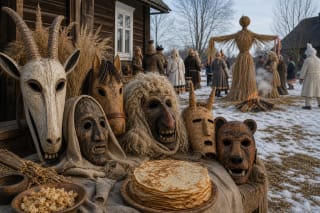
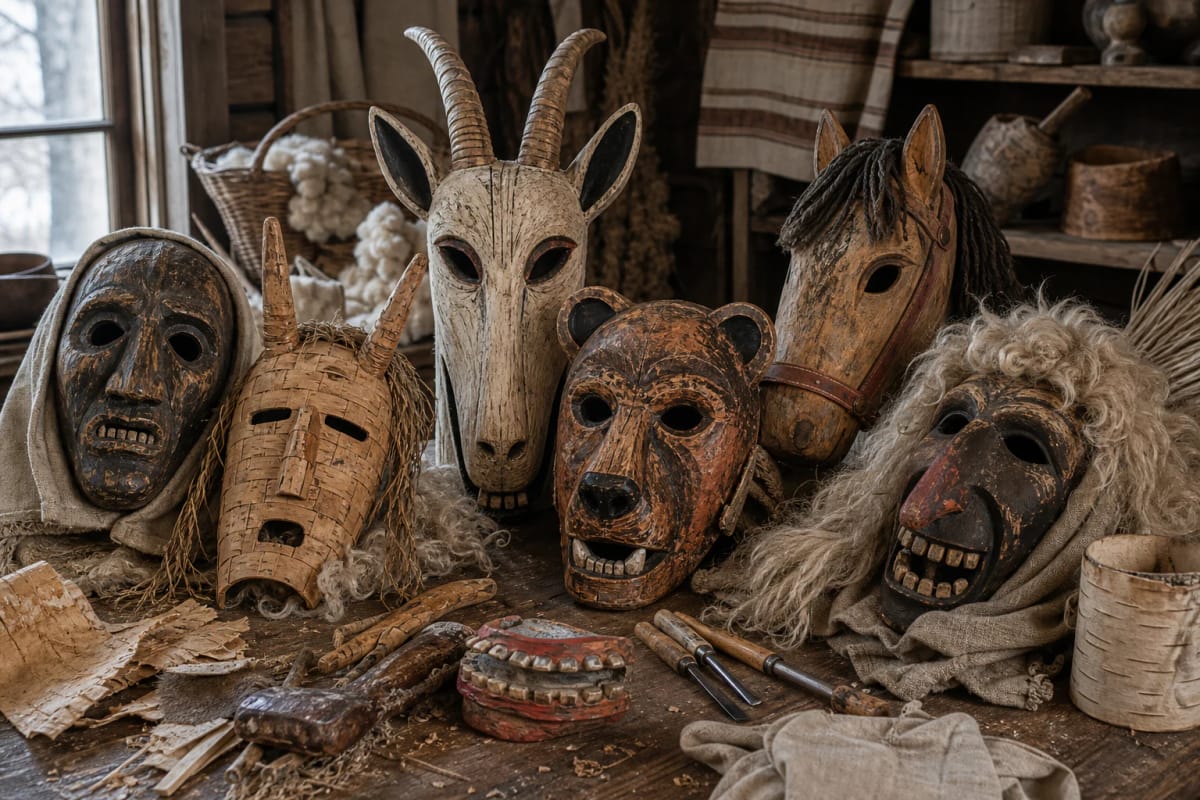
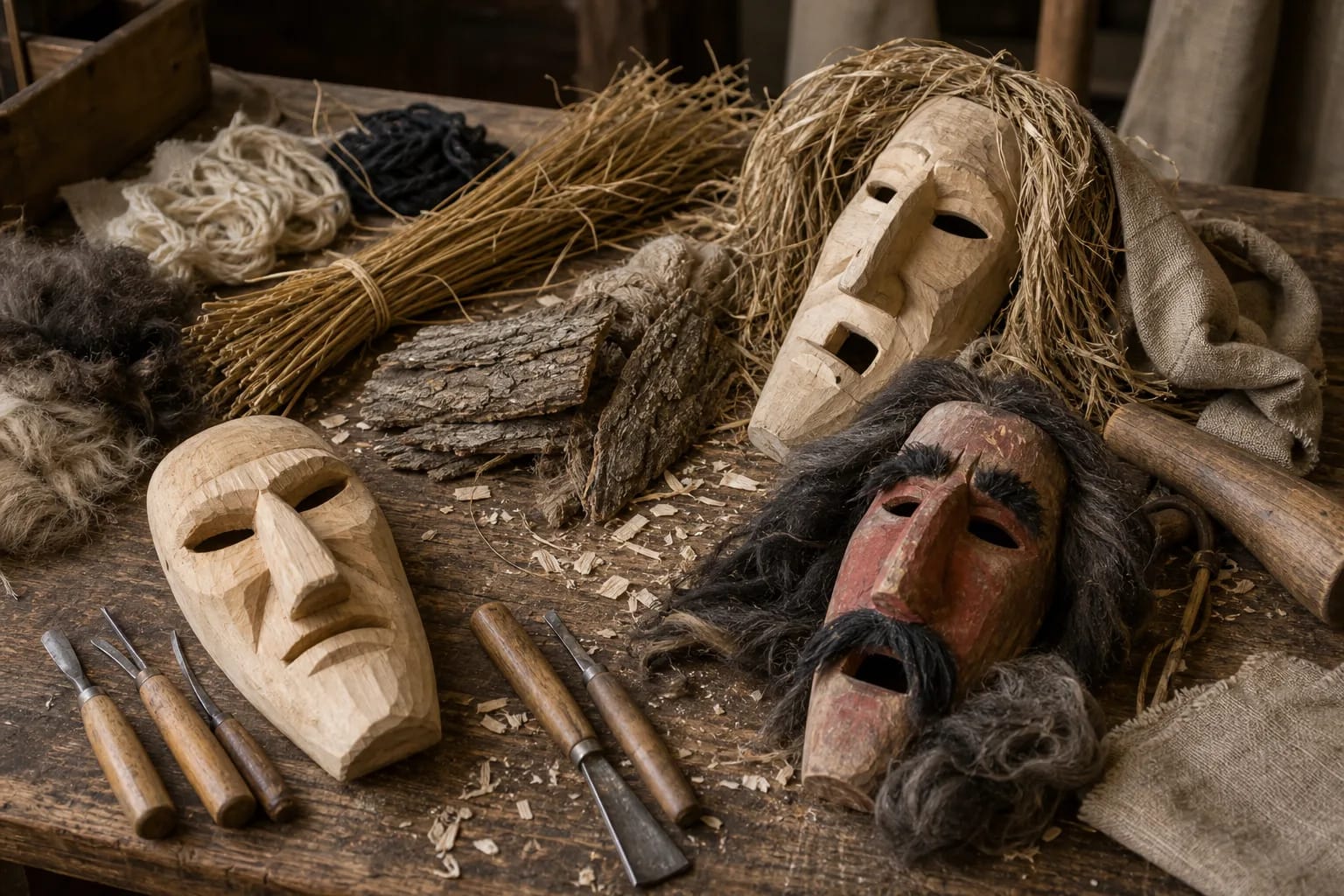
Wooden Masks: Carved from wood, often with exaggerated noses, teeth, brows, wrinkles, or animal features. They are durable and especially linked with Žemaitija.
Bark and Fur Masks: Made from bark, fur, sheepskin, straw, tow, or old textiles, emphasizing roughness, animality, and the inverted order of the feast.
Paper and Cardboard Masks: Papier-mache or cardboard masks are common in education and community events. They can involve children more easily but should still follow Užgavėnės character logic.
Animal Masks: The goat, horse, bear, crane, and other animals evoke fertility, strength, noise, spring awakening, and the village farm world.
What Are Užgavėnės Masks?
Užgavėnės masks, often called ličynos in Žemaitija, belong to the Shrovetide masqueraders’ feast. They hide the ordinary face and let a person become a goat, horse, bear, Giltinė, companion of Morė, old man, stranger, or other boundary figure.
The mask is not merely a handsome carving. It works with noise, dancing, walking from yard to yard, jokes, eating, the fight of Lašininis and Kanapinis, the destruction of Morė or Gavėnas, and the driving out of winter. Without action it becomes only a museum object.
Užgavėnės masks distort the normal face: noses are too large, teeth show, eyes darken, horns bend, fur is rough. This grotesque inversion helps turn everyday order upside down and open the way to spring through laughter, fear, and noise.
Why the Masks Are Frightening, Funny, and Strange
Užgavėnės is a threshold before Lent, when more noise, fullness, joking, and play are allowed. Masks are deliberately excessive: too old, too animal-like, too angry, too foolish. The exaggerated form releases community tension.
A mask lets the masquerader speak not quite in their own name. They can joke, ask for food, tease hosts, sing, dance, make noise, and perform social satire. The inverted order is how the community redraws its boundaries.
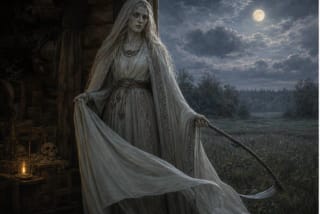
Animal and death figures connect with fertility, renewal, and the farming year. The bear wakes, goat and horse evoke animal power, Giltinė or Smertis frightens and amuses, and Morė or Gavėnas carries winter away.
Materials: Wood, Bark, Fur, Straw, and Paper
Traditional masks could be carved from wood or made from bark, fur, sheepskin, straw, tow, cloth, leather, paper, or cardboard. Wood makes a durable strong form; bark and fur give roughness, wildness, and the feeling of a temporary feast object.
Masks were painted, smoked, rubbed with soot, and decorated with wool, fur, rope, straw fibers, rags, or animal-like details. Beauty here is not tidy. A good Užgavėnės mask is alive, strange, recognizable from far away, and wearable while walking.
Modern education often uses papier-mache, cardboard, or lighter materials. That suits teaching if the tradition’s logic remains: the character must have a role, not just be a random party face.
Main Characters
Lašininis and Kanapinis are central figures. Lašininis represents the fat, abundant time of winter, while Kanapinis represents leaner time, approaching Lent and spring. Their fight ends with Kanapinis winning, moving the feast from fullness toward waiting.
Morė or Gavėnas is the figure of winter, old order, and expulsion. Names and forms vary by place, but the action is similar: the effigy is carried or pulled with noise and eventually burned, drowned, or destroyed.
Animal masks such as goat, horse, bear, crane, and others make the feast speak through body and movement. The goat jumps, the horse moves, the bear can be heavy and comic. These characters matter for performance as much as appearance.
Žemaitija and the Ličynos Tradition
Žemaitija is considered the strongest region for Užgavėnės masks and masquerader tradition. Grotesque wooden masks, animal figures, huge noses, teeth, horns, rough fur, and processional action are especially vivid there.
Ethnographic sources note that grotesque human and animal masks survived more strongly in Žemaitija, while in parts of Aukštaitija animal masks or face painting could be more prominent. Still, these differences are not strict boundaries: the feast always depended on the local community. VLE notes that masks in Lithuania were worn mostly in winter, during the Christmas period and Užgavėnės, and distinguishes anthropomorphic masks (a Roma man, a Jew, a beggar), zoomorphic masks (goat, crane, horse, more rarely bear), and demonic masks (devil, Giltinė); since the 1950s folk masters have also made them.
The Žemaitian word ličyna captures the mask’s force. It is not a neutral face covering but a new snout or face through which a person enters another festive order.
Grūšlaukė and Kurtuvėnai as Living Examples
The Užgavėnės traditions of Grūšlaukė and Kurtuvėnai are listed in Lithuania’s intangible cultural heritage inventory. What is protected is not only an old mask type but the living practice: masquerader groups, local routes, community roles, and transmission.
Grūšlaukė matters as a Žemaitija village community with local memory. Kurtuvėnai shows how a regional park, community, festival, and education can sustain the tradition.
These examples keep the mask from becoming frozen in a display case. It has to go out onto the road, make people laugh, frighten them, ask for pancakes, and return to the community year cycle.
Masks and Contemporary Ethics
Historical Užgavėnės included characters now understood as ethnic or social stereotypes. They can be mentioned as historical evidence, but they should not be promoted as contemporary costumes. The tradition is not weakened by leaving degrading caricatures behind.
Strong contemporary masks can draw on animals, season, winter, death, age, abundance, noise, Morė, Gavėnas, and the wider Shrovetide world without repeating offensive characters. A living tradition selects what is worth carrying forward.
The mask is not Halloween or a universal horror decoration. It belongs to a specific Lithuanian calendar moment, so its form should grow from Užgavėnės characters, materials, and action.
How to Recognize a Good Užgavėnės Mask
A good mask has a clear character. The viewer should understand whether it is a goat, bear, horse, old man, Giltinė, Morė’s companion, or another feast figure. A frightening face alone is not enough.
Material matters. Wood, bark, fur, straw, linen, tow, and rough textiles create a traditional feeling. Plastic masks may be convenient, but they almost always lose Užgavėnės materiality.
The mask must also allow movement, speech, sight, and breathing. A masquerader walks through yards, dances, makes noise, and joins the action, so the mask has to be usable as well as impressive.
Where to See and Learn
Traditional Užgavėnės masks can be seen in Žemaitija museums such as Alka, in Daugyvenė Museum events and exhibitions, at the Lithuanian Ethnography Museum, in regional museums, and in Grūšlaukė, Kurtuvėnai, and other community celebrations.
Learning works best through mask-making workshops where characters, materials, and festive action are explained. Cutting out a paper mask is only a beginning; real understanding comes when the mask is linked to a role.
For a contemporary mask, a good method is to choose one traditional character, learn its movement, materials, and function, and then make an honest interpretation. That keeps the tradition alive rather than turning it into decorative copying.