
Narrative folklore
Lithuanian place legends
Read Lithuanian place legends in English, tied to hillforts, lakes, stones, sacred springs, valleys, and names still visible on the map.
Editorial retellings with source-based context; these are not verbatim archival transcriptions.
About this genre and its sources
Hillforts and castles. Warriors, giants, enchanted treasures and memories of rulers.
Lakes and water. Travelling lakes, sunken settlements and stories from the waterside.
Stones and boulders. Devil’s footprints, giants and stories explaining remarkable stones.
Place legend guides
Landscape-origin stories, hillfort legends, lake legends, stone legends, and cautious source notes.
Hillforts and castles
Warriors, giants, enchanted treasures and memories of rulers.
The Apuolė Hillfort legend tells of a Curonian fortress at the confluence of the Luoba and Brukis, an old memory of warfare, and a hill where history became…
The Aukštadvaris Hillfort legend links Pilaitė Hill with the nobleman Lackis, escape from Moscow, an abducted noblewoman, and a castle that stood by the Verknė.
The Bakainiai Hillfort legend explains the large hill encircled by the Liaudė River as a castle site heaped up with caps, where community labor became…
The Crooked Castle legend tells of Vilnius's nearly invisible wooden castle, its burning, forgotten location, and the city's childhood hidden on the Hill of…
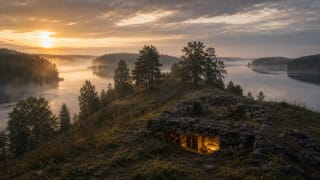
The Dubingiai Castle Site legend connects the Asveja peninsula with an island, the Radziwiłł crypt, Vytautas's castle, and the memory of hidden grandeur above…
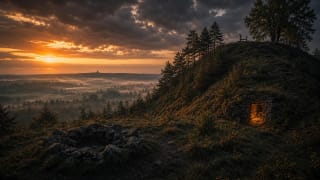
The Girgždūtė Hill legend tells of underground tunnels, the commander Girgždas, messages carried by pipes, and golden chairs and bells appearing on the hill.
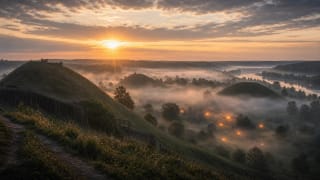
The Kernavė Hillforts legend tells of Pajauta Valley, Lizdeika Hill, hidden roads, and an old capital whose soil preserves the memory of the beginning of the…
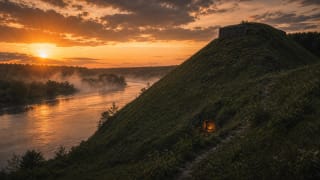
The legend of Papilė Hillfort tells of Pilies Hill on the bank of the Venta, a tower-shaped rise, the hidden memory of a castle, and local folklore already…
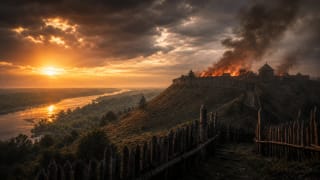
The legend of Punia Hillfort links Margis Hill with the memory of Pilėnai, the choice of freedom, fire, and the landscape where the Nemunas and Punelė meet.
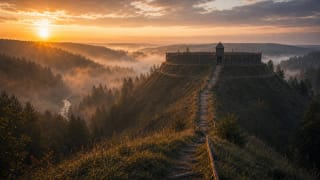
The legend of Šeimyniškėliai, or Voruta, Hillfort links the Anykščiai landscape with the memory of Mindaugas's castle, deep stream ravines, and the image of a…
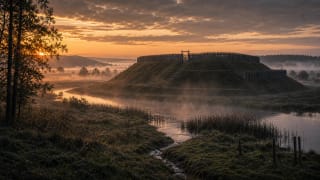
The legend of Senoji Įpiltis Hillfort tells of a mysterious Curonian castle, the old memory of Duvzarė land, and a stronghold protected by water and ramparts.
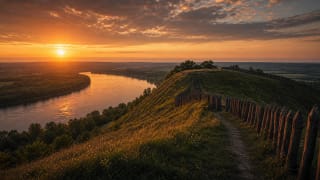
The legend of Seredžius Hillfort, associated with Palemonas Hill and Pieštvė Castle, tells of origin, defense, and princely memory established on the bank of…
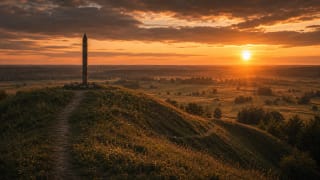
The legend of Sprūdė Hill tells of a Žemaitian hill, Duke Sprūdeikis's castle, shelters beneath it, and the memory of a fugitive ruler in the Varniai landscape.
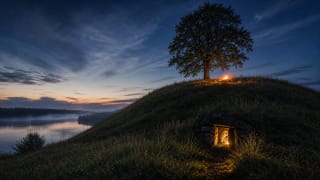
The legend of Taurapilis Hillfort tells of a church inside the hill, organ music, and the St. John's Day moment when the hillfort briefly opens.
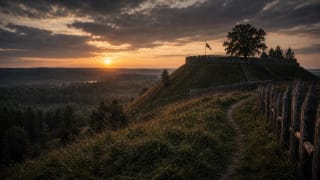
The legend of Žvelgaitis Hill links the Žagarė hillfort with the name of a legendary thirteenth-century duke, Semigallian land, and the memory of a castle on…
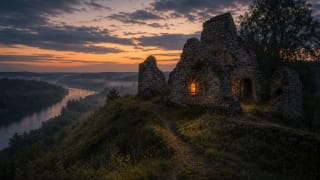
The Liškiava Hillfort legend tells of Duke Krėza, an enchanted princess, the Witch's Wall, and the memory of an unfinished castle frozen above the Nemunas.
The Lopaičiai Hillfort legends tell of a hill near Tverai, mythological stones, springs, priestly memory, and the sense of a sacred place preserved in the…
The Medvėgalis legend explains the hill's name through two brave girls who crossed a kūlgrinda, a stone-paved marsh road, to call for help and said: mudvi…
The Merkinė Hillfort legend tells of a city seen by a king in a dream, the confluence of the Nemunas and Merkys, and a hillfort that preserves the image of…
The Narkūnai Hillfort legend joins the memory of Utenis Castle, Happiness Valley, a health-giving spring, and the custom of offering coins into one Aukštaitija…
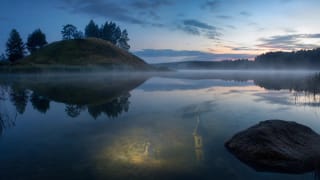
The Obelija Lake legend is connected with Obelija hillfort, Zaramkalnis, and stories of a church hidden inside the hill and bells heard from the depths.
Lakes and water
Travelling lakes, sunken settlements and stories from the waterside.
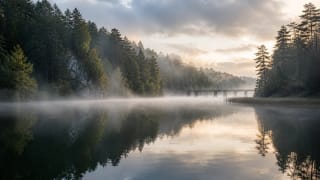
The Asveja Lake legends page honestly separates the well-attested history of Dubingiai and Asveja from a legend text that is harder to verify publicly, while…

The Dusia Lake legend explains how a great lake came above the fields, stopped only when its name was spoken, and left stories of a drowned place, bells, and…
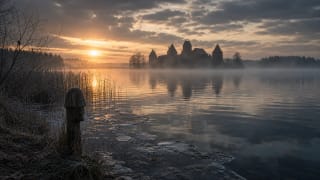
The Galvė Lake legend explains the name of the Trakai lake through a story about a head demanded each year, and through motifs of islands, castle, and water…

The Lake Žuvintas legend page carefully separates reliable natural and protected-area history from a place-legend text that is still hard to verify publicly,…
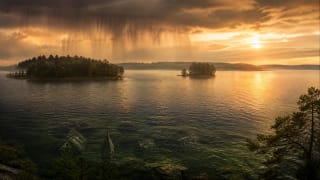
The legend of Lake Plateliai tells of a lake that arrived as a cloud, a name explained through words about broad rain, Castle Island, sunken places, and the…
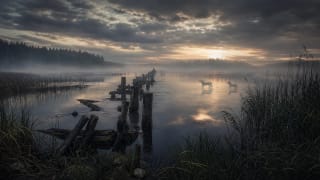
The legend of Lake Sartai explains the lake's name through a collapsed bridge, people who plunged into the water, and chestnut horses whose color became a sign…
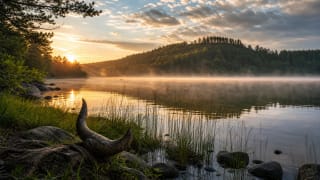
The legend of Lake Tauragnas connects Lithuania's deepest lake with an aurochs, a horn, Taurapilis, and the old hillfort memory of Aukštaitija.
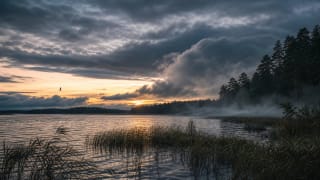
The legend of Lake Vištytis tells of water that arrived or descended over meadows, a warning voice, and a name that stopped the border lake.
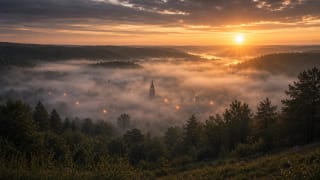
The legend of Raigardas Valley tells of a rich city that sank into the earth, Perkūnas's wrath, underground bells, and the salty waters of Druskininkai.
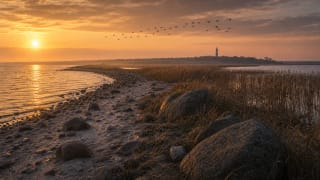
The legend of Ventė Cape explains the Curonian Lagoon peninsula through the image of earth, sand, and stones scattered by a giant in the windy lagoon country.
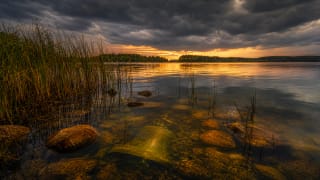
The Lūkstas Lake legend tells of water threatening Varniai, the speaking of the true name, drowned bells, and the deep memory of a Samogitian lake.
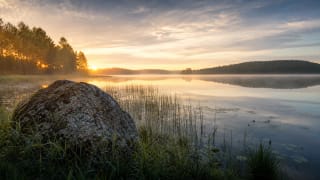
The field of Metelys Lake legends is most strongly connected with the Laumė Stone at Papėčiai, the Meteliai landscape, and stories of supernatural lakeshore…
Stones and boulders
Devil’s footprints, giants and stories explaining remarkable stones.
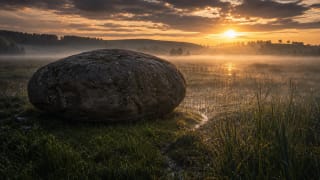
The legend of the Barstyčiai, or Puokė, Stone links Lithuania's largest boulder with images of giant strength, marshes, and the stone-filled world of Samogitia.
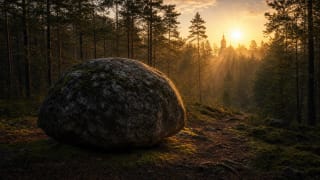
The legend of Puntukas Stone explains how the huge boulder near Anykščiai came to rest by the Šventoji: the devil was carrying it to smash the church, but a…
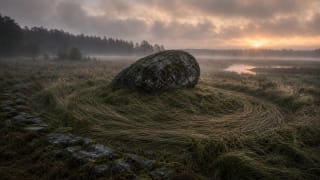
The legend of Šilalė Kūlis tells of the son of the wind sleeping beneath the great stone, a marsh-surrounded sacred place, a stone causeway, and the stone…
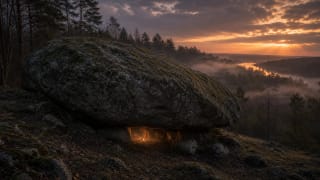
The legend of Švendubrė Devil's Stone tells of a boulder dropped by the devil, a way into the underground city of Raigardas, treasure, and fear on the Nemunas…
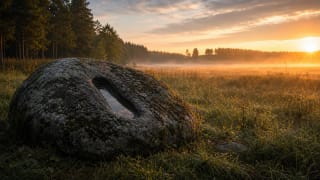
The legend of Vištytis Stone tells of a footprinted boulder regarded as wondrous, the devil's or Mary's foot, sacred fire, and water believed to heal.
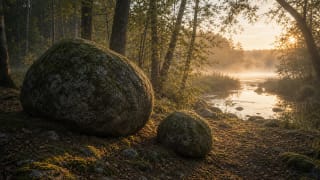
The Mokai Stones legend tells of a living stone family: Mokas, Mokiukas, and Mokienė, with Mokienė disappearing in the water, in a story where stone, river, and…
Sacred places and nature
Holy hills, trees, springs, caves and unusual landscapes.
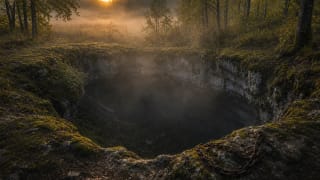
The Cow Cave legend explains a sinkhole in the Biržai region through a story of a cow that sank into the earth, a chain, and ground in northern Lithuania that…
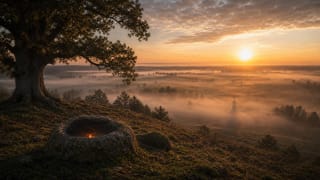
The Girnikai Hill legend tells of Kurtuovė, mother of giants, a sunken church, a sacred-fire stone, and a hill from which Samogitia and the Šiauliai region can…
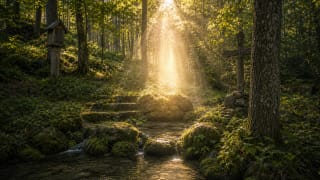
The Krokulė Spring legend tells of Christ appearing to shepherd children, the blessed spring site, a chapel, and Užpaliai's memory of healing water.
The Ladakalnis legend links a hill in Aukštaitija National Park with the memory of offerings to the goddess Lada, a panorama of six lakes, and the image of a…
The legend of Devil's Pit tells of a sunken church, sin, and a hollow near Aukštadvaris where natural form met moral storytelling.
The legend of Rambynas Hill tells of Perkūnas's stone, laumės, sacred fire, and the Nemunas slope where an old sanctuary became a sign of Lithuania Minor's…
The legend of Šatrija Hill tells of witches gathering from all Lithuania, a forgotten broom, and a Žemaitian sacred hill where fear, sacredness, and landscape…
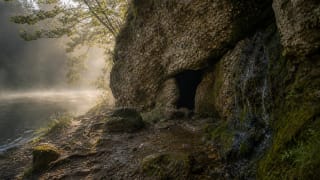
The legend of Skališkės, or Liucionys, Cave connects a rock on the Neris bank, a dripping spring, and the name Holy Cave with a threshold place between water,…
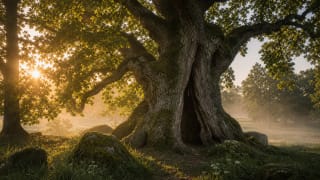
The legend of the Stelmužė Oak tells of a sacred elder tree, a giant, the memory of pagan rites, and a living witness to the history of the Zarasai region.
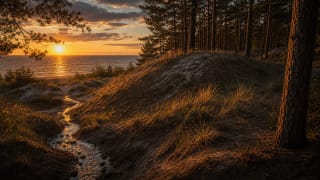
The Naglis Hill legend tells of the giant Naglis buried in a Palanga dune, the grave heaped up by his wife Brukšva, and a stream begun from tears.
Towns and place names
Stories explaining how places received their names.
Recorded local narratives
Narrative variants, explanations of place names and personal memories with specific recording details.
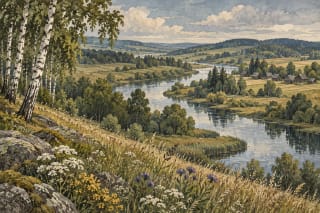
A recorded account of Bobų Stone near Verkšionys: women washing clothes, a remark about witches and the provenance of the 2005 interview.
Three accounts recorded in 2005 explain the name of Karvutė Stone through fishing, abundance and family memory, with precise source references.
Two recorded explanations of Olejnik Stone connect its name with a drowned merchant or an oil presser. A source-based comparison of local accounts.
A Bražuolė account recorded in 2004 explains an eastward current through disobedience. The dossier separates geography from narrative meaning.
Three accounts of the Wedding Stones at Verkšionys, with named narrators, recording dates and a comparison of their different explanations.
Other genres
Keep exploring Lithuanian stories
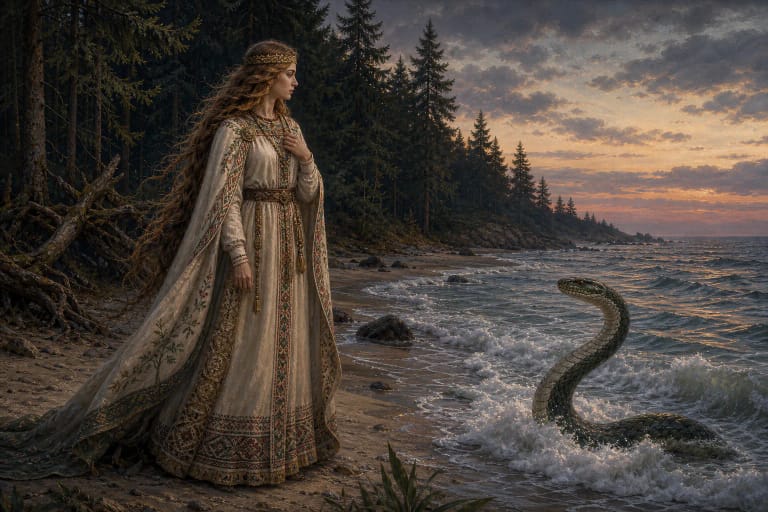
An English collection of Lithuanian tales with full retellings, motif explanations, variant history, and cultural interpretation.
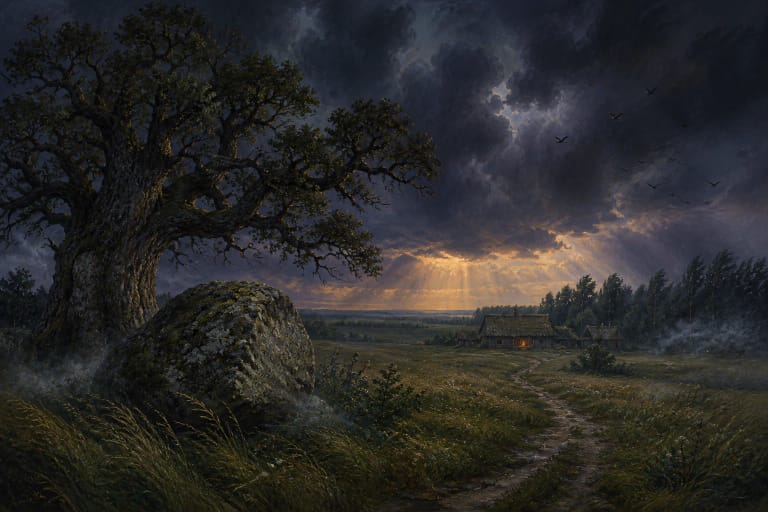
Read Lithuanian sakmes in English: concise belief and origin stories about supernatural encounters, creation, taboos, signs, and consequences.
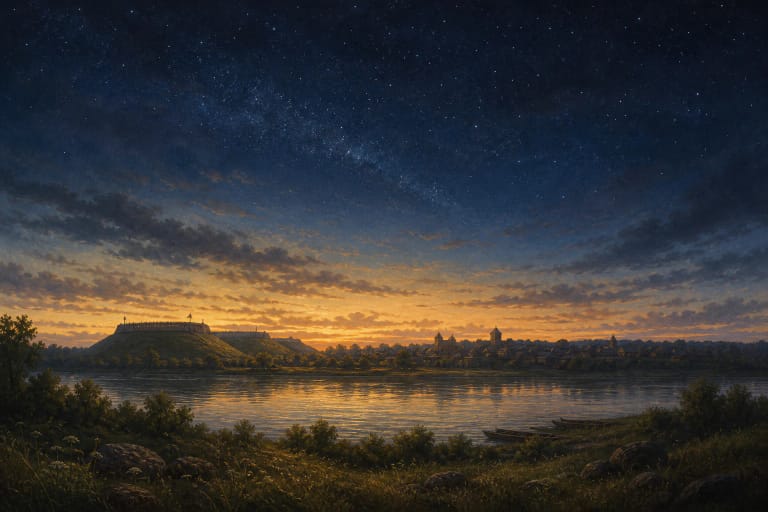
Explore Lithuanian legends in English, distinguishing folklore, chronicle tradition, literary retelling, and local religious memory.