- Field
- Lithuanian beeswax candle casting, dipping, rolling, and ritual candle use
- Type
- traditional craft
- Heritage status
- living tradition
- Context
- Candle, beeswax, wick, fire, light, Grabnyčios, Vėlinės, Easter, wax sheet, casting, dipping
Candle making, Wax candle casting, Candle dipping, Candle rolling
Candle Casting forms and objects
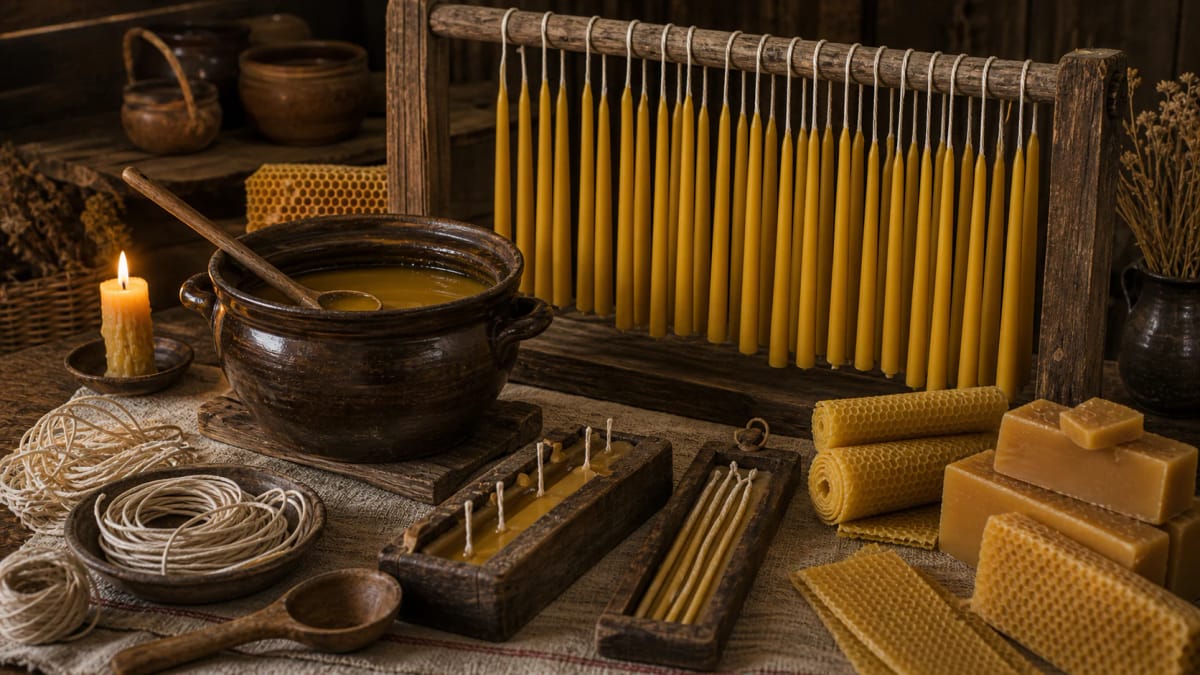
Poured Candles: Melted wax poured into molds or around a wick to form thicker or specially shaped candles.
Dipped Candles: A wick repeatedly dipped into melted wax until the candle grows layer by layer.
Rolled Candles: Candles rolled from beeswax sheets, common in education and contemporary national-heritage practice.
Graudulinės and Festive Candles: Candles blessed at Grabnyčios or used in other rites, connected with protection, prayer, memory, and light.
What Is Candle Making?
Candle making turns beeswax or another material into a candle by joining melted wax with a wick. In Lithuanian tradition, beeswax is the strongest material because it comes from beekeeping and has natural scent, color, and ritual status.
The craft includes more than pouring wax into molds. Candles can be dipped, as the wick is repeatedly lowered into wax, or rolled from beeswax sheets. All of these methods belong to žvakininkystė, the candle-making craft.
A candle is not only a source of light. It is connected with prayer, remembrance, home protection, Grabnyčios, Vėlinės, Easter, funerals, and the festive order of the home.
Beeswax
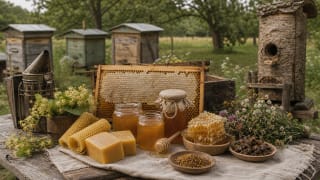
Beeswax is the main traditional candle material. It has yellow color, a honeycomb scent, and a warm quiet light, which made wax candles valued in church and home.
Wax comes from beekeeping. Honeycomb, honey, and wax form one household chain: bees provide food, and wax becomes light. This explains the close link between candle making and honey traditions.
Modern candles use other materials too, but from a heritage perspective beeswax remains the strongest traditional sign.
Wick or Knatas
The wick, called dagtis or knatas, is the candle’s core. It draws melted wax into the flame. If it is too thick, the candle smokes; if too thin, the flame is weak and may go out.
Traditional wicks could be made from linen, cotton, or another suitable fiber. They need to be straight, well tensioned, and properly fixed.
In candle making the wick is not a minor detail. It determines whether an attractive wax object will actually burn well.
Pouring into Molds
Poured candles are made by pouring melted wax into a mold or around a prepared wick. The mold may be wooden, metal, clay, or modern, but the key is a strong silhouette and clean release.
Pouring can make thicker, more uniform, or special-shaped candles. It requires caution: wax should be melted properly but not overheated.
This is different from casting metal. Here the poured material is wax, not bronze or tin.
Dipping and Layering
Dipped candles are made by repeatedly lowering the wick into melted wax. Each dip leaves a thin layer, and the candle gradually thickens. The handwork is visible and slow.
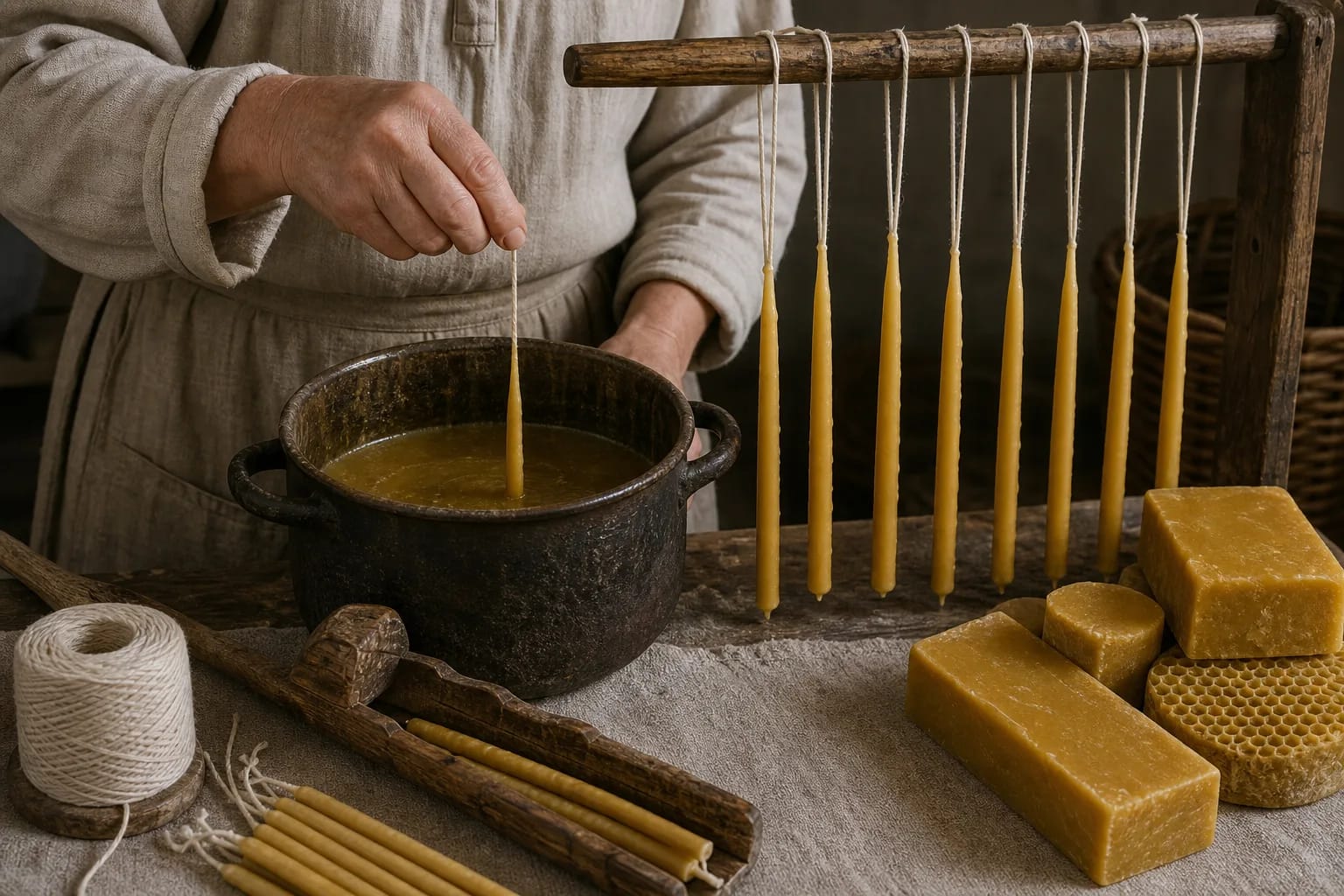
Layers have to cool enough, and the candle should remain straight. Working too quickly can make uneven surfaces; wax that is too hot can melt earlier layers.
Dipping works well in education because the participant can see the candle grow layer by layer.
Rolling from Beeswax Sheets
Rolled candles are made from beeswax sheets, often called vaškuolės. The wick is placed at the edge and the sheet rolled into a cylinder. This method is common in contemporary education.
It is simpler than hot-wax pouring because it does not require heating a large amount of wax. It still needs neat rolling, correct wick length, and a good wax sheet.
From a heritage perspective, rolled candles show a living adaptation: traditional material and light meaning remain, while the technique becomes safer for teaching.
Grabnyčios and Graudulinės Candles
Grabnyčios, the Feast of the Presentation of Christ, is connected with blessing candles. Such candles were sometimes called graudulinės and kept at home for special moments.
Tradition held that a blessed candle could protect the home during storms, illness, the hour of death, or other threshold moments. These beliefs should be described as customary worldview, not literal safety guarantees.
The graudulinė candle shows that a candle’s meaning is more than light. It becomes a sign of prayer, protection, remembrance, and boundary moments.
Vėlinės, Easter, and Memory
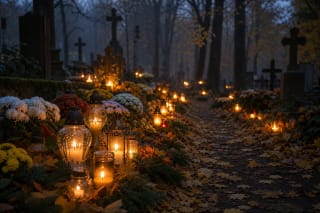
At Vėlinės, the candle is one of the strongest symbols of remembrance today. Candles burning in cemeteries connect light, memory of the dead, and family visits.
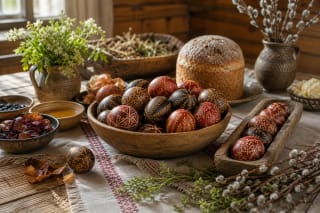
The Easter candle, or Paschal candle, belongs to church liturgy and symbolizes the light of resurrection. It is not everyday household candle making, but it shows how deeply candles belong to the Christian year.
Home candles, cemetery candles, and church candles have different uses, but all are joined by wax, fire, and the meaning of light.
Safety
Candle making requires caution. Hot wax can burn, overheated wax can be dangerous, and burning candles must always be supervised.
In education it is safest to distinguish hot wax pouring from rolling wax sheets, which is more suitable for children. Dipping and pouring should be supervised by someone experienced.
A heritage craft should be alive but not reckless. Safe work helps the tradition continue.