
Summer
Jonines in Lithuania
June 24, usually celebrated on the evening of June 23
Jonines is one of Lithuania's most recognizable summer feasts. It is celebrated across the country, from large city events to community evenings by lakes, and it keeps a strong link with Rasos and Kupoles traditions.
Tradition context
- When
- June 24, usually celebrated on the evening of June 23
- Season
- Summer
- Themes
- Name day of Jonas and Janina, bonfires, wreaths, fern flower, kupoles herbs, communities
Jonines in Lithuania joins St John's Day, name-day greetings, and older summer-solstice customs: bonfires, wreaths, kupoles herbs, songs, and the legend of the fern flower.
What Is Jonines in Lithuania?
Jonines in Lithuania is the June 24 feast usually begun on the evening of June 23. It falls in the summer-solstice period, so many old nature customs survived beside the day of St John the Baptist. VLE notes that in the Baltic lands this feast is known from the fourteenth century: it is mentioned in 1372 in a letter of Bishop Henry II of Warmia, later in the 1573 Wolfenbüttel postil and the works of M. Pretorius (1690); before Christianity it was called Kupoles or Rasos, and the name Jonines became established only in the later dictionaries of K. G. Milkus (1800) and F. Kuršaitis (1883).
Today Jonines is at once a name-day celebration, a summer community gathering, and a chance to remember Rasos customs. That is why Jonines can feel folk, familial, and very contemporary at the same time.
When Is Jonines Celebrated and Why Is June 24 a Day Off?
Jonines is marked on June 24, while the main events take place on the eve. In Lithuania the day is a public holiday, so many people plan travel, meetings in nature, or participation in public celebrations.
In practice the most important time is the evening of June 23. That is when wreaths are woven, bonfires lit, Jonases and Janinas greeted, concerts and evening gatherings held, circle dances danced, and night customs performed.
How Jonines Is Celebrated Today
Large events often have a stage, concert, traders' or craft fair, folklore groups, wreath weaving, and a symbolic bonfire. This works well for people who want a clear program and festive atmosphere.
Community Jonines leaves more room for custom. People weave wreaths themselves, sing, go to water, dance circles, greet name-day celebrants, and talk by the fire. That format often stands closer to the older meaning of the feast.
Bonfires, Wreaths, Kupoles, and the Fern Flower
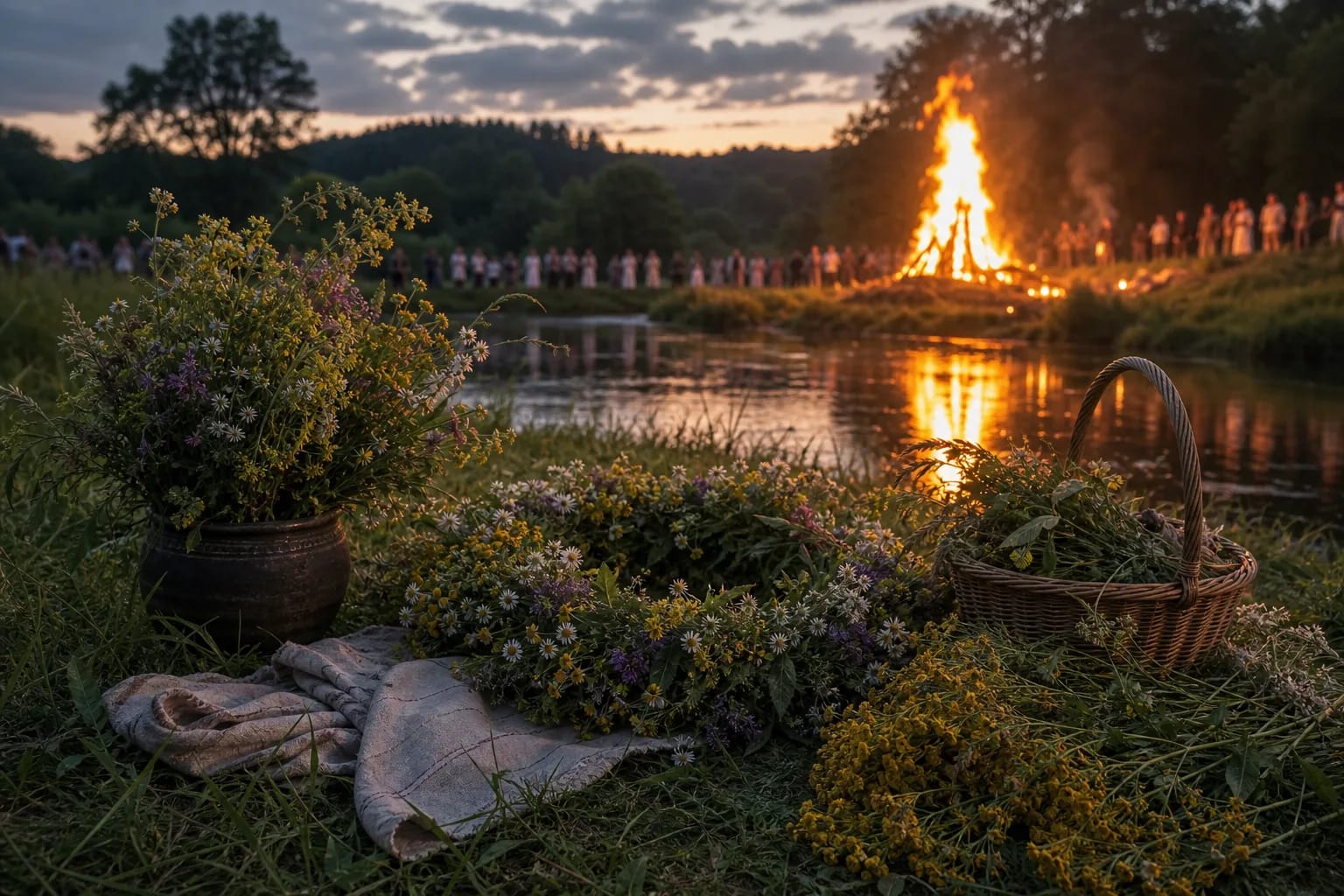
The Jonines bonfire is a sign of both light and community. Songs, dances, and games happen around it. In some places, jumping over the fire survives as a custom connected with cleansing, courage, and luck.
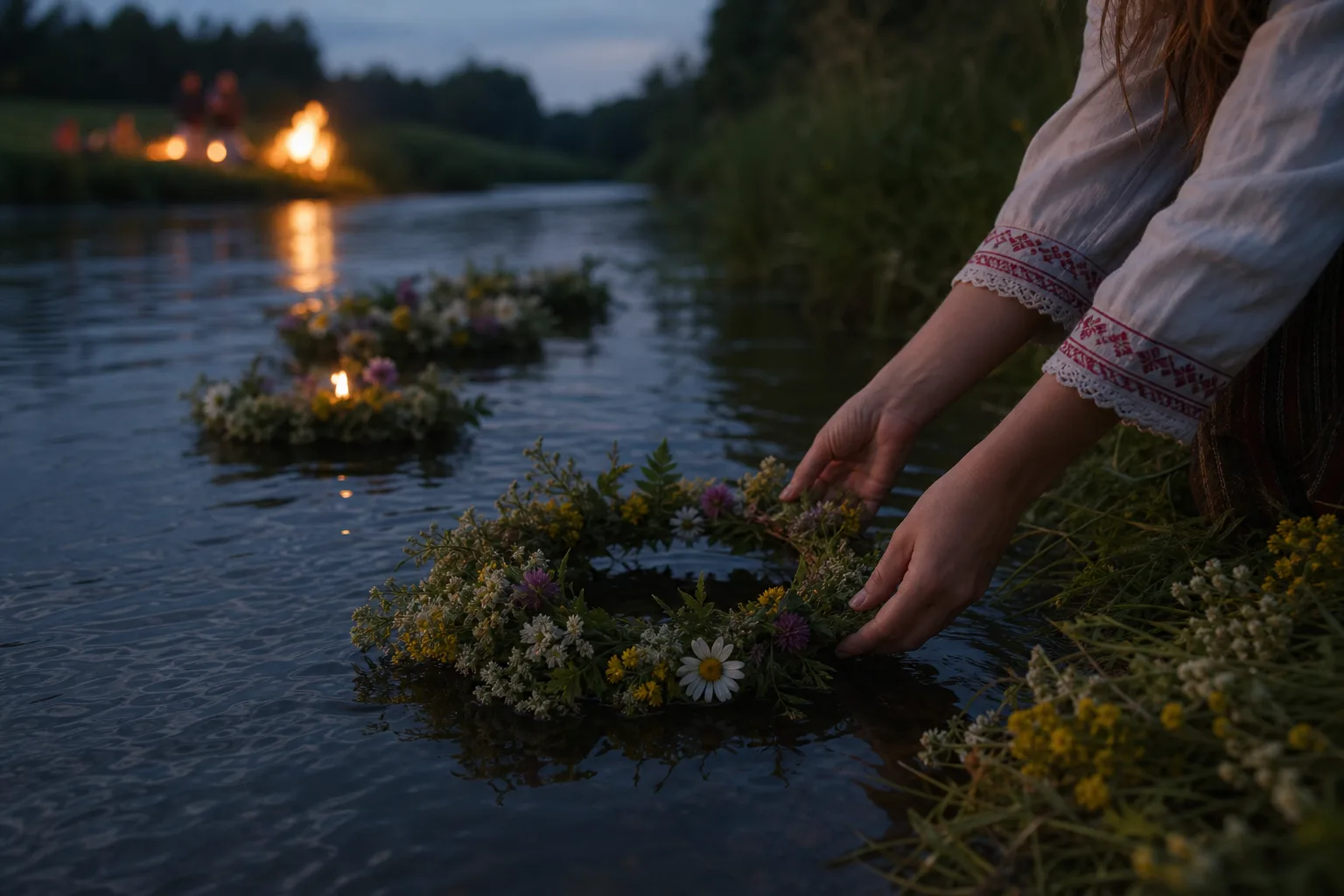
Wreaths and kupoles herbs remind us that Jonines is not only a city concert. Its roots are in herbs, fields, water, and night. The fern-flower legend adds playful mystery: people search while knowing that the real discovery is the adventure itself.
How Jonines Differs from Rasos
Rasos emphasizes the solstice, dew, kupoliavimas, and the archaic layer of the feast. Jonines is more closely tied to St John's name, greetings to Jonases and Janinas, public events, and the widely recognized name of the holiday.
In everyday speech the feasts often merge. A person may say they are going to Jonines but take part in Rasos actions: weaving a wreath, floating it on a river, singing by a bonfire, and washing in dew.
Preparing for Jonines as Tradition, Not Only Concert
Before choosing an event, look for signs of an ethnocultural program: wreath weaving, kupoliavimas, folklore groups, circle dances, stories about customs, and a shared bonfire. Those signs show that the celebration is not only a stage and food stalls.
With friends, a simple traditional plan can be enough: gather herbs together, weave wreaths, light a safe bonfire or candle, sing at least a few folk songs, go to water, and wait for dawn.
Main Jonines customs and meanings
Jonines customs join name-day joy, nature symbols, and the magic of a summer night. Even contemporary celebrations retain the bonfire, wreaths, songs, water, and the story of the fern flower.
Greeting Jonases and Janinas. The name-day layer distinguishes Jonines from Rasos and gives the feast a personal family and friendship meaning.
Lighting the bonfire. Fire is the main sign of Jonines evening, the place where people gather, sing, and dance.
Weaving herb wreaths. Wreaths are worn, given, decorated, or floated on water.
Kupoliavimas and gathering herbs. At Jonines, herbs are linked with health, protection, and the fullness of summer.
Searching for the fern flower. The legend gives the feast mystery and the feeling of night adventure.
Circle dances, games, and songs. Jonines is a community feast where live participation matters more than only watching a concert.
Celebrations in towns and villages. Contemporary Jonines often include fairs, folklore performances, workshops, and concerts.
Waiting for sunrise. In more traditional celebrations the night ends with morning dew and greeting the sun.
Where to experience it
Where to experience Jonines in Lithuania?
Jonines can be celebrated almost anywhere in Lithuania, but the experience differs: a large concert in one place, an ethnocultural evening in another, or a quiet lakeside gathering with wreaths and songs.
Jonava
Often called the capital of Jonines, suited to visitors who want a large event, concerts, and a strong name-day atmosphere.
Kernave
A good choice for a more archaic relationship between Rasos and Jonines, with hillforts, rites, bonfire, and folklore.
Rumsiskes
Good for families and visitors who want to see customs in a museum setting that still feels alive.
Vilnius, Kaunas, Klaipeda, and Resorts
Cities and resorts are convenient for concerts, transport, and evening programs, but it is worth choosing events with folklore or education.
Jonines: songs, sutartines, and related pages
The mood of Jonines night is strengthened by songs about summer, herbs, love, sun, and water. This makes folk songs and sutartines natural companions to the feast.

Jonines sources and useful pages
Jonines: frequently asked questions
When is Jonines celebrated in Lithuania?
Jonines is observed on June 24, but most events and customs take place on the evening of June 23 and during the night into June 24.
Why is Jonines also called Rasos?
Rasos is the older solstice name, while Jonines is linked with St John's Day. Both names are often used for the same festive time.
What are the main Jonines customs?
The most common customs are bonfires, wreath weaving, kupoliavimas, songs, circle dances, searching for the fern flower, greeting name-day celebrants, and being outdoors.
Why is a bonfire lit on Jonines?
The bonfire is linked with the sun, light, cleansing, and the center of community. People gather there to sing, dance, talk, and wait through the night.
Why are wreaths woven on Jonines?
A wreath is a symbol of summer greenery, the circle, and a person's bond with nature. It is woven from plants blooming at that moment, worn, given, or floated on water.
Does the fern flower really exist?
No. Ferns do not bloom, so the fern flower is a mythic symbol. On Jonines night it means the search for happiness, love, knowledge, and mystery.
Where should visitors celebrate Jonines in Lithuania?
Large events are often held in Jonava, city parks, or resorts. For a more traditional experience, look for Kernave, Rumsiskes, ethnoculture centers, and local community programs.
What can children do during Jonines?
Children can weave wreaths, learn herbs, join circle dances, safely watch the bonfire, hear fern-flower stories, and follow a shorter museum or community program.
How can Jonines be celebrated without a mass concert?
Choose a smaller ethnocultural event or celebrate with family and friends in nature: weave wreaths, sing, light a safe fire, go to water, and greet the morning.