- Field
- Lithuanian stone splitting, dressing, monument, and millstone craftsmanship
- Type
- traditional craft
- Heritage status
- regional tradition
- Context
- Akmenskaldystė, akmentašystė, stone splitter, stonecutter, field boulders, grave monuments, stone crosses, shrine-shaped memorials, millstones, foundations, paving, dolomite, limestone
Akmentašystė, Stone splitting, Stone dressing, Traditional stoneworking, Lithuanian stonecutting
Stoneworking forms and objects
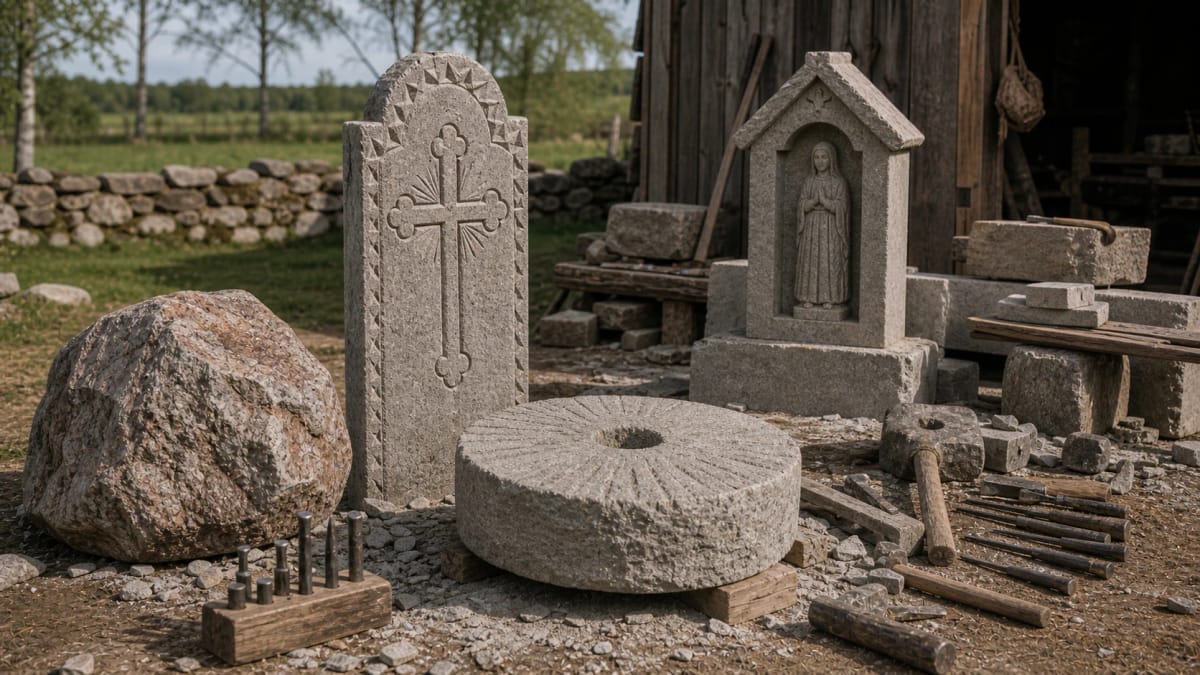
Grave and memorial monuments: Stone grave markers, crosses, slabs, shrine-shaped memorials, and inscription surfaces that required dressing, smoothing, and ornamenting.
Millstones and farm stonework: Grinding stones, millstone blanks, thresholds, boulder details, and yard or farm objects where precision mattered for function.
Building stone: Stones for foundations, walls, paving, fences, and roads, split and dressed according to building needs.
Decorative and sacred stone signs: Small crosses, rosettes, plant or geometric motifs, niche-like stone monuments, and details of small-scale sacred architecture.
What is stoneworking?
Akmenskaldystė is the craft of splitting, dressing, and preparing stone. The closely related term akmentašystė more strongly emphasizes shaping the stone surface, smoothing it, ornamenting it, and making monuments. In village and small-town practice these kinds of work often overlapped.
A traditional stoneworker worked with field boulders, dolomite, limestone, and other local stone. He could prepare building stone for foundations, paving, or walls; dress millstones; make grave monuments, crosses, thresholds, or decorative details.
This craft should be distinguished from modern industrial quarrying. Traditional stoneworking values the hand, wedge, chisel, sledgehammer, the sound of the stone, knowledge of the blank, and a local need, rather than mass production of crushed stone.
The stone splitter and the stone dresser
The akmenskaldys primarily splits and prepares stone: he breaks a boulder, separates a slab, and chooses a blank for building or millstones. The akmentašys is more closely associated with surface dressing, form, ornament, inscriptions, and finishing monuments.
The same person could do both jobs, especially in smaller communities. A master had to hear how a stone would split and know its veins, cracks, and hardness. One wrong blow could ruin an entire blank.
Stone craftsmanship is slow and physically demanding. It requires not only strength but rhythm: many small, accurate blows often matter more than one powerful strike.
Materials: boulders, dolomite, limestone
Lithuania's landscape has many field boulders, used for foundations, fences, paving, grave monuments, and farm needs. They are hard, uneven, and often contain different minerals, so each blank behaves in its own way.
Dolomite is important in northern Lithuania, while limestone matters around Akmenė and other areas. These materials suit construction, finishing, or monuments, but their qualities differ from field boulder. One may be easier to dress, another harder; one holds an edge better, another crumbles faster.
A traditional master chose stone according to the job. A millstone needs one kind of hardness and grain, a grave monument another surface, a foundation another shape and weight.
Tools and working process
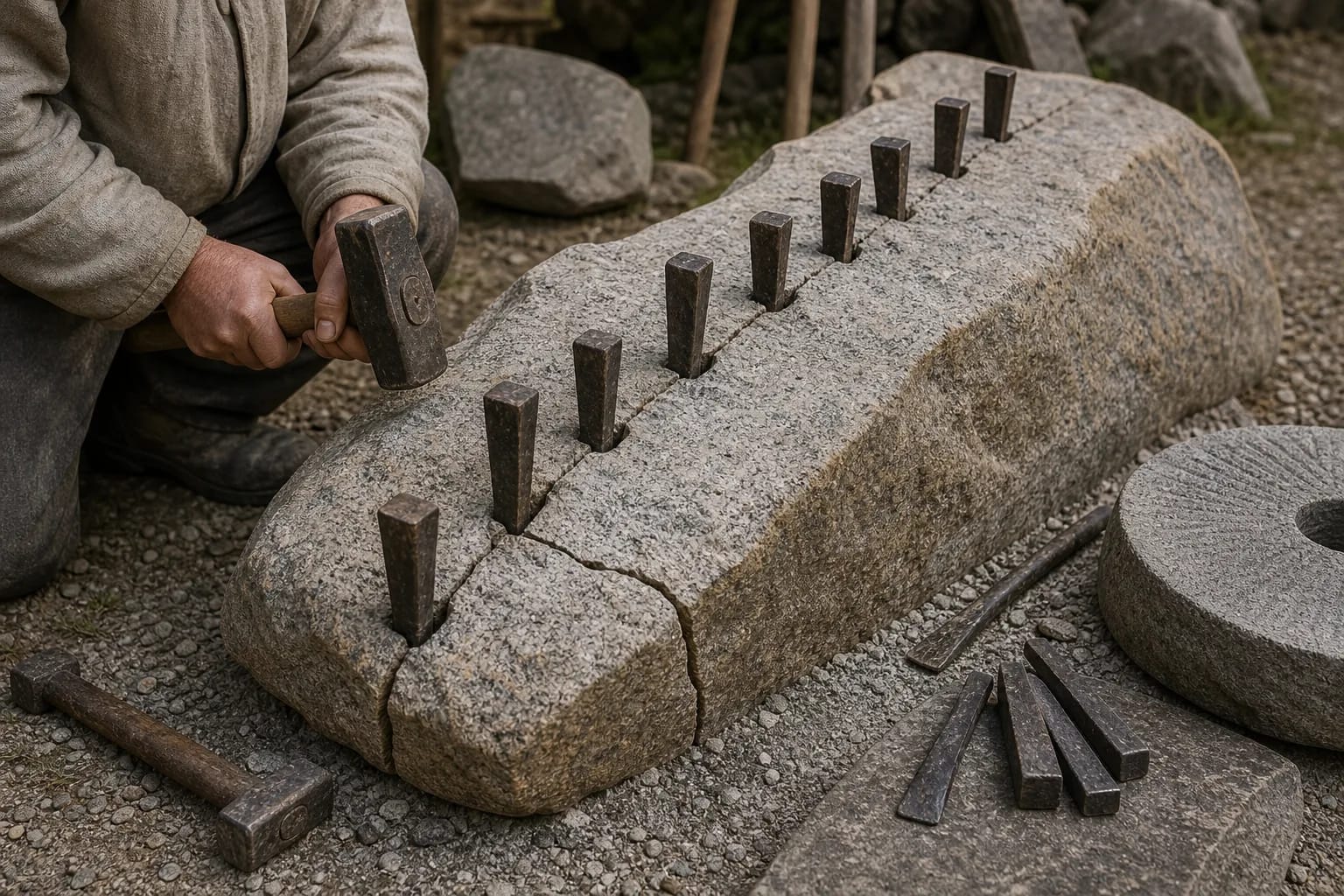
Stoneworking uses sledgehammers, hammers, chisels, wedges, points, leveling tools, measuring tools, and sometimes wooden or metal templates. Older work rests on the hand strike and on listening to the stone's response.
A boulder may be split with wedges: holes or seats are drilled or cut, wedges are inserted, and the stone is gradually forced to split in the desired direction. The surface is dressed with small blows until the necessary plane or relief appears.
A monument requires still greater control: the surface must be smooth for an inscription, a cross or plant motif must be clear, the edges safe, and the whole form stable. Memorial stonecutting is therefore both technical and artistic work.
Grave monuments and sacred stone signs
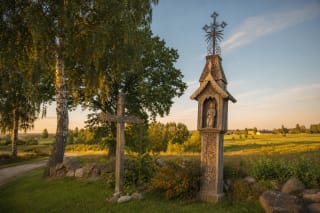
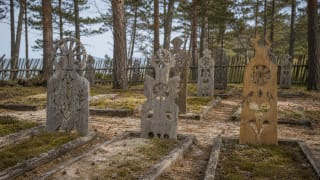
Stone grave monuments, crosses, slabs, niche-like shrine forms, and small memorial shapes are among the most visible areas of stoneworking. They were meant to last longer than wooden signs, so stone became associated with durability and memory.
A stone surface may carry a carved cross, rosette, plant ornament, date, name, religious sign, or simple geometric border. The ornament must be clear, because stone does not allow the same flexibility as wood or textile.
When speaking about sacred stone objects, not every stone should be treated as an ancient holy place. A stoneworking object is first of all a master's work for a concrete function: a grave, road, homestead, churchyard, or communal memory.
Millstones, thresholds, and farm objects
Stoneworking was not limited to monuments. Millstones, grinding stones, thresholds, foundation corners, paving stones, and well or yard details required accurate stone preparation. Such objects were highly practical, but rural farming cannot be understood without them.
Millstones needed stone that ground grain properly and did not wear down too quickly. Surface grooves, the central opening, weight distribution, and the pair of stones all had to work together.
Building stone also required skill. A foundation stone must lie stably, wall or fence stones must fit one another, and paving must withstand traffic, water, and frost.
Regions and Kelmė stonecutting
Stoneworking depended on local stone. Where suitable boulders, dolomite, or limestone were available, the craft could have a stronger base. Northern and central Lithuanian localities, the Kelmė region, and other stonier areas have clearer examples of stone craftsmanship.
The Lithuanian Intangible Cultural Heritage Inventory singles out the Kelmė region stonecutting tradition, showing that stone craftsmanship can be a living regional practice rather than only a technique of the past.
Regionality here is not a catalogue of ornaments. It is tied to the availability of stone, lines of local masters, cemetery and town needs, building material, and forms of communal memory.
Stoneworking today
Today stone processing is often associated with electric tools, machines, polished granite, and commercial monument production. That is a separate layer. Traditional stoneworking is valuable when it preserves an understanding of hand dressing, local stone, and form.
Masters may restore old monuments, make new stone signs, repair millstones, restore foundation or paving stones, and create details for small-scale architecture. In such work speed is not the only value; respect for the material matters.
In contemporary heritage, stone is often chosen for longevity. Yet longevity depends on choosing the right stone, allowing water to drain, building a stable base, and caring for the object.
Care and restoration
Old stone monuments may look strong, but they also decay: edges crumble, surfaces split, lichens grow, moisture gathers, inscriptions fade, and foundations settle. Aggressive cleaning can do more harm than good.
Restoration requires understanding the type of stone, surface condition, earlier repairs, and the object's purpose. Mechanical scrubbing, high-pressure water, or unsuitable chemicals can destroy relief and inscription.
The best care is often documentation, directing water away, a stable base, gentle treatment of biological growth, and specialist advice. The aging of stone is part of its history, but structural danger must be addressed in time.