
Lithuanian folk instruments
Lithuanian string instruments
String instruments connect home music, village ensembles, kankles symbolism, and later concert traditions in Lithuania.
String instruments and home music
Lithuanian string instruments connect kankles symbolism, family music making, village ensembles, and later concert practice. The pages keep older use and modern revival separate.
String-instrument guides
Read about kankles, fiddle, bass strings, dulcimer traditions, and related Lithuanian chordophones.
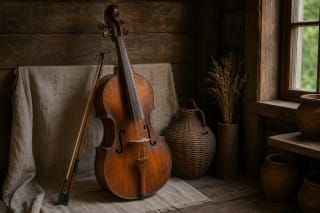
Basetlė is the bass bowed instrument of Lithuanian village bands: a double-bass or cello type with 2-4 strings, known in Lithuania, especially Žemaitija, from…
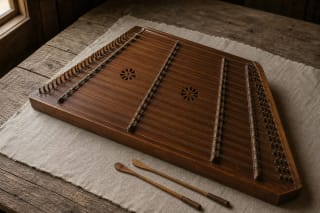
Cimbolai are a Lithuanian struck string instrument: a trapezoid resonator with 12-33 metal strings struck with small hammers, especially associated with…
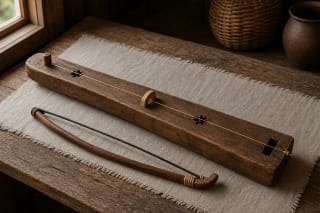
Dzindzinis is a Lithuanian bowed monochord: a wooden board about 100 cm long with a single lengthwise string, used by young people in the first half of the…
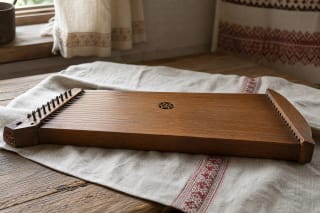
Kanklės are the most important Lithuanian plucked string instrument: a chordophone of the Baltic psaltery family, linked with sutartinės, home music-making,…
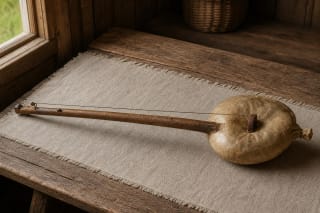
Pūslinė is a simple Lithuanian folk bass string instrument made from a wooden stick, an inflated dried pig bladder, and 1-3 strings, providing a low…
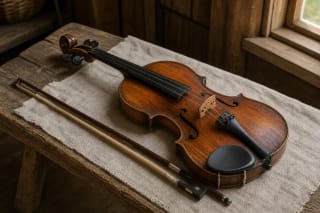
In Lithuanian ethnic music, smuikas became one of the main melody-leading village-band instruments.