- Field
- Forest Dzūkai mushrooming, grybijos, kašelės, and gathering forest goods
- Type
- traditional craft
- Heritage status
- living tradition
- Context
- Mushrooming in Dzūkija, forest Dzūkai, Dainava Forest, Varėna region, Marcinkonys, Zervynos, Musteika, grybija, kašelė, porcini, lepeška, zelionka, rudamėsė, makavykas, juodzikis, varnėkas, budė, mushroom drying, Kūčios mushroom brine
Forest Dzūkai mushrooming tradition, Dzūkian mushrooming, Mushroom gathering in Dainava Forest, Forest goods gathering tradition
Mushrooming in Dzūkija forms and objects
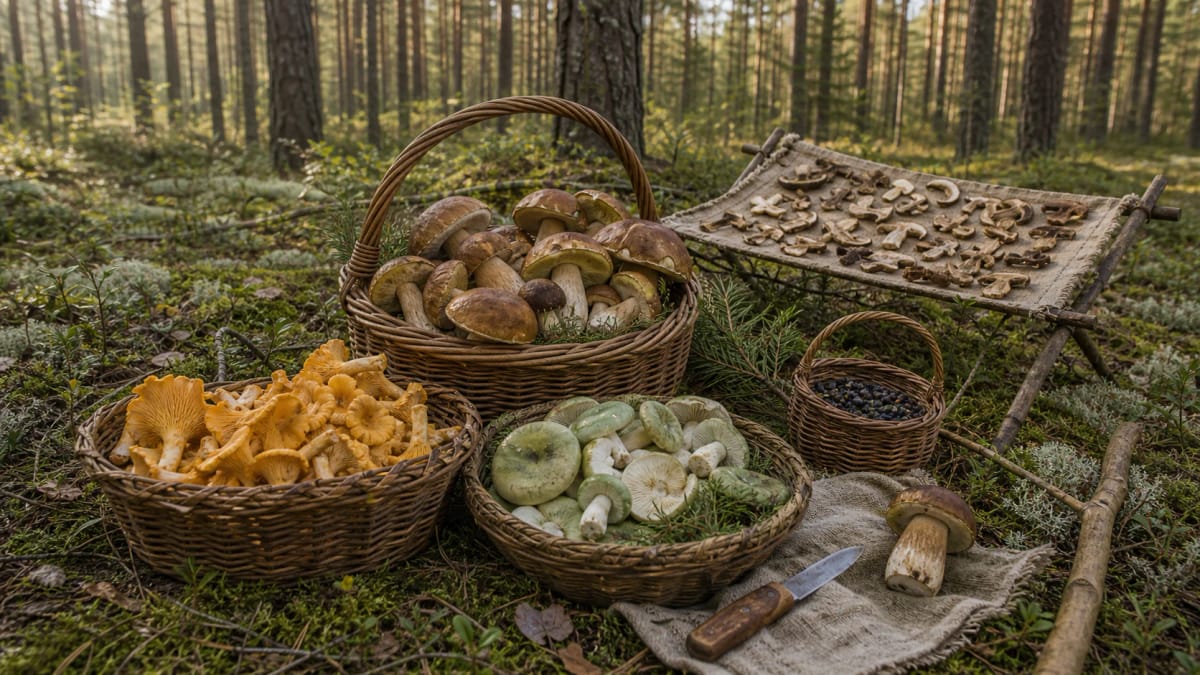
Kašelė: A splint or woven mushroom basket carried on the shoulders in Dzūkija and suited to long walking in the forest.
Grybija: A mushroom place known to a family or gatherer, often guarded from outsiders and passed from generation to generation.
Porcini: The most valued mushrooms; in the language of forest Dzūkai the general word grybas often means precisely a porcini.
Lepeškos: The Dzūkian name for chanterelles; they have long been gathered for food and sale.
Mushroom-drying house or bunker: A special mushroom-drying place or structure mentioned in some forest Dzūkai villages.
What is mushrooming in Dzūkija?
Mushrooming in Dzūkija is not only a leisure walk with a basket. In the forest Dzūkai tradition it is a system of forest livelihood, family knowledge, local speech, beliefs, food preparation, and respect for pinewoods.
Mushrooms are gathered in many Lithuanian regions, but in the Varėna region, Dainava Forest, and villages of Dzūkija National Park mushrooming became an especially strong identity marker. The tradition is entered in the Lithuanian Intangible Cultural Heritage Inventory as heritage of the forest Dzūkai.
Its center is not only the mushroom as product. It matters when to go, what forest to watch, how not to disturb the forest floor, how to guard one's places, and how to prepare mushrooms so their flavor lasts through winter.
Forest Dzūkai and Dainava pinewoods
Forest Dzūkai are the people of the sandy Dzūkija pinewoods. Their environment includes dry lichen and mossy pine forests, sand, forest villages, stream valleys, and poor soils where forest goods long formed an important part of subsistence.
Dzūkija National Park emphasizes that the livelihoods of this region were connected with the forest for many centuries. Mushrooms, berries, honey, herbs, and woodwork are inseparable from everyday culture, shaping speech, work, feasts, and family memory.
The saying about living from kašelės is therefore not only pleasant folklore. It recalls a time when gathering, preparing, and selling mushrooms was a real source of family income.
Kašelė and mushrooming tools
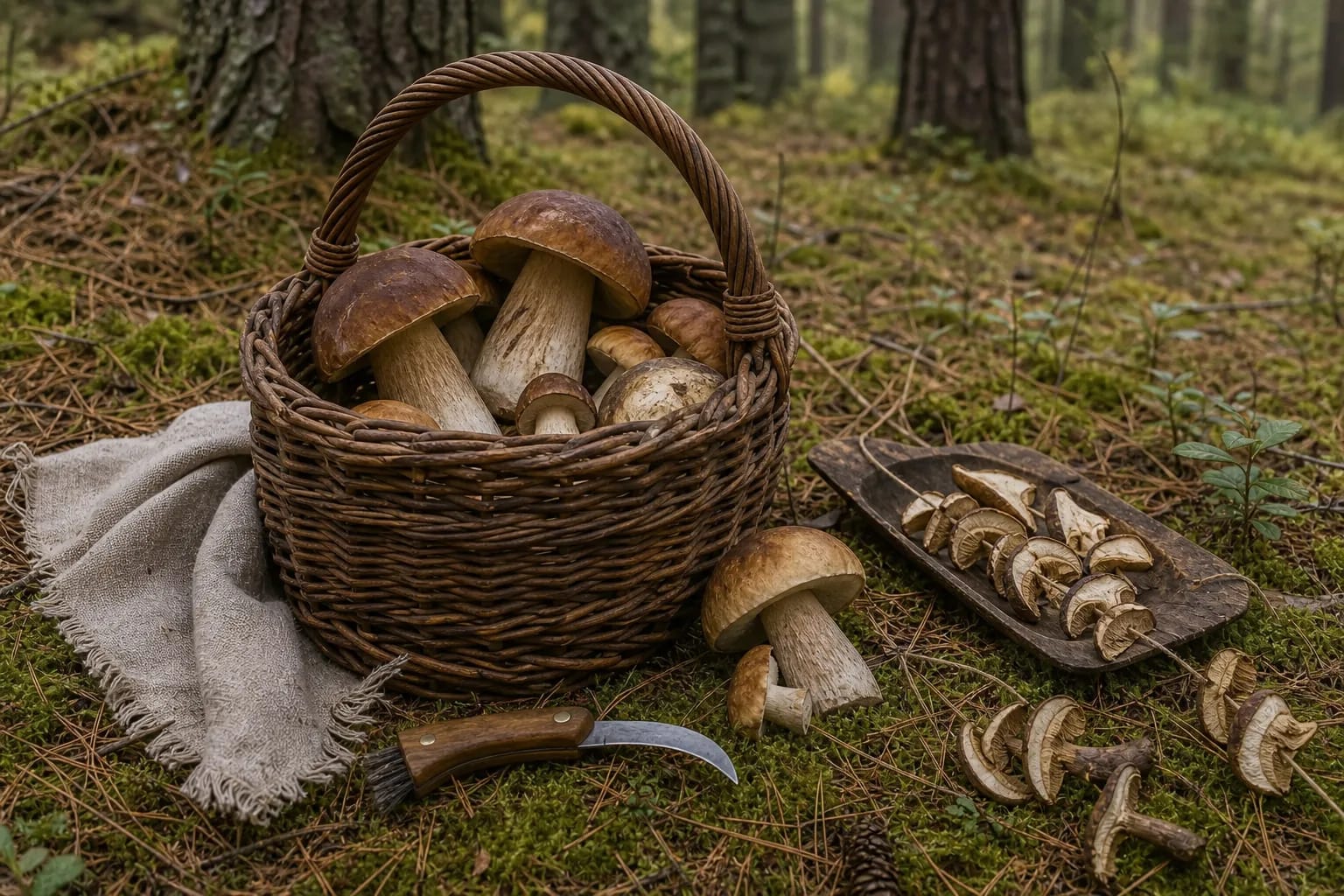
The main sign of a Dzūkian mushroom gatherer is the kašelė, a splint or woven basket often carried on the shoulders. It had to be comfortable for long walking, large enough, and suitable for keeping mushrooms from being crushed.
Large baskets were used for chanterelles, called lepeškos in Dzūkija, because these mushrooms were gathered not only for family food but also for sale. Tools were simple: basket, knife, sometimes a stick, but the most important tool was memory.
A good kašelė shows the practicality of the craft. It is not decoration for a photograph: its form, weight, and straps had to suit a particular person and forest paths.
Grybija and family secrets
A grybija is a well-known mushroom place. In the forest Dzūkai tradition such places are guarded, not revealed to strangers, and passed to children much like other family property.
Knowing grybijos means understanding forest signs: where mist rises after rain, where the floor is wetter, where pinewoods are white with lichens, where birches or oaks change the mushroom species. It is not just coordinates on a map.
Forest ethics are tied to this knowledge. The place must be left alive: moss should not be torn up, the forest floor should not be destroyed, litter must not be left, and behavior should not weaken the grybija for the next season.
Dzūkian mushroom names
Descriptions by the Inventory and Dzūkija National Park show that forest Dzūkai mushrooming has its own vocabulary. Porcini are divided into white-headed woodland types and black-headed pinewood types, and the general word grybas often means specifically a porcini.
Chanterelles are called lepeškos, yellow knights (žaliuokės) are called zelionkos, slippery jacks may be makavykai or juodzikiai, orange boletes varnėkai, saffron milk caps rudamėsės. Less valued or unfamiliar mushrooms could be called budės.
These names are not only colorful dialect. They show which species mattered for cooking, sale, drying, fermentation, and everyday mushrooming thought.
From first to last mushrooms
The Dzūkian mushrooming season is long. Accounts mention early spring false morels, the first May porcini called mojiniai, summer and autumn waves, and finally zelionkiniai mushrooms appearing with green mushrooms until snow.
A mushroom gatherer watches more than the calendar. After good rain, a warm night, mist, cobwebs, and dampness of the forest floor, one can judge whether to expect porcini, lepeškos, or other mushrooms.
The end of the season also had signs. The Inventory mentions a symbolic farewell to the forest or grybijos by bending or breaking a pine twig. This shows that mushrooming was understood as a relationship with a place, not only taking a harvest.
Drying, kitchen, and Kūčios
Mushrooms in Dzūkija were dried in bread ovens, bathhouses, and in some villages special mushroom-drying houses or bunkers are mentioned. Drying made it possible to store supplies for winter and prepare mushrooms for sale.
Dzūkian cooking is hard to imagine without mushrooms. They are used in soups, sauces, stews, fillings, and especially at Kūčios, where mushroom brine, small filled dumplings, and other fasting dishes matter.
A cultural description must not be confused with safety advice. Some traditionally mentioned mushrooms, such as false morels, can be dangerous, so a modern text must not encourage risky gathering or preparation without reliable identification.
Protected areas and gathering rules
The Dzūkija National Park page on berry and mushroom gathering rules states that collecting is not allowed everywhere: reserves and special restrictions exist. Čepkeliai State Nature Reserve has a separate regime and is open only to certain local residents at set times.
Heritage tradition therefore does not mean the right to enter any protected place. Visitors must check park rules, avoid closed areas, follow daylight requirements, and not confuse mushrooming with commercial gathering, which may have additional conditions.
The best way to learn the Dzūkija mushrooming tradition is through local museums, national park education, community narratives, and responsible forest visits.
Safety: what must be remembered
About 6000 mushroom species are found in Lithuania, of which only about 380 are edible, and VLE also notes more than a hundred poisonous species. The most dangerous Amanita species and some other mushrooms can cause severe or fatal poisoning.
Only clearly known mushrooms should be gathered. A single photograph, dialect name, or neighbor's comment is not enough. Overgrown, frost-damaged, or doubtful mushrooms may also be unsuitable for food.
A cultural heritage page should strengthen respect for tradition, but it must not become a mushroom-identification guide. Mushroom safety requires special knowledge and responsibility.