- Field
- Regional Lithuanian national costume and its textile craft system
- Type
- textiles
- Heritage status
- well attested
- Context
- Lithuanian national costume, traditional clothing, shirts, skirts, aprons, bodices, sashes, nuometai, scarves, delmonai, regional identity, Song Celebration
Lithuanian national costume, National dress, Traditional rural festive clothing, Regional costume
Lithuanian National Costume forms and objects
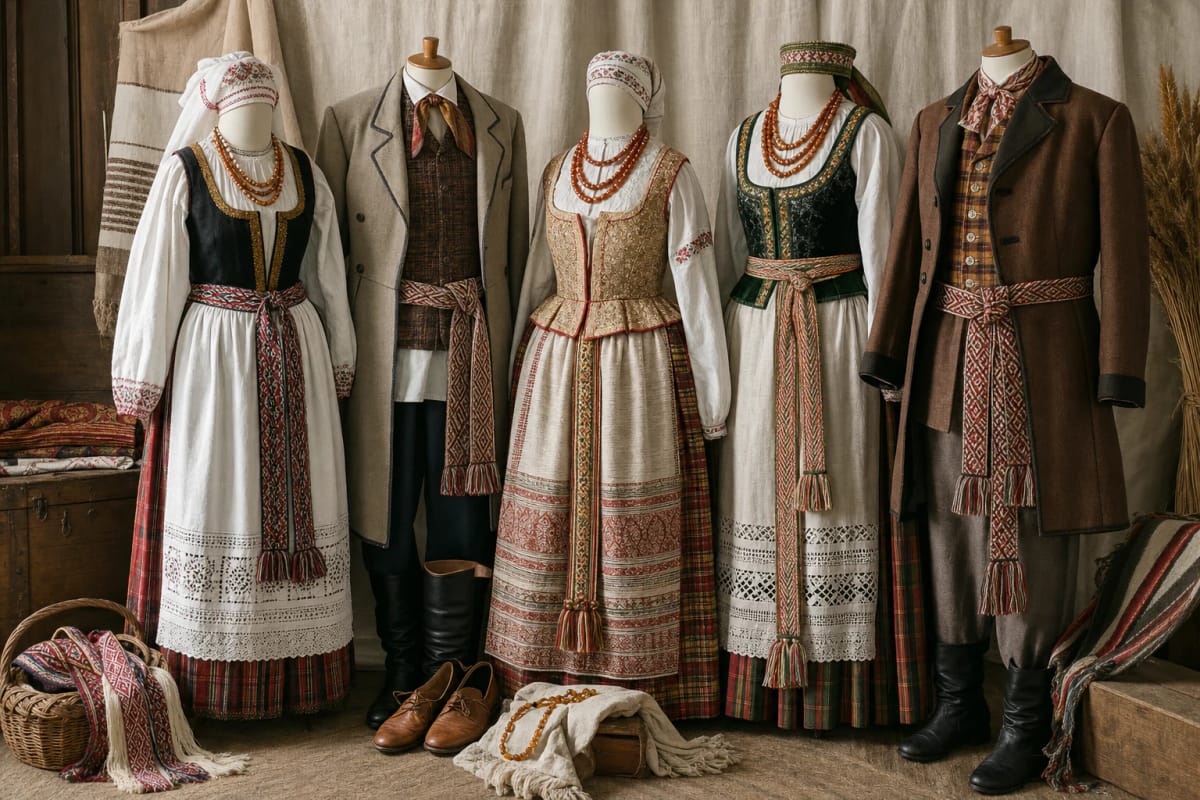
Women’s National Costume: Usually made of shirt, skirt, apron, bodice, sash, head covering, scarf or drobulė, jewelry, stockings, and footwear. Region and marital status change its appearance most strongly.
Men’s National Costume: Made of shirt, trousers, vest, sermėga or frock coat, sash or belt, headgear, and footwear. The men’s costume as a representative form was shaped more actively in the early 20th century.
Regional Costume: Aukštaitija, Žemaitija, Dzūkija, Suvalkija, and Lithuania Minor differ in colors, weaving, head coverings, sashes, aprons, and local elements.
Stage and Representative Costume: Dress for Song Celebrations, folklore ensembles, and state events may be based on museum copies or stylization. Responsible costume makes its sources clear.
What Is the Lithuanian National Costume?
The Lithuanian national costume is representative dress formed from traditional 19th-century rural festive clothing, regional textiles, museum examples, and the national revival’s need for a recognizable symbolic outfit. It is not just any old-fashioned clothing.
It is more accurate to speak of regional costumes than one uniform Lithuanian costume: Aukštaitija, Žemaitija, Dzūkija, Suvalkija, and Lithuania Minor each have distinct clothing traditions.
Today the costume is worn at Song Celebrations, state and community holidays, folklore events, weddings, formal meetings, and family occasions. A good costume shows not only national identity but also a specific region, material, weaving method, and wearing logic.
Traditional Clothing and National Costume Are Not the Same
Traditional rural clothing was living everyday and festive dress. People wove, sewed, wore, repaired, inherited, and changed it according to fashion, wealth, age, marital status, and work. The national costume is a later, consciously selected form adapted for representation.
By the late 19th century, traditional festive village clothing was retreating from daily use in many places, while the national revival turned its details into signs of identity. In the early 20th century and interwar period, the goal of a tidy region-based national costume strengthened.
This distinction prevents confusion among museum reconstruction, stage costume, family relic, designer interpretation, and an actual 19th-century rural garment. All may be valuable, but their purpose and relation to sources differ.
Parts of the Women’s National Costume
A woman’s costume usually includes a white linen shirt, skirt, apron, bodice, sash, head covering, scarf or drobulė, jewelry, stockings, and footwear. Local elements matter: the delmonas in Lithuania Minor, the nuometas in Aukštaitija, and layered scarves in Žemaitija.
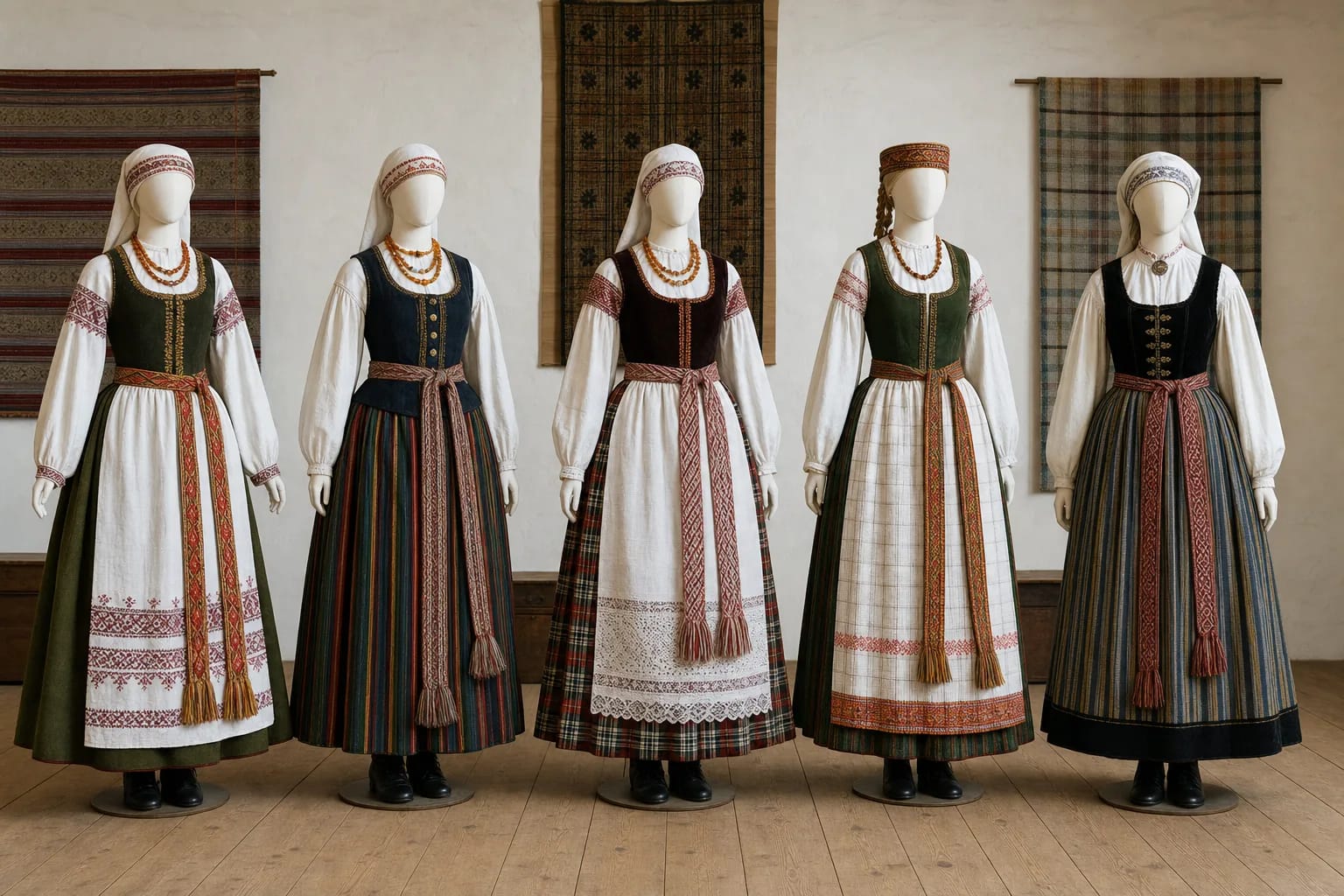
The shirt is the base: white cloth, collar, cuffs, shoulder pieces, and embroidery show weaving and sewing skill. The skirt provides regional color rhythm, the apron often becomes the most recognizable regional sign, and the bodice shapes the silhouette and adds a touch of urban fashion.
Girls’ and married women’s head coverings differed. Even a beautiful costume loses accuracy if the head covering is chosen at random; wreath, ribbons, scarf, kykas, or nuometas speak about age, marital status, and region.
Parts of the Men’s National Costume
A man’s costume usually includes shirt, trousers, vest, sash or belt, sermėga, jacket or frock coat, headgear, and footwear. Men’s rural dress was harder for researchers because it adopted urban forms more quickly.
In the interwar period, especially in the 1930s, the men’s national costume model was shaped more actively for representation. It therefore often shows a balance between ethnographic material and a broader national image.
A good men’s costume is not just a white shirt with a sash. Trouser cut, vest fabric, coat color, hat or cap, shoes, and fit to a specific region and period all matter.
The Aukštaitija Costume
Aukštaitija costume is often linked with white linen, restrained red-and-white ornament, a lighter impression, and the nuometas tradition. Married Aukštaitija women could wear long nuometai, one of the region’s strongest signs.
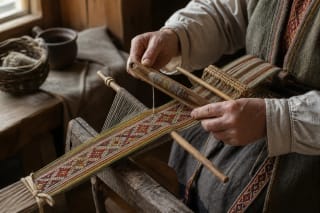
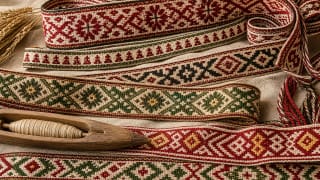
Sashes, linen shirts, red woven-in patterns, and clear festive order are important. Braided sashes are also a living textile tradition of the region and are listed in Lithuania’s intangible cultural heritage inventory.
Aukštaitija should not be reduced to a white-and-red scheme. Counties, parishes, and families had their own colors, shirts, skirts, bodices, and head-covering variants.
The Žemaitija Costume
Žemaitija costume is recognized by saturated colors, abundant scarves, red, dark green, blue, or violet tones, layering, and a strong textile character. Scarves become a major part of the costume.
Žemaitija bodices are often shorter and higher waisted, sometimes made from homespun woolen or half-woolen fabrics. Skirt and underskirt layers create a heavier, more colorful silhouette than in some other regions.
In Žemaitija costume the whole color body matters more than one ornament. Reconstruction must look at relationships among fabrics, not just a beautiful skirt or scarf.
Dzūkija, Suvalkija, and Lithuania Minor
Dzūkija costumes are often described through smaller and darker checked skirts, abundant sashes, subtle shirt embroidery, kerchiefs, and aprons that remained in use longer. The image can be restrained yet technically rich.
Suvalkija costume often stands out for orderly symmetry, rich colors, and ornate supplementary-pattern aprons. Aprons with lilies, tulips, and other plant motifs are among the brightest signs of Lithuanian national costume.
Lithuania Minor, or the Klaipėda region, has a distinct Lietuvininkai, Lutheran, and Prussian cultural layer. The delmonas, darker fabrics, local sashes, head coverings, and sometimes textual elements must be presented separately rather than folded into a generic Lithuanian costume.
Materials, Crafts, and Handwork
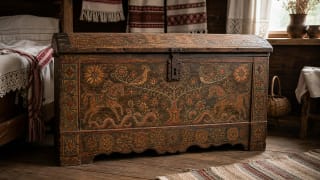
National costume joins many crafts: flax growing, spinning, weaving, sewing, embroidery, crochet, knitting, sash braiding or weaving, delmonas embroidery, jewelry making, and footwear craft. It is a knot of folk art, not just clothing.
Main materials include linen, wool, half-woolen fabrics, and later cotton, silk, brocade, velvet, satin, and factory cloth. Traditional costume was never only “natural village” fabric; urban fashion, trade, and purchased materials also shaped it.
The more precisely a costume’s origin is known, the stronger its cultural weight. Museum copies, family-preserved details, regional makers, and specialist recommendations help distinguish respectful reconstruction from surface decoration. Key studies include Stasė Bernotienė's Lietuvių liaudies moterų drabužiai XVIII a. pab.–XX a. pr. (1974), the Drabužiai volume of the multivolume Lietuvių liaudies menas (1974), and Teresė Jurkuvienė's Lietuvių tautinis kostiumas (2006).
Stage, Soviet Period, and Contemporary Reconstruction
In the 20th century, national costume lived on stage, in schools, celebrations, ensembles, and political representation. During the Soviet period, stylized stage costumes often simplified regional variety, brightened colors, and produced a more uniform image.
The folklore movement and late-20th-century research strengthened the wish to return to museum examples, real regions, proper fabrics, and actual wearing methods. A good contemporary costume increasingly rests on a specific source rather than a vague folk style.
In the Song Celebration context, the national costume remains Lithuania’s most visible living representative dress. Its strength comes when the mass image does not erase regions: different costumes together show Lithuania’s textile and identity diversity.
How to Wear the National Costume Respectfully
Respectful wearing begins by asking which region the costume represents and what sources its parts follow. A randomly mixed Aukštaitija head covering, Suvalkija apron, Žemaitija scarf, and modern skirt may look colorful but no longer tell a clear cultural story.
Wearing logic also matters. Nuometas, scarf, wreath, or kykas should match the wearer’s status and region. A sash should be worn as part of the garment, not hang like a souvenir; footwear, stockings, jewelry, and visible shirt parts also change the whole image.
Finally, daily inspiration should be separated from full costume. A sash, delmonas, wrist warmers, or scarf can enrich modern dress, but calling something a national costume requires sources, accuracy, and respect for the regional system.