- Field
- Lithuanian woven objects made from willow, osier, and other flexible plant materials
- Type
- traditional craft
- Heritage status
- living tradition
- Context
- Vytelės, willows, osiers, hazel splints, linden bast, baskets, kraitelės, hampers, seed baskets, cradles, fish traps, chairs, tables, weaving techniques
Vytelių pynimas, Woven plant objects, Willow weaving, Osier weaving, Basket weaving
Willow Weaving forms and objects
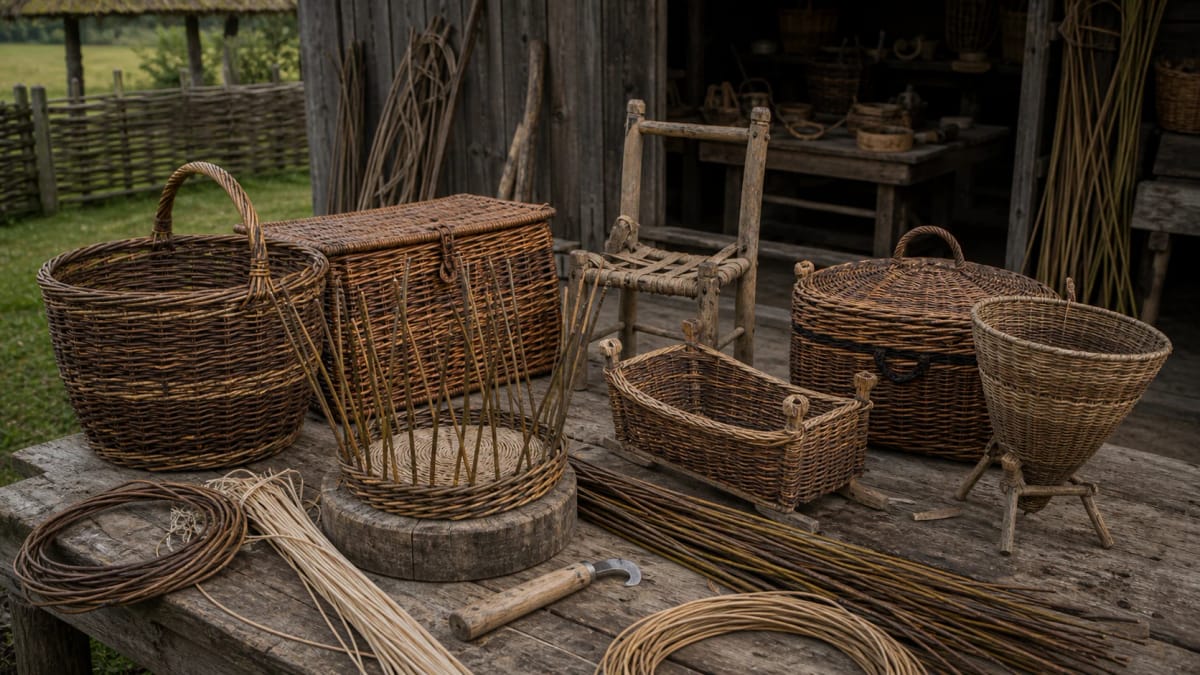
Baskets and hampers: Open or closed containers for food, grain, berries, mushrooms, market goods, travel, laundry, and everyday carrying.
Farm woven objects: Seed baskets, bread-tub covers, harness or farm containers, fish traps, and other practical objects that required strength.
Furniture and household structures: Cradles, chair seats, table or chair parts, shelves, small enclosures, and other objects where weaving is combined with a wooden frame.
Decorative and teaching objects: Small baskets, educational craft pieces, contemporary forms, and folk art objects that continue the logic of traditional materials.
What Is Willow Weaving?
Willow weaving is a traditional craft of flexible plant materials used to make baskets, hampers, kraitelės, seed baskets, cradles, fish traps, chair seats, table parts, and other household objects. It is not only decorative handwork but the making of practical containers, frames, and structures.
Vytelės usually means thin shoots of willow or osier, but traditional woven objects also used hazel splints, linden bast, roots, thin wooden strips, reeds, straw, and other flexible plant materials. The material was chosen according to the object's purpose.
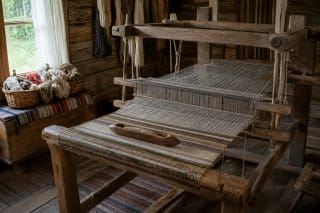
Basketry is close to textile weaving because it relies on an interlacing rhythm, but its scale and function are different. It creates a three-dimensional form: bottom, wall, handle, lid, or frame. The Universal Lithuanian Encyclopedia distinguishes two main Lithuanian techniques for woven objects: spiral and cross-weaving.
Materials: Willows, Osiers, Hazel
Willows and osiers are valued for flexibility. Their rods can be bent, twisted, interlaced, and shaped as they dry. The smaller the object, the more carefully the rods must be sorted by thickness, length, and elasticity.
Hazel splints, linden bast, and other strips create a different surface and strength. Thicker material suits chair seats, fish traps, larger containers, and farm objects. Thinner rods suit small baskets and patterning.
Material is gathered at the right time of year. Rods need to be sorted, dried, soaked before use, sometimes peeled, split, or evened. The weaving begins long before the first interlacing.
Preparation: Soaking, Splitting, Bending
A dry rod breaks, so before weaving it is often soaked or steamed. Moisture restores flexibility, allowing the rod to bend and tighten into the form. But overly wet material can be heavy, deform, or shrink later.
Thicker shoots may be split into splints. This produces thinner, flatter strips suitable for a smoother surface or finer pattern. Splitting requires sensitive hands, because an uneven splint disrupts the rhythm of weaving.
Handles, rims, and hoops are often formed by bending thicker rods. If they are bent too sharply, they break. An experienced weaver knows how far the material will yield and where it needs support.
The Weaving Process
Many baskets begin with the bottom. A cross or frame is created, the first rows are woven around it, upright stakes are set for the walls, volume is formed, and the rim and handle are finished at the end.
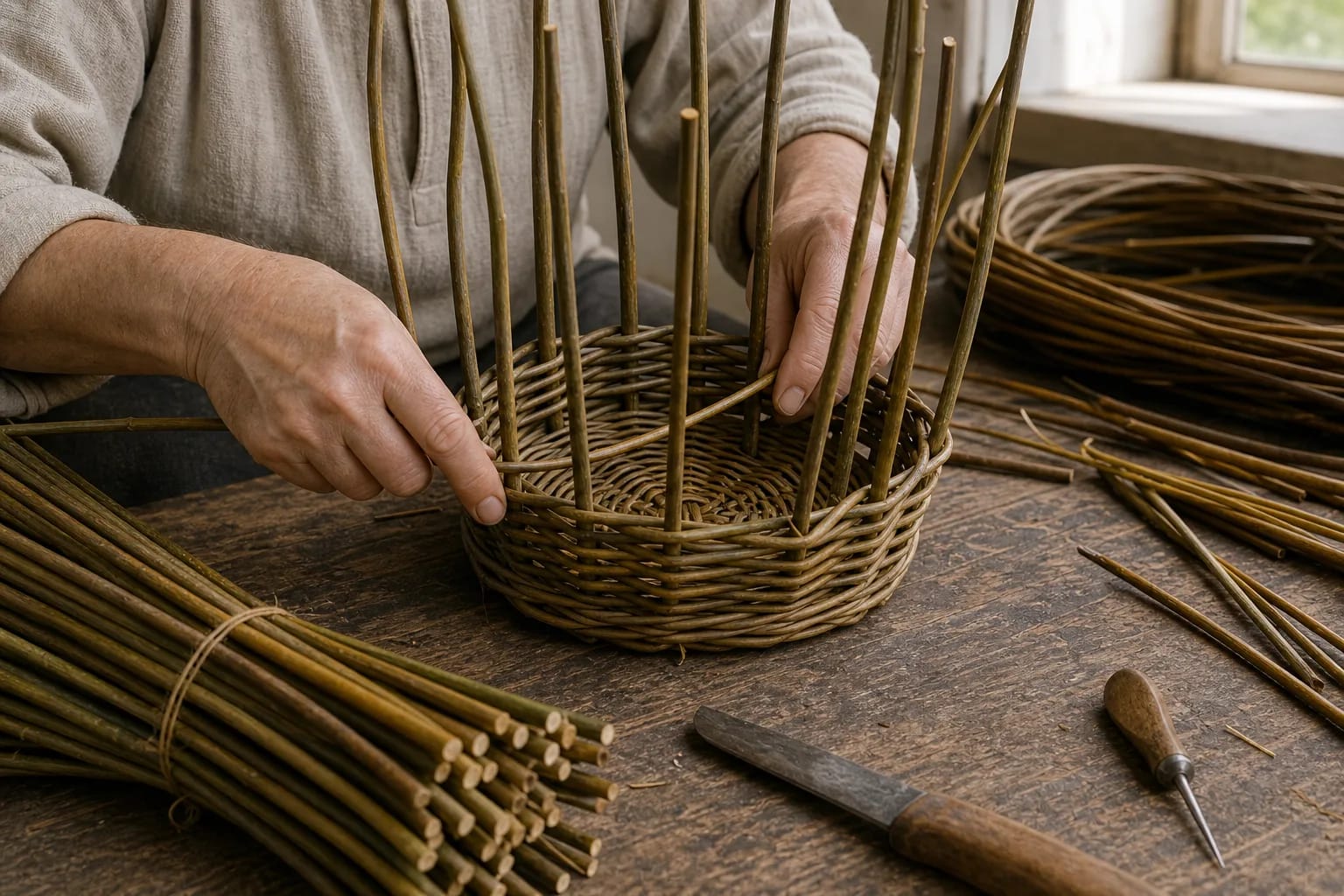
The technique may be simple cross-weaving, spiral work, diagonal weaving, a double rim, or a denser or looser pattern. Each technique affects not only appearance but strength. A farm basket needs different weaving from a small festive basket.
A good woven object must hold its form. The bottom should not wobble, the walls should not collapse, the handle must carry weight, and the rim must be finished so that sharp ends do not protrude.
What Lithuanians Wove
Woven objects covered many parts of daily life: baskets, hampers, kraitelės, kašelės, seed baskets, cradles, chair seats, bread-tub covers, laundry containers, travel hampers, market baskets, fish traps, and even some furniture parts.
Each object had its own logic of form. A berry or mushroom basket must be light and easy to carry. A seed basket must suit scattering seed. A fish trap must work in water. A chair seat must be comfortable and taut.
The weaver therefore does more than weave attractively. The craftsperson understands how the object will be used: who will carry it, how heavy it will be, whether it will be damp, whether it will need cleaning, and whether it will hang, stand, or travel.
Regions and Lithuania Minor
Woven objects are known throughout Lithuania because the materials grew in many places and every farm needed containers. Still, regions differed in material choices, object types, craft specialization, and local names.
Lithuania Minor had distinctive examples connected with markets, fishing, the lagoon region, and craft environments. Woven baskets, fish traps, farm containers, and the work of local masters show that weaving could be not only household work but also a specialized occupation.
Regionality is best understood through material and need. Where water and fishing mattered, fish traps and fishing-related woven objects were needed. Where market trade was strong, carrying baskets were needed. Where flax and grain mattered, seed baskets and containers were important.
Difference from Straw Gardens
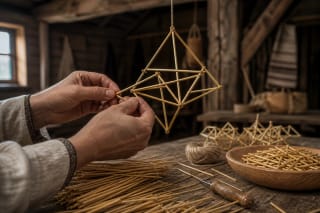
Willow weaving should be distinguished from šiaudiniai sodai, Lithuanian straw gardens. In straw gardens, straw segments are cut and threaded on string to create spatial geometry, usually for ritual or decorative use. In willow weaving, a container, frame, or practical object is made.
Both traditions use plant material and rhythm, but their technologies differ. A rod is bent, tensioned, interlaced, and functions as structure. A straw in a sodas works as a module through which a thread passes.
This distinction matters for content structure: straw gardens are a separate UNESCO tradition, while willow weaving is a broader field of household crafts.
Contemporary Weaving
Today willow weaving lives through folk artists, craftspeople, educational workshops, certified national heritage products, fairs, and practical basket commissions. Some masters create traditional forms; others adapt the technology for contemporary interiors.
It is important to distinguish natural rods from synthetic rattan or plastic weaves. The appearance can be similar, but the behavior of the material, ecology, repair, and connection to tradition are completely different.
A good contemporary woven object has clear material, a strong rim, a comfortable handle, and a form suited to its function. Ornament or modernity should not weaken the construction.
Care
Woven objects are sensitive to moisture, mold, overdrying, and mechanical breaking. A rod that is too dry can snap; one kept too damp can mold. Baskets should be stored in a ventilated place that is neither too wet nor too hot.
Cleaning is best done dry or very gently, without soaking the whole object. If a handle or rim breaks, it is better repaired with traditional material than with tape or wire, which can damage the rods further.
An old museum or family object should be documented: form, material, local name, user, and purpose. Basketry is fragile, so the information can sometimes survive longer than the object itself.