- Field
- Traditional Lithuanian tools for plowing, harrowing, cutting, haymaking, and threshing
- Type
- traditional craft
- Heritage status
- well attested
- Context
- Agricultural implements, plow, ard, iron share, harrow, scythe, sickle, flail, rake, pitchfork, yoke, horse
Farming implements, Traditional farm tools, Plowing implements, Haymaking tools, Threshing tools
Agricultural Implements forms and objects
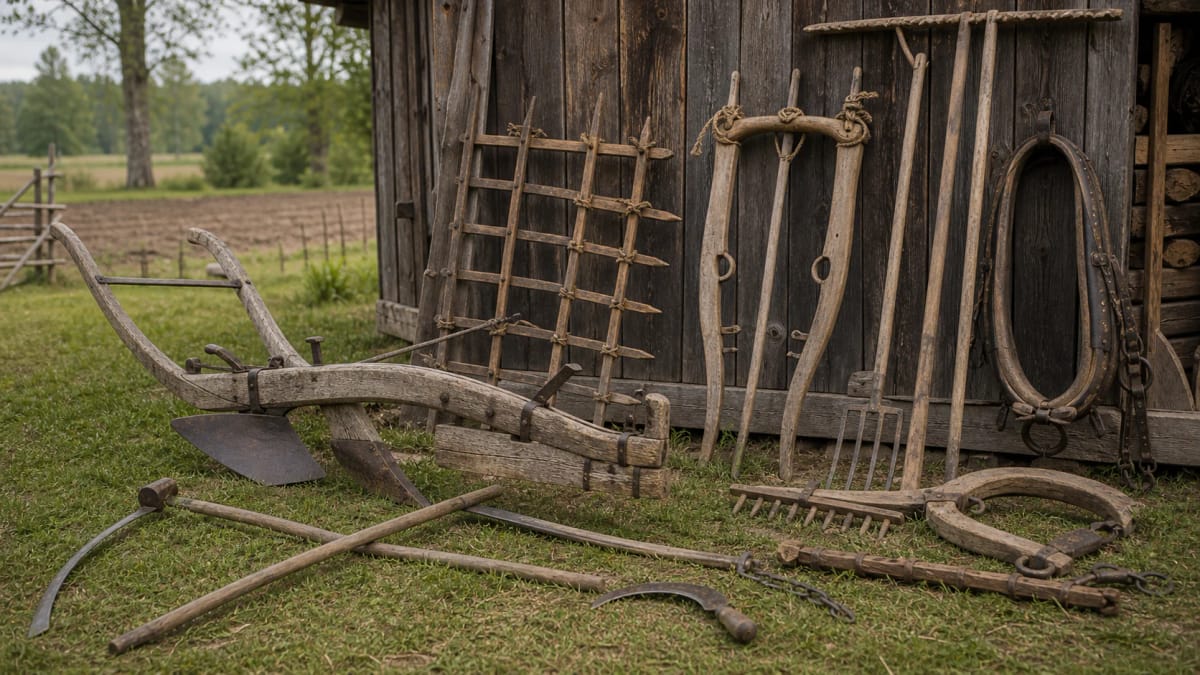
Plowing Implements: Žagrės, arklai, plows, shares, ridgers, and other tools for turning, loosening, furrowing, and preparing soil.
Harrowing and Soil-Loosening Tools: Wooden, branch, woven, or iron-toothed harrows used to break clods, cover seed, and level fields.
Cutting and Haymaking Tools: Scythes, sickles, rakes, forks, handles, shafts, and blade-care tools used for hay and grain work.
Threshing and Grain-Processing Tools: Flails, grain beaters, winnowing, cleaning, and storage tools that completed the grain-work cycle.
What Are Agricultural Implements?
Agricultural implements are traditional farming tools used for plowing, harrowing, sowing, cutting, raking, threshing, and handling harvest. They include žagrės, arklai, plows, harrows, scythes, sickles, flails, rakes, forks, yokes, harness, and many smaller parts.
These tools join wood, iron, rope, leather, and human or animal strength. One implement often belonged to several crafts: a carpenter or farmer made the wooden part, a blacksmith forged the blade or share, and leatherwork or household repair kept harness in use.
They matter because the Lithuanian rural year cannot be understood without them. From plowing and sowing to haymaking, rye harvest, threshing, and milling, each task had its tool, rhythm, and vocabulary.
Plowing Implements: Žagrė, Arklas, Plow
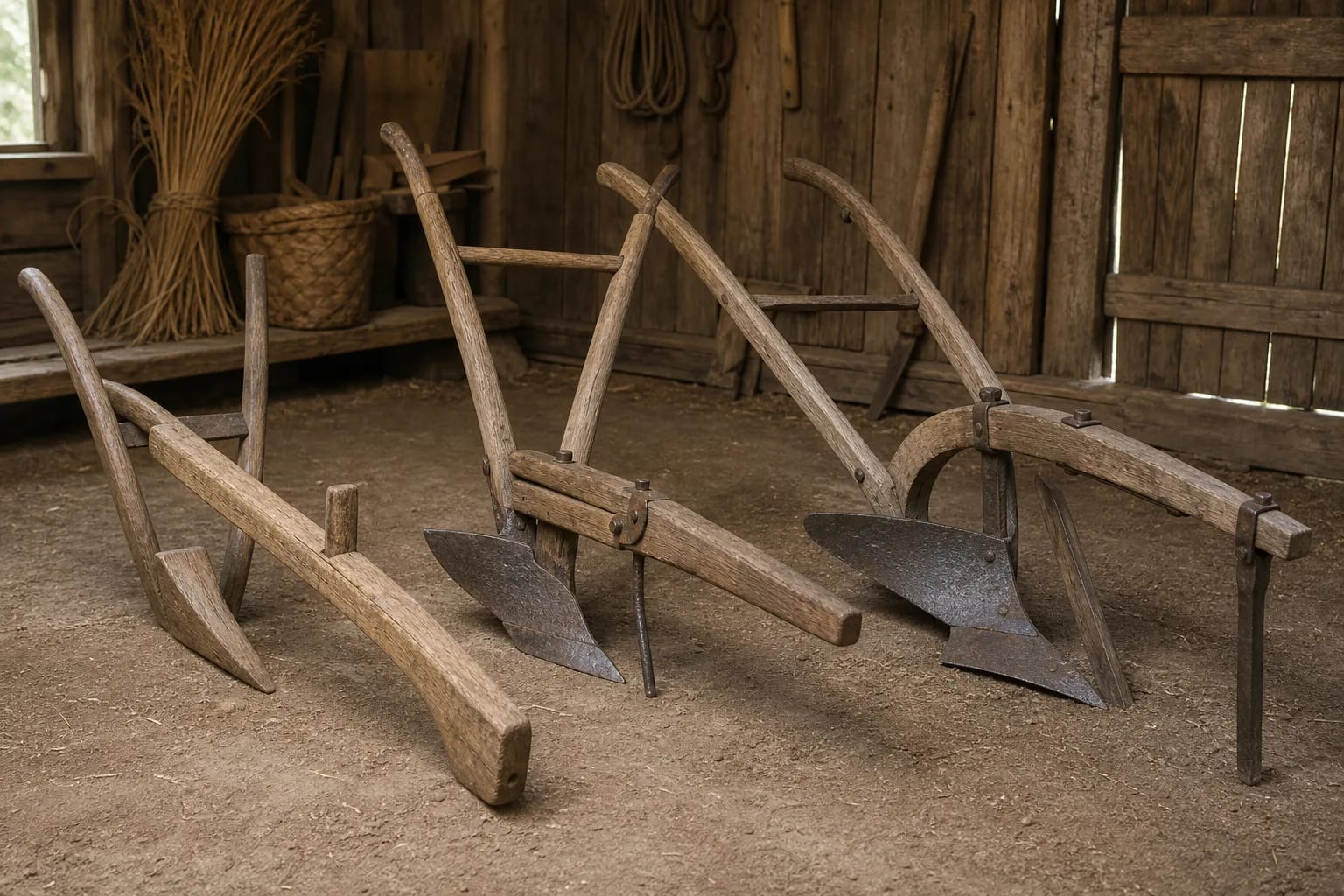
Plowing implements prepare soil for sowing. Older forms include the žagrė and arklas, wooden or wood-and-iron tools drawn by horses or oxen. A wooden arklas part found at Šventoji, now part of Palanga, is dated to the second millennium BCE, among the earliest such finds in Europe; the most characteristic tongue-shaped plowshare was found at Maišiagala hillfort, and in the 19th century the ard was replaced by an iron ridger (vagotuvas).
The žagrė could be single- or double-furrowed, with regional constructions. Southern and southeastern Lithuania mention double-furrow forms, while other forms spread elsewhere. Later plows with iron parts and better mouldboards turned soil more efficiently.
Not every soil-turning implement should be called a plow. Arklas, žagrė, and plow have different construction and historical layers. Local names varied, but technical distinction helps explain farming development.
Harrows and Field Preparation
After plowing, the field was harrowed. Harrows broke clods, leveled the surface, covered seed, and prepared soil for growth. Older harrows could be branch, woven, or wooden; later forms increasingly used iron teeth.
A harrow’s form depended on soil, draught animal, region, and period. Light soil needed a simpler form; heavy soil required stronger teeth and frame. The implement had to be heavy enough to work yet not too heavy to pull.
Harrowing shows that farming is not simply “plowing a field.” Soil has to be broken, leveled, seeded, and brought into contact with the seed.
Scythe, Sickle, and Haymaking
The scythe is one of the most important hand cutting tools. It cut hay, grain, and other plants and required the right shaft, grips, blade angle, whetting, and skill.
The sickle is older and different in use, especially for hand-cutting grain. It lets the worker hold stalks by hand and cut closer to the ears, but the work is slower and physically demanding.
Regions differed in scythe-shaft form and grip placement. Such details look small but determine posture, speed, and fatigue.
Rakes, Forks, and Hay Handling
Cut hay had to be turned, dried, raked, loaded, and carried. Wooden rakes, forks, poles, wagons, and ropes were used. Rake teeth had to be flexible enough to work and strong enough not to break.
Forks served hay, straw, manure, grain, and other farm tasks. Wooden forks and later iron forms show the transition from all-wood tools to combined wood-and-metal construction.
Haymaking tools are tied to communal work. Scythes, rakes, and forks were carried into fields, repaired, sharpened, and used rhythmically, often in work parties.
Flail and Threshing
A spragilas, or flail, is a threshing tool: a handle and swinging head used to beat grain so kernels separate from ears. It is simple but demands skill.
Threshing with flails requires rhythm and safety. Several people could thresh together, coordinating blows so they did not injure one another and so the grain was beaten efficiently. So the flail also belongs to work music: the order of blows has its own rhythm.
After threshing, grain had to be winnowed, cleaned, dried, and milled. The implement world then continues into querns, mills, and bread baking.
The Shift from Wood to Iron
Many old implements were wooden, but the working edges increasingly became iron: shares, plow parts, scythes, sickles, harrow teeth, and fork tips. This improved efficiency and durability.
The shift did not happen all at once. One farm might use an older wooden harrow, a newer plow, an inherited scythe, and a homemade rake side by side.
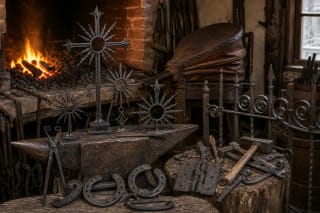
Blacksmithing was crucial. The smith repaired scythes, forged shares, rings, fittings, and teeth. Without iron, wooden tools lost working power in heavier soil.
Regional Differences and Terms
Tool names and forms differed by region. The same implement could have several local names, while a similar name could mean a slightly different construction elsewhere. Farming vocabulary is therefore very rich.
Double-furrow žagrės, single-furrow forms, scythe-shaft variations, harrow types, and local sickle or rake forms show adaptation to soil, landscape, and work habits.
When studying a particular homestead or museum object, ask not only what it is, but where it was used, on what soil, with which animal, and in what season.
Museums, Education, and Value Today
Traditional implements are now mostly seen in museums, ethnographic homesteads, education programs, festivals, and reconstructions. They are no longer the main agricultural technology, but without them the older work rhythm is hard to explain.
Implements trained the body: how to walk behind a žagrė, hold a scythe, thresh with a flail, or rake hay. Such knowledge is movement, rhythm, and experience, not only information.
Preserving implements means recording local names, use stories, makers, repairs, and work context, not only hanging them on a wall. Without those stories, a tool becomes merely old iron and wood.