- Field
- Samogitian kastinys, sour cream, butter, and hand-stirred dairy emulsion
- Type
- traditional craft
- Heritage status
- living tradition
- Context
- Kastinys, Žemaitiškas kastinys, sour cream, butter, hand-stirring kastinys, clay bowl, wooden spoon, caraway, garlic, onion, pepper, hot potatoes, Samogitia, TSG
Žemaitiškas kastinys, Hand-stirred kastinys, Making kastinys
Kastinys forms and objects
Žemaitiškas kastinys: Kastinys of traditional composition and technology, recognized as a traditional speciality guaranteed.
Everyday kastinys with potatoes: A freshly hand-stirred dairy product most often served with hot boiled potatoes.
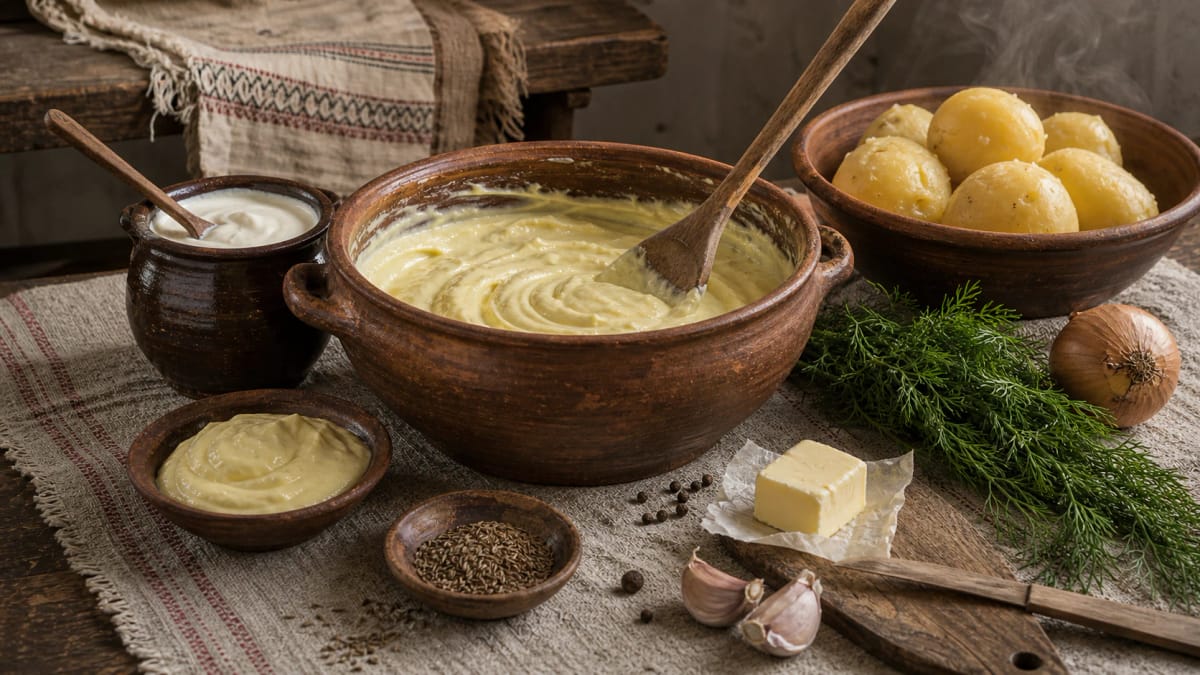
Seasoned kastinys: Kastinys flavored with caraway, garlic, onion, pepper, dill, or other additions recognizable in tradition.
Festive or educational kastinys: A product stirred at fairs, homesteads, and educational programs, showing the dairy technique of Samogitia.
What is kastinys?
Kastinys is a dairy product characteristic of Samogitia, made from sour cream and butter patiently stirred into a smooth, airy, creamy mass. It is seasoned with salt, caraway, garlic, onion, pepper, dill, or other additions and usually eaten with hot potatoes.
Kastinys is not cheese, butter, or a simple sour-cream spread. Its essence is technique: stirring, temperature control, ingredient ratio, and the moment when the mass binds without melting or separating. VLE describes it as a food of Courland and Samogitian peasants, stirred from butter and sour cream; it was widespread until the mid-twentieth century, later made less often, and from the early twenty-first century again prepared as a traditional dish.
Žemaitiškas kastinys is entered in the European Union register of traditional specialities guaranteed. This protects traditional composition and method of production, not only geographical origin.
Why is it stirred?
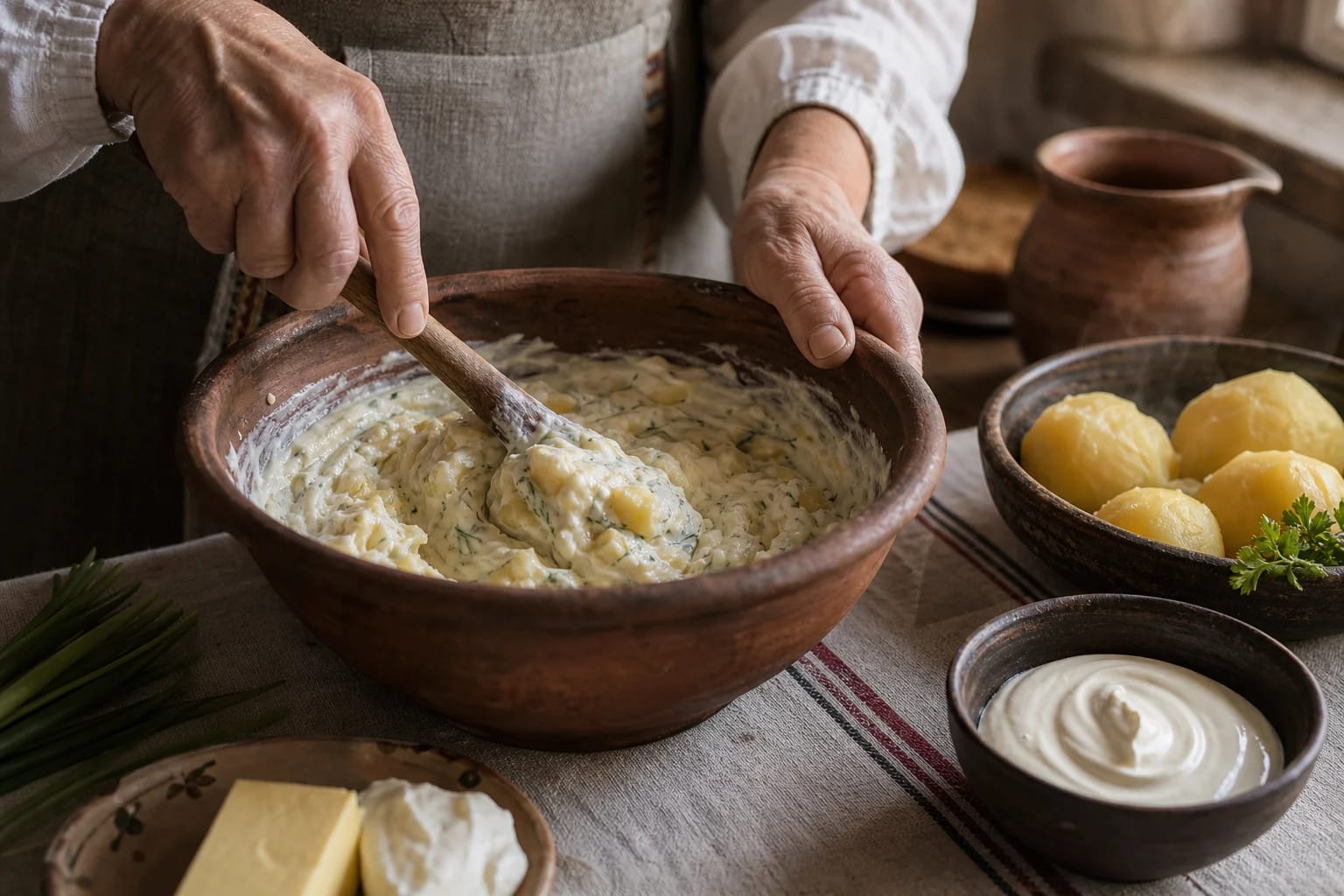
Kastinys is made by stirring with a wooden spoon or paddle. This slowly binds sour cream and butter into one emulsion. If the mass is mixed too roughly or at the wrong temperature, it may separate.
The craft is therefore not simply putting ingredients in a bowl. One has to feel when the bowl is too cold or too warm, when the butter is soft enough, and when the sour cream begins to bind.
The Lithuanian verb sukti, to turn or stir, describes the process well: the hand repeats the same movement until the product becomes unified. This is slow dairy kitchen work, not quick whipping.
Ingredients
The base is sour cream and butter. Depending on tradition and specification, sour milk or other dairy nuances may appear, but the identity of kastinys remains the joining of sour cream and butter.
Seasonings give character. Caraway, salt, garlic, onion, pepper, and dill are common. Caraway especially links kastinys with other Lithuanian dairy and bread products.
Ingredients must be fresh and safe. Kastinys is eaten fresh, so dairy quality and hygiene are essential.
Clay bowl and temperature
In the traditional image, kastinys is stirred in a clay bowl. Clay holds temperature well and creates a stable working environment. VLE describes the process: a piece of butter and first several spoonfuls of sour cream are placed in a clay bowl warmed in hot water, then more sour cream is gradually added and the mass is stirred with a wooden spoon until it thickens; at the end salt, caraway, sometimes pepper and onions are added.
Temperature is one of the hardest things. Too cold a mass binds poorly; too warm a mass may melt. An experienced maker works by texture rather than by the clock.
A wooden spoon or paddle also matters. A metal tool or mechanical mixer can change the process and texture. In education, hand stirring shows the essence of the craft.
Kastinys and potatoes
Kastinys is most often served with hot boiled potatoes. The potatoes melt the surface of kastinys, strengthen the aroma of butter and sour cream, and turn a simple pairing into warm, filling food.
This serving context explains why kastinys is not only a spread. It is a companion to hot potatoes, a center of the Samogitian table, and a demonstration of dairy skill.
Kastinys may also be eaten with bread, vegetables, or other additions, but hot potatoes remain the classic context.
Samogitian identity
Kastinys is strongly associated with Samogitia. It shows local dairy cuisine, restrained food, handwork, and the ability to create a distinctive texture from simple products.
Žemaitiškas kastinys as a traditional speciality guaranteed protects the traditional method, but TSG status is not the same as a geographical indication. This distinction matters so names are not confused.
Today kastinys is often presented at fairs, educational programs, regional tastings, and Samogitian heritage events.
Fasting, communal work, and everyday life
Kastinys is associated with the simple rural table, fasting periods, communal work, and family meals where filling but non-meat food was needed. Dairy products became the main food source.
The fasting context should be understood historically: local practice, church rules, and family habits could differ. Still, the restraint and dairy base of kastinys explain its place in everyday cooking.
At communal meals or work gatherings, kastinys with potatoes was practical: one bowl could be prepared and shared at the table.
Common mistakes
Kastinys should not be called cheese. It does not follow the logic of pressing curd cheese in a cheesecloth or aging cheese. It is a stirred sour-cream and butter emulsion.
Another mistake is thinking that any mixture of sour cream and butter is kastinys. Without proper stirring, texture, and traditional seasonings, it is only a spread.
A third mistake is presenting kastinys as a modern restaurant dip without the Samogitian context. Contemporary serving is possible, but the cultural core is region, handwork, and hot potatoes.