- Field
- Lithuanian cured and smoked meat in a natural casing
- Type
- traditional food craft
- Heritage status
- well attested
- Context
- Skilandis, pork, natural casing, salting, garlic, pepper, smoking, drying, maturing, smokehouse, winter provisions
Lithuanian skilandis, Skilandis making, Smoked skilandis
Skilandis forms and objects
Lietuviškas Skilandis: A protected name with Traditional Speciality Guaranteed status, tied to a specific traditional composition and production method.
Stomach or Bladder-Cased Skilandis: A historically natural-cased form using pork stomach, bladder, or large intestine, giving skilandis a large round or elongated body.
Smoked and Matured Skilandis: A product whose flavor is shaped not only by salting but also by drying, smoking, and time.
Festive Meat Appetizer: A matured product sliced thinly, traditionally kept for provisions and served to guests or for festive tables.
What Is Skilandis?
Skilandis is a Lithuanian meat product made from pork, fatback, salt, and spices, stuffed into a natural casing, pressed, dried, smoked, and matured. It is larger, slower, and meant for longer preservation than an ordinary sausage.
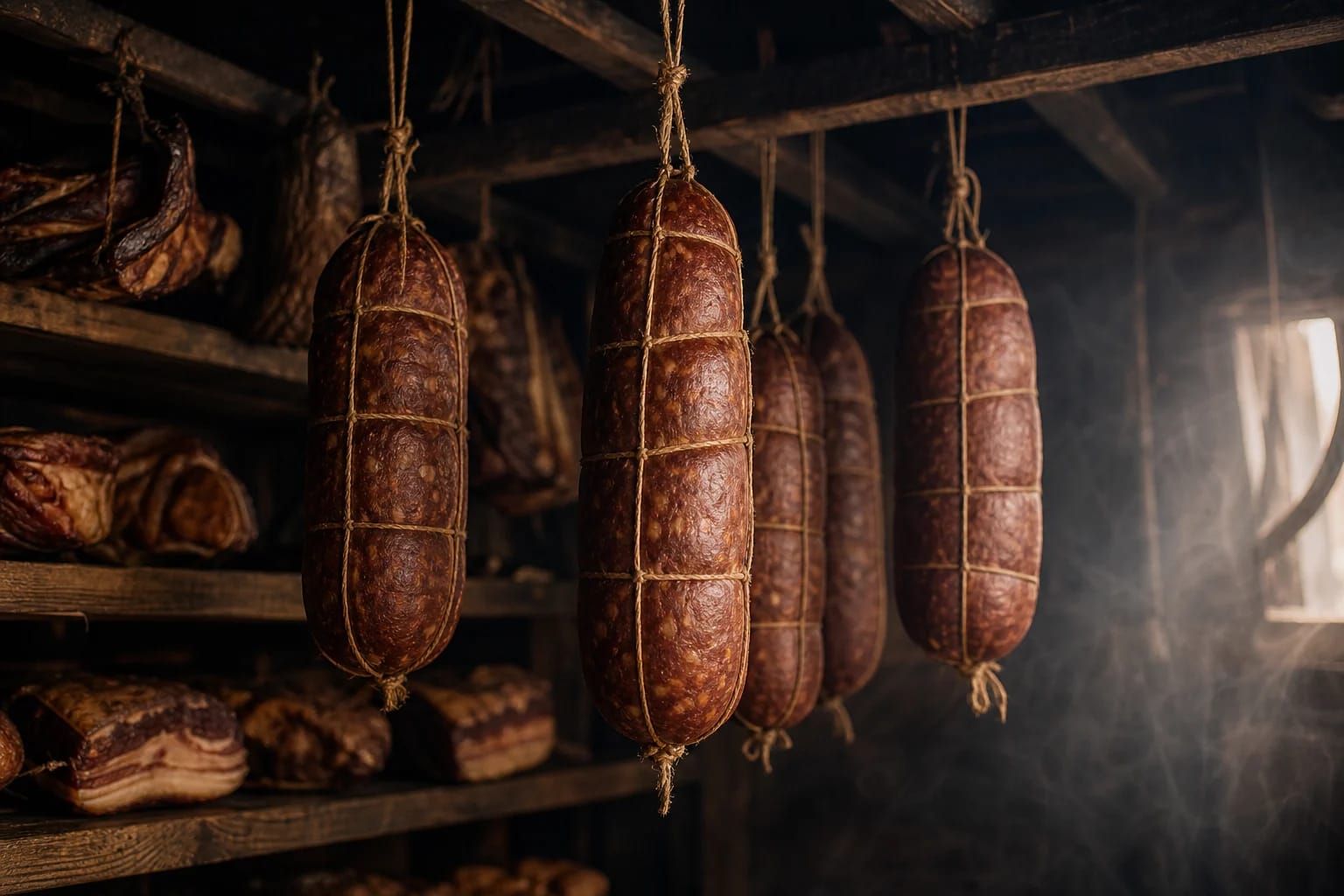
Its core is preservation. Salting, smoking, drying, and maturing allow the meat to keep, develop a firm texture, and gain a deep flavor. It belongs to farm provisions, winter food, and the hospitality table.
Lietuviškas skilandis has European Traditional Speciality Guaranteed status. That status protects a traditional composition and method, not every smoked meat product that might casually be called skilandis.
Natural Casing
Skilandis is traditionally linked with natural casings such as pig stomach, bladder, or large intestine. The casing shapes the product, holds the meat mass, and lets it dry and mature.
The casing has to be prepared cleanly and precisely. It must not tear, let the filling fall apart, or obstruct smoking, so skilandis requires knowledge of casing preparation as well as meat preparation.
Tying with cord, and sometimes additional support, helps maintain shape. The roundness, length, and tension of skilandis are technological results, not just visual preferences.
Meat and Spices
Skilandis uses pork and fatback, salted and seasoned with garlic, pepper, and other traditional spices. The meat may be chopped or ground according to the chosen technology.
The spices should be clear but not overwhelming. Garlic and pepper help define the recognizable flavor, while the base remains meat, salt, smoke, and maturation.
Skilandis is not a fresh dish. The prepared filling has a long path before eating, so raw meat quality and food safety are decisive.
Salting and Pressing
Salting begins preservation. Salt gives flavor and affects the meat’s water balance; inaccurate salting can damage safety, texture, and taste.
Pressing helps the skilandis become dense, hold its form, and mature better. This distinguishes it from smaller sausages that are generally prepared more quickly.
This stage shows why skilandis is a craft. The maker has to understand filling density, casing tension, salt, weight, and time.
Smoking, Drying, and Maturing
Smoking gives skilandis aroma, color, and part of its preservation effect. Traditional smokehouses required experience in managing temperature, smoke, and duration.
Drying and maturing are just as important. During this time the product firms, the flavor deepens, and the surface stabilizes. Too short a process leaves it immature; too long or poorly controlled a process can spoil it.
Modern production has to meet food-safety requirements. Heritage cannot be separated from hygiene and control in preserved meat.
Difference from Sausage
Skilandis is often simplified as a sausage, but that is imprecise. It is larger, commonly stuffed into a different natural casing, tightly tied, pressed, dried, smoked, and matured for longer.
Sausage can be fresh, boiled, smoked, or dried, while skilandis has a more specific Lithuanian form and preservation logic. It resembles a preserved meat reserve more than an everyday quick product.
Not every smoked sausage is skilandis. The name should imply method, form, and maturation.
Lietuviškas Skilandis as TSG
Lietuviškas skilandis was registered in 2016 as a European Union Traditional Speciality Guaranteed product. TSG status protects the traditional character, composition, and method, not a geographical region alone.
The status helps prevent the name from being diluted. If any smoked meat product were called skilandis, the traditional definition would lose meaning.
For consumers, the protected name means a concrete specification. For cultural writing, it makes it possible to speak precisely instead of relying only on taste memories.
Serving and Storage
Skilandis is usually sliced thinly and eaten with rye bread, at the festive table, on journeys, or as a matured meat appetizer. Its strong flavor means a little is enough, but the product should be properly matured.
Storage remains important after production. Too much moisture can encourage spoilage, while excessive dryness can over-dry the product. Old farms had their own places for keeping meat, but modern products should follow the producer’s instructions.
Skilandis is a good example of food heritage joining taste, provisions, technology, and safety.