- Field
- Making wheels, carts, sledges, and sleighs: hubs, spokes, felloes, and ironwork by the blacksmith
- Type
- traditional craft
- Heritage status
- well attested
- Context
- Wheelwright, wheelmaking, wheels, hub, spokes, felloe, iron tire, bent and joined felloes, wagon, brika, brička, lineika, phaeton, sledges, sleighs, shafts, pole, iron banding, blacksmithing
Račdirbystė, Wheelwrighting, Wheel and wagon making, Cart maker, Wheelmaking
The Wheelwright's Craft forms and objects
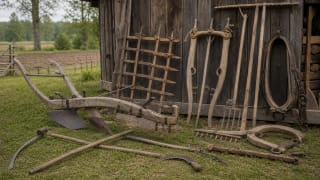
Wheels: The wheelwright's central product: a hub, spokes set into it, and a bent or joined felloe (tekinlankis), increasingly banded with iron from the late seventeenth century.
Wagons: Working four-wheeled wagons (brikos) and festive bričkos, brikeliai, lineikos in Aukštaitija, phaetons in Užnemunė, as well as vežėčios and uorės with a fixed-length base.
Sledges and sleighs: Winter overland transport using runners instead of wheels, also requiring the wheelwright's and carpenter's woodwork and the blacksmith's iron fittings.
Harnessing and driving parts: Shafts, the pole or grąžulas (rodiklis), axles, runners, and other wagon and sledge parts connecting the draft animal with the vehicle.
What Is the Wheelwright's Craft?
The wheelwright's craft, Lithuanian račdirbystė, is the making of wooden wheels and of vehicles that move on wheels or runners. The wheelwright made wagon wheels, assembled wagons, sledges, and sleighs, and the most important and most complex product was the wheel itself.
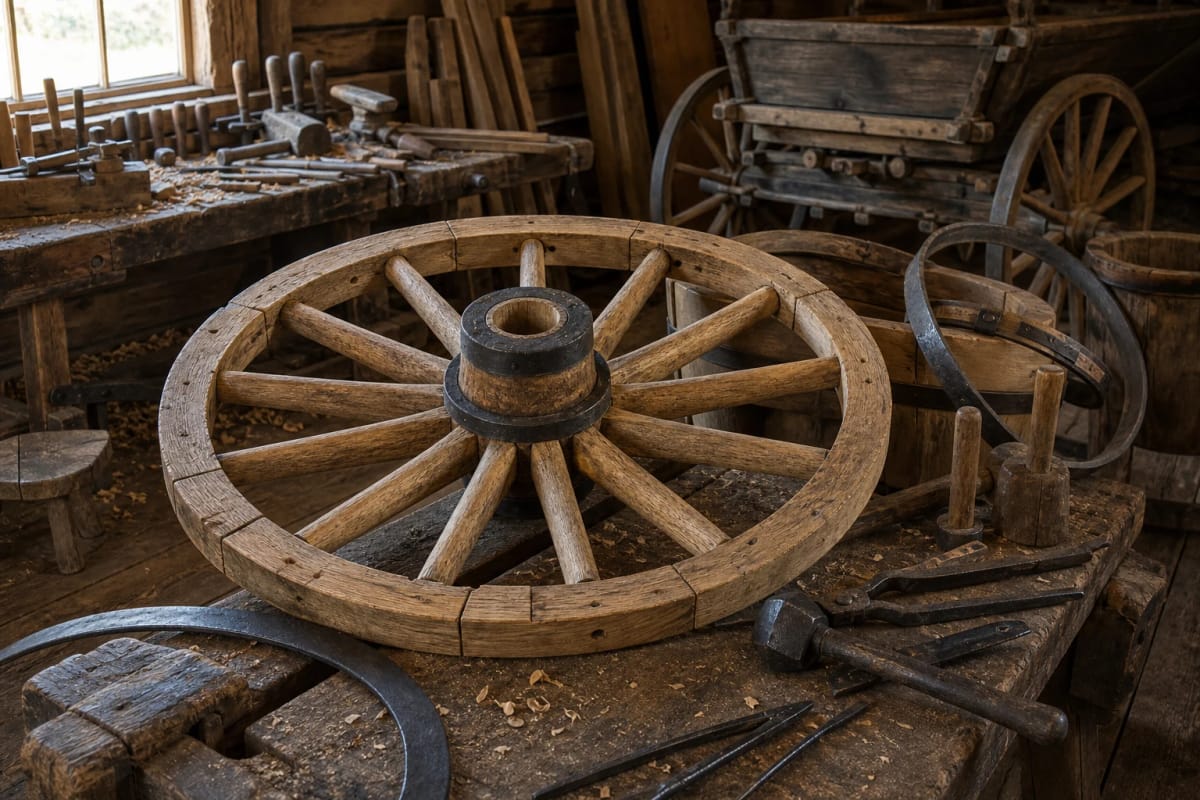
A wheel is not a simple piece of wood. It has three main parts: the hub, the center through which the axle passes; the spokes, the rays running from the hub; and the felloe or tekinlankis, the outer ring connecting the ends of the spokes into a circle. Every part requires precise fitting so that the wheel is strong, round, and durable.
This craft mattered because until twentieth-century mechanization, the wagon was the main rural overland vehicle. Without the wheelwright there was no reliable way to transport harvests, firewood, manure, or people, so the maker of wheels and wagons belonged among the most necessary village craftsmen.
Historical Depth and Wagon Development
Wheels have been used in the wider world from about the fourth millennium BCE, in Mesopotamia and the Black Sea region. According to the Universal Lithuanian Encyclopedia, the first wheels were solid wooden disks placed on an axle, while spoked wheels with hubs and bent felloes spread in the second millennium BCE, especially in war chariots.
Working wagons were not widely used for a long time because their load capacity was limited. The situation changed in medieval Europe: from the thirteenth century a turning front axle appeared, from the fourteenth century iron-banded felloes, and from the fifteenth century iron axles. In Lithuania, working wagons have been used from the thirteenth century.
The load capacity of wagons grew with their construction. The encyclopedia notes that in the sixteenth and seventeenth centuries peasants' working wagons could carry more than 650 kilograms, and in the nineteenth century about 1000 kilograms. In the nineteenth century wheels began to be displaced by newer transport, especially trains, and in the twentieth century, particularly its second half, by cars and tractors with trailers.
Wheel Structure: Hub, Spokes, Felloe
The heart of the wheel is the hub, a thick wooden body into which the spokes are set from the outside and through which the axle passes. In wagons with wooden axles, hubs were somewhat longer and thicker than in wagons with iron axles, because they endured greater friction and load.
Spokes connect the hub to the felloe and transmit the load. From the fifteenth and sixteenth centuries in Europe, spokes began to be set into the felloe and hub at a slight angle, strengthening the wheel against side forces. The felloe, or tekinlankis, is the outer circle that touches the ground and holds the whole wheel together.
The quality of the whole wheel depended on how accurately the wheelwright chose the wood, dried it, and joined the parts. Spokes must be of equal length and angle so the wheel turns evenly; the felloe must make a proper circle, otherwise the wheel will wobble and crack quickly.
Bent and Joined Felloes
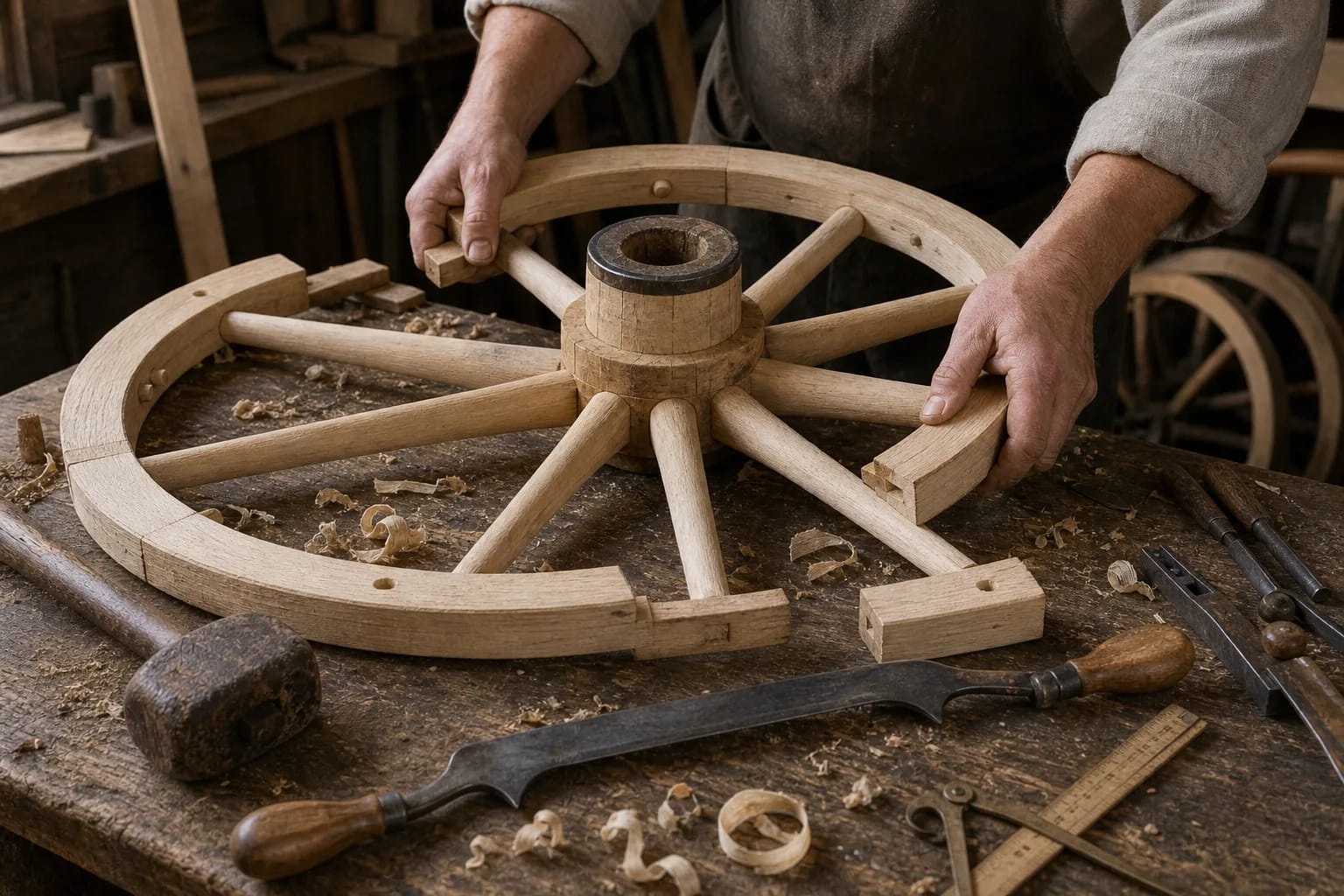
According to the Universal Lithuanian Encyclopedia, Lithuanian wheelwrights made felloes in two main ways: bent felloes, made by bending one piece of wood, and joined felloes, assembled from several pieces, usually four, five, or eight. The parts of joined felloes were connected with oak or birch pegs.
The two methods had a clear regional distribution. Bent felloes were more common in Aukštaitija and Dzūkija, while joined felloes were more common in Suvalkija and Žemaitija, although in the latter regions bent felloes were still used in the second half and even at the end of the nineteenth century. Sixteenth-century sources mention that peasants' wagon wheels were still sometimes made from a single solid piece of wood.
Later development shows a shift toward joined and factory-made wheels. In the late nineteenth and early twentieth centuries, peasants in western and southwestern Lithuania usually used joined felloes, rarely buying bent ones at markets, while in eastern Lithuania bent felloes prevailed and were replaced by joined ones in some places only in the 1930s. From the 1970s, felloes made from eight to ten pieces of oak, birch, or ash spread throughout Lithuania, along with factory-made wheels.
Materials, Sizes, and Regional Differences
Felloes and other parts were mostly made from hard deciduous wood such as oak, birch, and ash. From the late nineteenth century to the present, felloes have been about 4 to 6 centimeters thick, while closer to the seaside they were made wider, 7 to 8 centimeters and sometimes up to 10 centimeters, because a wider wheel sank less into sandy or heavy coastal roads.
Wheel diameter also differed clearly by region. The encyclopedia gives the largest wheels in the Klaipėda region and Suvalkija: front wheels up to 90-97 centimeters, rear wheels up to 104-108 centimeters. In Žemaitija rear wheels reached 80-90 centimeters and front wheels 70-80 centimeters. The smallest wheels were in eastern and northern Lithuania, with rear wheels around 80 centimeters and front wheels up to 70 centimeters.
Front wheels are usually smaller than rear wheels because they turn under the front of the wagon and need clearance while steering. These measurements were not accidental: they were shaped by road surface, soil, wagon size, and local tradition, so wheel size can sometimes help identify the region from which a wagon came.
Iron Banding and the Blacksmith's Work
A wooden wheel had to be protected from wear and splitting, so it was banded with iron. According to the encyclopedia, wheels began to be banded with iron in the late seventeenth century, first in Lithuania Minor: iron rings about 5 centimeters wide were driven into both sides of the hub interior so the axle would not wear out the wood.
From the second half of the nineteenth century, felloes were fitted in smithies with iron strips of different thicknesses, called tekinlankiai. Hub ends were banded with two wider rings, 3 to 7 centimeters, and the middle near the spokes on both sides with narrower iron hoops, 1.5 to 3 centimeters wide. When a hot iron tire was fitted and cooled, it contracted and clamped the entire wheel tightly.
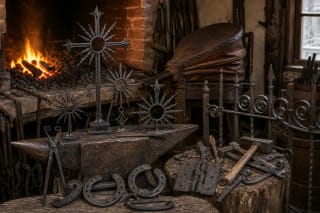
The wheelwright's craft is therefore an example of two craftspeople working together: the wheelwright made the wooden hub, spokes, and felloe, while the blacksmith forged iron rings, tires, fittings, and axles. A good wagon required both masters to coordinate measurements very precisely; otherwise the banding would split or the wheel would loosen.
Types of Wagons, Sledges, and Sleighs
Lithuania mostly used four-wheeled wagons; two-wheeled ones were rare. The encyclopedia distinguishes two types of four-wheeled wagon. One had a single-pole connection, including single- and pair-horse working wagons called brikos and festive bričkos and brikeliai in Aukštaitija and Žemaitija, lineikos in Aukštaitija, and phaetons in Užnemunė. The other type had a fixed-length base with three connecting poles: single-horse vežėčios and uorės in Aukštaitija.
Wagons were divided into working and festive vehicles. Working wagons carried harvests, firewood, manure, or grain; festive bričkos, lineikos, and phaetons were used for church, markets, weddings, and visits. The wheels of more elegant phaetons and lineikos were carved and painted, and carriage wheels could even be gilded, so an expensive vehicle joined the work of wheelwright, carpenter, and painter.
In winter people traveled on sledges and sleighs, which slid on runners over snow. They too required the wheelwright's and carpenter's woodwork and the blacksmith's fittings. The vehicle was connected to the draft animal by shafts or a pole, the grąžulas or rodiklis; wagons could be one- or two-axled, with springs or without them.
The Wheelwright in the Rural Craft System
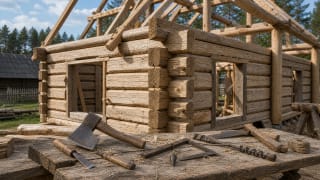
The wheelwright rarely worked in isolation. Wagon making required prepared wood, drying, bending, precise joining, and iron parts, so the craft naturally connected with blacksmithing, carpentry, and wood carving. The same master in a village often knew how to repair an old wagon, assemble a new one, and make sledges for winter.
Sixteenth-century manor inventories already mention banded and unbanded, single-horse and pair-horse working and festive wagons. This shows that estates used transport for many purposes and that wheel and wagon making was a significant part of the economy. Peasants' iron-banded wagons are known from the late seventeenth century, so the use of iron gradually spread from estates and towns into villages.
The wheelwright's product also had prestige. A neat, well-painted festive wagon or brička showed the owner's status, while a well-made working wagon was the foundation of the farm. For that reason a good wheelwright's work was valued like the work of other essential village masters.
How to Recognize and Evaluate Wheelwright Work Today
In an old wagon or museum object it is worth looking first at the felloe: is it bent from one piece or joined from several pieces with pegs? Together with wheel diameter and felloe width, this can suggest region and period. An iron tire and banded hubs point to later nineteenth- and twentieth-century work.
When evaluating a wagon as craft, the precision of fitting matters: are the spokes at the same angle, is the wheel a true circle, and is the iron tire neatly fitted? These details look small, but they determine whether a wheel runs evenly and lasts for decades.
A classic study of this craft is S. Bernotienė's “Valstiečių sausumos transporto priemonės XIX-XX a.” in “Iš Lietuvių kultūros istorijos,” vol. 1, Vilnius, 1958; the topic of transport is also continued in A. Vyšniauskaitė and J. Laniauskaitė's “Valstiečių linininkystė ir transportas,” vol. 9, Vilnius, 1977. Today traditional wagons and the wheelwright's craft can be seen at the Horse Museum in Niūronys, the Lithuanian Ethnography Museum, and other ethnographic homesteads and museums.