- Field
- Traditional craft of building stoves, bread ovens, tiled stoves, and chimneys
- Type
- traditional craft
- Heritage status
- well attested
- Context
- stove building, stove builder, krosnis, pečius, bread oven, cookstove, tiles, tiled stove, pot tiles, kakalys, benkis, firebox, flue, chimney, damper, hearth, seklyčia, priemenė, fire, heating, bread baking
Building stoves, Masonry stove construction, Tiled stove construction, Bread-oven construction
Stove Building forms and objects
Stove: A masonry or tiled device for heating, boiling, baking, or bread baking, tied to the house plan and chimney system.
Bread oven: A stove or part of a stove used for baking bread; it is an important object of food heritage and household warmth.
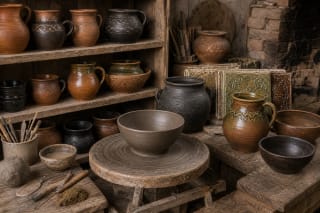
Stove tiles: Ceramic stove tiles or hollow elements that store and radiate heat while shaping the stove's appearance.
Flue: The passage inside a stove or stove system through which smoke and hot gases move before entering the chimney.
Chimney: A chimney or duct that carries smoke out of the building; its condition is directly connected with fire safety.
What is stove building?
Stove building is the craft of constructing and repairing stoves and understanding how they work. A stove builder lays or assembles a stove, but the work does not end with arranging bricks: the builder must understand heat storage, draft, flues, the chimney, room layout, and fire safety.
In the traditional Lithuanian homestead the stove was one of the main centers of the house. It heated, boiled, baked bread, dried things, divided rooms, shaped the rhythm of the day, and became a strong symbol of household fire.
For that reason stove building is both a technical and a cultural craft. A badly built stove is dangerous, while a well-built one works quietly, heats evenly, and fits the life of the house.
Krosnis, pečius, and cookstove
The Lithuanian words krosnis, pečius, and viryklė can overlap, but their functions differ. Krosnis can be a general name for a heating or baking device, pečius is often used in everyday speech, and viryklė is more closely connected with cooking.
The Universal Lithuanian Encyclopedia describes krosnis as a device for heating rooms and boiling or baking food. In a traditional setting one system could include a heating body, cooking surface, bread-oven opening, and thermal mass.
On a modern page it is worth avoiding one flat English term for everything. People may search for pečius, a bread oven, or a tiled stove, but culturally all of them fall within the same field of stove building.
The bread oven
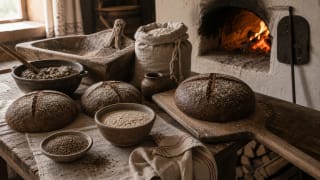
The bread oven is one of the most important traditional stove types. It stores heat in a massive body, and after firing and clearing the embers, bread or other dishes are baked inside its chamber.
The bread oven connects stove building with bread baking, rye fields, sourdough, the rhythm of baking day, and family food. It was not only a heat source; it was a food-production technology.
A description of such a stove should not turn into instructions for masonry work. The key is to understand the function: heat storage, baking chamber, safe smoke path, and relationship to the house plan.
Tiled stoves and tiles
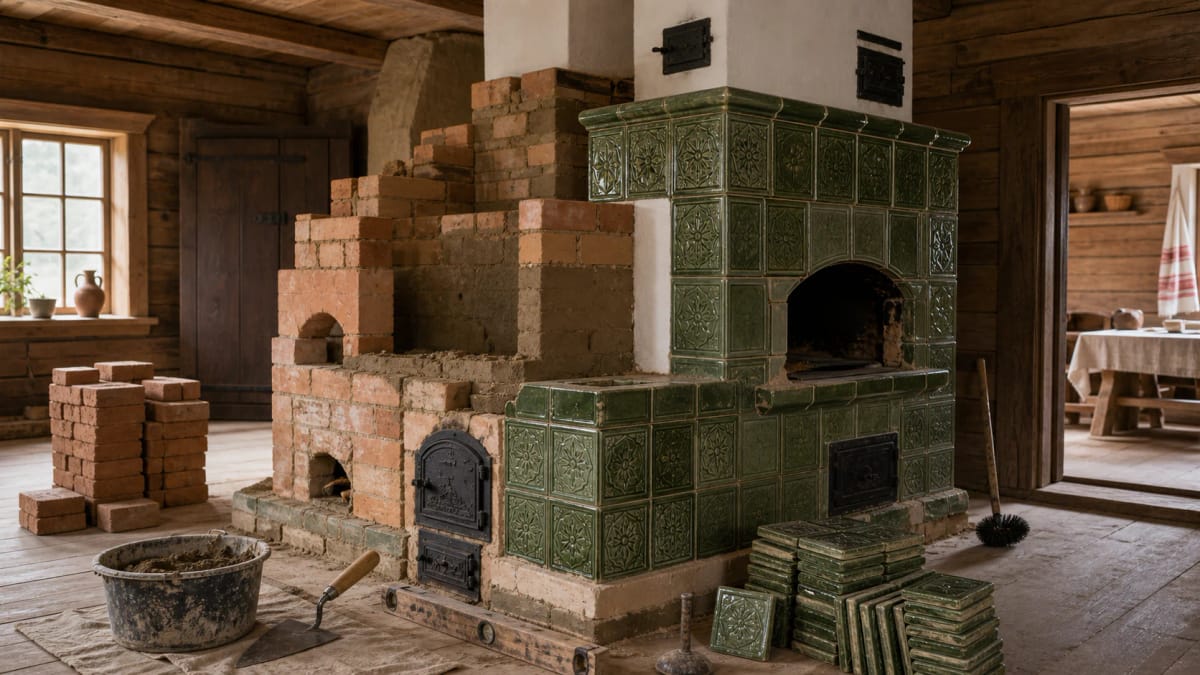
Tiled stoves have their own place in Lithuanian culture. Stove tiles are ceramic elements that can store and radiate heat while also shaping the stove's appearance: color, relief, ornament, and the status of a room.
The Universal Lithuanian Encyclopedia connects stove tiles with many historical forms, from pot-shaped to flat tiles. It notes that tiled stoves in Lithuania are known from the late fourteenth century; the collection of tiles from Vilnius Lower Castle, dating from the late fourteenth to the early seventeenth century, is one of the largest in Europe. From the fifteenth century flat tiles spread, covered with green or brown glaze and decorated with coats of arms, including a tile with the Žaltys coat of arms, and images of fantastic animals. In villages and small towns a tiled stove could be both practical and representative.
For a stove builder a tile is not simply a decorative slab. It has to be integrated into a working thermal system, so that a beautiful surface does not hide poor draft or an unsafe construction.
Flue, chimney, and draft
A stove's performance depends on the route taken by smoke. Flues direct hot gases through the stove mass, while the chimney carries them out of the building. If draft is poor, the stove smokes, burns badly, and creates danger.
Draft depends on the stove construction, chimney height, cross-section, cleanliness, air supply, and building conditions. A stove therefore cannot be judged separately from the chimney.
Fire-safety specialists regularly remind people to clean and maintain chimneys and flues. This is part of the safety knowledge of stove building, not a minor afterthought.
The stove in the house plan
In a traditional house the stove often stood so that it could heat several rooms or divide living spaces. Its position affected the priemenė, seklyčia, kitchen, alkierius, sleeping places, and everyday movement.
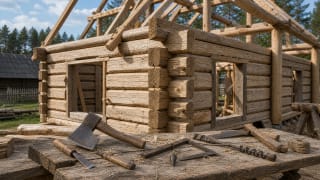
The stove also had a relationship with wooden walls, ceilings, and the roof. Safe clearances, foundation, floor, chimney, and heat distribution are structural questions, not decorative ones.
That is why an old building cannot be restored by simply putting any stove anywhere. The house plan, heritage value, and modern safety requirements all have to be understood.
The stove builder's work
A stove builder has to know masonry, but also has to read materials: brick, clay, mortar, tile, metal doors, dampers, ash spaces, and chimney. Each element affects the whole system.

A good craftsperson discusses in advance what the stove must do: heat one room, heat several spaces, bake bread, cook food, or be restored as a heritage object.
Amateur improvisation is dangerous in this craft. Even a handsome stove can be unsafe if the draft is wrong, surfaces overheat, or the chimney connection is poor.
Mažoji Lietuva and regional names
The names, forms, and room positions of stoves differed by region. The Universal Lithuanian Encyclopedia mentions types and names from Mažoji Lietuva, including kakalys and benkis, which show the variety of local language and technology.
Regional words matter because they preserve concrete household experience. One word can mean not only a device, but also room order, heating method, or the logic of local architecture.
A stove-building page should therefore leave room for terms, but not overload the reader without explanation. The reader needs to understand clearly what heats, what bakes, what carries smoke away, and what creates danger.
Fire safety and maintenance
A stove is a fire device. Fire safety is therefore not an addition but an essential part of the craft. Chimneys and flues must be cleaned, cracks repaired, dampers and doors checked, and combustible materials kept at a safe distance.
The Fire and Rescue Department's heating-season advice emphasizes stove and chimney maintenance, because soot, poorly kept chimneys, and improper firing are common causes of fires.
A heritage stove should be respected, but not used blindly. If the structure is old, the chimney is uncertain, or the stove has not been fired for a long time, a specialist inspection is necessary.