- Category
- Home and Ritual Symbols
- Domain
- Sacred fire, household hearth, protection, offering, purity, warmth, rites
- Source status
- well attested
sacred fire, household fire, hearth, Gabija
What does fire mean in the Lithuanian worldview?
Fire is one of the strongest symbols of Lithuanian old religion and custom. It warms, protects, lights, and cleanses, but it can also destroy. Because of this double nature, fire was treated as a force that must be handled with respect.
In the household hearth, fire becomes the center of everyday order. It is connected with food, warmth, family, and the life of the home. In ritual space, fire may act as a link with the gods, a place of offering, and a sign of communal gathering.
Fire cult and sources
The Visuotinė Lietuvių enciklopedija articles on fire cult and old Lithuanian religion mention the importance of sacred fire, an undying fire tended by priests, and the role of fire in cult rites. This is one of the better-attested layers of the old religion.
Still, sacred-site fire should be distinguished from the household hearth. The first is more closely connected with public rite and cult, the second with everyday practices of household sacredness. The two fields are related, but their functions are not identical.
Gabija and the household hearth
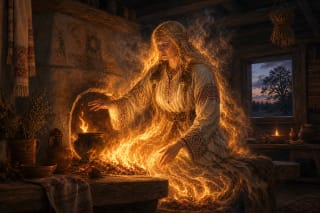
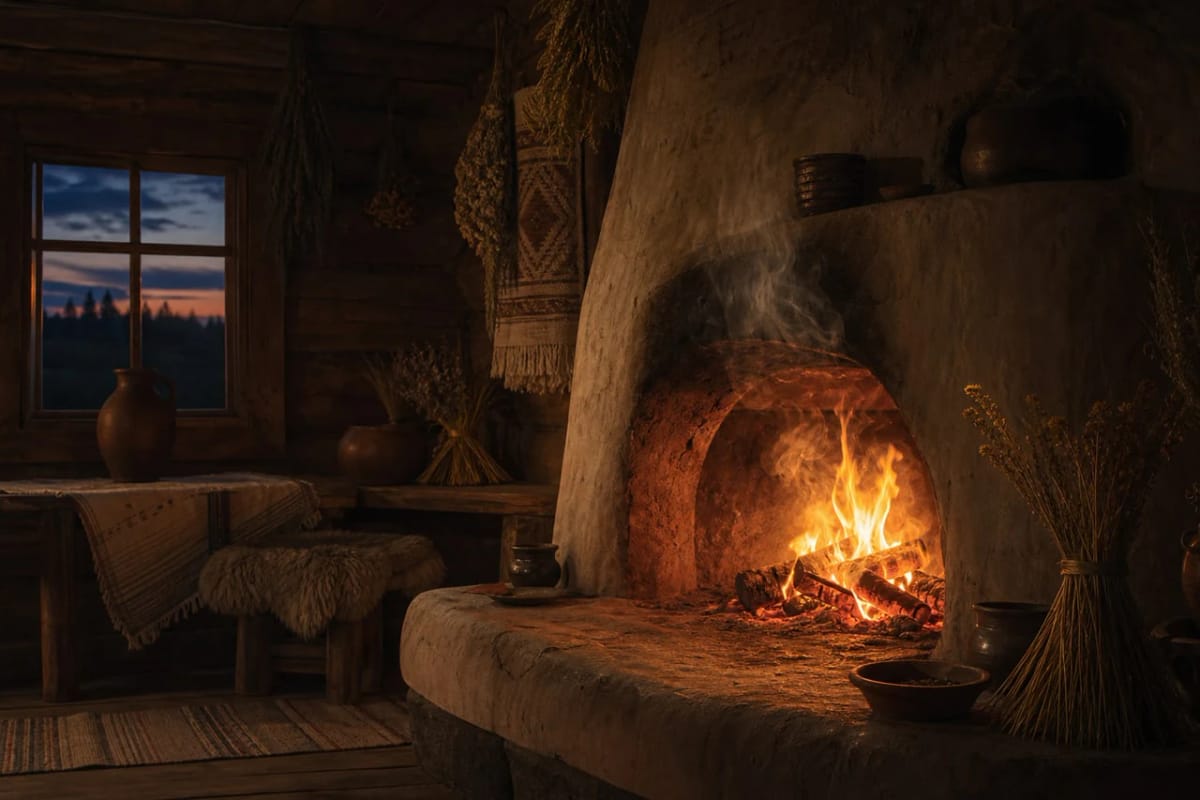
Gabija is often presented as the guardian of fire. Her image is especially important not for explaining any bonfire or altar in general, but the household fire in particular: the hearth, embers, ashes, purity, and respectful behavior toward fire.
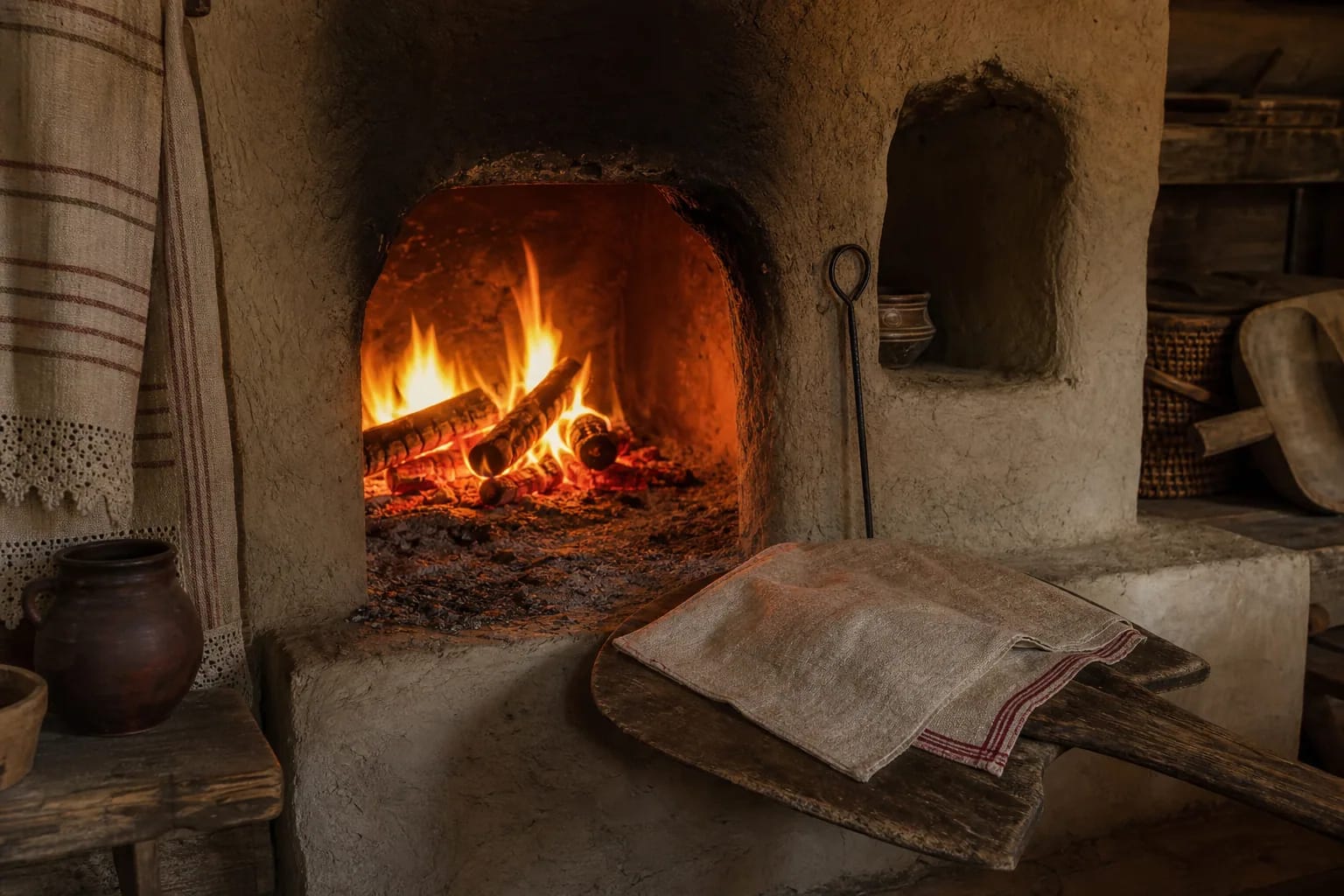
In folk belief, fire had to be tended, kept clean, and addressed respectfully at the end of the day. In the evening the embers were buried in ashes, 'putting Gabija to sleep' with respectful words and sometimes leaving bread or water so that the fire would rest peacefully overnight. It was strictly forbidden to spit into the fire, trample it, pour dirty water onto it, or throw rubbish into it; an insulted fire was believed able to 'take revenge,' go out walking by itself, and burn the house. Such customs show that fire was understood as a living and sensitive household force.
Fire as protection and transformation
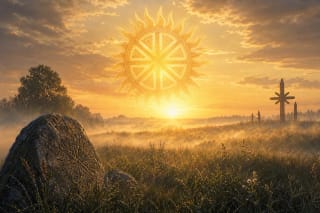
Fire protects against cold, darkness, and unwanted forces. Bonfires at calendar festivals may mark a community boundary, cleansing, a threshold of the year, or an earthly repetition of solar light.
At the same time fire is a symbol of transformation: grain becomes bread, raw material becomes metal, an offering becomes smoke, old time is burned away and new time begins. Fire therefore joins household everyday life with cosmic change.
How should fire be read today?
Today the fire symbol is best explained through respect, boundary, and responsibility. It is not just a decorative bonfire or romantic ancient detail. In Lithuanian tradition, fire requires order, safety, and a conscious relationship.
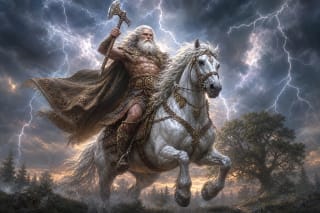
Fire connects different rites and deities: Gabija and the household hearth, Perkūnas and lightning, Rasos bonfires and sacred-site altars. In bread baking, it is also part of everyday work.