- Category
- Journey and Boundary Symbols
- Domain
- Water, distance, passage, journey, sea, bridge, boundary between worlds
- Source status
- folkloric
little boat, sea, little bridge, water road, passage
What do boat, sea, and bridge mean?
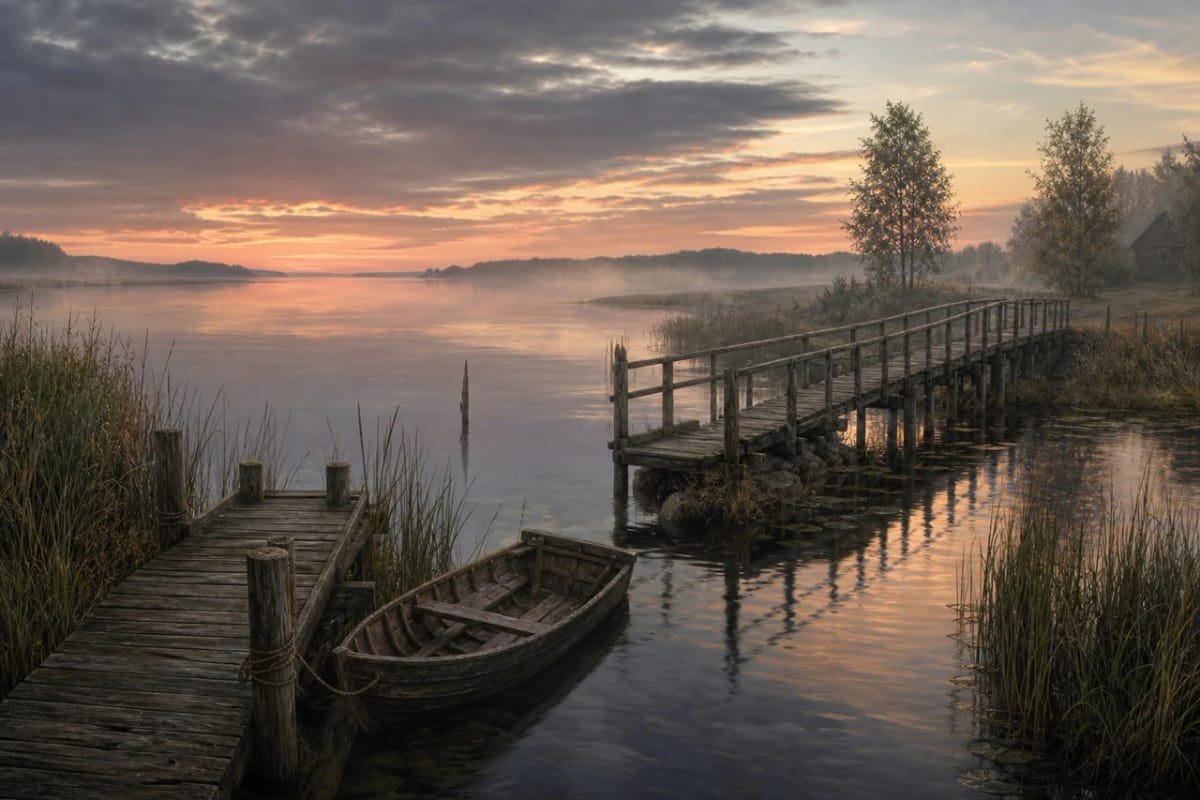
These three symbols work together. A sea or broad water separates a person from the other shore, the boat allows movement through dangerous space, and the bridge makes the crossing clear and visible.
In Lithuanian songs such images can mean journey, longing, unreachable distance, a wedding or life passage, and sometimes the boundary between this world and another.
The sea as distance and boundary
The sea is not only a body of water. In folkloric language it often means breadth, indefinite distance, and a space that must be crossed. The distance may be geographical, emotional, or symbolic.
For that reason sea imagery stands close to songs of longing. It lets the song say that something is far away, hard to reach, separated by water or fate.
Boat and bridge as means of passage
The boat carries a person across water, but it also shows dependence on waves, wind, and the success of the journey. It can be safe, but it can also be risky.
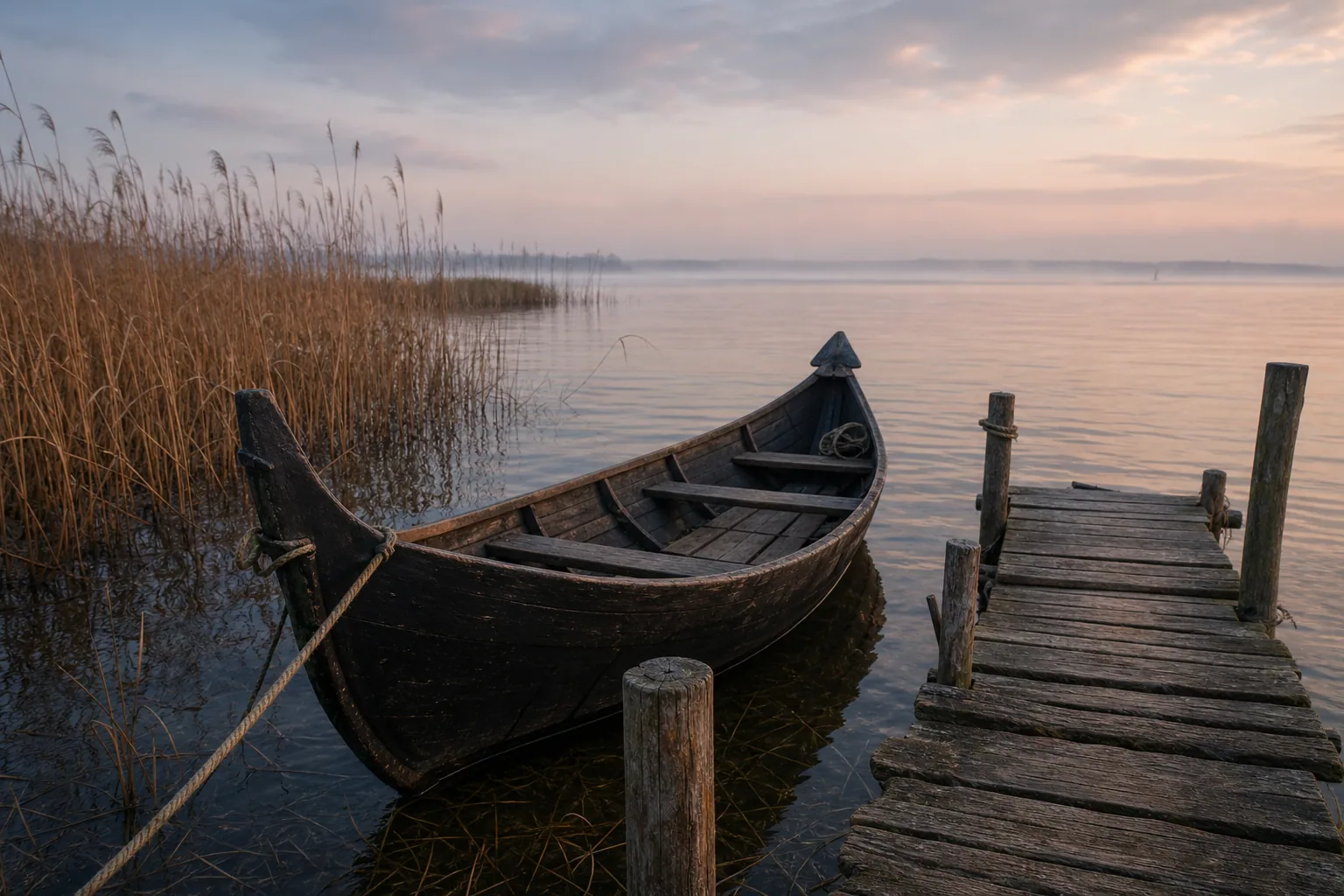
The bridge is a firmer sign of passage. In songs, a bridge breaking, crossing a bridge, or stopping on a bridge may mark a fateful boundary: the road changes here, and the person does not return unchanged.
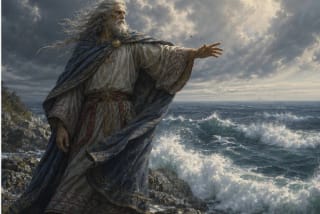
The image of water as a boundary between worlds is especially vivid in the context of death: it was believed that the soul traveled to the other world across water or sea, so boat and ferry could be understood as means of carrying the soul. This also connects with a cosmic image studied by Nijolė Laurinkienė: at night the Sun sails by boat across the sea toward the east so that it can rise again in the morning.
How should these symbols be read today?
Today boat, sea, and bridge are best explained not as a single myth, but as a group of symbols. They help speak about boundary, passage, departure, waiting, and longing for the far shore.
The page works best when these signs are connected with water, road, threshold, and Vėlinės themes. Then they become a clear Lithuanian folkloric language of passage.