- Category
- Fertility and Home Animals
- Domain
- Fertility, household luck, womb, rain, witch, laumė, transformation, frog bride
- Source status
- folkloric
toad, frog, ropūžė, little frog
What do the toad and frog mean?
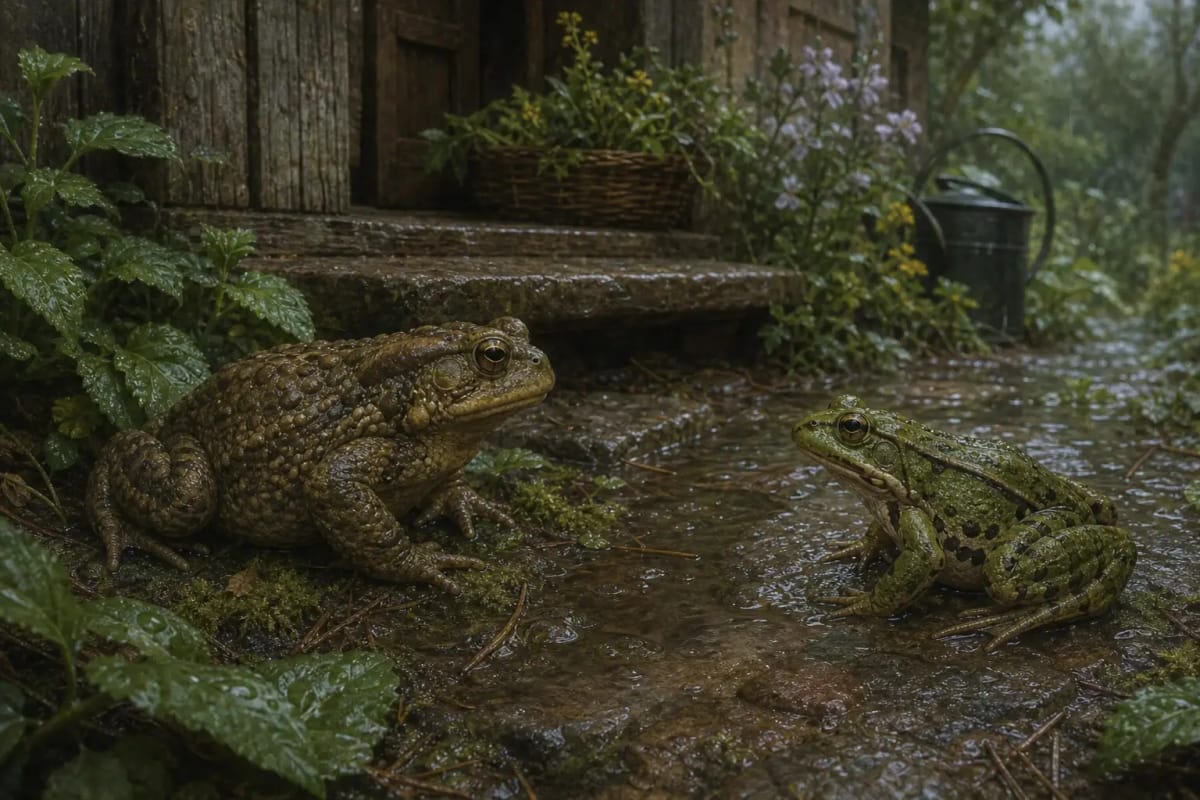
In Lithuanian folklore the toad and frog are animals of moisture, fertility, and household luck. Although in everyday life they may seem insignificant or even repulsive, in belief they carry a strong layer of protection and life.
These animals are connected with water, rain, and the dampness of the earth, so they naturally entered fertility symbolism. In folk understanding, moisture is a condition of life, and the frog and toad are animals of that moisture.
The toad more often has a darker shade connected with the witch and the womb, while the frog has a brighter shade connected with spring and transformation. Still, they often appear together as a pair of related meanings.
Household luck and the prohibition against killing
In folk beliefs the toad and frog were considered animals of household luck, and killing them was a sin and a source of misfortune. It was believed that if a toad were killed, trouble could come to the home or livestock.
This prohibition shows that these animals were understood as protective rather than harmful. A toad living in the cellar or yard was considered a good sign, guarding the house in a way somewhat like the household grass snake.
This respectful relationship with the toad and frog belongs to a broader folk view that small animals of home and earth can carry luck and protection if they are not harmed.
The toad, the frog, and rain
In Lithuanian beliefs the toad and frog are closely linked with rain. It was believed that killing a toad or frog could bring rain, and frogs croaking in the evening were read as a rain omen.
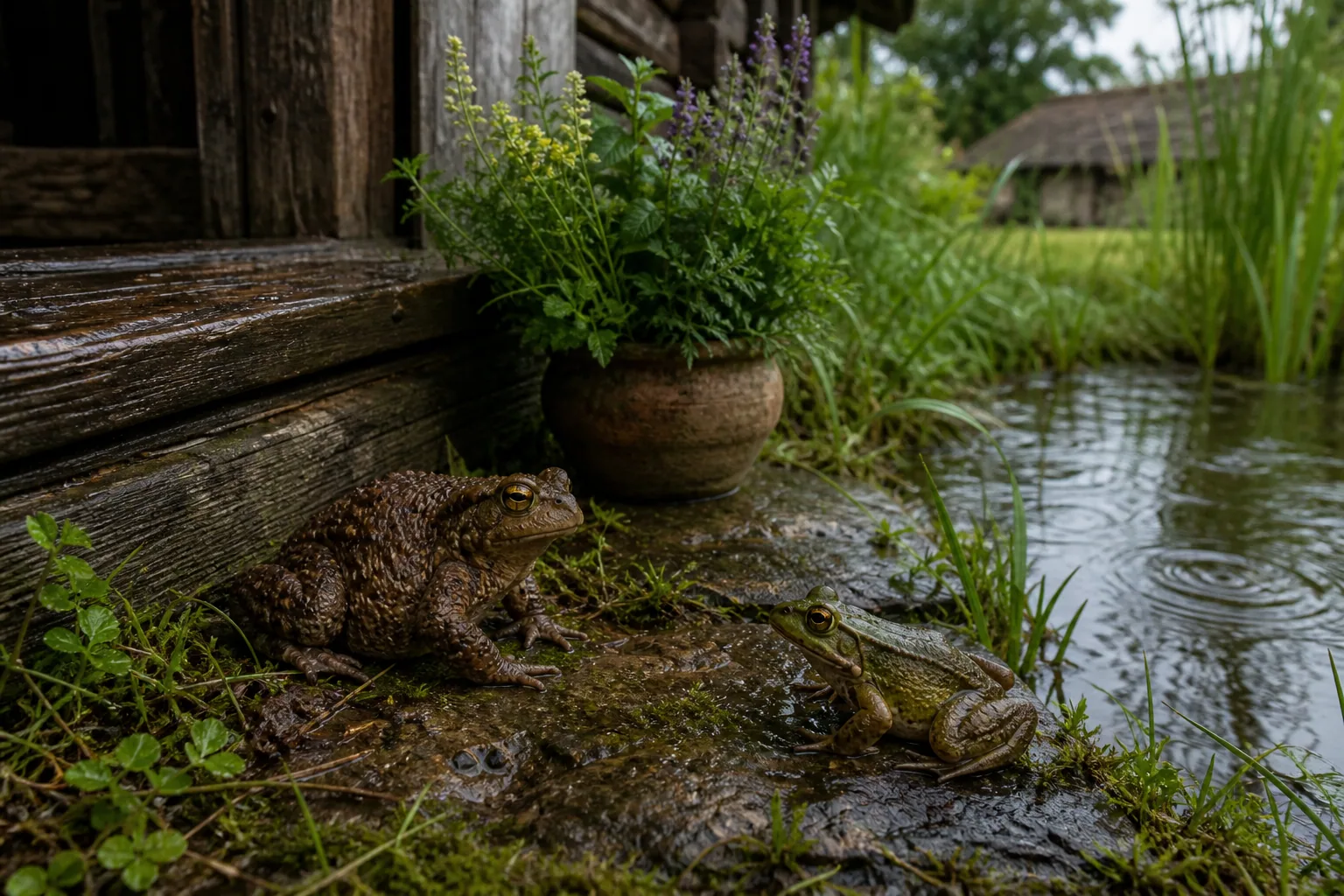
This connection rests on simple observation: frogs and toads become more active in damp, rainy weather. In folk imagery, however, that observation becomes a magical link: the animal not only senses rain but can call it forth.
Through this rain symbolism, frog and toad again join fertility: rain waters the fields, and the animal that foretells it becomes a sign of abundance and harvest.
The toad as a form of witch or laumė
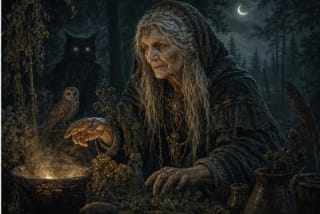
The darker layer of the toad is its connection with the witch and laumė. In legends a witch who can transform into animals often appears as a toad, so a toad sitting in the yard could be regarded with suspicion.
This duality, a protective household toad and at the same time a possible witch form, shows how closely folklore intertwines layers of life and threat. The same animal can be both luck and an enchanted being.
Laumė, a being of watery and damp places, is also associated with the frog and toad. Through moisture and transformation these animals enter the field of female mythical beings.
Fertility and the womb image
In Lithuanian folk medicine and belief the toad is connected with female fertility and the womb. Because of its shape, the toad was symbolically compared with the womb, and it appears in beliefs and healing practices dealing with women's health and fertility.
This comparison of toad and womb is known across a wider Baltic and European folk-cultural field. It explains why the toad is so strongly connected with feminine, birthing life-force.
Through this image the toad becomes not only an animal of household luck, but also an animal of fertility, joining the dampness of earth with human birth and offspring.
The frog bride in wonder tales
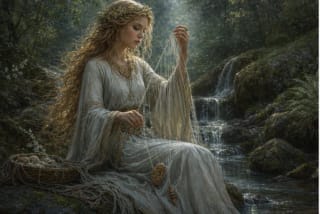
The brighter side of the frog appears most clearly in wonder tales. In them the frog is often an enchanted bride: the hero must marry a frog, who later becomes a beautiful girl.
This transformation of the frog bride is a classic wonder-tale motif, speaking about hidden beauty and value beneath a repellent exterior. The frog becomes a symbol of transformation and release from enchantment.
Such transformation fits the frog's wider symbolism: an animal that seems small and damp hides the power of life and renewal, which in the wonder tale appears as a bride.
How are they different from the grass snake?
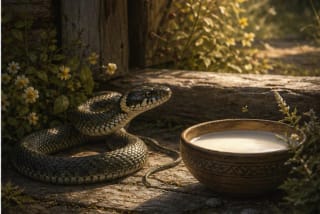
It is important to distinguish the toad and frog from the grass snake. In Lithuanian folklore the grass snake is the main sacred household reptile, connected with the Sun, household luck, and abundance, kept under the threshold and fed milk.
The toad and frog occupy a neighboring but separate niche: their main meanings are fertility, rain, and connection with witch and womb, not the independent household cult that belonged to the grass snake.
These animals are best seen as complementary creatures of damp earth: the grass snake represents sacred household protection, while the toad and frog represent fertility, transformation, and female mythical beings.
How should the toad and frog be read today?
Today the toad and frog are worth seeing as rich folklore symbols: animals of household luck, rain omens, signs of fertility and the womb, and images of transformation in wonder tales.
They are best explained together with the grass snake, witch, and laumė. Then it becomes clear how a damp-earth animal can be luck, an enchanted being, and a transformed bride. This layered character makes the toad and frog living images of Lithuanian mythology.